Glamping in winter sounds dreamy: snow falling outside, a glowing dome, a wood stove crackling. But many travelers hesitate because of one nagging worry — will they end up shivering through the night once temperatures drop below freezing? It’s a fair concern, and the honest answer is that it depends entirely on the structure, the heating setup and how well you prepare.
The good news is that a well-built winter dome can feel genuinely cozy, while a basic canvas tent can get surprisingly cold. In this guide, we’ll break down how cold these structures actually get, compare domes, tents and yurts for winter use, and cover the heating questions to ask before booking. You’ll also find realistic cost expectations, a packing list built for freezing nights, and practical tactics to stay warm from lights-out until morning — so you can book that snowy getaway with confidence.
How Cold Does It Actually Get in a Winter Dome or Tent?
The short answer: it varies wildly depending on what you’re sleeping in. An unheated canvas tent offers very little insulation, so the inside temperature tracks the outdoors closely. On a typical winter night, that means the interior can sit around 20-32°F (-7 to 0°C) — cold enough that a thin summer sleeping bag simply won’t cut it.
What a heated dome actually feels like
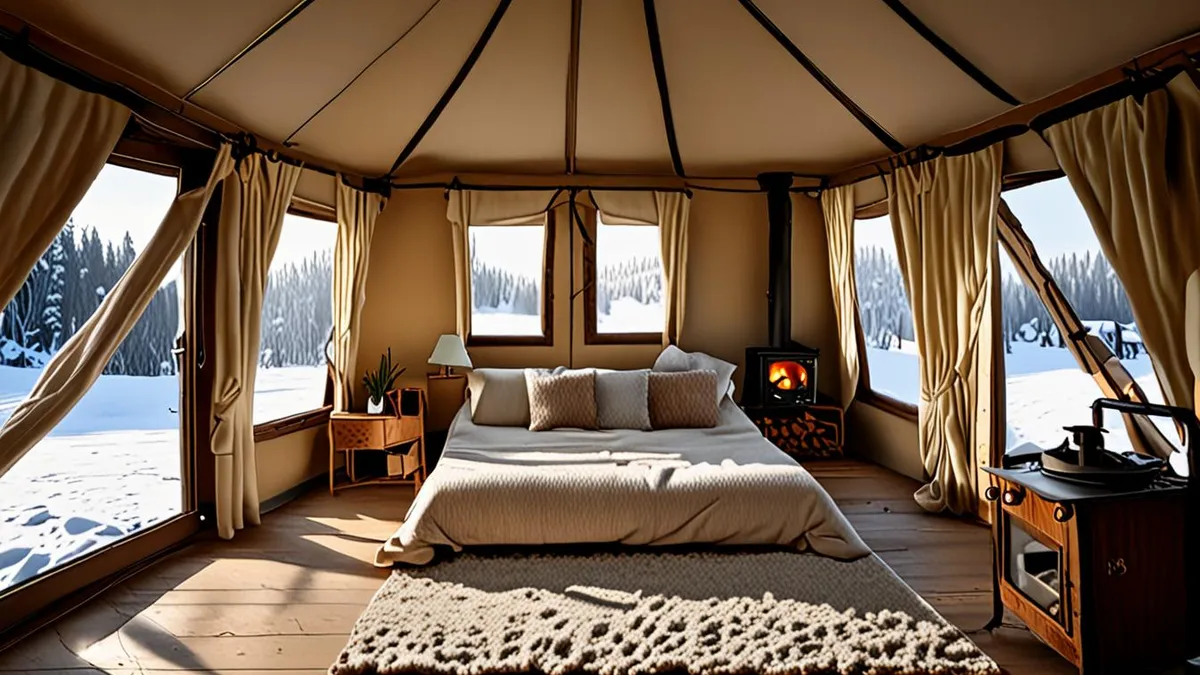
Insulated four-season domes are a different story. With an insulated cover and a wood stove running, these structures typically hold a comfortable 65-75°F (18-24°C) inside, even when snow is piling up outside. Many first-time winter glampers are surprised at how quickly the stove transforms the space — a dome warms up fast once the fire is lit, often within minutes.
The catch is what happens when the fire dies down. Domes cool off within 1-2 hours after the stove stops burning, so interior temperature depends heavily on whether someone keeps feeding the fire. That’s why it matters whether staff tend the stove overnight or whether you’ll be reloading it yourself before bed. Understanding this swing — toasty at bedtime, cooler by 3 a.m. — is the key to packing and planning correctly for a winter dome stay.
Dome vs Tent vs Yurt: Which Structure Handles Winter Best?
Not all glamping structures handle cold and snow equally well, and choosing the right one matters more in winter than in any other season. If you’re new to the differences between these structures, our guide to glamping in yurts, domes and safari tents covers the basics in detail. Here’s how they stack up for cold-weather trips.
Geodesic domes: the winter winner
Geodesic domes are the most reliable cold-weather option. Their curved shape sheds snow well, so heavy accumulation slides off instead of weighing down the roof. Paired with insulated liners, a dome keeps heat in far better than flat canvas panels, which is why most genuinely winter-ready glamping sites build with domes.
Safari tents and yurts
Safari-style canvas tents are the least winter-suited of the three. Their thin, single-layer canvas loses heat quickly, and snow can pool on flat roof sections. Unless a site explicitly advertises four-season insulation and heating, treat a safari tent as a fair-weather option and skip it for snowy months.
Yurts sit in the middle — and a proven middle at that. Traditional yurts use layers of felt or canvas that insulate well, and a central stove is standard in snowy climates from Mongolia to mountain resorts in North America. If a dome is booked or out of budget, a yurt with a stove is a dependable choice for a snowy night.
Heating Systems and What to Ask Before Booking
Heating is the single biggest factor in whether your winter glamping trip feels cozy or miserable, so it deserves a close look before you book. Most winter-ready sites use one of a few common heat sources: wood stoves, propane heaters, underfloor heating, or a combination topped up with electric blankets. Each behaves differently overnight, which is exactly why you should ask questions rather than assume.
The most important question is whether heating actually runs all night. Some sites have staff who tend the stove until late evening only, meaning the fire dies around midnight and the temperature drops steadily until dawn. Others expect you to reload the stove yourself. Also ask whether extra firewood costs extra — a bundle fee can add up over a multi-night stay in freezing weather.
Before paying a deposit, confirm the unit is a genuine four-season build: an insulated cover with an R-value of 3-5, not a fair-weather tent with a heater dropped inside. If you’re unsure what else to check, this guide to choosing your first glamping site will help you spot red flags early. And don’t linger on the decision — winter weekends and holidays sell out fast, so book 2-3 months ahead for the best units and dates.
- Ask if the stove is glass-fronted — being able to watch the fire from bed makes cold nights far more pleasant and lets you gauge when a reload is needed.
- Find out whether carbon monoxide detectors are installed, especially important in tightly sealed domes running wood or propane heat overnight.
- Check whether underfloor heating, where offered, is included in the rate or billed as a paid add-on per night.
- Ask about the check-in stove briefing — a good site will show you how to load, vent and dampen the fire safely yourself.
What Winter Glamping Costs
One of the best-kept secrets of winter glamping is the price. For the same dome or tent you would book in July, winter rates usually run 10-30% lower than peak summer rates. Operators know fewer travelers want to sleep near the snowline, so they discount to keep their units occupied through the colder months.
So what should you actually budget? For a heated dome, plan on roughly $150-400 per night depending on the region and the level of amenities. A simple dome with a wood stove in a rural setting sits at the lower end of that range, while a large unit with a private hot tub, full bathroom and mountain views will push toward the top. If you want a broader picture of what glamping costs across seasons and styles, our guide to typical glamping prices breaks down the numbers in detail.
Add-ons and small print to check
The nightly rate rarely tells the whole story. Some sites charge separately for firewood bundles, which matters a lot if the stove is your only heat source and you plan to feed it all evening. Hot tub use is another common extra, sometimes billed per stay or per hour. On the flip side, midweek discounts can be generous in winter, so shifting your stay from Saturday to Wednesday can save real money. Always ask what is included before you book, and confirm whether extra firewood costs extra so you can budget the whole trip, not just the headline rate.
Packing for a Freezing Night: Layers, Sleep Gear and Extras
Packing for a winter glamping trip is closer to packing for a winter camping trip than a hotel stay. Even in a heated dome, temperatures can swing overnight, and in a tent-based unit the interior often tracks the outdoors closely. The right sleep gear is the difference between a cozy night and a miserable one, so start there and build your clothing layers around it.
Your sleep system matters most. For tent-based stays, bring a sleeping bag rated 20°F (-6°C) or lower, since standard three-season bags often fall short when the ground freezes. Pair it with a sleeping pad that has a high R-value, because most of your body heat is lost downward into the cold ground or platform, not into the air. In a heated dome you can usually pack lighter, but a warm bag is still smart insurance if the stove dies down at 3 a.m.
Don’t forget these extras
- Headlamp with fresh batteries: winter days are short and tents get dark by late afternoon, so you will be navigating your campsite and gear in full darkness by dinner time.
- Thermos: fill it with hot tea or cocoa before bed so you can drink something warm in the morning without lighting the stove or leaving your sleeping bag first.
- Hand warmers: tuck a few disposable pairs into your jacket pockets; they are invaluable for warming up cold boots, gloves and the inside of your bag before you get in.
- Dry bag or stuff sacks: keep spare layers and electronics sealed away from damp canvas and condensation, which builds up quickly in cold tents overnight.
Finally, think about the small moments that catch people off guard. Slip-on boots by the door, a beanie within arm’s reach and tomorrow’s clothes where you can find them in the dark will all make your night smoother than any single big-ticket item.
Night-By-Night Tactics to Stay Warm Until Morning
Staying warm through a winter night is less about brute-force heating and more about smart routines. A wood stove or propane heater can only do so much on its own; how you manage the fire, your clothing and your gear in the last hour before bed often matters more than the temperature reading on the thermometer. The good news is that none of this requires experience or special equipment. Once you settle in for the evening, a handful of small habits will keep you comfortable until sunrise, even if the temperature outside keeps dropping and snow starts piling up on the deck. Treat your first night as a practice run, and by the second evening these steps will feel automatic.
- Load the stove fully before bed. Add several pieces of seasoned hardwood rather than a single log, then close the air vents partway to slow the burn. A packed firebox with restricted airflow can smolder for hours instead of flaming out within the first hour, which is the difference between waking up cozy and waking up to a cold dome at 3 a.m.
- Change into dry sleepwear. Whatever you wore around the fire has absorbed sweat and campfire smell; damp fabric pulls heat away from your body fast. Fresh, dry base layers and clean wool socks make an immediate difference, and slipping them on before you get into the bag means you start the night warm instead of spending an hour shivering while your body dries out.
- Put tomorrow’s clothes inside the sleeping bag. Shoving your jeans, socks and shirt down into the bag warms them with your body heat overnight, so getting dressed on a freezing morning stops being a shock. It also frees up space in your pack, since the bag doubles as overnight storage.
- Wear a beanie to bed. A large share of body heat escapes through your head, and a thin knit hat is the cheapest sleeping bag upgrade you can make. Pair it with dry wool socks and you will notice the difference within minutes of lying down.
- Keep water inside the tent or dome. Bottles and jugs left outside or in an unheated porch will freeze solid overnight, and a frozen jug means no morning coffee until it thaws. Keep a filled thermos by the stove before you turn in, so you have a warm drink ready when you wake up.
- Crack a window slightly. It sounds counterintuitive, but wood stoves and propane heaters consume oxygen, and a small opening ensures safe airflow without noticeably cooling the space. If the fire starts burning sluggishly or the air feels stuffy, open the vent a little wider.
Do these six things and you will barely notice the cold settling in outside. The routine takes maybe fifteen minutes at the end of the day, most of it spent feeding the stove and swapping into dry layers. The first night is usually the learning curve; by the second evening, prepping your bag and banking the fire will feel like second nature, and you can simply enjoy the snow falling outside the canvas with a warm drink in hand.
The Bottom Line on Winter Glamping Comfort
So, will you actually freeze on a winter glamping trip? Not if you book the right structure. An unheated canvas tent basically matches whatever the thermometer outside reads, so on a cold night you’ll feel every degree of it. A genuine four-season dome with a wood stove is a different experience entirely, holding a comfortable 65-75°F (18-24°C) inside while snow piles up a few feet away. The difference between shivering and sleeping well comes down to choosing an insulated build, reserving early for popular weekends, and packing proper sleep gear.
There’s a real payoff for that planning: winter rates usually run 10-30% lower than peak summer, and snowy scenery viewed from a warm dome is hard to beat. If you’ve spent a night in a winter dome or tent, share how it went in the comments, or pass this article along to a friend who’s considering a cold-season trip.