If you’ve ever scrolled through photos of canvas tents with king beds and wood-fired hot tubs, you know how tempting glamping looks. But choosing your first glamping site can feel surprisingly overwhelming. Safari tent or yurt? Lakeside or forest? Why does one listing cost $150 a night while a nearly identical one asks $350? With so many stay types, price ranges and booking decisions stacked up, it’s easy to freeze and never book at all.
This guide breaks the decision down into manageable steps. We’ll explain what each structure actually is and how much comfort it offers, help you pick a location and season that suit your style, and walk through realistic budgeting. You’ll also learn which amenities to confirm before paying, how far in advance to book, and what to ask the host. By the end, you’ll have a clear checklist for choosing a glamping site with confidence on your very first trip.
What Is a Glamping Site? Stay Types Explained
A glamping site is any accommodation that gives you a camping-style setting, usually in nature, with real beds, furniture and often electricity already set up. Instead of pitching a tent in the dark, you arrive to a structure that’s ready to enjoy. The catch is that “glamping” covers a wide range of structures, and they differ a lot in comfort and price.
The main stay types
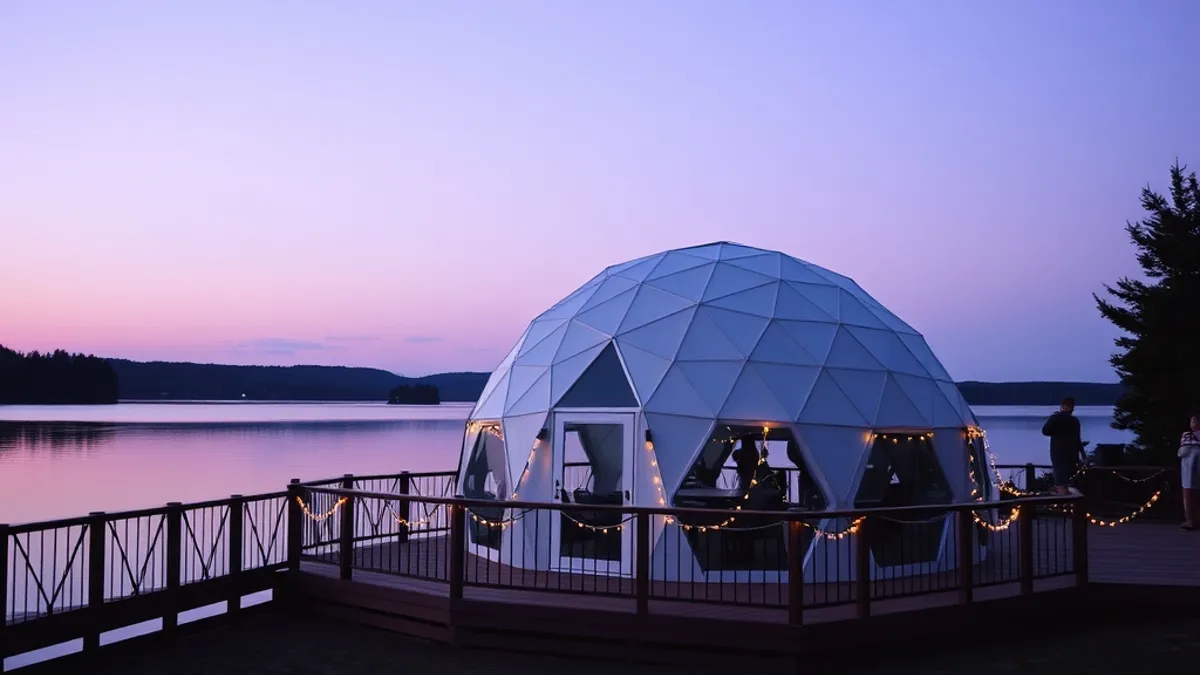
Safari tents are large canvas tents on fixed frames, often with wooden floors, proper beds and sometimes a small deck. Yurts are round, tent-like structures with lattice walls; they feel spacious but are still essentially insulated fabric. Treehouses are built on platforms in trees and vary from simple wooden rooms to elaborate multi-level builds. Geodesic domes are rounded hard-shell or fabric structures that feel modern and airy. Cabins are the closest to a small house, with solid walls, real windows and often a full kitchen. Airstreams are vintage-style aluminum trailers, compact but typically well equipped.
Matching the structure to your comfort level
As a first-timer, be honest about how rustic you want to go. Tents and yurts are more rustic: you’ll feel the temperature outside more, and sound carries. Cabins and domes are more insulated, so they stay warmer on chilly nights and quieter in wind. On price, expect roughly $100–$400 per night depending on structure and location, with cabins and domes usually sitting at the higher end of that range. If you’re unsure, a safari tent or yurt in mild weather is a gentle introduction, while a cabin is the safest bet if you want the experience to feel like a hotel in the woods.
Picking the Right Location for Your Glamping Site
Location shapes your whole trip, and for a first glamping experience it matters more than any other factor. A stunning structure in the wrong setting can leave you bored, uncomfortable or stranded. Start by narrowing the geography, then think about what you actually want to do once you arrive.
Keep your first trip close to home
For your first glamping site, choose one within a 1–2 hour drive of your base. This reduces risk in several ways. If the weather turns bad, you can reschedule or leave without losing a long journey. If you forget gear, you can pop home. And if glamping turns out not to be your thing, you haven’t burned a whole vacation on it. A shorter drive also means less pressure: you can arrive mid-afternoon, settle in slowly and still be home by bedtime the next day if needed.
Match the setting to your activities
Next, decide between lakeside, forest, desert or mountain settings based on the activities you want. Lakeside sites suit swimming, kayaking and slow mornings by the water. Forest settings are ideal for hiking, shade and that classic campfire feel. Desert locations offer dramatic skies and stargazing, while mountain sites deliver cooler air and big views, though often with more changeable weather. Pick the setting that matches what you’ll actually do, not just the prettiest photo.
Finally, check how close the site is to a town. Proximity to groceries, restaurants and emergency services makes a first trip far less stressful, especially if the site has limited kitchen facilities or you’re traveling with kids. A site 20 minutes from a small town is much more forgiving than one hours down a dirt road.
Choosing the Best Season to Go Glamping
Timing can make or break a first glamping trip, and it affects both price and comfort more than most beginners expect. The same yurt can feel magical in September and stuffy and overpriced in late July, so it pays to think about the calendar before you book.
Peak season versus shoulder season
Peak season runs June through August, which brings the highest prices and the biggest crowds. Popular sites near lakes and national parks often book out far in advance, and you may pay a premium for the privilege of sharing a fire pit with noisy neighbors. The shoulder months of May and September through October offer milder rates and fewer guests. You’ll often get the same views, quieter surroundings and a more relaxed host, all for less money. For a first trip, shoulder season is usually the sweet spot.
Matching the season to your structure
Weather should guide your choice of stay type. Yurts and safari tents suit mild weather best; their canvas walls mean you’ll feel hot afternoons and cool nights more directly. If you’re dreaming of a cold-weather trip with frost on the ground and snow on the ridgelines, pick a cabin or a dome instead, since both handle cold months far better with solid or insulated construction. Before booking, check the site’s typical nighttime temperatures for your travel dates rather than relying on the listing photos, and pack layers either way. A little calendar planning now saves you from shivering in a tent or sweating through a peak-season premium later.
Setting a Realistic Budget
Most first-time glampers are surprised by how wide the price range is. A simple safari tent in a quiet field sits at the low end of the scale, while a large insulated dome with a private hot tub can easily reach the top. Before you fall in love with a listing, decide what that nightly rate actually buys you, because two sites at the same price can offer very different experiences.
As a rough guide, the lower end of the range usually covers a tent or yurt with a real bed and access to a shared bathhouse. Mid-range stays often add a private bathroom, a small kitchenette and a covered deck. At the top end, you can typically expect solid insulation, full plumbing, quality furnishings and extras like stargazing windows or outdoor showers. Cabins and domes usually sit at the higher end of the scale, so if your budget is tight, a well-reviewed tent or yurt can still feel special.
Also build in a buffer for extras that are not always included in the base rate. Common add-ons to check before you pay:
- Firewood and ice: some hosts sell bundles on site, others expect you to bring your own, and a weekend of evening fires adds up quickly.
- Linens and bedding: a few sites charge a linen fee or ask you to bring sleeping bags, which changes both your cost and your packing list.
- Cleaning fees: these are often charged per stay rather than per night, so they hit short trips hardest—compare total trip cost, not the headline nightly rate.
- Activity charges: kayaks, guided walks or farm tours may be priced separately, so add them to your budget if you plan to use them.
One easy way to stretch a budget is to share. Larger units that sleep four to six people often cost less per person than a small tent for two, and splitting the total with friends can bring a premium cabin down to an affordable per-person price. Just agree upfront on how you will divide extras like groceries and firewood.
Checking Amenities Before You Book
The word “glamping” covers everything from a tent with a shared bathhouse down the hill to a cabin with its own full kitchen, so never assume. The single most important amenity question for a first trip is whether the bathroom and kitchen are private or shared. Sharing a spotless bathhouse with two other tents is fine for many travelers; sharing it with a full campground on a busy weekend is a different story.
Think honestly about which home comforts matter to you. If you are going in a warmer month, a fan or air conditioning can make or break your sleep. In cooler weather, a heater or wood stove matters far more than Wi-Fi. Power is another quiet dealbreaker: some safari tents and yurts run on solar with limited outlets, which is charming until you need to charge a camera, a CPAP machine or a phone you are using for directions.
Recent guest reviews are your best defense against unpleasant surprises. Photos can be years old, but reviews from the last few months tell you how the place is actually maintained. As you read, look for patterns rather than one-off complaints:
- Cleanliness specifics: reviewers often mention whether bedding, shared bathrooms and kitchenware were genuinely fresh, not just tidy-looking.
- Host responsiveness: note how quickly hosts replied when something broke or a guest arrived late—this predicts how your own issues will be handled.
- Noise: reviews frequently flag thin walls, nearby roads, roosters at dawn or late-night parties that listing photos never show.
- Season-specific notes: guests who stayed in similar weather will mention whether the unit actually stayed warm or cool as promised.
If a listing leaves something unclear, ask the host directly before booking. A good host answers specific questions about water, power and heating without hesitation, and a vague answer is useful information in itself.
How and When to Book Your Glamping Site
Glamping sites are usually small—often just a handful of units on a property—so popular dates disappear faster than you might expect. Unlike a large hotel with dozens of rooms to fill, a safari tent or yurt site might only have three or four bookable units, and a single busy weekend can wipe out an entire month’s availability. The good news is that booking a first trip is simple if you work through a few steps in order, and none of them take more than a few minutes. Here is a straightforward process from search to confirmation that will help you avoid the most common first-timer mistakes.
- Match your booking window to your dates. For a June–August trip, reserve 2–6 months ahead, since peak-season weekends at popular sites often sell out early. Off-season, 2–4 weeks is often enough, and you may even find last-minute deals when hosts would rather fill a unit than leave it empty.
- Compare total costs across platforms. Some sites list the same unit on several booking platforms as well as their own website, and fees can differ, so check the final price before committing. Sometimes booking direct comes with perks like flexible check-in or a small welcome extra.
- Read the cancellation policy carefully. Policies range from fully flexible to strictly non-refundable, and some deduct a service fee even on refunds. Weather happens, so know exactly what you get back if you cancel.
- Message the host before paying. Ask about access roads (is the last stretch gravel or rough?), parking (one spot or two?), and arrival times (can you check in after dark?). These details matter more at a remote site than at a hotel.
- Confirm the essentials in writing. A short message summarizing what the host promised—late arrival, extra parking, a crib or early check-in—gives you something to refer to if anything is disputed later.
Once your booking is confirmed, save the host’s contact details and directions offline, since cell coverage at rural sites can be patchy. Screenshot the confirmation email too, in case your phone loses signal right when you need it. A little preparation at this stage is what turns a good glamping trip into a stress-free one.
Wrapping Up Your First Glamping Trip Plan
Planning your first glamping trip does not have to feel overwhelming. Start simple: pick a stay type that appeals to you, choose a spot close to home that fits your budget, and the hardest decisions are already made. Keeping the distance short lets you test the waters without committing to a long haul, and it makes a weekend trip easy if plans change.
From there, aim for shoulder season to enjoy milder prices and fewer crowds. If your heart is set on summer dates, book 2–6 months ahead so you are not left scrambling. Before you pay, verify the amenities that matter to you, confirm whether bathrooms are private or shared, and skim recent reviews for cleanliness and host responsiveness. A quick message to the host about arrival details can save headaches later.
Do that, and you can book with confidence. If this helped you plan your first trip, leave a comment or share the article with a friend who needs a nudge to try glamping.