Glamping promises the comfort of a hotel room with the atmosphere of a campsite, but many travelers book a tent still wondering one thing: will the lights actually turn on at night? If you have ever packed for a tent and hesitated over your phone charger, portable heater or reading lamp, you are not alone. Glamping electricity and lighting work differently from a normal hotel, and knowing how before you arrive makes a big difference to your comfort.
This guide explains how powered tents get their electricity, what you can and cannot safely run inside one, and the kind of lighting you will find overhead and at your bedside. It also covers how to keep your devices charged, what to expect at solar-powered and off-grid sites, and the practical questions worth asking before you book. By the end, you will know exactly what to pack and what to confirm.
How Glamping Electricity and Lighting Actually Work
Powered glamping tents draw their electricity from one of three common sources. The simplest is a direct mains hookup, where the tent is wired into the site’s power supply just like a caravan pitch. The second is an on-site solar array that feeds a 12-volt battery bank, storing energy during the day for use after dark. The third is a battery bank that staff remove and recharge daily, often swapping in a fresh unit so guests never notice the changeover.
Solar systems are the most common choice on rural and eco-focused sites, and they are deliberately modest. An array of roughly 100-400 watts is sized to cover evening lighting and phone charging, not heavy appliances. That budget works well because modern LED fixtures sip power compared with older incandescent bulbs, leaving plenty of capacity for the devices guests actually use.
Why you rarely find a normal wall socket
Even in tents with a full mains hookup, power is usually delivered through 12-volt sockets, USB ports and pre-wired LED fixtures rather than standard household plugs. This keeps the wiring safe, low-voltage and suited to the tent’s limited power budget. It also means a hairdryer or kettle would trip the system, which is why most sites move those tasks to shared facilities. When you check in, it is worth locating the USB ports and switches first, so you know exactly what each socket is meant for before you plug anything in.
What Powered Tents Can and Cannot Run
The quickest way to think about tent power is that it is a budget, not a household supply. Everything on the circuit, from the ceiling lights to the USB ports, shares the same limited capacity. The good news is that the things travelers care about most fit comfortably within that budget. Lighting, phone and tablet charging, small fans and even a CPAP machine all draw so little power that a typical tent system handles them overnight without strain. Travelers with a CPAP machine should still mention it when booking, but in practice these low-draw medical devices are one of the easiest loads for a powered tent to support.
The problems start with high-draw appliances. Hairdryers, electric kettles and portable heaters pull far more current than a tent circuit is designed to deliver, so sites usually exclude them from tent wiring and instead provide them in shared kitchens or washhouses. Many sites bundle these shared facilities together, and you can get a clear picture of what to expect from this guide to glamping site amenities from hot tubs to kitchens.
- Heating style matters: tents that offer heating usually pair a small electric supply with a wood-burner or propane heater, so the heavy warmth comes from fuel rather than the circuit.
- Shared kitchens carry the load: kettles, microwaves and hairdryers are typically placed in a communal building where a proper mains supply can handle them safely.
- Surcharges vary in scope: a powered tent at the same site typically costs 10-30% more than an unpowered one, and that premium may or may not include heating, so ask what it covers before paying.
Lighting You Will Find Inside a Powered Tent
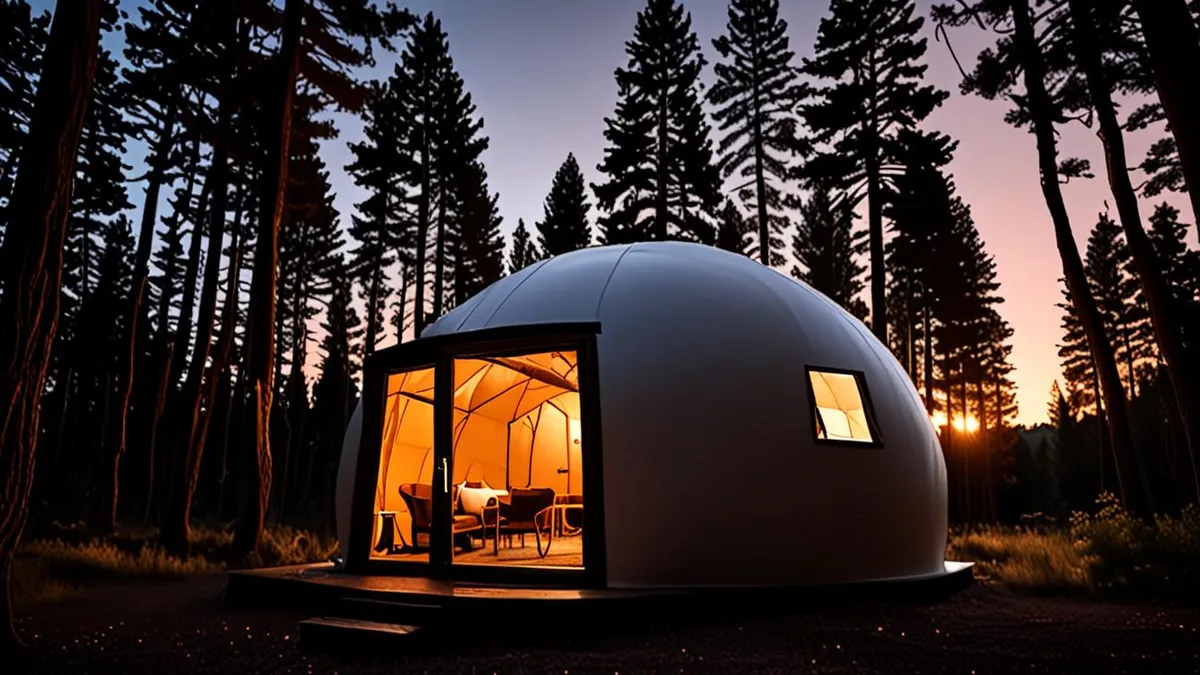
Step inside a powered glamping tent and the lighting is usually the first thing you notice, because it feels designed rather than improvised. The standard setup is a set of pre-wired LED fixtures at 5-15 watts each, controlled by wall switches or dimmers. Because LEDs use only a fraction of the power of older incandescent bulbs, sites can run several fixtures at once without straining even a modest solar-battery system. Dimmers are common for good reason: they let you drop the light to a soft glow for evening reading or a late-night trip to the bathroom without waking the whole tent.
Why the light is always warm-white
Most glamping interiors use warm-white light of 2700-3000 kelvin, and the choice is deliberate. That color temperature produces the amber, fireside tone people associate with relaxation, and it avoids the harsh, clinical feel of cool-white office lighting. It also matters outdoors: bright blue-white light spills out of tents and washes out the night sky, while warm light keeps dark-sky views intact for anyone stargazing from their tent under dark skies.
Beyond the fixed fixtures, the extras vary widely from site to site. Some tents add string lights along the canvas, a bedside reading lamp or a dimmable lantern you can carry outside. Others keep things minimal and expect you to bring your own reading light. These layers are charming but not guaranteed, so if you read or work in the tent after dark, it is worth confirming exactly what lighting is provided when you book.
Staying Charged: Devices, Batteries and Backup
Even the best-powered glamping tent has a limited electricity budget, especially on solar sites where a string of cloudy days can trim what the batteries can spare. Tent circuits are sized for lighting and device charging, not for running everything you own at once, so a little preparation in your bag means you never have to ration your phone or sit in the dark after sunset. Here is how to stay charged from check-in to checkout.
- Pack a 10,000-20,000 mAh power bank. A fully charged bank in this range recharges a typical phone 2-5 times, which is plenty of buffer if the tent sockets are reserved for essentials or the solar batteries run low after gray weather. Charge it fully before you leave home so it is ready on arrival.
- Charge during daylight hours. On solar-powered sites, the battery bank is fullest in the afternoon, so plug in phones and cameras while the sun is up rather than waiting until evening when everyone else does.
- Use shared sockets as a top-up. Many sites offer charging points in a reception building or communal lounge. Treat these as a backup for slow overnight charging rather than your main supply, and unplug promptly so other guests can use them.
- Carry short cables and a car charger. A short cable is easier to manage on a bedside shelf, and a car charger covers road trips and any stopovers along the way. If you are traveling in the off-season, our guide to packing for a shoulder season glamping trip covers the extras worth bringing.
- Bring a small headtorch. It keeps both hands free for zipping doors, finding gear or walking to the washrooms after dark, and it doubles as an emergency light if anything fails. A spare set of batteries or a second cheap torch is smart insurance.
None of this takes up meaningful space in a duffel bag, and together it removes almost every charging headache a powered tent can throw at you. You will spend your evenings relaxing instead of hunting for an outlet.
Off-Grid and Solar-Powered Sites: What to Expect
Off-grid glamping sites are a different beast from tents plugged into the grid. A genuinely solar-powered site pairs its panels with 12-volt battery storage, and that storage is sized for a specific job: evening lighting and device charging. It is not designed to run a hairdryer at midnight or keep a mini-fridge humming around the clock, so your expectations should match the setup.
Generators and quiet hours
On eco-focused sites, generators are either absent altogether or restricted to set hours, and they are typically quiet inverter models rather than the loud construction-site variety. If a site does run one, it is usually to top up battery banks after several overcast days. Ask when, and how often, so you know whether your mornings will come with a low hum in the distance or pure birdsong.
How to spot a real solar site
The best indicator of a serious off-grid operation is transparency. Sites that publish their energy setup openly, including panel capacity, battery storage and any generator backup, have usually put real thought into the system. Vague green claims with no detail behind them deserve more skepticism. A site that explains its power honestly is also far more likely to tell you plainly what you can and cannot plug in, which makes planning your stay much easier.
Questions to Ask Before Booking a Powered Tent
The fastest way to avoid disappointment at a glamping site is to ask a few pointed questions before you book. Power setups vary enormously between operators, and listing pages rarely spell out the details that actually matter. Photos show cozy interiors and string lights, but they tell you nothing about whether the sockets will run your gear or how bright the interior really gets after dark. A five-minute email or phone call can settle everything from whether your CPAP machine will work overnight to whether you will be reading by adequate light, and it saves you from packing gear you will not need or leaving behind things you will.
- Mains or solar-battery power? A direct mains hookup behaves like home electricity, while a solar-battery system has tighter limits. Knowing which one you have tells you how freely you can charge devices.
- How many USB or plug points are there? A tent with two USB ports fills up fast for a couple with phones, cameras and a tablet. Ask for the actual count so you know whether to bring a small multi-port charger.
- Is heating electric or wood-fired? This matters most in cooler months. Electric heating draws heavily on the system and may be limited or unavailable on solar sites, while a wood stove keeps the tent warm without touching the power budget at all.
- What are the lighting levels like? If you read in bed or work from the tent, ask whether fixtures are bright enough and adjustable, since warm ambient lighting alone can be too dim for close work.
- Is there shared charging as a fallback? Communal sockets in a reception or lounge area are your safety net if the tent system runs low, so confirm they exist and where they are.
Operators who answer these questions clearly and without hesitation are usually the ones running well-designed, honestly described systems. Hesitant or vague answers are a useful signal to pack extra backup, ask to speak with someone on-site, or simply look elsewhere for your trip.
The Bottom Line on Power at Glamping Tents
So, will you have power in that glamping tent? In most cases, yes — but with realistic expectations. Powered tents draw on a mains hookup, a solar array or an on-site battery bank, and those systems are sized for lighting and device charging rather than heavy appliances like hairdryers or heaters. Warm LED fittings, USB ports and 12-volt sockets are the norm, and tents with a full electric hookup and heating typically cost 10-30% more than unpowered ones at the same site.
The gaps are easy to cover. Pack a power bank, bring a small headtorch as backup, and ask a few booking questions about the power source, the heating and the shared charging facilities. Do that, and any powered tent becomes predictable rather than a gamble. If this helped you plan your trip, leave a comment or share the article with a fellow traveler.