Geodesic dome holidays have exploded in popularity, and it is easy to see why. From the outside, these domes look like futuristic bubbles dropped into a meadow or forest clearing. But many travelers hesitate before booking one, wondering whether a curved canvas shell can really keep them warm and dry through a night of rain, wind or frost.
The short answer is that a well-built dome handles weather better than most people expect, and the details are in the engineering. In this article, we look at what makes the geodesic shape so strong, how these domes are actually assembled on site, and how insulation layers and heat sources keep the inside cozy in winter. We also cover ventilation and condensation, what the interior layout typically offers, the best times to book, and how to decide whether a dome stay suits your style of travel.
What Is a Geodesic Dome and Why It Works
A geodesic dome is built from a network of triangles, and that geometry is the secret to its strength. Triangles are the most stable shape in construction, so when the whole shell is made of them, weight and stress spread evenly across the structure. That is why domes cope so well with strong wind and heavy snow: there is no single weak point carrying the load.
Why the curved shape matters
The smooth, rounded surface does more than look striking. Rain runs off the curve instead of pooling, and because there is no flat roof, there is no flat surface where water can gather and eventually leak. Wind also flows around the curve rather than pushing against a flat wall, which is why domes feel surprisingly stable in exposed spots.
The sphere has another practical benefit: heating efficiency. A dome holding the same floor area as a rectangular tent encloses noticeably less air volume, so there is simply less space to warm up. Pair that with insulation and a heat source, and the interior warms quickly and holds its temperature well. Typical domes range from about 3 to 7 meters in diameter, sleeping between 2 and 5 guests, which keeps that air volume modest and the atmosphere snug.
How Geodesic Domes Are Built
Despite their space-age look, geodesic domes are refreshingly straightforward structures. Most are assembled from a handful of core components — a frame, a weatherproof shell and an insulated interior — and put together on a prepared site by a small crew. You do not need heavy machinery or a concrete foundation, which is one reason domes appear in places a traditional cabin never could, from forest clearings to clifftop meadows. Here is how the build typically works, step by step.
- Prepare the site and build the deck. A raised wooden platform is constructed first, keeping the dome off damp ground and giving it a level, dry base. Many sites also run plumbing or electrics through this deck, so bathrooms, lighting and heating can be connected without visible cabling across the floor.
- Assemble the frame. Struts made of galvanised steel, aluminium or timber are bolted together at triangular hubs, working from the base upward until the dome shape closes at the top. Because the panels repeat, crews become quick at matching each strut to its position.
- Fit the shell panels. Panels of PVC-coated polyester are zipped or clipped over the frame, with clear polycarbonate windows added where panoramic views or extra daylight are wanted.
- Add insulation and interior fittings. Liner layers go in under the shell, then flooring, furniture and heating are installed to turn the shell into a guest-ready space.
For a single unit, site setup usually takes 1 to 3 days with a small crew, though this varies with dome size, weather and how remote the location is. Larger diameters and awkward access — a steep track, no vehicle route to the platform — can stretch the schedule, so operators often plan installation outside peak season. Once up, a dome needs relatively little maintenance compared with many other glamping structures: there is no flat roof to clear, and the shell can be cleaned and checked between guest stays. That combination of quick setup and low upkeep is part of why so many operators have adopted them.
Insulation: How a Dome Stays Warm in Winter
The question every cold-weather traveler asks is simple: can a canvas bubble really stay warm when the temperature drops? The answer lies in the layers between you and the outside air. Under the outer shell, quality domes fit insulated liner layers, thermal bubble blankets or wool batting. These create an insulating air gap that slows heat loss dramatically compared with a single layer of canvas.
How warm is warm enough?
Typical liner setups reach R-values of around 3 to 6. That may sound modest next to a house wall, but combined with a heat source it is enough to keep a dome comfortable through sub-zero nights. Because a dome encloses less air than a rectangular structure of the same floor area, that insulation has less volume to protect, so the space heats up quickly.
Wood stoves are the classic heat source and remain the most atmospheric option: a small stove in the corner, a stack of logs outside, and the dome stays toasty for hours. Some sites add electric heaters for convenience, and the more upscale operations run underfloor heating through the wooden deck, which keeps feet warm on frosty mornings.
If you are weighing up a winter trip, it helps to understand how these structures compare with tents more broadly. Our guide to how cold glamping really gets in winter covers what to expect and how to prepare for a cold-season stay.
Ventilation, Condensation and Year-Round Durability
Anyone who has slept in a tent knows the morning dampness that comes from a night of breathing under canvas. Domes face the same physics: warm, humid air from sleepers, cooking and a wood stove rises, hits the cold shell and turns to condensation. Well-designed sites handle this with two tools working together: breathable liner layers that let moisture pass through, and roof vents or chimney openings that let humid air escape at the top, where it naturally collects.
If a dome smells musty or the windows are dripping in the morning, ventilation is not doing its job. Before booking in cooler months, it is fair to ask the site how they manage airflow in winter. Good operators will have a clear answer; vague ones are a warning sign.
Durability depends mostly on the shell fabric. With proper UV treatment, a quality PVC cover typically lasts 8 to 15 years before replacement, so a well-run site rotates shells on a schedule rather than waiting for failures. Ask when the shell was last replaced if the listing photos look faded.
- Four-season domes are engineered and rated for specific snow loads, so they can stay open through winter storms that would flatten a summer tent.
- Summer-only models use lighter fabric and a simpler frame, which makes them cheaper to book but unsuitable for snow or heavy autumn wind.
- Shoulder-season stays, especially in autumn, put less strain on ventilation because cooler nights reduce the temperature gap between inside air and the shell.
- Vents work best when left slightly open even in cold weather; closing everything tight to keep warmth in usually makes condensation worse.
For a closer look at why the cooler months suit dome stays, see this guide to glamping in autumn and what to pack.
Inside a Dome: Layout and Amenities
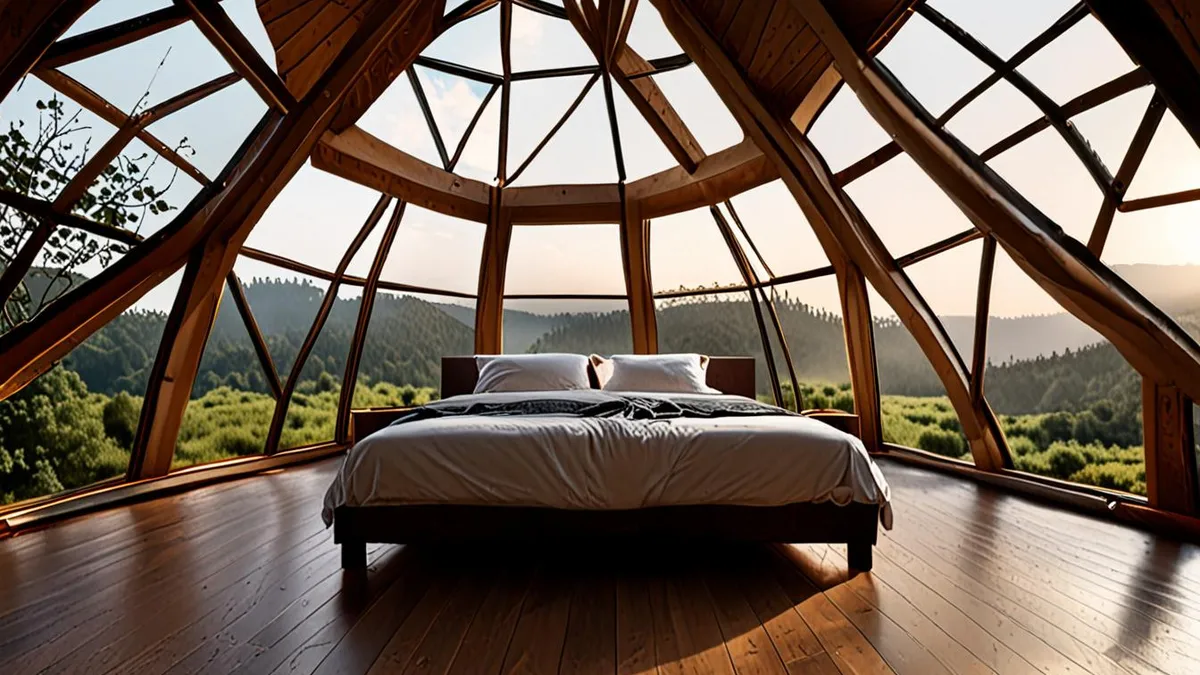
Step inside a geodesic dome and the first thing most people notice is how un-tent-like it feels. The curved walls eliminate corners, so the open floor plan makes even a 4-meter dome feel generous. The bed is usually centred or set against the curved rear wall, most often positioned to face a large panoramic window looking out over the view the site was chosen for.
That window is the heart of the experience. Waking up to a valley, a lake or a forest without leaving the duvet is the reason many travelers pick a dome over a cabin. At upscale sites, the basics expand quickly: en-suite bathrooms, small kitchenettes and private hot tubs on the deck are common upgrades, and they shape the price as much as the location does.
Overhead, many domes add a skylight or clear panel directly above the bed. Lying back and watching stars through the shell, with the stove ticking beside you, is the detail guests mention most in reviews.
- Most domes accommodate between 2 and 5 guests, with diameters typically spanning 3 to 7 meters, so check capacity before assuming a dome fits a family.
- En-suite bathrooms usually mean a composting or macerating toilet and a compact shower, since domes sit on decks off-grid from mains plumbing in many cases.
- Kitchenettes typically cover a two-burner hob, a small fridge and basic cookware rather than a full oven, so plan meals accordingly.
- Hot tubs on private decks are usually wood-fired or electric; wood-fired models need lead time to heat, so ask the site how it works.
- Blackout options vary: the clear stargazing panel is atmospheric but lets in early light, so light-sensitive sleepers should pack an eye mask.
To compare what different sites offer, this explainer on glamping amenities from hot tubs to kitchens breaks down what each feature actually means in practice.
When to Book a Geodesic Dome Holiday
Timing shapes both the price and the atmosphere of a dome holiday. Peak season runs from June to September, when the weather is most reliable and every site is fully open. Summer weekends in particular sell out early, so book 3 to 6 months ahead if you have specific dates in mind, especially for popular regions or domes with the best views.
Why shoulder season works
April-May and October offer a different kind of stay: lower rates, quieter sites and landscapes that look their best at the edges of the season. Thanks to insulated liners and a wood stove, a four-season dome is genuinely comfortable on a chilly October night, and many guests prefer the crisp-air-and-cozy-interior combination to a warm summer evening. Check that your chosen site stays open outside peak months, as some smaller operators close between seasons.
What you can expect to pay
In Europe, dome holidays typically cost 100 to 300 euros per night for two people. The lower end covers simple summer domes on shared sites, while the upper end buys private decks, en-suite bathrooms and standout locations. Extras such as hot tubs and panoramic or stargazing positions usually push the price above the base rate. If your dates are flexible, comparing the same site across two months often reveals a meaningful difference for an identical dome.
Is a Dome Stay Right for You?
So, can a curved canvas bubble really keep you warm and dry? The short answer is yes, when it is built well. A geodesic dome gives you the close-to-nature feeling of camping under canvas, but with proper insulation, a wood stove or electric heater, and a raised deck keeping you off the damp ground. It is far closer to a cozy cabin than a leaky tent.
What matters most is not the price tag but the spec: the structure, the insulation layer and the amenities on site determine how comfortable your night will be. Match the season and the site’s specification to your trip before booking, and a dome stay can be one of the most memorable nights you spend on holiday. If you have slept in a dome yourself, share your experience in the comments or pass this article along to a fellow traveler.