Finding a lodge that genuinely welcomes both dogs and young children is harder than it looks. Plenty of sites advertise themselves as pet friendly, yet quietly cap the number of dogs, restrict them to hard floors or charge fees that only appear at checkout. Others are wonderful with dogs but fall short on cots, stair gates or a garden you can safely let a toddler loose in. Lodge breaks for groups need to work for every member of the party, paws included.
This guide walks through exactly what to check before you pay a deposit. We cover pet policies and what they really allow, child-friendly layouts and sleeping space, outdoor fencing and safety, booking timing and group costs, the kitchen setup for self-catering a big group, and location and on-site facilities for mixed ages. We finish with a pre-booking checklist you can run through before committing, so nothing important gets left to chance.
Pet Policies: What Lodge Breaks for Groups Really Allow
Start with the small print on pets, because this is where most group bookings go wrong. Many pet-friendly lodges cap dogs at one or two per booking, which is a problem if two families are traveling together with a dog each. Ask directly whether the limit applies per lodge or per booking, and whether any breeds or sizes are restricted, as some sites exclude certain breeds or set weight limits without advertising it clearly.
Money matters come next. Expect a pet charge of roughly £20-£50 per dog per stay at many sites, and check whether it is included in the quoted price or added at checkout. House rules vary too: some lodges let dogs on sofas and beds with covers down, while others restrict them to hard floors or specific rooms.
Questions worth asking before you book
One of the most important questions is whether dogs can be left alone in the lodge. Most sites prohibit it outright, which affects your plans for days out, so confirm this before assuming you can pop out for a meal. The extras are also telling: dog bowls and towels waiting on arrival, an off-lead exercise area on site, or walking routes straight from the car park all signal a site that genuinely welcomes dogs rather than merely tolerates them.
Child-Friendly Layouts and Sleeping Space
That “sleeps 8” label can hide a lot. Family lodges typically sleep 6-8 people across 2-3 bedrooms plus a sofa bed, so count the real beds before you commit. A sofa bed should be a spare option, not a main bed. If two of your group will be sleeping on a creaky pull-out in the living room while parents pace past with a baby monitor, the layout matters far more than the headline number. Ask the site exactly how many proper beds there are, what size they are, and where the sofa bed sits in the floor plan. For a detailed breakdown of what to look for, this guide to lodge beds and sleeping arrangements covers the details worth checking before booking.
Bedroom separation is the other big one. Toddlers need a dark, quiet room away from the open-plan living area, especially if the adults want to talk, cook or play games after bedtime. A lodge where every bedroom opens onto the kitchen means early nights for everyone or restless little ones by nine. Look for a layout where bedrooms sit down a short hallway, and check whether walls between rooms are solid rather than thin partitions. It is also worth asking which bedroom holds the sofa bed, since that room often doubles as the route to a bathroom or terrace. One quick phone call before booking can save your group a week of shuffling beds, closing doors and tiptoeing around naps.
- Cots and highchairs: these are often available on request rather than as standard, so ask when booking rather than assuming one will be waiting.
- Bunks and twin rooms: bunks work well for cousins and siblings, but check weight limits on the top bunk if older children will use them.
- Stairs and levels: if you have children under five, confirm the lodge is single level or that stair gates can be fitted, since some open-tread designs make gates impossible to install.
- Blackout potential: check whether bedroom blinds or curtains block out light, as summer evenings in rural areas stay bright well past toddler bedtime.
Outdoor Space, Fencing and Safety Checks
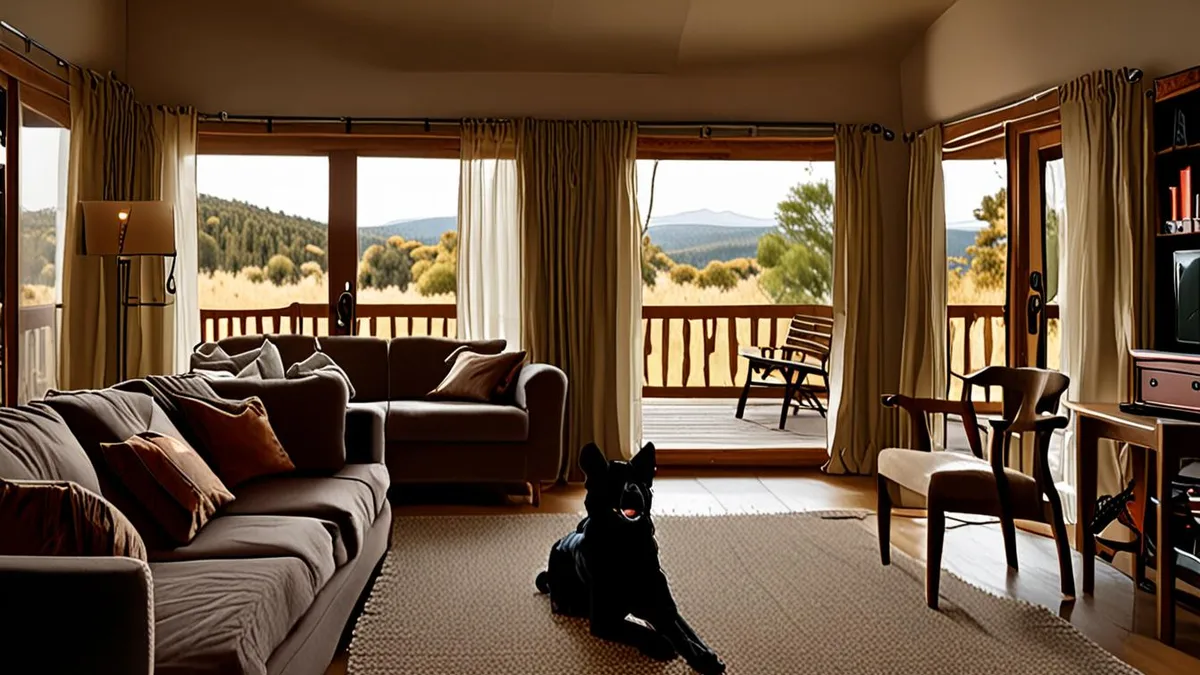
Outdoor space can make or break a lodge break with dogs and small children, and the honest truth is that fully fenced decks or enclosed gardens appear on only a minority of listings. Filter for them specifically, because a deck that opens straight onto a lake or an unfenced field changes how much relaxing anyone does. A secure enclosure lets the dog out for a wee without a lead ritual and lets a toddler potter while you cook.
Water proximity deserves a hard look. Lakeside lodges look idyllic in the photos, but with small children and dogs you will need constant supervision near the shore, so decide whether that trade-off suits your group before booking on views alone.
Hot tubs, fire pits and driveways
If a hot tub is on your wishlist, ask whether it has a lockable cover, since an open tub is a genuine hazard with curious toddlers around. There is more on this in this guide to what to check before booking a lodge hot tub. Also ask whether fire pits and barbecues sit well back from play areas, and check the driveway and parking arrangements. A shared lane with passing cars matters a great deal once you have a free-roaming toddler and a dog that bolts for anything moving.
Booking Timing, Deposits and Group Costs
The single biggest mistake groups make is booking too late. Larger family lodges that sleep 6-8 people are the first to go, and for school holiday weeks you typically need to book 6-12 months ahead to get the layout you actually want. If you have your heart set on a specific site, ask when they release dates for the following year and set a reminder.
Next, budget for the extras. Group and pet-friendly bookings commonly require a refundable damage deposit of £100-£250, held on your card and released after your stay if nothing is broken. With several kids and at least one dog in the mix, assume some wear and tear and keep that money aside rather than treating it as spent.
Timing also changes what you pay. Peak summer weeks can cost 50-100% more than off-peak January or February breaks, so it pays to compare alternatives. May half-term or a September weekend often delivers similar weather, quieter sites and a noticeably smaller bill, and dogs are usually easier to accommodate outside the busiest weeks too.
Finally, read the small print on what is included. Some quotes cover bed linen, towels and dog charges; others add them at checkout, which can shift your total more than you expect. Our guide to what you pay beyond the advertised rate breaks down these add-ons in detail, so you can compare lodges on true cost rather than headline price.
Kitchen and Self-Catering Setup for Big Groups
When you are cooking for 6-8 people twice a day, the kitchen matters more than the hot tub. The first thing to check is appliance scale, because some lodges are fitted with apartment-sized ovens and fridges that struggle with a roast dinner and a carton of milk, let alone a week’s shopping for a big group.
The washing-up question is just as important. A group meal without a dishwasher means someone spends half the evening at the sink, and on a group break that someone is usually whoever drew the short straw. If there is no dishwasher, look for two sinks or at least generous counter space to make the chore bearable.
Seating is the detail people forget until the first dinner. Confirm the table genuinely seats your whole group at once, and ask whether a highchair can be added for a toddler. Then think about the aftermath of walks in the rain.
- Washing machine: essential on stays of several nights, when muddy dog towels, wet coats and children’s clothes pile up faster than you can pack spares.
- Drying space: check for a tumble dryer, heated airer or a proper airing cupboard, because a radiator covered in socks helps nobody.
- Bin capacity and recycling: a week of nappies, food packaging and dog food tins overwhelms a small kitchen bin, so ask if spares or outside bins are provided.
- Basic kit: confirm there are enough pans, sharp knives and large serving dishes for group cooking, since many lodges are kitted out for couples.
Location and On-Site Facilities for Mixed Ages
Where your lodge sits shapes every day of the trip, so start with the setting itself. Woodland sites usually mean shaded, muddy walks that dogs love, while coastal locations open up beach walks and paddling spots. Whichever you lean towards, look for good dog walking and safe paddling options within a 10-15 minute drive, because even the best on-site trails get repetitive over a week.
What to look for on site
The best sites for mixed-age groups go beyond a patch of grass. Check the listing or ask directly for a children’s play area, short waymarked trails you can manage with a toddler in tow, and an enclosed dog exercise field where your dog can run off-lead safely. Not every site offers all three, so decide which matters most to your group and prioritize accordingly.
Practical distances and wet-weather plans
Rural lodges are often idyllic precisely because they are remote, but that cuts both ways. The nearest shop, GP and vet can all be 20-30 minutes away, which is fine for a forgotten loaf of bread and less fine for a sick child or a limping dog. Note the locations before you travel rather than searching in a panic later.
Finally, plan for rain, because on a British lodge break it will come. Look for indoor fallbacks nearby such as soft play centers, swimming pools or covered attractions, and check whether the site itself has any indoor space where a group of bored children can burn off energy without driving the rest of you up the wall.
Your Pre-Booking Checklist for Dogs and Kids
Lots of lodges advertise themselves as family friendly or dog friendly, but far fewer manage both at once. Some sites welcome children yet quietly limit pets; others love dogs but frown on toddlers. Before you pay a deposit, run through a short checklist so you don’t discover the restrictions after booking.
Confirm the dog limits and any pet charges, ask about the real sleeping arrangements rather than the headline occupancy, check whether the outdoor space is properly fenced, and read the small print on the refundable damage deposit. These four checks quickly weed out the listings that only look suitable for a mixed group of kids and canines.
Once the basics are covered, match the lodge layout and location to your group’s actual ages, and remember that school holiday weeks sell out first, so reserving early makes a real difference. A lodge that ticks all these boxes turns a compromise break into a genuinely relaxing group holiday, with tired kids, tired dogs and adults who actually got a break too. If this helped you plan your trip, leave a comment or share the article with your group.