Hot tub photos sell lodge stays like almost nothing else. Steam rising off the water, snow on the trees, a glass of wine on the deck edge — it is exactly the image many of us book around. The problem is that the small print often only surfaces after the deposit is paid: the tub turns out to be shared, the cleaning schedule delays your first soak, or an extra charge appears that nobody mentioned at booking.
This guide walks through what actually matters before you commit. We will look at why lodge hot tubs vary so much between properties, how to confirm whether yours is private or shared, what to ask about hygiene and cleaning turnaround, and when a hot tub stay is genuinely worth it by season. We will also cover typical costs, deposits and booking lead times, how to match the tub to couples, families or groups, and finish with a quick checklist to run through before you confirm. Ask these questions early and the soak you pictured is far more likely to be the one you get.
Why Lodge Hot Tubs Vary So Much Between Properties
Not all lodge hot tubs are the same product, and the differences start with how the water is heated. Wood-fired tubs are the traditional option, especially at rural and off-grid properties, and they need roughly 2-4 hours to reach a comfortable temperature. Electric tubs are usually ready within 1-2 hours. That gap changes how you plan an evening: with a wood-fired tub you or the staff need to start lighting and stoking in the afternoon, while an electric tub can be a spontaneous decision after dinner.
Size matters just as much. Most lodge hot tubs hold 4-6 adults, which suits families and groups who want to soak together. Smaller 2-person tubs are common on couples’ retreats, where the emphasis is on intimacy rather than capacity. If you book a lodge for six people and find a two-seater on the deck, evenings will involve a lot of waiting turns.
Placement changes everything
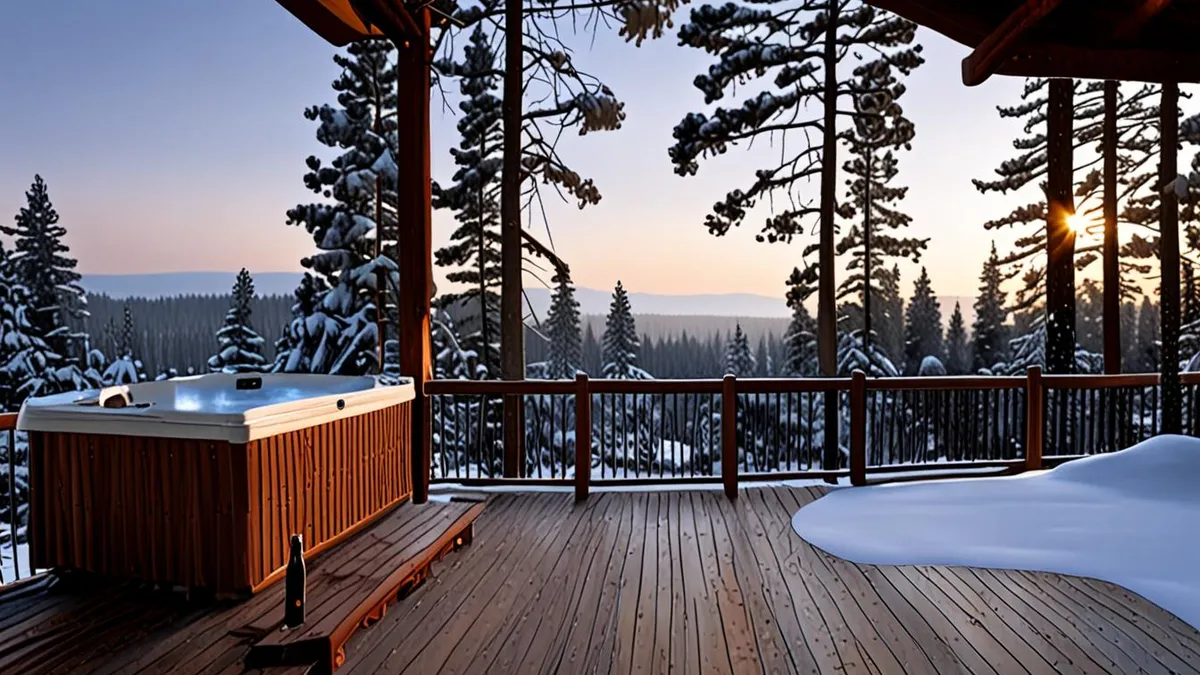
Where the tub sits affects how often you will actually use it. An open-air tub on an exposed deck can be glorious on a still evening but miserable in driving rain or wind. A covered or indoor tub keeps rain and snow off your head, though it may feel less atmospheric. In winter, an uncovered tub surrounded by snow is the classic experience, but only if the walkway to it is cleared and the heating keeps up with freezing temperatures. Ask the operator how the tub performs in wet and windy weather, and whether the placement is sheltered, before you assume the photos reflect year-round reality.
Private Deck or Shared Facility: Checking Access Before You Book
The single most common booking disappointment is assuming the tub in the listing photo is yours alone. On some properties the tub sits on your own deck and is available whenever you like. On others it is a shared facility used by guests from several lodges, which changes the whole character of the stay. Confirm this in writing before you pay anything, because listings are not always clear about it.
Access rules differ sharply between the two setups. Shared tubs are usually open roughly 8am-10pm, so late-night soaks are generally off the table. Private tubs are often available at any hour, which matters if you want a midnight soak under the stars or an early-morning dip before breakfast. The distance from your door is the other detail people forget to ask about, and it makes a real difference in winter.
- Who else has access: ask whether the shared tub serves all lodge guests on the property or only a subset, and roughly how many other parties use it during a typical week.
- Booking slots for shared tubs: some operators ask guests to reserve hourly slots so nobody waits; find out how the rota works and whether you can book your preferred evening time.
- The walk itself: ask whether the path to the tub is lit, paved or gravel, and whether robes and towels are provided, since a short hop feels very different from a long trek in freezing conditions.
- Weather exposure en route: a tub across an open field may be unreachable in heavy rain or snow, while one under a covered walkway stays usable whatever the sky is doing.
None of these details are dealbreakers on their own, but together they decide whether the tub becomes the highlight of your stay or an occasional inconvenience. Ask before booking, not after arrival.
Hygiene, Cleaning and Turnaround Times
Hygiene is the part of a lodge hot tub stay that most travelers never think about until something looks wrong. The reassuring news is that most operators drain, clean and refill the tub between guest stays. The practical catch is timing: that process can take 4-8 hours before the tub is ready for use. If you arrive at 3pm expecting an immediate soak, you may be looking at a full tub of water that is still heating, or no water at all. Ask the operator when the tub will be ready on your arrival day and plan your first evening around the answer.
Daily maintenance versus between-stays cleaning
A between-stays clean is not the same as daily care. Water testing and chemical balancing should ideally happen every day during your stay, not only when new guests arrive, because a tub used by several people over a week drifts out of balance quickly. Ask directly whether staff test the water daily or only between bookings, and how you will know it has been done.
Two smaller questions round out the picture. First, ask about shower-before-use rules; many operators require them because lotions, sunscreen and cosmetics upset the chemical balance fast, and knowing in advance avoids an awkward conversation. Second, ask whether covers are locked overnight. A locked cover keeps debris and wildlife out of the water, protects children and pets, and is a good sign the operator takes the tub seriously. Operators who can answer all of these questions confidently are usually the ones whose tubs you will actually want to climb into.
Season and Climate: When a Lodge Hot Tub Is Worth It
The season you travel in can make or break a lodge hot tub experience. Winter is when the classic image comes true: steam rising off the water while snow settles around you. For that to work in practice, the property needs covered walkways so you can reach the tub without wading through drifts in a robe, and a heating system that keeps the water at temperature in genuinely cold conditions. Ask the operator directly how the tub performs in freezing weather, and if you are considering a snowy destination, our guide to winter lodges in Sweden for snow travelers covers what to expect from cold-climate stays.
Summer is a different calculation. An open-air tub in direct midday sun can push water temperatures uncomfortably high, turning a soak into something closer to a warm bath you cannot escape. Shaded tubs or evening soaks work far better in warm months, and many guests find a twilight dip after a day of hiking is the best use of a summer tub.
The shoulder-season sweet spot
If you have flexibility, consider late spring or early autumn. Months like May-June and September-October often combine weather that is still pleasant enough for an open-air soak with rates that can run 30-50% below peak. You get the tub, the view and the quiet, without the top-tier price or the deep-cold logistics of a winter booking.
Costs, Deposits and Booking Lead Times
Hot tub lodges rarely cost the same as standard lodges, and the premium can be significant in peak season. The fairest way to judge value is to compare like-for-like dates: a hot tub lodge in July against a standard lodge in July, not against its own off-season price. That comparison tells you whether the tub is genuinely worth the surcharge for your trip, rather than making the tub look expensive or cheap against a season you were never going to book anyway.
Deposits are the other number to pin down. Some owners ask for a refundable cleaning or damage deposit of roughly £50-150, returned after your stay once the property has been inspected. Get the exact amount and the refund terms in writing before you pay anything, so there is no dispute over a scuffed deck or a missing cover strap later. Ask whether the deposit is taken as a separate payment or held against the main booking, and who carries out the inspection.
Timing matters too. Summer hot tub lodges are best booked 3-6 months ahead, while winter and festive dates often require 6-12 months of lead time, as the best tub-equipped lodges sell out first for Christmas and New Year weeks.
- Wood charges: if the lodge has a wood-fired tub, ask whether firewood is included or billed per use, and roughly how much wood a single evening’s soak consumes so you can budget the extra.
- Deposit refund timing: confirm when the refund is processed after checkout, since some owners wait until after a cleaning inspection, which can mean days or weeks before the money lands back on your card.
- Minimum stay rules: some hot tub lodges enforce longer minimum stays at weekends or during holidays, which affects whether a short break is even possible at the price quoted.
Matching the Tub to Your Trip: Couples, Families and Groups
The right tub depends on who is traveling with you, and it is worth matching the setup to your group before you commit.
Couples
For a romantic break, prioritize a private 2-person tub on a screened deck. The screening is the detail that makes the difference: an open deck with a view of neighboring lodges is not the same as genuine seclusion, so ask for photos of the actual sightlines rather than relying on wide-angle marketing shots.
Families
With children, the questions change. Confirm the operator’s child supervision policy, including any minimum age rules for the tub, and check whether lockable covers are fitted. A lockable cover is not just about heat retention; it prevents unsupervised access between soaks, which matters enormously when young children are staying in the lodge with you.
Groups
For groups of six or more, do the math on capacity. Most lodge tubs hold 4-6 adults, which means a group of eight cannot realistically all soak at once. Ask whether the property has a second tub, or whether a rota system is workable given how long the water takes to stay warm and how your evenings are structured. A group that plans its evenings around two tub shifts will have a far better time than one that assumes everyone fits in together.
Quick Checklist Before You Confirm Your Lodge Booking
Before you pay that deposit, run through the essentials one more time. Confirm the tub is genuinely private, ask when the water will be ready on arrival day given the 4-8 hour cleaning turnaround, and check the heating type so you know whether an evening soak needs planning ahead. Ask about any deposit of £50-150, and match your travel season to the tub setup. Book 3-6 months out for summer stays, or 6-12 months for winter and festive dates when demand is highest.
One last habit that saves the most headaches: get every hot tub promise in writing before your money changes hands. Private access, cleaning schedules and extra charges all mean far less as verbal assurances than as lines in your booking confirmation. If a host hesitates to put those details in an email, treat that as useful information in itself. Found this helpful, or learned something the hard way? Leave a comment or share this article with someone planning a lodge escape.