Many travelers book a lodge for four people, arrive tired after a long drive, and discover that “sleeps 4” means one double bed and two singles crammed into a single open-plan space. There are no separate bedrooms, no doors to close, and suddenly the trip feels very different from the photos. Lodge beds and sleeping arrangements vary far more than hotel rooms, and the listing description rarely tells the whole story.
This guide walks you through what to check before you pay. We explain why lodge layouts differ from hotel rooms, which bed sizes and configurations to confirm, what families with children should look for, and how to handle loft beds, mezzanines and other unusual sleeping spaces. You’ll also find practical advice on verifying the setup with your host in writing, matching the sleeping arrangement to your trip type, and a final checklist of checks to complete before booking. A few messages sent in advance can save your group from a week of awkward sleeping.
Why Lodge Beds and Sleeping Arrangements Differ from Hotel Rooms
The biggest difference between a lodge and a hotel room is how the sleeping space is organized. Hotels give you separate rooms with doors; lodges often mix a double bed with singles, bunks or a sofa bed in one open-plan living space. In a studio-style lodge, the “bedroom” may simply be the corner of the living area where the double sits a meter from the kitchen counter.
This matters most when you look at maximum occupancy. That number counts every sleeping surface, not every comfortable bed. A lodge advertised as “sleeps 6” may mean 2 people in a double, 2 in singles and 2 on bunks, with the bunks tucked into a hallway alcove. Nobody is sleeping on the floor, technically, but the experience can be far from what your group imagined.
Why privacy is the real issue
Open-plan sleeping means less privacy, and this is where groups run into trouble. Two couples sharing one open space will hear each other’s alarms and evening conversations. Groups of friends may find that the only “private” spot is the sofa bed in the living room, which doubles as the seating area everyone uses until midnight. Before booking, think honestly about who in your group needs a door that closes, and treat that as a requirement rather than a nice-to-have.
Bed Sizes and Configurations to Confirm Before Booking
Bed sizes in lodges are not standardized, and photos rarely show true scale. A double bed photographed from above can look enormous, but standard lodge doubles in Europe typically measure 140-160 cm wide, and a true king is 180 cm. If you and your partner are used to a king at home, a 140 cm double for a week is a real difference, so ask the host directly which width you’re getting.
Single beds are typically 90 cm wide, which is fine for adults, but confirm whether they are fixed beds or fold-outs. A fold-out or stacking bed in a corner is rarely as comfortable or stable as a proper frame. If bunks are listed, ask whether they are adult-rated or child-sized, because a child-sized bunk will not hold an adult comfortably or safely.
- Room-by-room layout in writing: Ask the host to list which beds share a room, not just how many beds exist. Two singles in a separate room is a very different setup from two singles in the corner of the living area.
- Distance between beds: In open-plan lodges, ask how far apart the sleeping surfaces are. Beds separated by a partition wall offer more privacy than beds in one continuous space.
- Mattress type and age: Ask whether mattresses are sprung or foam and how recently they were replaced, since older foam mattresses in group lodges can sag noticeably.
- Bedding and towel confirmation: Ask at booking whether linen is included. Many self-catering lodges charge 10-20 EUR per person for linen hire, which adds up for a large group.
Get these answers before you pay, not after arrival. A host who responds clearly and specifically at the booking stage is also a good sign of how the whole stay will go.
Sleeping Arrangements for Families with Children
Bunk rooms are the classic family lodge setup, and they work well for children under 12. Kids generally love bunks, and a dedicated bunk room gives siblings their own space. The same layout is far less comfortable for teenagers or adults, though: bunks are usually shorter and narrower than standard singles, the top bunk has limited headroom, and climbing a ladder at night loses its charm quickly. If your group includes teens, ask for proper single beds instead.
Cots, high chairs and early reservations
If you travel with a baby or toddler, check whether cots and high chairs are available free or on request. Some lodges include them at no charge, others rent them, and some have only one or two on site for the whole lodge complex. Whatever the arrangement, reserve them in advance and get the confirmation in writing, because arriving to find no cot means someone’s sleeping arrangement changes on night one.
The value of a separate kids’ bedroom
Family lodges with a separate kids’ bedroom are worth seeking out. Once children are asleep behind a closed door, adults can keep their evening hours: cooking a proper dinner, playing cards or talking without whispering. In an open-plan lodge, the alternative is going to bed when the kids do or tiptoeing around a room where two of those sleepers are children. If evenings matter to you, make a separate children’s room a filter in your search, and confirm the layout with the host before booking rather than trusting the photos.
Loft Beds, Mezzanines and Unusual Sleeping Spaces
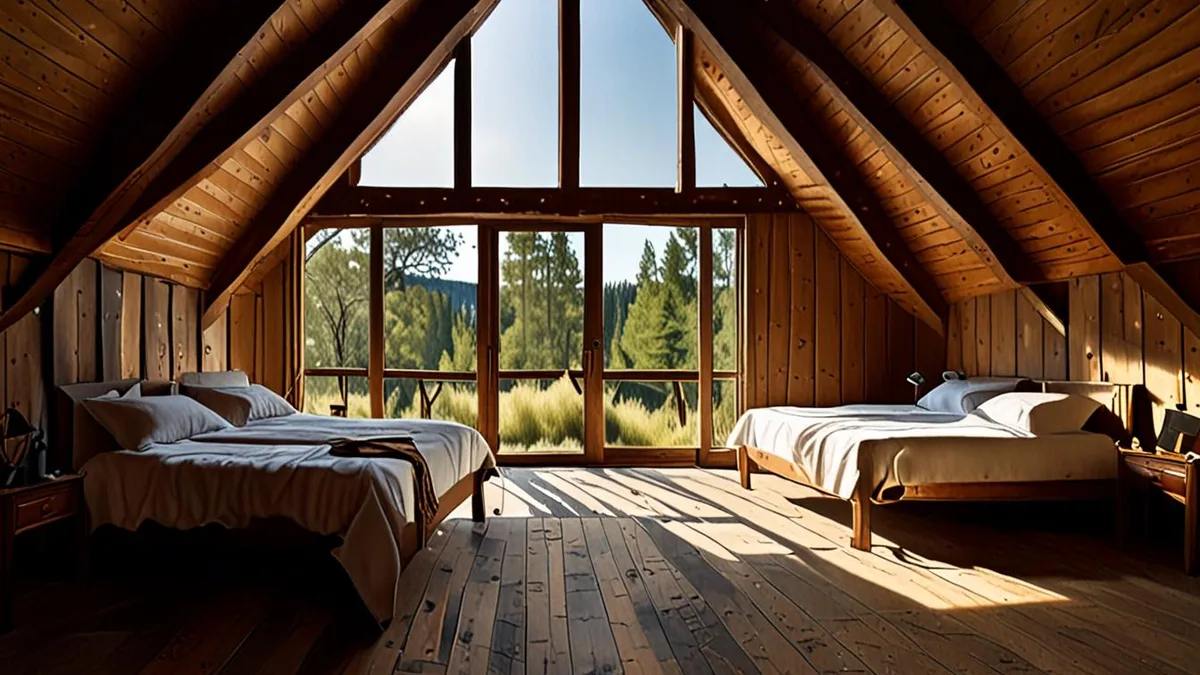
Scandinavian-style lodges love lofts and mezzanines. A bed tucked under the roofline looks charming in photos and makes clever use of a small footprint, but the practical details rarely appear in the listing. Many loft and mezzanine sleeping areas have limited standing height, often under 1.8 m, which means most adults spend their time in the loft bent over or sitting on the bed.
Access matters just as much as headroom. Some lofts are reached by steep fixed ladders rather than stairs, and that changes who can realistically sleep there. A ladder climb is awkward at the best of times, and it becomes a real problem in the dark at 2 a.m. when someone needs the bathroom.
Who a loft actually suits
Loft beds work best for flexible, able-bodied adults who don’t mind climbing and can tolerate low ceilings. They are a poor match for young children, older guests, anyone with limited mobility, or light sleepers who get up during the night. If your group includes any of these, ask for a ground-floor or stair-accessed bed instead.
Also watch for converted sleeping nooks: spaces carved out of alcoves, former storage areas or partitioned corners. These sometimes have no window at all, which affects natural light, airflow and how easily people wake up in the morning. A windowless nook can feel stuffy and disorienting, especially for guests who like to wake with daylight. Ask the host directly whether each sleeping space has a window and how high the ceiling is at its lowest point.
How to Verify the Setup with the Host Before You Pay
Most booking disputes over lodge beds come down to one thing: the listing showed a photo, not a fact. A photo of a bright main bedroom tells you nothing about the width of the double, the state of the bunks or how low the loft ceiling really is. A short, well-timed conversation with the host fixes that before any money changes hands. Here’s how to do it properly.
- Time your message 2-4 weeks before arrival. This is late enough that your booking details are settled and early enough to change lodge or adjust your group if the answers don’t work. Asking months ahead often gets vague replies because the host hasn’t prepared the lodge yet and may not even be sure which unit you’ll be given.
- Ask for the bed configuration per room in writing. Request a simple room-by-room breakdown: which beds are in which space, which beds share a room, and where the sofa bed sits. A written answer gives you something to fall back on if the lodge doesn’t match the listing, and it makes the host think carefully rather than reply from memory.
- Ask specific questions, not general ones. “Is it big enough?” gets a yes from everyone. Instead ask the width of the double bed, whether singles are fixed beds or fold-outs, whether the sofa bed counts toward the stated occupancy, and whether bedding and towels are included or charged as an extra. Vague questions get vague answers, and you’ll only discover the truth when you unpack your bags.
- Request recent photos of every sleeping area. Listings usually feature the main bedroom because it photographs best. Ask for current photos of the bunk room, the loft, the sofa bed and any nook, ideally taken within the last season. If a host hesitates to send photos of a sleeping area, treat that as information in itself.
Keep the whole exchange on the booking platform’s messaging system rather than by phone. That way the written answers stay attached to your reservation, and you have a clear record if anything at the lodge doesn’t match what you were told. If a host insists on calling instead, politely explain that you prefer written confirmation for your own records, then summarize the call in a follow-up message so the key details are documented anyway.
Matching Sleeping Arrangements to Your Trip Type
The right sleeping setup depends entirely on who is traveling and why. A layout that delights a family with three kids can ruin a couples’ weekend, and a lodge that works in summer can frustrate a ski group. Match the beds to the trip before you book, not after you arrive.
Couples should look for lodges with one proper bedroom and a real bed rather than a studio where one of you ends up on a sofa bed. Sofa beds in lodge living areas are typically 120-140 cm wide and best suited to one adult or a child, which is a poor deal for a couple on a romantic break. A closed bedroom door also gives you privacy and a lie-in while your partner has coffee.
For groups of friends, fairness is the issue. The classic dispute-causing layout is one double plus bunks: two people get the good bed while everyone else climbs into narrow bunks. Agree on bed allocation before you travel, or better, choose a lodge where all beds are of similar quality.
- Winter and ski trips: prioritize lodges with a drying room, heated boot rack or drying space near the bedrooms, so wet gloves, socks and base layers don’t end up draped over bedroom furniture or sleeping areas overnight.
- Mixed-age groups: check that at least one comfortable bed sits on the ground floor, since lofts, mezzanines and steep stairs often rule out older guests from the “best” sleeping spots.
- Long stays: favor fixed single beds over fold-outs and sofa beds, because a fold-out that feels fine for two nights becomes a back problem by night five.
Final Checks Before You Book Your Lodge
Most lodge disappointments come down to one thing: the sleeping setup was never verified before paying. That “sleeps 4” listing can easily mean a double bed plus two singles in one shared space, which is a very different trip from what you pictured. The fix is simple. Confirm bed sizes, bunk ratings and bedding costs in writing before you pay, and check loft access and shared-room layouts against your group’s actual needs.
Also make sure occupancy counts every sleeping surface, so nobody ends up on a sofa bed by surprise. A short message to the host covering these points takes minutes and can save a whole holiday. If you’ve ever arrived at a lodge and found the beds weren’t what you expected, share your experience in the comments below.