Coordinating a group trip where everyone wants comfort, a fair price and a say in the plan can fall apart fast without a system. Someone objects to sleeping on the ground, someone else balks at the cost, and before you know it the whole idea quietly dies in the group chat. Glamping for groups solves most of these friction points, but only if you plan it properly.
This guide walks you through the whole process, step by step. You’ll learn why glamping works better than traditional camping for friend groups, how to agree on a budget and collect money before you book, and how to choose a stay type that fits your group size. We’ll also cover picking a location and season that suits everyone, booking early and confirming the logistics, and planning meals and activities the whole group will enjoy. By the end, you’ll have a clear plan for a trip that actually happens.
Why Glamping for Groups Works Better Than Traditional Camping
Ask anyone who has tried to organize a traditional camping trip with friends, and they’ll tell you the same story: someone hates sleeping on the ground, someone gets cold at 2 a.m., and someone gives up entirely when they see the communal bathroom situation. Glamping removes those complaints before they start. Real beds, heating and private bathrooms mean even your least outdoorsy friend has nothing to grumble about.
Built-in gathering spots
Glamping sites are also designed for socializing. Fire pits, decks and communal kitchens give your group natural places to gather without anyone having to engineer the hangout. You drift from the fire to the deck to dinner instead of standing around wondering what to do next.
Lower barrier, more friends
Nobody needs to own a tent, sleeping bag or stove. That matters more than you might think, because gear is often the reason friends who have never camped quietly opt out. With glamping, they just show up with clothes and snacks.
Finally, many glamping sites sit near towns rather than deep in the backcountry. Non-outdoorsy friends can slip away for a coffee, browse local shops or grab forgotten supplies, so the trip works for hikers and café-sitters alike.
Agree on Budget and Collect Money Before You Book
Money is where most group trips go wrong, so sort it out before anything is booked. Glamping stays typically run $150-500 per night per unit, with premium domes at the top of that range, so a clear per-person budget keeps expectations realistic from the start. A group of eight booking multiple units can quickly be looking at a significant nightly total, which is exactly why the money conversation needs to happen before anyone starts browsing dreamy dome photos. Here’s how to handle it without the drama.
- Set a per-person budget range first. Agree on a range everyone accepts before you start searching, so nobody falls in love with a stay the group can’t afford. Writing the number down in your group chat makes it real and gives you something to point to when someone suggests upgrading.
- Collect deposits before committing. Use a payment app to gather a deposit from every person before you reserve anything. Verbal yeses mean nothing; money in the app means people are serious.
- Decide how shared extras get split. Firewood bundles, groceries and other group purchases should have a rule attached upfront, whether that’s an even split through the payment app or a shared kitty. Deciding this at home beats arguing over a receipt at the campfire.
- Nominate one person to hold the booking. Put the reservation in one name, then reimburse that person once all deposits have arrived. This keeps the paperwork simple and avoids six people calling the same site with slightly different questions.
Do this right and you’ll sidestep the awkward chasing that ruins friendships faster than any bad weather. If you want a deeper breakdown of what different stay types cost, our guide to typical glamping prices covers it in detail.
Choose the Right Stay Type for Your Group Size
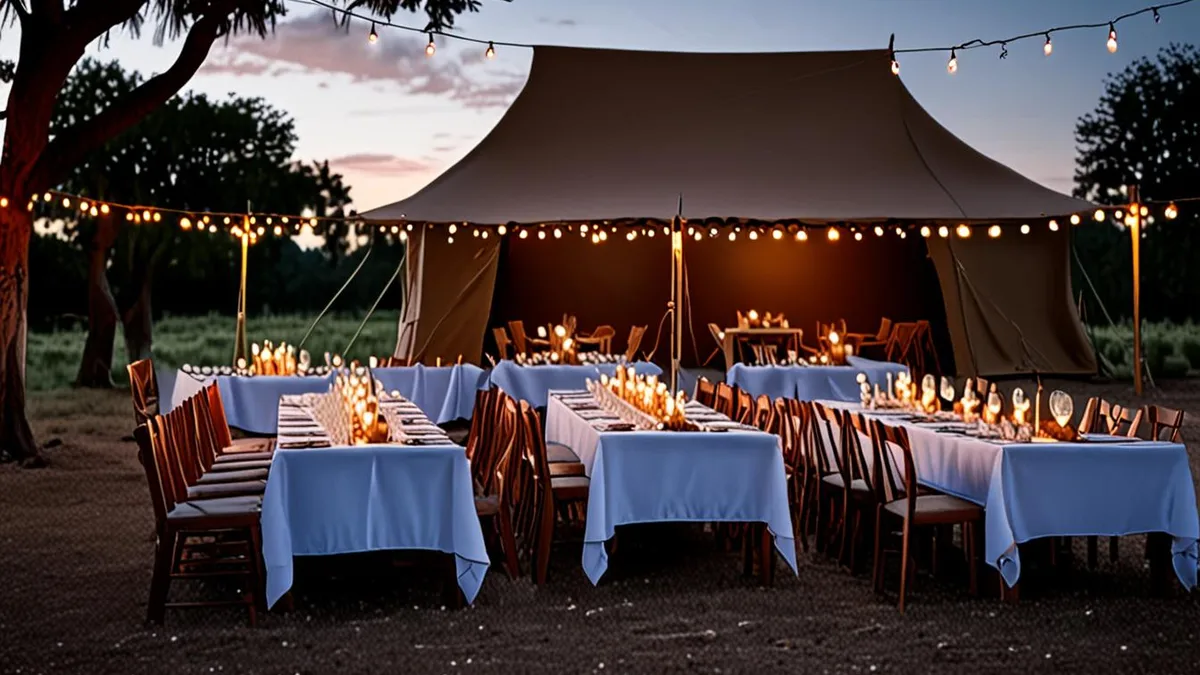
Glamping units come in all shapes and sizes, but most sites sleep 2-4 guests per unit. That means a group of 8 usually needs 2-4 units, so your real task is finding a site that can host your whole crew at once. Before you compare tent types, it helps to understand the key differences between yurts, domes and safari tents, since each offers a different mix of space, insulation and atmosphere.
It also pays to think about who is sleeping where before you book. Couples usually want their own unit, while friends happy to share can split a larger one, which can bring the total number of units down. Ask each site how many people each unit officially sleeps and whether extra beds or cots are available, because the answer varies widely even between sites that look similar online.
Once you know what your group wants, work through these questions when you contact or research a site:
- Whole-property buyouts. Some sites let you book the entire property, which is ideal for groups of 8 or more who want privacy and the run of the place. Ask about buyout pricing and any minimum requirements.
- Unit layout. Check whether the units are clustered together or scattered across the property. Clustered units keep the group together after dark; scattered ones suit friends who want quieter corners.
- Shared indoor space. Look for a site with a lodge or covered pavilion the whole group can use. It doubles as a rainy-day backup for dinners, games and late-night conversations.
- Mixed unit types. Some sites offer a range of accommodations, so couples can take a smaller unit while singles share a larger one. Ask what combinations are possible.
Getting the stay type right shapes the whole social dynamic of the trip, so it’s worth the extra emails to the site before you commit. A short phone call often reveals details that never make it onto the booking page, such as which units sit closest together or which ones get morning sun. Take notes, compare a few sites side by side, and you’ll end up with an arrangement that fits your group instead of one you have to work around.
Pick a Location and Season That Suits Everyone
The fastest way to kill group enthusiasm is a five-hour drive that leaves one friend exhausted before anyone unpacks. Aim for a site within a 2-3 hour drive of where most of the group lives. That keeps carpooling simple and means you can still squeeze in a first evening around the fire instead of arriving after dark.
Timing matters just as much as distance. May-June and September-October typically bring milder weather and lower rates than the July-August rush, and sites are quieter, so you are less likely to have neighbors inches from your fire pit. Shoulder-season weekends also book up more slowly, which helps when you are coordinating several calendars.
Think about how remote you actually want to be. A site that feels secluded but sits within 20-30 minutes of a grocery store or small town gives you a safety net: forgotten coffee, extra ice, or a rainy-afternoon cafe run are all easy. If a few friends need to stay reachable for work or family, ask the host about cell coverage before you book, since dead zones are common in scenic areas. For more on weighing these trade-offs, see this guide to choosing the right glamping site for a first trip.
- Ask about the road in. Some glamping sites sit at the end of gravel or dirt roads, which matters if a friend is bringing a low-clearance car or arriving at night.
- Map the nearest gas station. On longer weekend stays, knowing where to refuel saves a panicked search when someone’s tank runs low on a day trip.
- Consider sunrise and sunset direction. West-facing decks and valleys with morning fog can change how much you enjoy mornings and evenings, and hosts will usually tell you honestly.
- Check local events calendars. A town festival nearby can be a fun bonus or a noise problem, depending on your group’s plans.
Book Early and Confirm Group Logistics
Group-sized availability disappears first. A single couple can usually find a yurt a few weeks out, but a cluster of 3-4 units on the same dates is much harder to land. Reserve 3-6 months ahead for most trips, and push that to 6-12 months if you are targeting peak summer weekends.
Once you have a shortlist, call or email the site directly rather than relying only on the booking page. Ask specifically about group discounts, minimum-night stays, and the cancellation window. Many sites offer a reduced rate for booking multiple units, but you often have to ask. Cancellation terms matter even more for groups, because one friend dropping out can affect the whole reservation.
Confirm the practical details in writing
Parking is the detail groups most often forget. Many sites are compact, and a typical group arrives in 3-4 separate cars, which can overwhelm a small lot or gravel pull-off. Ask how many spaces your units come with and whether overflow parking is nearby.
Also get written confirmation of check-in times. Staggered arrivals are almost inevitable with a group, and a written confirmation lets the early arrivals plan grocery runs while latecomers know exactly when they can check in. A short email summary after your call protects everyone if memories differ later.
Plan Meals and Activities Everyone Will Enjoy
Food is where group trips either come together or fall apart. The simplest fix is meal teams: assign pairs of two to each dinner so nobody cooks alone and nobody ends up responsible for every night. With a three-night stay, that means each pair cooks once and gets two nights completely off. It also turns cooking into a social event instead of a chore, since pairs can plan their menu together in the weeks before the trip.
Build a shared shopping list in your group chat a week before the trip, and have everyone add their own breakfast and snack items. Split grocery costs in the same payment app you used for deposits, so reimbursements stay visible instead of turning into a pile of ignored IOUs. Assign one person to do the main grocery run on the way in, and check whether the nearest town has a decent store before you count on it.
Balance the schedule, too. Plan a few anchor moments like a group hike or a dedicated campfire night, then leave generous blocks of free time. Some friends will want a long morning hike, others a slow coffee on the deck, and both should be easy. Over-scheduling is the fastest way to drain the relaxed vibe you booked the trip for in the first place.
- Confirm fire rules before you plan menus. Some sites restrict campfires during dry conditions or only allow fires in designated rings, so ask the host what is currently permitted.
- Check what cooking equipment is provided. Many glamping units include a grill, fire pit, or camp stove, but you may need to bring your own fuel, matches, or basic utensils.
- Plan one no-cook meal. A build-your-own sandwich or salad night gives tired meal teams an easy win and needs almost no equipment.
- Assign a cooler and ice duty. If your unit has no fridge, decide who brings coolers and budget for an ice restock partway through the trip.
Your Group Glamping Trip, Sorted
Planning a glamping trip for a group falls apart fast when there’s no system: one friend books too late, another quietly resents the cost, and suddenly nobody agrees on anything. The fix is simple. Agree on the budget and collect deposits through a payment app before anyone commits to a reservation, then choose units and a site layout that actually fit your group size.
From there, it’s mostly momentum. Book 3-6 months out (earlier for peak summer weekends), keep the drive reasonable, and plan meals and activities together so everyone feels heard. Do those few things up front and the trip practically runs itself, leaving you free to enjoy the fire pit instead of the group chat drama. If this helped you plan your own trip, leave a comment or share this article with the friends you’re bringing along.