You love the idea of sleeping surrounded by nature in France, but the logistics feel overwhelming. Which region suits your trip? Should you book a safari tent, a yurt or a stargazing dome? And does it matter whether you travel in May or August? Glamping in France answers all of these questions, but only if you match the destination to what you actually want from your stay.
This guide walks you through the options from coast to countryside. You’ll find out why France works so well for first-time glampers, where to stay along the Atlantic and Mediterranean shores, and which regions combine best with vineyards and châteaux. We’ll also cover mountain stays in the Alps and Pyrenees, help you choose between tents, yurts and domes, and explain when to book and what you can expect to pay. By the end, you’ll know exactly how to plan a trip that fits your season, budget and travel style.
Why Glamping in France Works for First-Timers
France is one of the easiest countries in Europe for a first glamping trip, and the reason comes down to geography. The driving distances are short, yet the landscapes change dramatically. In a single week, you can wake up in a safari tent beside the Atlantic, spend a night in a yurt among vineyards, and finish under a dome in the mountains. Few countries pack that much variety into a road trip of a few hundred kilometers.
Nature without the gear
Glamping bridges the gap between basic camping and hotels, which is exactly what many travelers want. You get the fresh air, the starry skies and the campsite atmosphere, but with a real bed, proper bedding and often a private terrace or bathroom. There’s no tent to pitch, no sleeping bags to buy and no equipment to haul on a flight. For anyone who likes the idea of camping but not the logistics, this middle ground is hard to beat.
A season that gives you room to plan
Timing matters too. The main glamping season in France runs roughly from May to September, which is a generous window compared to destinations where summer only lasts a few weeks. That flexibility makes planning easier: you can aim for lavender season in Provence, cooler hiking weeks in the mountains, or quieter shoulder months by the coast without feeling squeezed into a tiny slot in the calendar.
Coastal Glamping: Atlantic and Mediterranean Shores
France’s coastline offers some of the country’s most popular glamping, but the Atlantic and Mediterranean shores deliver very different experiences. Knowing which one fits your trip saves you a lot of second-guessing later.
The Atlantic coast: pine forests and wide beaches
Stretching from the Vendée down to the Basque Country, the Nouvelle-Aquitaine coast is a classic choice. Campsites here sit in fragrant pine forests, many just a short walk from the beach, and safari tents are the stay type of choice. It’s a relaxed, family-friendly stretch of shore with long sandy beaches and bike paths threading through the dunes. If your ideal day is beach in the morning, forest walk in the afternoon, this is your region.
The Mediterranean: sea plus mountains
Prefer drama with your swim? Corsica and the Côte d’Azur suit travelers who want the sea and mountains in one view. These sites tend to be smaller and more scenic, and demand reflects that: popular spots are often booked out by spring. If you have your heart set on Corsica or the Riviera, treat booking as an early-year task rather than a summer one.
One practical note: coastal sites carry the highest July-August demand anywhere in France, so expect peak pricing and earlier booking windows there. Pack smart before you go—our complete glamping packing checklist covers everything from beach days to cool coastal evenings.
Countryside and Vineyard Regions: Dordogne, Loire and Provence
Move inland and France’s glamping scene changes character. The countryside regions trade beach access for river valleys, vineyards and some of the most beautiful villages in the country, and each of the three big names suits a slightly different traveler.
Dordogne: rivers, castles and family-friendly stays
The Dordogne pairs river valleys and medieval villages with yurts and lodge tents, which makes it ideal for family trips. Days here have a natural rhythm: canoeing on the river in the morning, exploring a market town like Sarlat in the afternoon, and barbecuing back at your tent in the evening. Sites are often set in rolling countryside rather than packed side by side, so you get space as well as scenery. If you’re traveling with children, this is usually the easiest region to plan around.
Loire Valley: glamping between the châteaux
The Loire Valley works beautifully for château-hopping itineraries. You can base yourself in a lodge tent or cabin and spend your days cycling between Renaissance castles and vineyards. The region is roughly 4-5 hours’ drive from Paris, which makes it manageable for a long weekend or a convenient first stop on a longer road trip.
Provence: lavender season and TGV access
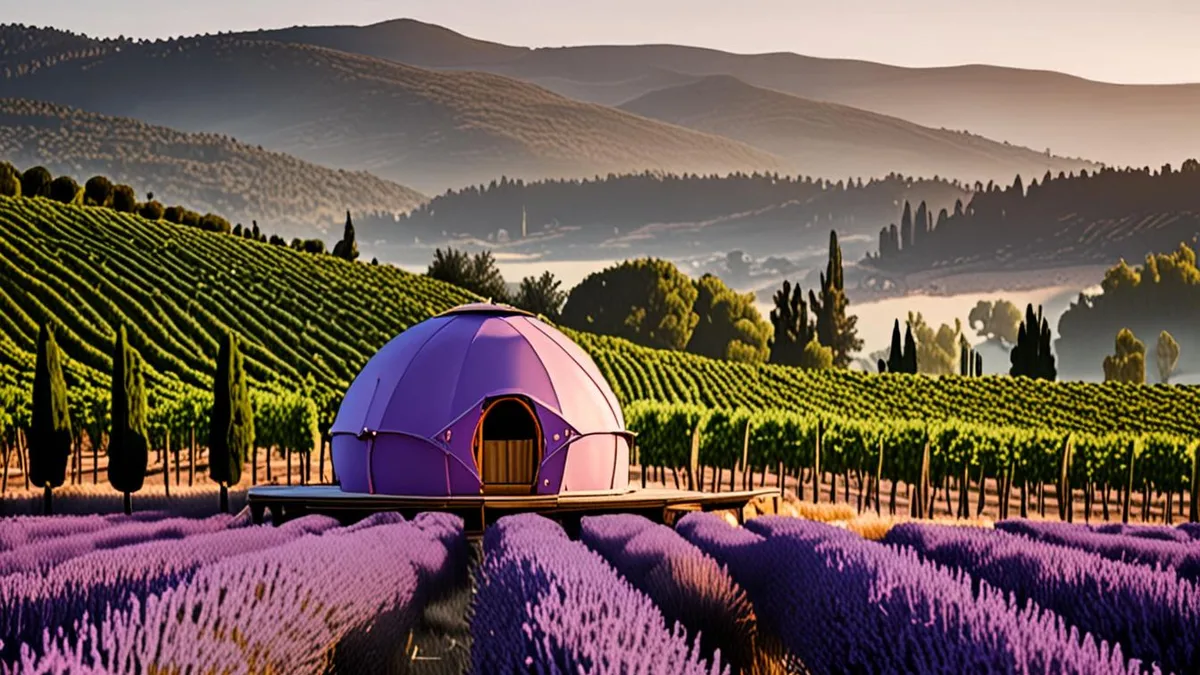
Provence adds something the others can’t: lavender-season stays, running from late June to early August. Waking up in a dome or yurt with purple fields and cicadas outside is a genuinely memorable experience. Access is easy too—the region is about 3 hours from Paris by TGV, then a rental car for the final stretch to your site. Just remember that lavender season overlaps with peak demand, so book well ahead if that’s your target window.
Mountain Glamping in the Alps and Pyrenees
The Alps are the natural choice for hikers who want a proper bed at the end of a long day on the trails. The main window runs from June to September, when the high routes are open and snow has cleared from most passes. Nights stay cool even in midsummer, which is exactly what you want in a glamping dome or lodge tent with a wood stove and a thick duvet.
Most alpine glamping sites sit in valley positions near trailheads, so you can leave the car parked for several days and walk straight from your tent. Expect cooler evenings than the coast, and pack layers even for July.
The Pyrenees: same season, fewer crowds
The Pyrenees offer a quieter and often cheaper alternative, with the same June-September hiking window. The terrain is just as dramatic, with cirques, lakes and ridge walks, but the sites tend to be smaller and rates noticeably gentler than in the big-name alpine valleys. If your goal is mountain air and solitude rather than a resort atmosphere, this is the range to look at first.
One thing to check before anything else: opening dates. Mountain sites often close earliest of all, frequently by late September or October, and some only open for the height of summer. Confirm the season with the site directly before you build an itinerary around it, especially if you are planning a late-September hiking trip.
Choosing Your Stay Type: Tents, Yurts and Domes
Glamping is not one single thing, and the difference between stay types matters more than most first-timers expect. A safari tent, a yurt and a geodesic dome offer very different experiences, and picking the wrong one for your trip is the most common mistake. If you want a fuller breakdown of how they compare, this guide to glamping in yurts, domes and safari tents covers the details.
As a quick rule of thumb: safari tents are the family workhorse, yurts are the romantic option, and domes are the design statement. But it also pays to match the stay type to the region. Domes suit vineyards and mountains, where the transparent panels and stargazing views actually get used. Safari tents suit beaches and big family campsites, where space and storage matter more than atmosphere.
- Safari tents: usually the largest layout, often with two or three separate bedrooms, a full kitchen and a covered wooden deck, which makes rainy days with children far more manageable.
- Yurts: the round felt-and-lattice structure gives a warm, cocoon-like feel, and many French yurts come with wood burners, so they work well in spring and autumn too.
- Domes: the transparent or panoramic panels are aimed at stargazing and landscape views, and they tend to be positioned for privacy rather than clustered near a pool or playground.
- Lodge cabins: a solid-walled hybrid you will see at many French campsites, closer to a small house than a tent, which suits travelers who want nature but not canvas.
On price, budget roughly €80-150 per night for a standard tent in peak season, and €200-400+ for a luxury dome. The premium end usually buys you a private hot tub, a standout location or serious design, so decide which of those you actually care about before paying for it.
When to Book Glamping in France and What It Costs
Glamping in France books out faster than regular campsites, simply because there are fewer units on each site. A campsite might have two hundred pitches but only a dozen safari tents, so the good ones go early. For July and August stays, plan to book 3-6 months ahead. Peak-season rates often run 20-40% higher than shoulder-season prices, so the same dome that costs a certain amount in June will cost noticeably more in the first week of August.
The cheaper windows: May, June and September
If your dates are flexible, aim for May, June or September. Prices drop, sites are quieter, and 1-2 months’ lead time is often enough to find availability. Early June and mid-September are particularly good in the south, where the weather is still warm but the crowds have thinned. The main French season runs roughly May to September, so these shoulder months sit right at the edges of it.
On budgeting, expect a clear gap between a standard glamping tent and a premium dome in high summer — the dome can easily cost several times more. Family-sized safari tents with full kitchens tend to sit toward the upper end of the tent range. For a more detailed breakdown of what drives these prices, see this guide to typical glamping costs and what you get for your money.
One final tip: always check what is included. Some French sites charge linen hire, cleaning fees or a tourist tax on top of the nightly rate, and these extras can add up over a week-long stay.
Planning Your Coast-to-Countryside Trip
Glamping in France works best when you match three things: region, stay type and season. If summer beaches are the priority, head for the coast. Families tend to be happiest in the Dordogne or the Loire Valley, while hikers should look to the Alps and the Pyrenees. Because the regions sit close together, one well-planned trip can combine French coast, countryside and mountains without long driving days.
Timing matters just as much. Booking 3-6 months ahead secures the best peak-season sites in July and August, while May, June and September offer better value and more availability. With the right region and stay type, a comfortable night under canvas in France is easy to arrange. If this helped you plan your trip, leave a comment or share the article with a fellow traveler.