If you assume glamping season starts in June, you’re not alone — and you’re probably missing out. Many travelers book their first trip for midsummer, then find themselves squeezed onto busy sites, paying peak prices and sharing trails with crowds. Glamping in spring flips that experience entirely: sites are quieter, rates are lower and the landscape is often at its most beautiful.
In this guide, we’ll look at why glamping in spring beats the summer rush, what cooler nights mean for your stay, and how booking, costs and packing change in the early season. We’ll also help you choose the right stay type for chilly evenings and put together a smart packing list. By the end, you may well find that March to May becomes your favorite time to sleep under canvas.
Why Glamping in Spring Beats the Summer Rush
The biggest reason to try glamping in spring is simple: fewer people. April and May typically bring some of the lowest occupancy of the year, with some sites running at around 50% lower occupancy than in July. That translates into real, tangible benefits on the ground — you might have the shared fire pit to yourself, hear birdsong instead of neighboring conversations, and walk trails without passing another group every few minutes.
Privacy you simply can’t buy in July
On a quiet spring site, the distance between you and the next tent matters less. Hot tubs, deck chairs and viewpoints that get claimed early in summer often sit empty all day. If you’ve ever felt that glamping sites felt a little too close together in peak season, spring restores the sense of space you were paying for in the first place.
Lower rates for the exact same stay
Early season pricing is the other major win. Nightly rates in spring are frequently 20-40% below peak summer prices for the same tent or dome. You’re not getting a lesser version of the experience — same bed, same stove, same view — just at a friendlier price, because demand is lower.
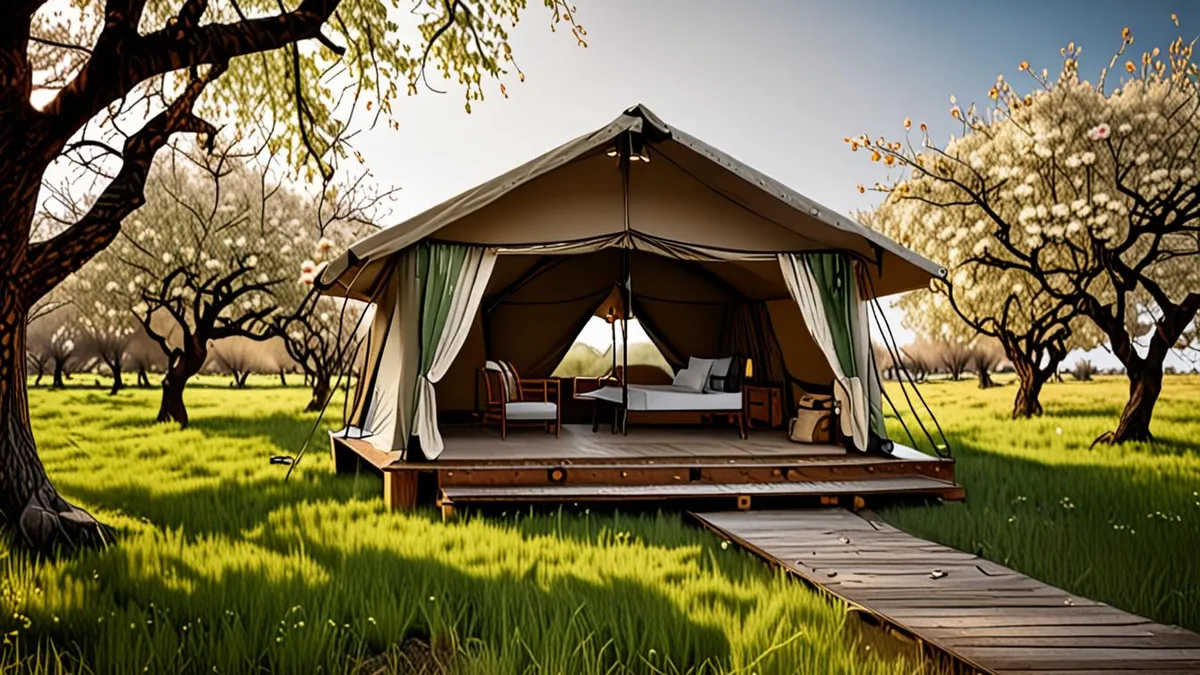
And then there’s the landscape itself. Spring is when orchards and wild cherries blossom, meadows turn that vivid first green of the year, and wildlife is at its most active. Deer, hares and returning birds are easier to spot before the summer heat quiets everything down. By August, much of that fresh color has faded and trails are dusty. Spring gives you the version of the countryside that postcards promise.
What Spring Weather Means for Your Stay
Spring weather is the main thing that catches glampers off guard. Days are often genuinely pleasant, with mild temperatures of 15-20°C — perfect for hiking, reading on the deck or eating outdoors. But once the sun drops, nights can fall to 5-10°C, and that difference surprises people who packed for daytime weather. The fix is simple: bring warm layers you can add as evening approaches, rather than one heavy jacket.
Rain is the second factor to plan for. Spring showers pass through quickly in most regions, but they do pass through. The good news is that well-run glamping sites are built for this — a rainy afternoon on a covered deck with a hot drink can be one of the best parts of the trip. If you’re sensitive to cold nights, prioritize insulated or heated stays such as domes and cabins; they hold warmth far better than open canvas. For a full rundown of what to bring, our complete glamping packing checklist covers the essentials.
- Insulated flooring matters as much as a heater. Cold rises from the ground in spring, so stays with raised wooden platforms or all-weather flooring feel noticeably warmer than tents pitched directly on grass.
- Ask about extra blankets before you arrive. Many hosts supply spare duvets or hot water bottles on request, but a quick message ahead of time saves a shivery first night.
- Check what’s covered, not just what’s indoors. A site with a covered deck, outdoor kitchen shelter or indoor lounge lets you keep cooking and socializing even when a shower rolls in.
- Evening entertainment counts twice in spring. With darkness falling earlier than in summer, a book, deck of cards or downloaded film earns its place in your bag.
Booking Your Spring Glamping Trip
Here’s where spring glamping gets genuinely easy: the booking timeline. For summer weekends, popular sites often need reserving 3-6 months ahead — miss that window and you’re scrolling through “fully booked” pages. For spring dates, booking 4-8 weeks ahead is usually enough. That flexibility is a real advantage if your schedule tends to shift, or if you decide on a whim that next weekend looks good.
Why midweek wins in April and May
If you can take a day or two of leave, aim for a midweek stay in April or May. These dates are the easiest to secure and often the cheapest, since sites price around demand and midweek demand is at its lowest. You also get the quietest possible version of the site — some places feel almost private on a Tuesday in early May.
One check before you fall in love with a site
Do verify opening dates before you get attached. Some seasonal glamping sites only reopen in late April or May, especially those at higher elevations or in areas where winter maintenance takes time. A site that looks perfect online may simply not be taking guests yet for the dates you have in mind.
It also pays to think about what kind of site suits you before you book, rather than after. If it’s your first trip, our guide on how to choose the perfect glamping site for your first trip walks through the questions worth asking a host. And since spring nights can still drop to 5-10°C, it’s smart to confirm heating arrangements at the same time as you confirm availability — a site that’s open in April isn’t necessarily warm in April.
What Spring Glamping Typically Costs
One of the best surprises about glamping in spring is the price tag. Across most sites, nightly rates typically fall between about $100 and $300 depending on the stay type and location, and early season dates often sit at the friendlier end of that range. A geodesic dome in the countryside or a safari tent near the coast can cost noticeably less in April than it does in July, for exactly the same bed, deck and view.
Because hosts want bookings before the summer rush, spring discounts can be substantial, which means a dome or safari tent often lands near the bottom of that price range. That is close to what you might pay for a modest hotel room, but with a wood-fired hot tub, a private fire pit and a meadow full of blossoms outside your door. If you want a clearer picture of how these rates compare across stay types and seasons, this guide to typical glamping prices breaks down what you can expect to pay.
Look beyond the nightly rate
Shoulder-season packages are where spring really pays off. Because hosts want bookings before the crowds arrive, they often bundle extras into spring deals: firewood for the stove, breakfast baskets with local produce, or late checkout so you can enjoy a slow morning. When comparing sites, ask what is included rather than just scanning the base price. A stay that looks slightly more expensive but throws in firewood and breakfast can work out cheaper overall, especially on chilly evenings when you would otherwise be buying extra logs. Rates and inclusions change from site to site, so it is always worth confirming the details directly with the host before you book.
Choosing the Right Stay Type for Cool Nights
Not all glamping stays handle a chilly spring evening equally well. When temperatures drop to 5-10°C after sunset, the difference between a well-insulated structure and a thin canvas wall becomes very obvious around two in the morning. Choosing the right stay type for the season is the single biggest factor in whether your trip feels cozy or cramped.
Domes and cabins are the safest bet for spring. Geodesic domes usually have insulated covers and often a small heater, while solid cabins behave like tiny houses with proper walls, windows and heating. Safari tents and yurts, on the other hand, feel wonderfully airy in warm weather but let the cold in once the sun goes down. They can absolutely work in spring, but only if they come with good bedding and a real heat source such as a heater or wood stove.
Questions to ask before you book
Hosts generally answer these questions happily, and the answers tell you far more than the photos do:
- Heating source: Is it a wood stove you need to tend overnight, an electric heater on a thermostat, or underfloor heating? Ask whether the heat runs all night or switches off.
- Hot water: Find out if showers have reliable hot water in cool months, and whether it is gas, electric or wood-fired, since wood-fired systems can take time to heat up.
- Flooring: Ask about all-weather flooring underfoot. Solid or insulated flooring stays warm and dry, while bare deck boards or thin ground sheets turn cold and damp after rain.
- Bedding setup: Confirm whether extra blankets, duvets or hot water bottles are provided, or whether you should bring your own extra layer for the bed.
If a host hesitates on heating or hot water, treat that as useful information. A site that is transparent about how it handles cool nights is usually one that has hosted spring guests before and knows what they need.
Packing Smart for Early Season Glamping
Packing for spring glamping is all about preparing for two seasons in one day. You might start with coffee on the deck in a t-shirt, watch a shower roll through after lunch, and end the evening wrapped in a blanket while the temperature dips to 5-10°C. A little thought in your packing makes that variation a pleasure instead of a problem.
Start with warmth. Warm layers you can add and remove, a hat for evening walks and thermal sleepwear for bed will do more for your comfort than any single bulky jacket. Even well-heated domes and cabins feel different from a centrally heated home, and thermal pajamas mean you can leave a window cracked for fresh air without shivering.
Don’t forget these early season essentials
Beyond the obvious layers, a few items earn their place in the bag every single spring trip:
- Waterproof boots or shoes: Spring meadows and woodland paths stay muddy long after the rain stops, so ankle-high waterproof footwear beats sneakers for firewood runs and morning walks.
- A proper rain jacket: Choose one with a hood you can pull up in wind, so a passing shower does not interrupt an evening by the fire.
- A headlamp: Spring evenings are longer and darker than summer ones, and a headlamp keeps your hands free for locking up, finding the bathroom or stoking the stove after dark.
- Board games or cards: With fewer daylight hours than summer, cozy indoor time matters. A couple of games turns a rainy evening into one of the trip’s highlights rather than a gap to fill.
Pack a small dry bag or stuff sack for wet gear too. Keeping damp boots and jackets separate from your clean clothes is a small habit that keeps the whole stay more comfortable.
Make Spring Your New Favorite Glamping Season
So, does glamping season really have to wait for summer? Not at all. From March to May, you get lower rates, quieter sites and landscapes at their most alive, with blossoms, green meadows and wildlife everywhere. April and May in particular tend to be far less crowded than July, so the trails and views feel like they belong to you.
The recipe is simple: book 4-8 weeks ahead, choose an insulated stay like a dome or cabin to handle cool nights, and pack for variable weather with warm layers and rain gear. Do that, and you will enjoy the season at its best, before the summer crowds arrive. If you have a favorite spring glamping spot or a tip of your own, leave a comment or share this article with a friend who loves the outdoors.