You’ve narrowed your glamping trip down to a bell tent or a tipi, but the price and experience differences aren’t obvious from photos alone. Both promise canvas walls and a woodsy night’s sleep, yet the bell tents vs tipis question touches everything from how much headroom you’ll get to whether you can light a fire inside and how late into autumn you can book. The two shapes look similar in a thumbnail and feel completely different once you’re inside.
This guide walks through the core differences at a glance, the style and atmosphere each tent creates, the comfort and space you can expect, typical nightly costs, and the season and weather each handles best. We’ll finish with practical advice on how to choose and book the right one for your group and travel dates. By the end, you’ll know exactly which silhouette belongs in your itinerary.
Bell Tents vs Tipis: The Core Differences at a Glance
At first glance, both tents are round and made of canvas, so it’s easy to assume they’re interchangeable. They’re not. A bell tent is a low, wide structure: a single central pole holds up the canvas roof, and guy ropes pull the edges taut around the perimeter, creating that classic carousel silhouette you see at festivals and meadow campsites.
A tipi, by contrast, is a tall cone built from layered poles that meet at a peak, with a smoke flap at the top that can be adjusted to vent a fire. That shape changes everything about how the tent works. Where the bell tent slopes gently from its center pole down to the ground, the tipi rises steeply, keeping its height across much of the floor.
Layout and heating: where the real differences show up
Inside a bell tent, you get open-plan floor space in a single room, with usable headroom concentrated near the center pole. It’s simple, flexible and ideal for one bed plus a few extras. A tipi’s height allows genuinely different layouts: standing room throughout much of the interior, raised bunks or platforms, and often a central fire pit that doubles as heat source and gathering point.
So while both are canvas glamping stays, the silhouette, interior layout and heating approach differ fundamentally. A bell tent is warmed from the outside with bedding and heaters; a tipi can be warmed from within. Keep that in mind as you compare photos, because the two tents solve the same problem in very different ways.
Style and Atmosphere: Bohemian Meadow vs Nordic Lodge
The bell tent has become the poster child for romantic, bohemian glamping. Picture cream canvas glowing in morning light, bunting strung from the center pole, fairy lights draped along the seams, and a folding table outside with a picnic vibe. It reads as festival-meets-meadow: soft, low to the ground and effortlessly photogenic at sunrise.
The tipi’s lodge-like warmth
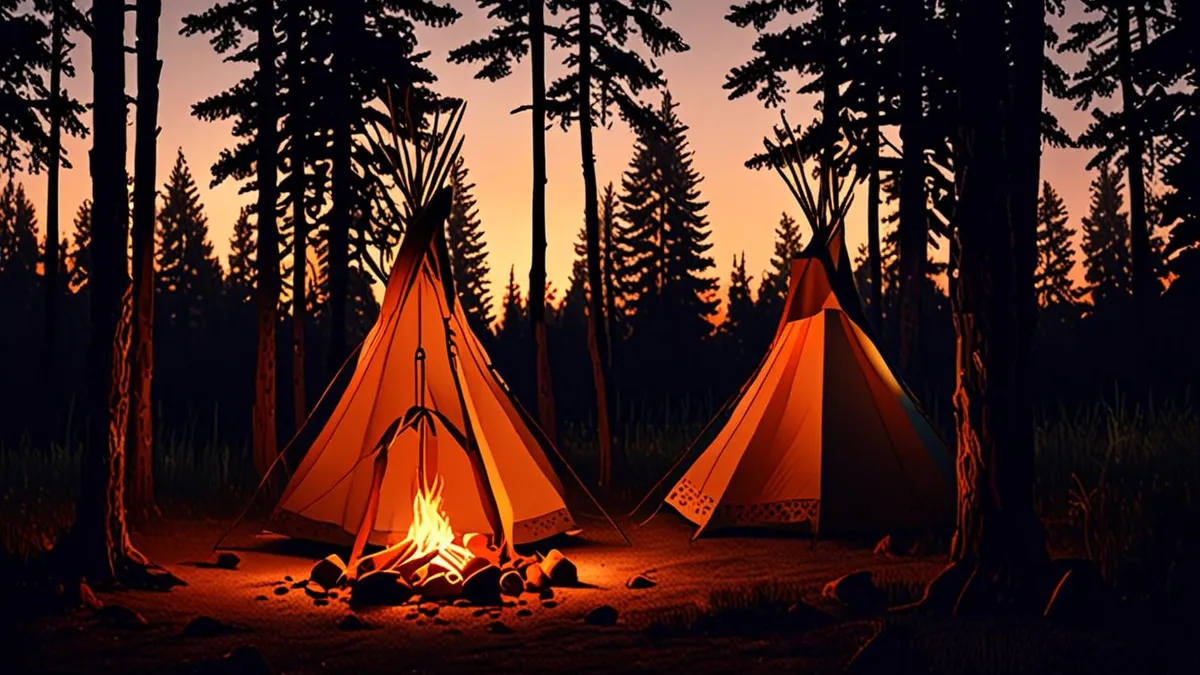
Tipis go in a different direction. Exposed wooden poles rise to the peak, woven rugs cover the floor, and patterned liners line the cone walls. When the central fire is lit, the whole structure glows from within, giving it the feel of a rustic lodge rather than a festival field. It’s dramatic, cozy and built for evenings as much as for sleeping.
Neither style is better; they simply suit different trips. If your ideal memory is soft meadow mornings, bare feet in grass and pastel photos, the bell tent delivers that mood. If you want dramatic cone silhouettes against a dusk sky, firelight flickering on canvas and a space that feels like a wilderness cabin, the tipi wins.
A practical tip: browse each site’s gallery with your own trip in mind. Ask which photos you actually want to come home with, and let that answer decide the tent. Style is the one category where the right choice is entirely personal.
Comfort and Space Inside Each Tent
Inside a bell tent, you’ll typically find sleeping space for 2-5 guests, usually built around one queen or double bed with floor mattresses for extra people. The catch is headroom: because the canvas slopes from the center pole down to the edges, you can only stand comfortably near the middle. Adults at the edges will be crouching or sitting on the bed.
Tipis usually accommodate 2-6 guests, and the layout feels more like a small cabin. Many sites set up sleeping platforms or futons rather than mattresses on the ground, and the poles, which can reach up to 8 m tall, create genuine standing room across much of the interior. You can walk around, get dressed upright and play cards at a low table without hunching.
Warmth is the other big comfort difference. A tipi with a central fire stays genuinely warm on chilly nights, with the smoke flap venting the smoke upward. A bell tent has no in-tent fire option, so it relies on other strategies:
- Layered bedding and duvets, since single-layer canvas loses heat quickly once the sun drops
- Hot water bottles filled at the site’s kitchen or washblock before bed
- Site-provided heaters, which some operators supply on cooler nights, so ask when booking
- Choosing a tent on a raised or insulated ground cover, which keeps the floor noticeably less cold underfoot
If interior space and warmth top your list, it’s also worth seeing how tipis compare with other large canvas structures; our guide to glamping in yurts, domes and safari tents covers how yurts, domes and safari tents differ from both. But between just these two, the tipi is the roomier and warmer choice, while the bell tent trades height for simplicity and a lower price.
Cost: What Each Stay Typically Runs
Price is where bell tents and tipis really part ways. Bell tents generally run $100-$250 per night, which makes them the budget-friendlier canvas option at most glamping sites. Tipis usually cost $150-$350 per night, and that premium is not arbitrary — it reflects the bigger footprint, the built-in heating and the raised platform or deck work that many tipi stays involve. You are also paying for setup labor: a tipi with poles up to 8 m tall takes a crew 2-4 hours to pitch properly, while a bell tent goes up in under an hour.
Timing matters as much as tent type. Peak weekends in June-August tend to sit at the very top of both ranges, while shoulder-season midweek nights often land at the bottom. If your dates are flexible, shifting a stay from a summer Saturday to a Tuesday in late September can save a meaningful chunk of the total. For a broader sense of what canvas stays cost across different styles and regions, this guide to typical glamping prices is a useful benchmark before you commit to a site.
- Platform builds: tipis on wooden decks cost more to construct and maintain, and that shows up in the nightly rate.
- Firewood and heating: some sites bundle firewood for in-tent fires into the price; others charge it as an add-on, which can swing the real cost by $20-$40 per night.
- Group math: a $300 tipi sleeping six works out to $50 per person, often cheaper per head than a $150 bell tent shared by two.
- Cleaning and booking fees: some operators add these at checkout, so compare the final total rather than the headline nightly rate.
Season and Weather: When Each Tent Shines
Season is the quiet dealbreaker between these two tents. Bell tent season generally runs April-October, because single-layer canvas cools quickly once summer fades. On a mild June night that is a non-issue — with bedding and a hot water bottle you will sleep fine. But in early April or late October, a bell tent can feel chilly by midnight, and most sites either close them or lean on portable heaters.
Tipis handle the shoulder seasons better. Their central fire pit radiates warmth from the middle of the tent, and the taller cone structure holds that heat around the sleeping area. That is why tipi stays often keep operating into November, when most bell tent meadows have already packed up for the winter.
Rain and wind
Weather resilience also differs. In heavy rain or strong wind, tipis on anchored platforms tend to feel more stable than guyed bell tents, which rely on tensioned guy lines and can shift in gusts. A well-pitched bell tent on a dry, sheltered meadow is perfectly weatherproof for typical summer conditions, but if your trip falls in a stormier month, the tipi’s engineered base gives it the edge. Always check a site’s seasonal opening dates and cancellation policy before booking an off-season night.
How to Choose and Book the Right One
Choosing between a bell tent and a tipi comes down to three things: who is traveling, when, and how rustic you want the experience to feel. Work through the steps below in order and the right answer usually becomes obvious. First-time campers often overthink the choice, but each step eliminates an option quickly.
- Count your group. Couples or small families wanting the lowest cost and a simple one-room layout should pick a bell tent, which typically sleeps 2-5. Groups of 4-6 will be far more comfortable in a tipi, where the height creates genuine standing room.
- Check the calendar. For shoulder-season trips in October, a tipi is the safer pick — its central fire keeps cold evenings comfortable when a bell tent would rely on extra blankets and hot water bottles.
- Decide on the fire. If you want a real fire burning inside your tent, that is a tipi feature. Bell tent stays never include an open flame indoors, so choose accordingly.
- Book early for summer. For June-August weekends, plan to book 2-3 months ahead, since peak-season canvas fills fast at popular sites. Midweek shoulder-season nights are far easier to arrange.
- Compare true costs. Before comparing prices, check whether bedding, firewood and cooking gear are included — a cheaper nightly rate with paid extras can end up costing more than the pricier option.
- Match tent to terrain. Meadow sites suit bell tents, while woodland and hillside sites suit tipis, whose platforms handle uneven ground well.
If you are still weighing location, amenities and site type, it helps to read how to choose the perfect glamping site for your first trip before locking anything in. Once the site and tent type align, the rest is just picking dates, packing layers and looking forward to a night under canvas.
The Wrap-Up: Bell Tent or Tipi?
So which one should you book? If your priority is the lowest cost, a simple one-room setup and that soft, romantic meadow feel, the bell tent is your answer. At roughly $100-$250 per night, it’s the budget-friendlier canvas option, and its April-October season covers the classic summer glamping window perfectly. It suits couples and small families who want charm without complications.
The tipi earns its higher rate of around $150-$350 a night with genuine standing room under poles that can reach 8 m, space for 2-6 guests, and the unbeatable coziness of a fire burning at the center of your tent. It also stretches the season into November, making it the smarter pick for chilly shoulder-month trips. In short: bell tent for festival romance, tipi for lodge warmth. If this helped you decide, leave a comment or share the article with your travel crew.