Two glamping sites can offer the exact same tent or dome, yet feel completely different depending on whether that unit sits under a forest canopy or out in an open meadow. Most guests only discover this after booking, when they arrive expecting wide sunset views and instead get filtered green light through the trees, or vice versa. That surprise is easy to avoid with a little planning.
This guide to canopy and meadow glamping explains what each layout actually means, how they differ in temperature, shade and weather exposure, and how each one handles privacy and noise. We’ll also compare views, light and stargazing, look at which seasons suit each layout best, and help you match the layout to your trip type, whether that’s a romantic escape or a family weekend. By the end, you’ll know exactly which questions to ask before you reserve a pitch.
What Canopy and Meadow Glamping Actually Mean
The single biggest difference between two glamping sites offering the same accommodation often isn’t the tent at all. It’s where the tent sits. Site layout shapes your temperature, privacy, views and even how well you sleep, which is why it pays to understand the two main approaches before you book.
Canopy glamping: under the trees
Canopy glamping places units beneath mature trees. The result is natural shade through the hottest hours, shelter from wind and rain, and a screened-in woodland feel where branches and undergrowth separate you from the rest of the site. Many guests describe it as cocoon-like: you hear birdsong, see dappled light moving across the deck, and feel tucked away even when neighbors are relatively close.
Meadow glamping: out in the open
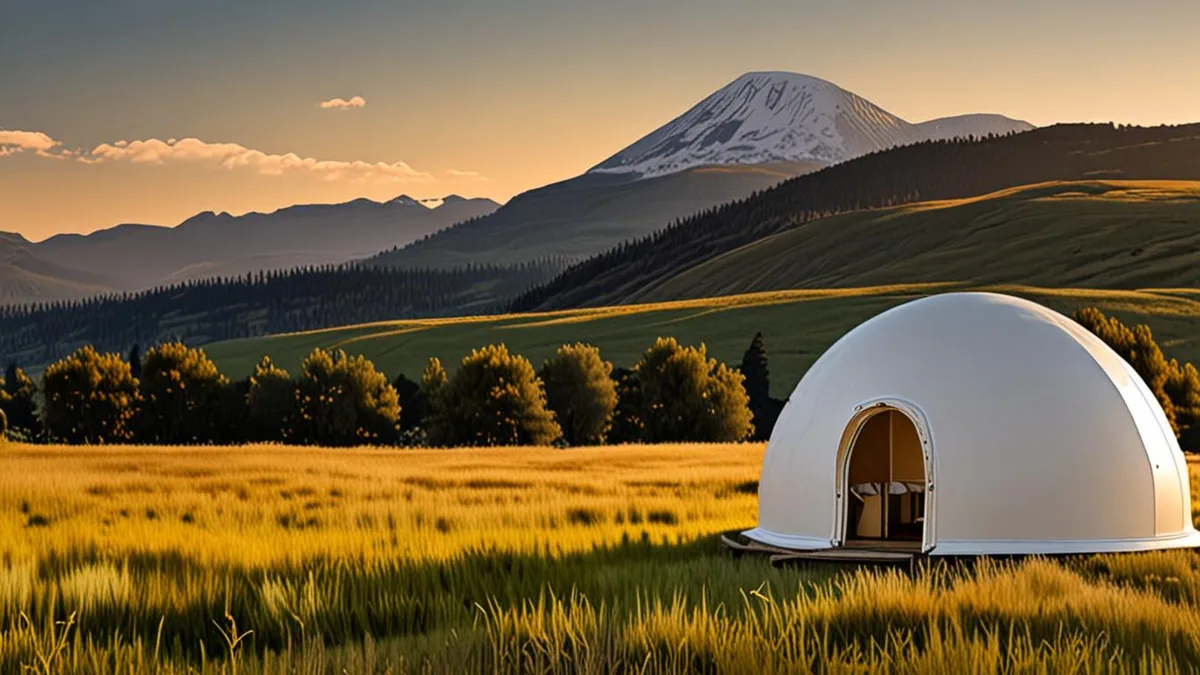
Meadow glamping does the opposite. Units stand on open grassland pitches with wide views across the landscape, direct sun for most of the day and unobstructed night skies overhead. There are no branches framing your sunrise and no leaves between you and the stars. The trade-off is exposure: to sun, wind and the eyes and ears of other guests.
Here’s the key point: the same accommodation type can appear in either layout. A geodesic dome, a safari tent or a bell tent can sit under oaks in one site and on a windswept hillside in another. The setting changes the experience far more than the unit does, so when comparing sites, look past the photos of the tent itself and ask where it actually stands.
Temperature, Shade and Weather Exposure
Temperature is where the two layouts diverge most noticeably. On hot afternoons, canopy sites stay 2-4°C cooler than open meadow pitches because the tree cover blocks direct sun before it ever reaches your tent. If you’re booking for a July or August trip and a heatwave is a realistic possibility, that difference turns an uncomfortable afternoon into a pleasant one, and it keeps the interior of a dome or safari tent liveable without constant fan use.
Meadow pitches behave differently. In direct sun they warm up fast, sometimes uncomfortably so by mid-afternoon. But they also release that heat quickly, which works in your favour in spring and autumn: meadow pitches heat less at night, so shoulder-season evenings feel crisper rather than stuffy.
Wind and rain: the exposure trade-off
Open ground comes with open sky, and open sky means wind. Meadow sites face gusts often 10-20 km/h stronger than sheltered woodland. That matters for dome stability in stormy spells, and it matters even more for outdoor dining, where an unsecured tablecloth or a lightweight chair can become airborne. Canopy sites, by contrast, use the trees as a windbreak, so meals on the deck stay calm even on blustery days.
Rain has the opposite effect. Reduced airflow under trees means canopy sites can stay damp for 1-2 days after heavy rain, with the ground and deck slow to dry out. Pack waterproof footwear, quick-dry layers and an extra groundsheet, and read up on glamping in the rain: tips for a comfortable wet-weather stay if wet weather is likely. Meadow pitches dry quickly once the sun returns, but they give you little protection while it’s falling, so a sturdy umbrella and rain jackets earn their space in the car.
One practical note: ask the operator how drainage works on your specific pitch. A canopy unit on sloped ground with good runoff handles a downpour far better than a flat, shaded pitch where water pools. Most sites will happily talk you through it before you book.
Privacy and Noise: How Each Layout Handles It
Privacy works differently in each layout, and neither approach is automatically better. Canopy layouts rely on trees and vegetation as natural screens. Because the woodland itself blocks sightlines, private canopy pitches usually sit 15-30 m apart, which is close enough that you might hear a neighbor’s conversation drift through the trees, but you won’t see them.
Meadow layouts create privacy through distance instead. With no vegetation to hide behind, sites spread units 50 m or more across the open ground. You can often see neighboring pitches from your own, but they’re far enough away that the distance itself does the screening. For many guests this feels more private in practice than a shorter, tree-screened pitch; for others, being visible across a field is exactly what they came to avoid.
How sound travels
Open meadows carry sound much further than woodland. Voices, music and site activities like communal dinners or children playing are more audible across open ground, so a meadow pitch can feel lively even when it’s physically isolated. Canopy sites muffle sound naturally, but their shorter pitch spacing means you’re closer to the source when noise does occur.
If privacy is a priority, don’t guess. Ask operators for a site map showing pitch orientation before booking, and check where amenities, paths and communal areas sit relative to your pitch. A corner pitch facing away from the fire pit can be the difference between a restful stay and a noisy one. Couples weighing this choice can find more guidance in how to pick a private and peaceful glamping site as a couple, which covers the questions worth asking before you commit.
Views, Light and Stargazing Differences
If waking up to a wide horizon matters to you, meadow glamping is hard to beat. Because there are no trees blocking the line of sight, a meadow pitch delivers panoramic views across the landscape and typically offers stargazing with minimal light obstruction. On a clear night you can step straight from your bed onto the deck and watch the sky without walking anywhere, which is exactly why meadow sites are the natural home for stargazing trips. If that’s the main draw for you, it’s worth reading up on stargazing glamping and how to sleep under dark skies before you pick a site.
Canopy sites offer a different kind of reward. Instead of open views, you get filtered, dappled light through the leaves, birdsong at close range and a cocooned, treehouse-like feeling that many guests find deeply relaxing. The trade-off is real, though: you generally won’t see the horizon from your pitch.
Sunrises, sunsets and photography
On a meadow pitch, sunrises and sunsets play out in full across the open sky, right from your deck or picnic table. Under the canopy, the same events arrive framed through branches, which can be atmospheric but rarely dramatic. If you’re traveling with a camera or a telescope, favor meadow pitches, and aim your dates around a new moon when the sky is at its darkest. Photographers chasing golden light will also find the unobstructed meadow horizon far more generous than a wooded clearing.
Season and Booking Timing for Each Layout
The right layout also depends on when you travel, because canopy and meadow sites perform very differently across the season. Meadow pitches live on sunshine and open skies, while canopy sites lean on shelter from trees. Timing your booking around that difference can matter as much as choosing the layout itself, especially in summer when the best pitches disappear first. Here’s how to plan your dates and lead times.
- Match the layout to the season first. Meadow pitches shine in shoulder season, roughly May-June and September, when you actually want direct sun warmth on your deck and sites are quieter. Canopy sites extend the usable season, often staying comfortable into October and November because the trees block wind and take the edge off cold nights.
- Reserve meadow pitches early for peak summer. July-August meadow pitches often book out 2-3 months ahead, since everyone wants those open views in the warmest weeks. If you have your heart set on a specific meadow unit, put a reminder in your calendar and book as soon as dates open.
- Give canopy pitches a shorter but real lead time. Canopy pitches tend to sell out slightly later than meadow ones, but in summer they still benefit from around 4-6 weeks of lead time, especially for weekends and larger units like safari tents.
- Check the operator’s season dates before assuming anything. Most European glamping sites open April to October, but canopy sites often stay usable into November. Confirm the exact opening window with the site itself, since it varies by region and operator.
One practical note: if your dates are fixed and you’re booking late, flexibility on layout will help you more than loyalty to one site. A canopy pitch in July gives you shade and cooler afternoons when the sun is at its strongest, while a meadow pitch in September rewards you with long views and quieter surroundings. Both can work well, as long as you know what weather exposure to expect and pack for it. When in doubt, ask the operator which pitches they’d recommend for your travel window.
Matching the Layout to Your Trip Type
The best layout ultimately depends on who’s traveling and what the trip is for. Couples chasing quiet time together usually get more from a screened canopy pitch, where trees create natural privacy and the enclosed, cocooned setting feels intimate. Families and groups, on the other hand, often thrive in meadow layouts, where open ground gives kids room to run and parents can keep everyone in sight from the deck. Dog owners tend to fall into the same camp as families, since open pitches give pets space to burn off energy without constant leash duty around trees and vegetation.
Weather and purpose matter too. Hot-weather trips and stargazing breaks point toward meadows, while rainy-season or autumn trips point toward the shelter of the canopy. A practical middle path is to pick the layout for the trip’s main goal, then manage the downside with small choices, like packing extra layers for exposed meadow nights or quick-dry shoes for damp woodland ground. Before you book, it also pays to check how the site’s shared amenities are arranged, because that changes how the layout affects your whole day.
- Central amenities mean more walking. If the hot tub, kitchen or fire pit sits in a shared central area, a meadow pitch 50 m or more away can turn every coffee run or evening soak into a trek, especially after dark or in rain.
- Per-pitch amenities change the privacy equation. A private hot tub or fire pit on your own pitch makes distance from neighbors a pure bonus rather than an inconvenience, which suits couples in canopy sites and spread-out meadow layouts alike.
- Central fire pits shape evening social life. On meadow sites with a shared fire pit, evenings tend to become communal, which is great for families and groups but less so for couples wanting seclusion.
- Ask where amenities sit relative to your pitch. Request the site map and check whether your specific pitch is close to the facilities you’ll actually use, since two pitches on the same site can differ a lot in practical convenience.
Wrapping Up: Canopy or Meadow
Two glamping sites can offer an identical tent or dome yet feel completely different depending on where that unit sits. Canopy glamping means shade, shelter and intimacy; meadow glamping means views, stars and space. Neither layout is better overall — the right one depends on your weather tolerance, your preferred style of privacy, the season you travel in and the kind of trip you are planning.
So before you book, look past the photos of the accommodation itself and check the site map and pitch spacing. Make sure the layout matches what you actually want from your stay, whether that is a cocooned woodland hideaway or a wide-open pitch under the stars. If this helped you choose between canopy and meadow, leave a comment or share the article with a fellow traveler.