Booking your first glamping trip usually comes with one nagging question: will you get a proper bathroom, or a composting loo at the end of a muddy path? Glamping toilets and showers vary enormously between sites, and the difference is not always obvious from the photos. Some safari tents come with a full en-suite wet room, while others expect you to walk to a shared block in your dressing gown.
The good news is that you can find out exactly what you’re getting before you pay, if you know where to look. This guide walks through the full range of bathroom setups, from en-suite showers to composting toilets, explains what each type actually includes, and covers how facilities differ between safari tents, yurts and domes. You’ll also learn how to check a listing properly, what to pack for shared or off-grid facilities, and how to choose the right setup for your trip and budget.
The Glamping Bathroom Spectrum: From En-Suite to Composting Toilets
Glamping bathrooms fall into three broad categories, and knowing which one a site offers will shape both your budget and your expectations.
En-suite bathrooms
At mid-to-upper price points, especially in safari tents and domes, an en-suite bathroom with a flushing toilet and hot shower is the standard setup. These units appear in roughly half of European safari tents and domes in this price range. The convenience comes at a cost: expect to pay around 20-40% more than an equivalent unit with shared facilities.
Shared blocks and composting loos
Budget sites and smaller family-run operations typically rely on shared toilet and shower blocks instead. These are usually positioned within 30-100 meters of your accommodation, close enough to reach in a dressing gown but far enough that you’ll want a torch at night. Shared blocks are perfectly functional, but they mean planning your morning routine around other guests.
The third category is composting and dry toilets, which appear mainly at eco-certified or off-grid sites where the water supply is limited. These have improved dramatically in recent years and many are clean and odor-free when properly maintained, but they behave differently from a flushing toilet, using little or no water and relying on natural decomposition. If you’ve never used one, it’s worth reading up before you arrive so nothing surprises you at midnight.
What En-Suite Glamping Bathrooms Actually Include
If you’ve booked a glamping unit with an en-suite bathroom, here’s what you can realistically expect to find inside. The core fittings are a flushing toilet, a walk-in or cubicle shower with reliable hot water, and a small vanity sink. A towel rail is sometimes included, though not always, so check the listing if towels and drying space matter to you.
The biggest adjustment for most guests is space. An en-suite glamping bathroom is usually compact, often just 2-4 square meters, which means a wet-room style layout where the shower drains across the whole floor rather than a separate cubicle. Think practical cabin bathroom, not hotel suite. Water pressure and hot water duration can also be more limited than at home, so long luxurious showers may not be on the menu.
A handful of higher-end units go further and add extras such as bathtubs, heated floors or outdoor showers, but these remain the exception rather than the rule. Treat them as a bonus if you find them, not a baseline expectation. If you’re traveling in cooler months, a compact wet room can feel chilly, which is one more reason to pack smart for shoulder season glamping trips and bring warm layers for the walk between bed and bathroom.
- Wet-room flooring: because the entire floor doubles as the shower drain area, expect a slight slope and non-slip surfacing rather than flat tiles, and keep your towel and toiletries on shelves or hooks outside the splash zone.
- Water heating: many units use on-demand or small tank heaters, so the first shower may run cold for a moment while a second person showering soon after may need to wait for the tank to recover.
- Ventilation: compact bathrooms in canvas or wooden structures often rely on a small extractor fan or vented window, so expect some humidity after showering and crack a window where possible.
- Toiletries: hosts frequently provide basic soap and shampoo dispensers rather than full-size bottles, but quality varies, so bring your own if you’re fussy.
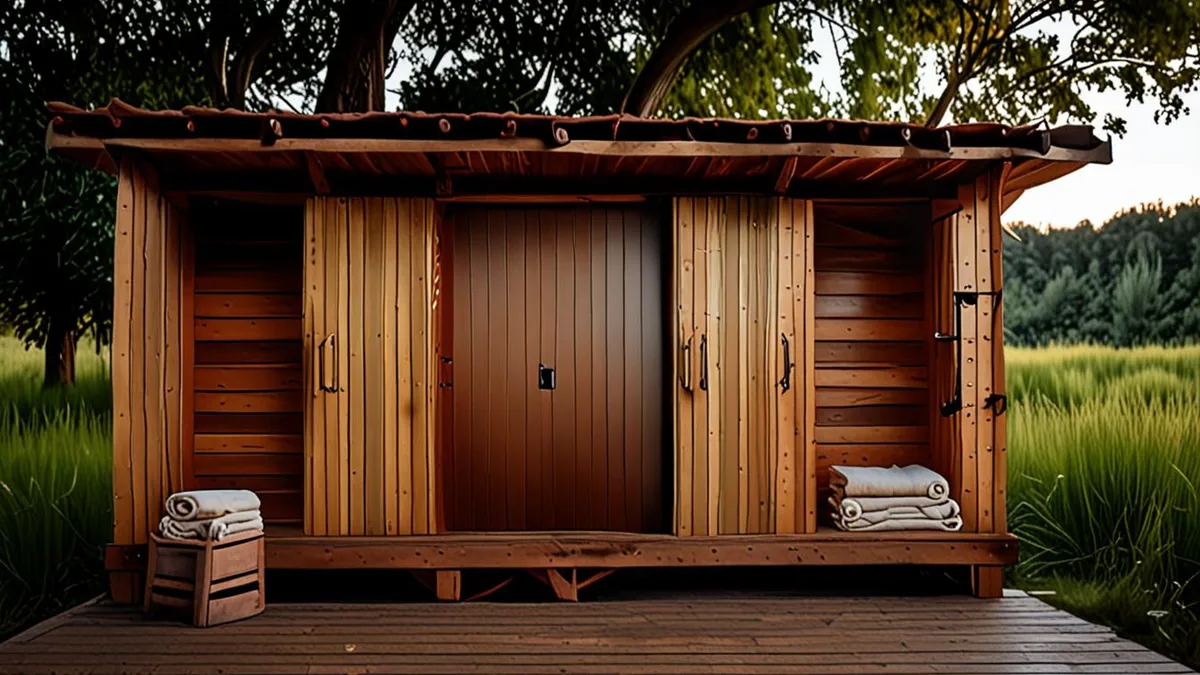
Shared Shower Blocks: Queues, Hot Water and Cleanliness
Shared shower blocks are the reality at many budget and family-run glamping sites, and how well they work depends mostly on size and management. On smaller sites, a basic block may have just 2-4 showers serving 10-20 guests, which means queues are almost guaranteed at peak times. The busiest windows are typically mid-morning and early evening, when everyone is getting ready for breakfast or dinner.
Hot water: what to expect
The good news is that hot water is generally reliable during the main season. The caveat applies to seasonal European sites, where facilities may only be fully operational from roughly April to October, so if you’re traveling at the edges of the season, confirm with the host that the shower block is open and heated. A quick message before booking saves an unpleasant surprise on arrival.
Cleanliness is the real test
Cleanliness varies more than any other factor between sites. Well-run blocks are cleaned daily, often with a posted cleaning schedule on the door, while a poorly maintained shower block is the single most common complaint in negative glamping reviews. Before booking, search recent guest reviews for mentions of the shower block or toilets and pay attention to how often cleaning comes up. Reviews written within the last few months tell you far more about current standards than photos taken when the site opened.
How Facilities Differ by Accommodation Type
The bathroom you get when glamping depends heavily on what you are sleeping in. A canvas bell tent and a luxury safari tent may sit on the same site, yet one sends you down a path with a towel over your shoulder while the other has a flushing toilet a few steps from the bed. Before you book, match the accommodation type to your expectations, because the differences are predictable.
Safari tents and lodges are the safest bet for an en-suite bathroom. These are usually the priciest units on a site, and most mid-to-upper priced options include a private toilet and hot shower as standard. Bell tents and yurts, on the other hand, are typically the budget-friendly or more traditional choices, and they rarely have private plumbing, so expect a walk to the nearest facilities instead.
Geodesic domes are the wildcard. Because domes range from basic off-grid pods to fully kitted-out luxury units, the bathroom situation varies enormously. If you are weighing up a dome against a treehouse, our guide to glamping domes versus treehouses breaks down what each type offers.
Treehouses are an interesting case. You might expect plumbing to be tricky at height, and it is, but builders solve it with compact en-suite wet rooms rather than sending guests outside. Here is a quick rundown of what to expect from each type:
- Safari tents and lodges: most often come with a private wet room, and at mid-to-upper price points roughly half of European safari tents and domes include one, so check the individual listing rather than assuming either way.
- Bell tents and yurts: usually have no plumbing at all, so look at the distance to the shared block when choosing your pitch, since a unit at the far end of a large site means a longer walk in the rain.
- Budget geodesic domes: frequently run off-grid, which means a composting toilet nearby and no hot water on tap, a setup you will mostly find at eco-certified or remote locations.
- Premium domes: often add full en-suite bathrooms with proper showers, sometimes with views through the dome panels, though this pushes the price up significantly.
- Treehouses: typically feature compact en-suite wet rooms designed specifically to work within the space and weight limits of a structure built off the ground.
How to Check Facilities Before You Book
Nothing sours a glamping trip faster than discovering the “private bathroom” you booked is actually a composting loo 80 meters away. The good news is that this is almost always avoidable with a little digging before you pay. Hosts rarely hide the details deliberately, but listing pages can bury them in the fine print, or use vague wording like “private facilities” that means different things on different sites. A few minutes of checking also helps you sidestep the classic first-time errors covered in our guide to glamping mistakes and how to avoid them.
- Read the facilities section line by line. Look for phrases like “shared bathroom”, “composting toilet” or “shower block nearby”. These are often tucked at the bottom of the listing in smaller text, and they change everything about your expectations.
- Scan recent guest reviews for bathroom keywords. Search or skim for words like “en-suite”, “shower block”, “hot water” or “queue”. Reviews tell you what is actually provided, not just what the listing claims, and they reveal how clean and reliable the facilities really are.
- Message the host with specific questions. Ask directly about the toilet type, whether hot water runs at all hours, and exactly how far the nearest facilities are from your unit. Vague answers are themselves useful information.
- Book early if you want an en-suite unit. Units with private bathrooms are the first to go, so for summer weekends at popular en-suite sites, plan on booking 2-3 months ahead rather than leaving it to the last minute.
Doing this homework takes maybe fifteen minutes in total, and it is the difference between booking the trip you pictured and improvising once you arrive. It also gives you leverage: if the listing turns out to be misleading, a written record of what the host told you makes a refund conversation far easier. Save screenshots of the facilities section and any messages before you pay, especially when booking through a platform rather than directly with the site. If a host cannot answer a simple question about hot water or toilet type, treat that as a signal and keep looking. There are plenty of glamping sites out there, and the ones worth your money are usually the ones happy to be specific.
Packing and Practical Tips for Shared and Off-Grid Facilities
If your unit has no private bathroom, a little packing foresight makes shared and off-grid facilities far less of a chore. Walking to a shower block in the dark, or stepping onto a wet floor barefoot, are the two moments most likely to make you regret traveling light. The same goes for eco sites with composting toilets, where the products you bring actually matter to how the system works.
Biodegradable toiletries deserve a special mention. Conventional shampoos, soaps and body washes can disrupt the bacteria balance in composting and other sensitive waste systems, so if you are staying at a composting-toilet or eco-certified site, switch to biodegradable versions for the trip. They are widely available and cost little more than regular products.
Timing matters too. When a block serves many guests, queues build up around the obvious times, so plan your showers around mealtimes instead. A shower at 11am or 4pm is usually a walk-in affair, while the 8am slot means waiting behind half the site.
- Flip-flops or shower shoes: shared block floors stay damp for most of the day, and communal showers are a common way to pick up athlete’s foot, so a cheap pair of rubber sandals is the single most useful item on this list.
- A quick-dry towel: standard bath towels stay damp for hours in a tent or yurt and can smell musty by day two, while a microfibre quick-dry towel hangs in your unit and is ready again within the hour.
- A head torch: paths to shared blocks are often unlit, and a head torch keeps both hands free for carrying your wash bag and towel, which a phone flashlight cannot manage comfortably.
- A small wash bag that hangs: shared block sinks sometimes have little or no shelf space, so a toiletry bag with a hook lets you hang it on the tap or a rail and keep everything off the wet counter.
- Layers for the walk: even in summer, nights get chilly, and a light zip-up hoodie by the door makes the trip to the block far more pleasant than padding out in a t-shirt.
Choosing the Right Bathroom Setup for Your Trip
If you’re booking your first glamping trip and wondering what kind of toilet and shower setup awaits you in that field, the answer is usually written right in the listing. Glamping bathrooms range from en-suite wet rooms to shared blocks to composting loos, and the facilities section will tell you which one you’re getting. En-suite comfort typically costs around 20-40% more, while shared facilities trade convenience for a lower price.
The good news is that there’s no real guesswork involved. Check the facilities list, scan recent reviews for mentions of the shower block or en-suite, and send the host a quick message with your specific questions before you pay. Ten minutes of checking turns an anxious booking into a confident one. If this helped you plan your trip, leave a comment or share the article with a fellow traveler.