Glamping for couples promises something simple: a beautiful room in nature where the only other voices you hear are birds and each other. Yet many couples arrive at their booked site, walk up the path, and find neighbors pitched a few meters away on both sides. The romantic escape they pictured turns into a shared campground with borrowed views and overheard conversations. So how do you protect your privacy and calm before you pay a deposit?
The good news is that privacy is largely predictable if you know what to look for. This guide walks you through the details that matter most: why unit count and spacing should be your first filter, which structures suit couples best, how to pick quiet seasons and midweek dates, what a private couples’ stay typically costs, and the exact questions to ask a host before booking. A final checklist pulls everything together so you can book with confidence.
Why Privacy Is the Make-or-Break Factor for Glamping for Couples
Picture the difference between two stays. In one, you step onto your deck with morning coffee and hear a family arguing two pitches over. In the other, you hear wind in the trees and nothing else. That difference rarely comes down to luck — it comes down to how the site was built, and it is the single biggest factor in whether a couples’ escape actually feels like one.
The uncomfortable truth is that many glamping operations are campgrounds with nicer tents. Some properties pack 20 or more units onto a single field, spacing them like a tent festival. The photos on the booking page often show one tent framed by trees, with no hint of the eighteen others behind the camera. When density is that high, you share everything: the sunrise view, the fire pit, the soundtrack of other people’s evenings.
What privacy actually changes on the ground
Privacy is not an abstract luxury — it shapes almost every moment of the stay. It determines how much noise reaches your unit at night, whether your deck overlooks a meadow or the neighbor’s washing line, and whether you can use a hot tub without an audience. It even affects small things, like whether you can leave the door open for fresh air or linger over breakfast in your robe. A unit with thin spacing forces you to moderate your own voices and movements, which is the opposite of relaxing.
That is why couples should treat unit count and spacing as the first filter, before price, décor or Instagram appeal. A cheaper tent on a crowded field costs more per hour of genuine relaxation than a pricier unit where you feel genuinely alone. Get the density right first, and the rest of the booking decisions become much easier.
Check Unit Count, Spacing and Layout Before You Book
Density is the clearest signal of whether a glamping site will feel private, and it is easy to check once you know where to look. Start by scanning the property listing for a unit count. A truly private site usually has fewer than 5 to 10 units on the whole property — anything above that, and you should expect to see and hear neighbors at least some of the time. If the website is vague or only says “set in acres of countryside,” ask the host directly how many units are on site. A host who answers clearly and quickly is usually a good sign; a host who dodges the question usually is not.
Spacing matters as much as raw numbers. Aim for at least 20 to 30 meters between units, which is a common marker of a low-density site. Also look for sites that advertise screened or offset pitches — planting, fencing or angled placement that breaks sightlines between decks. Two units 25 meters apart still feel exposed if they face each other across open grass, but feel secluded if a hedgerow sits between them.
Once you have narrowed your options, study the site map if one is published, or simply ask the host which unit is the most isolated. Corner and edge units are usually the quietest because fewer neighbors surround them. For a fuller walkthrough of the booking process, our guide on how to choose the perfect glamping site for your first trip covers the basics step by step.
- Fire pit placement: a shared fire pit is a natural gathering point, so ask whether it sits near your unit or across the property — a fire pit 40 meters away is atmosphere, while one next door is noise.
- Bathroom and shower locations: at sites without en-suite facilities, ask how far the nearest washrooms are and whether guests from other units walk past your deck to reach them.
- Access routes: find out whether the path to your unit crosses the main guest area, because a private-feeling pitch loses its charm if every arrival and departure passes your window.
- Parking proximity: ask where you will park, since a car door slamming near your unit at 7 a.m. can undo a night of peaceful sleep.
Finally, confirm these details in writing before you pay. A short message asking about unit count, spacing and shared facilities gives you something to fall back on if the reality does not match the photos.
Choose the Right Structure for a Couple’s Stay
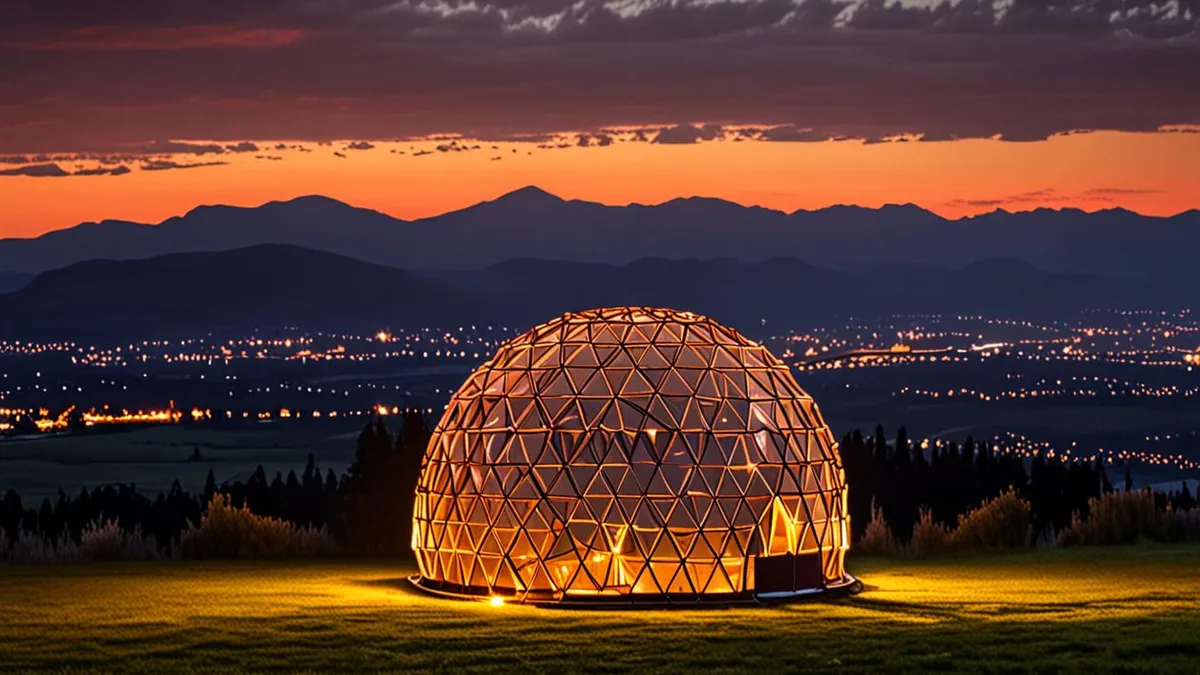
Once you have filtered for low-density sites, the structure you choose shapes both comfort and privacy. Each type trades openness, insulation and soundproofing differently, so it pays to match the structure to your priorities rather than booking on looks alone. If you want a deeper comparison, our article on the key differences between yurts, domes and safari tents breaks down the details.
Cozy and enclosed: yurts and domes
Yurts and domes suit couples who want a snug, enclosed feel. Their curved walls and small windows create a cocoon-like atmosphere, and most are built with insulation and heating for cooler months. That makes them a strong pick for autumn stays, when you want to watch the weather from inside rather than in it. On the privacy side, their solid fabric walls block more sound than thin canvas, though they still transmit some noise in busy sites — so pair them with the spacing checks from earlier in this guide.
Space and light: safari tents
Safari tents are the roomiest option, often sleeping four or more with full furniture and a large veranda. That generous deck is a real draw for couples who want morning coffee outdoors or a spot for an evening drink. The trade-off is openness: canvas walls and wide openings make safari tents feel more connected to neighboring pitches, both visually and in terms of sound. They shine in summer, when warm evenings mean you live outside anyway and the airy canvas feels like a feature rather than a compromise.
Maximum seclusion: cabins and treehouses
Cabins and treehouses give the strongest sound privacy of any glamping structure, thanks to solid walls, real doors and often distance from other units. They also frequently include private hot tubs, which turns an evening soak from a shared-facility gamble into a genuinely intimate experience. The insulation that keeps them quiet also keeps them warm, making them the natural choice for cooler-season trips.
A simple seasonal rule works well: choose insulated domes or cabins for autumn stays, and airy safari tents for summer. Match the structure to the weather and your privacy needs, and the stay will feel considered rather than improvised.
Pick a Quiet Season and Midweek Dates
Timing is one of the easiest ways to improve your odds of privacy without paying extra for it. The shoulder months of May, September and early October combine mild weather with thin crowds, so even popular properties can feel almost empty. You will often get the same romantic setting for less money simply by shifting your dates a few weeks, and hosts tend to be more flexible about check-in times when the site is quiet.
By contrast, June to August weekends are peak season almost everywhere in temperate regions. Even sites that advertise themselves as secluded can feel busy when every unit is occupied and neighbors are coming and going all day. If your schedule only allows summer travel, aim for the edges of weekends rather than Saturday nights, and book early since the most private properties sell out first.
- Midweek stays from Monday to Thursday are often 10 to 30 percent cheaper than weekend rates, and small properties frequently sit nearly empty, so you may have the fire pit, trails and views entirely to yourselves.
- Early October adds an extra perk in many regions: cooler evenings make wood stoves, blankets and hot tubs feel special, and the changing foliage gives you a backdrop you will not get in high summer.
- Shoulder-season light lingers differently too, with softer sunsets and quieter mornings, so plan your evenings around the deck or fire rather than racing to fit activities in.
Once you have picked your dates, pack for the season rather than the calendar picture. Shoulder nights can turn chilly even after warm afternoons, so bring layers, warm socks and something cozy for sitting outside after dark. A complete glamping packing checklist will save you from forgetting those essentials and let you enjoy the cool evening air instead of retreating indoors early.
Budgeting: What Couples Should Expect to Pay
For a genuinely private couples’ unit, expect to pay roughly $150 to $400 per night. The wide range reflects structure, location and how isolated the unit really is. A simple safari tent on a quiet farm sits at the lower end, while a geodesic dome or a treehouse with panoramic views typically commands the top of the scale.
What pushes the price up
Add-ons are the biggest driver of higher rates. A private hot tub, a wood-fired sauna, or a delivered breakfast hamper can each lift the nightly price toward or beyond the $400 mark. These extras are often exactly what makes a couples’ stay feel special, so decide which one or two matter most to you and skip the rest.
How to get luxury for less
The same high-end domes and treehouses that cost a premium in summer often drop to around $150 to $200 per night on shoulder-season midweek dates. Combine May or September travel with a Monday-to-Thursday stay and you can book the property’s best unit for the price of its mid-range one in July. Check whether firewood, hot tub preparation or cleaning fees are included in the quoted rate, as these vary between hosts and can change your total more than you expect.
Vet Reviews and Ask the Host the Right Questions
Reviews and a few direct questions will tell you more about a site’s true privacy than any photo gallery ever could. Marketing shots are taken on the calmest morning in the quietest corner of the property, so they rarely show you what a Friday night feels like when every unit is occupied. Hosts, on the other hand, know exactly how isolated each unit is, and honest answers come easily when you ask specific questions rather than general ones. Work through the steps below before you pay.
- Search reviews for the words “quiet”, “private” and “secluded”. If those words appear repeatedly across different stays, that is a strong signal. Repeated complaints about noise, visible neighbors or shared spaces are a red flag that the marketing photos may be hiding density.
- Message the host and ask how many units will be occupied on your proposed nights. A small property feels completely different when two units are booked versus all of them, and a confident host will answer without hesitation.
- Ask how far the nearest neighboring unit or home is from the one you are considering, and whether the pitch is screened by trees or offset from the others so your deck is not in anyone’s sightline.
- Confirm whether the hot tub is private to your unit or shared with other guests, since this changes both the romance and the practicality of using it in the evening.
- Check check-in flexibility and late-night noise policies. If you want a relaxed evening with wine by the fire, make sure quiet hours and arrival windows will not cut it short.
- Time your booking carefully: lock in dates 2 to 3 months ahead for peak-season weekends, while 4 to 6 weeks is often enough in shoulder season.
Ten minutes of vetting protects the entire trip. A site that answers your questions clearly and promptly is also more likely to look after you once you arrive, so treat slow, vague or evasive responses as part of the picture too. If a host will not tell you the occupancy or spacing, that silence is itself an answer.
Your Checklist for a Private and Peaceful Couples’ Escape
The disappointment most couples fear is arriving at a “romantic” glamping site only to find neighbors a few meters away and voices carrying across the field. The good news is that you can spot this before you pay. Filter for properties with low unit counts, wide spacing of 20 to 30 meters, and screened or offset pitches, and you remove the biggest risk at the very first step.
From there, the rest follows naturally: pick a structure that matches the season and your privacy needs, travel midweek in the shoulder months, and book within the right lead time for your dates. Before paying, verify quietness through reviews and a few direct questions to the host. Do that, and the odds of a peaceful escape shift firmly in your favour. If this helped you plan your trip, leave a comment or share the article with another couple.