Choosing where to stay along Norway’s fjords is harder than it looks. Photos promise glassy water right outside your window, but not every village, season or room labeled “fjord view” actually delivers that experience. Pick the wrong base and you may spend your trip driving to the scenery instead of waking up inside it.
This guide to Norway fjord hotels walks you through the decisions that matter: why a shoreline room is worth paying for, which areas suit different travel styles, when to book for the best rates, how to verify a room’s true water orientation, and whether a historic grand hotel, modern lodge or budget guesthouse fits your trip. We also cover planning activities around your base and pull everything into a simple final checklist, so you can book a waterfront stay that matches the picture in your head.
Why Norway Fjord Hotels Are Worth the Splurge
The main reason to pay extra for a fjord-view room is simple: you get the scenery when it’s at its best. Dawn light on the water and long, soft evenings are the moments photographers chase, and they happen before and after the day-trippers arrive. From your window, you watch mist lift off the water with your coffee, then see the cliffs glow at dusk once the crowds have gone.
Step outside and you’re already there
Many fjord hotels sit directly on the shoreline, which changes how you spend your days. Hiking trails often start near the property, the town pier is a short walk away, and kayaking operators typically launch from the waterfront itself. There’s no morning drive to reach the water — you simply step outside.
Scenery that’s genuinely world-class
This isn’t just convenient positioning. The Geirangerfjord and Nærøyfjord are UNESCO World Heritage sites, recognized for their dramatic depth, towering walls and waterfalls. A waterfront base here puts you inside a landscape of global significance, not just beside a pretty lake. That’s what justifies the splurge: the view from your room is the destination itself.
Best Areas for Waterfront Fjord Stays
Norway’s fjord country is large, and each waterfront base has a distinct personality. The right choice depends on how you want to spend your days — chasing big-name sights, riding scenic railways, or simply sitting on a garden bench above the water. It also affects logistics: driving distances between fjord regions are long, and roads can be slow and narrow, so picking one area and settling in usually works better than hopping between several. Here are the main areas worth considering, with a few details to help you narrow it down.
- Geiranger — The classic first-timer base on the Geirangerfjord, a UNESCO World Heritage site. Cruise ships dock right in the village, and viewpoints like the Eagle Road and Dalsnibba sit within easy reach by car or sightseeing bus. Expect the liveliest atmosphere and the biggest crowds in midsummer.
- Flåm — Built around one of Norway’s most famous scenic railway lines, making it the natural hub if you’re combining train journeys with a cruise or paddle on the nearby Nærøyfjord, also UNESCO-listed. It’s compact, walkable and busy, so book early.
- Balestrand — A relaxed village on the Sognefjord known for its historic artistic connections and leafy shoreline gardens, ideal if you want quiet evenings rather than tour-bus schedules.
- The Hardanger region — A string of waterside villages amid orchards and fruit farms, offering a gentler landscape and a good base for exploring waterfalls and glacier viewpoints in the surrounding area.
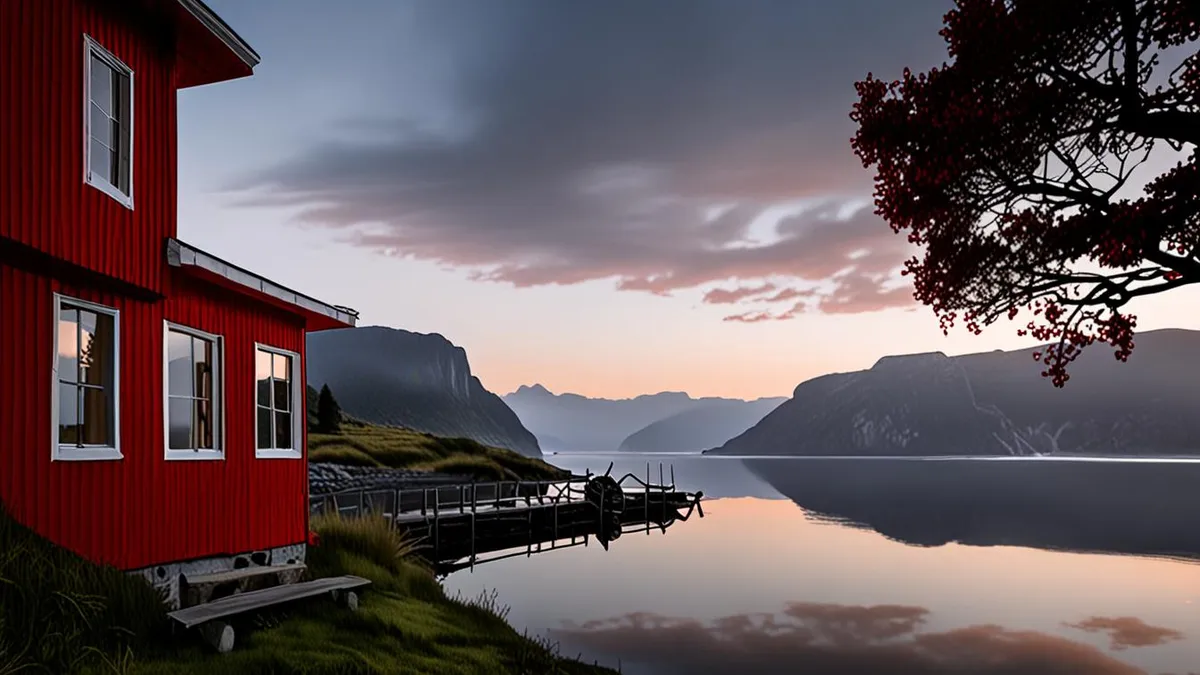
- Lofoten — Above the Arctic Circle, where steep peaks drop straight into the sea around red fishing cabins — a fjord experience paired with dramatic Arctic light rather than classic cruise territory.
If you’re unsure, start with your itinerary rather than the other way around. Rail-focused travelers gravitate to Flåm, first-timers usually love Geiranger’s drama, and anyone craving calm should look at Balestrand or the Hardanger region before booking. Lofoten suits travelers with more time and a car, since distances there are considerable. Whichever you choose, check how your dates line up with the local activity season before committing to a room.
When to Book Norway Fjord Hotels
Timing shapes both your budget and your experience on the fjords. Peak season runs June to August, when the weather is mildest, the days are longest and the waterfront hotels are at their busiest and most expensive. May and September bring lower prices and thinner crowds, with the scenery still in fine form — spring blooms in May, autumn color in September.
How far ahead to book
For a summer stay, reserve your fjord-view room 3-6 months ahead. The best-oriented rooms sell out first, and by the time you book late, the remaining “view” options are often the angled or partial ones. If you have your heart set on a specific hotel or a corner room, earlier is safer.
What you can expect to pay
Shoulder-season waterfront rooms often cost NOK 1,500-3,000 per night, rising sharply in July when demand peaks. That range covers typical mid-range and upper-mid-range properties; grand hotels and premium view categories sit above it. Check current rates directly with hotels, as prices shift year to year and with local events. If your dates are flexible, shifting a July trip to late May or early September is the easiest way to get the same shoreline position for noticeably less.
How to Spot a Genuine Fjord-View Room
Not every room marketed as a “fjord view” actually delivers the postcard. The single biggest factor is where the hotel sits. A building directly on the shoreline looks straight across the water, while a hotel a few streets back at the village edge often peeks between rooftops or past trees. Before you fall in love with photos, check the property’s position on a map relative to the water.
The next step is reading the room description with a skeptical eye. “Fjord view” is a flexible phrase in Norway, and it can mean anything from a full panorama to a sliver of water seen at an angle from one corner of the window. If the booking page doesn’t specify, message the hotel directly and ask two simple questions: which floor is the room on, and which direction does the window face? Most front desks answer honestly and quickly.
Once you know what to look for, these details help you sort a true panorama from a partial angle:
- Corner rooms typically have windows on two sides, so you get water on one side and mountains or village life on the other, widening the whole scene.
- Upper floors lift your sightline above parking lots, boats and neighboring roofs, which matters most in small villages where the shoreline is built up.
- Ask for the highest category with a view, not just any “view” room, since some hotels reserve their best-oriented windows for suites or premium doubles only.
- Request a specific room number in advance; staff can usually tell you which rooms have unobstructed water outlooks and which face the road or hillside.
A few minutes of verification is worth it. Paying for a view upgrade only makes sense if the window actually frames the fjord you came to see.
Choosing Your Stay Type: Historic Hotels vs Modern Lodges
Norway’s classic grand hotels are part of the fjord experience in their own right. Many of the waterfront properties in villages like Geiranger, Balestrand and Flåm date back to the golden age of steamship tourism, when travelers arrived by boat and stayed for weeks. Expect creaking wooden verandas, ornate period lounges, and a long guest history that gives the place real atmosphere. Watching the water from a rocking chair on a century-old veranda is a different pleasure from any modern window seat.
Modern lodges and glass-front cabins
If period charm isn’t your thing, newer lodges and cabin-style properties take the opposite approach: they strip away the ornament and let the view do the work. Floor-to-ceiling glass, clean Scandinavian interiors and minimalist design mean the fjord is the decoration. These stays are common along the Nærøyfjord and in the Lofoten islands, where rorbu-style fishing cabins have been converted into sleek waterfront accommodation. They suit travelers who want to wake up to water from bed, not from a lounge chair.
The budget-friendly middle ground
Between these two extremes sit guesthouses, waterfront apartments and small family-run inns. You trade the grand lounge and the panoramic glass wall for a simpler room, often with a kitchenette, steps from the same shoreline. This option makes the NOK 1,500-3,000 shoulder-season price range much easier to hit, and having a kitchen helps in small villages where restaurant options are limited and pricey. For longer stays, an apartment near the water is usually the smartest value of the three.
There’s no single right answer. Choose the grand hotel for romance and history, the modern lodge for uninterrupted glass-front views, and the guesthouse when budget and flexibility matter most.
Planning Activities Around Your Fjord Base
A fjord hotel is only as good as what you can do from it, so plan your dates around the water first. Fjord cruises and kayaking operators typically run their season from May to September. Outside that window you can still enjoy the scenery from shore, but if paddling or a boat trip is the reason you came, book your stay within those months or you may find the piers quiet and the tour offices closed.
Pick a base where trails start in town
Norwegian fjord roads are narrow, winding and slow, and daily driving eats into your time on the water. The smarter move is to choose a village where marked hiking trails begin within walking distance of your hotel. Geiranger, for example, has waterfall and viewpoint hikes that start right from the village, and Flåm sits at the junction of several walking routes. When trails start at your doorstep, you can hike in the morning, kayak in the afternoon, and never touch the car.
Use rail and bus segments instead of long detours
If your itinerary includes Geiranger or Flåm, resist the temptation to drive every leg yourself. Both villages are built around scenic connections: Flåm is famous for its mountain railway, and both are served by seasonal bus and boat links that are often faster and far more relaxing than a long car detour on narrow roads. Mix one or two scenic rail or bus segments into your route, rent a car only for the stretches where it genuinely adds freedom, and let the scheduled transport handle the dramatic climbs. You’ll arrive calmer, park less, and see more of the fjord from the window seat instead of the mirror.
Wrapping Up Your Fjord Stay Plan
Planning a fjord stay works best when you tackle three decisions in the right order. Start by choosing your base: Geiranger, Flåm, Balestrand, Lofoten or the Hardanger region each offer a different flavor of waterfront travel. Once your area is set, secure your room early if you want summer dates, because the best-oriented waterfront rooms tend to disappear long before the season begins.
Before paying extra for an upgrade, confirm exactly what you are getting. Ask the hotel about the room’s floor and orientation, since a ‘fjord view’ label does not always mean a full panorama over the water. Finally, time your trip around the water season, when fjord cruises and kayaking typically operate, so your room’s location becomes part of the experience rather than just a backdrop. If this helped you plan your trip, leave a comment or share the article with a fellow traveler.