Many dog owners assume glamping means leaving their pet behind at a boarding kennel, but that is rarely the case anymore. A growing share of glamping sites actively welcome dogs, and some operators are happy to talk about nothing else. The catch is that policies vary widely from one site to the next, so a few simple checks before you book can save you from an awkward arrival with a dog the owner did not expect.
This guide walks you through the whole process of pet-friendly glamping. You will learn why so many sites accept dogs, how to search for ones that genuinely do, which questions to ask before paying, and how to choose a site with the right space for your dog. We also cover the best time to book, what to pack for your four-legged companion, and the key takeaways to keep in mind.
Why Pet-Friendly Glamping Is Easier to Find Than You Think
If you have been putting off a glamping trip because you assumed dogs were not allowed, you may be pleasantly surprised. Plenty of glamping operators are dog owners themselves, and they build their whole experience around guests who travel with pets. Many of them market their sites as pet-friendly year-round rather than making dogs a seasonal exception, which means you can plan an autumn or winter escape with your dog just as easily as a summer one.
Accommodation styles that suit dogs
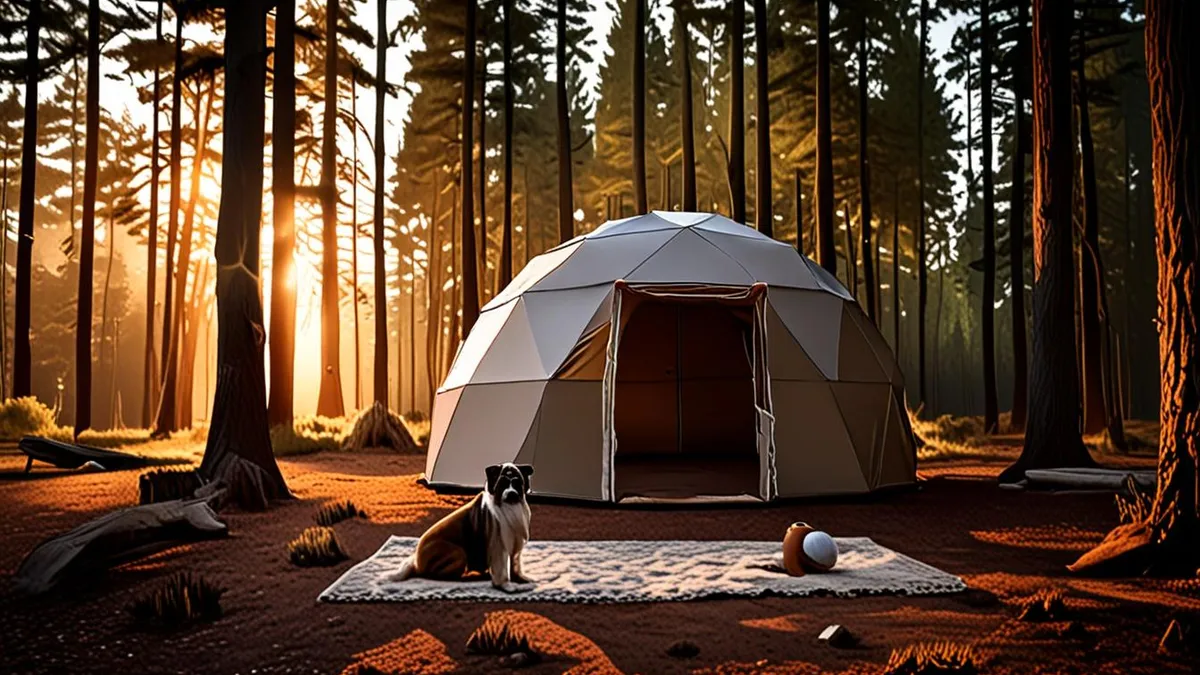
The type of unit matters more than you might think. Yurts, domes and safari tents with private decks tend to suit dogs far better than shared campground facilities. Your dog has its own entrance, its own patch of outdoor space, and no shared washrooms or communal areas where a nervous animal might feel overwhelmed. A private deck also gives your dog a spot to settle while you cook or read, without a lead tethered to a picnic table.
Why rural locations often work best</h3
Location plays a big role too. Rural sites with open land often impose fewer restrictions than urban or beachfront properties, where space is tight and neighbors are close. On a countryside site, your dog is more likely to have room to roam, and owners are less worried about noise or dogs disturbing other guests. Beachfront properties, by contrast, frequently ban dogs from the sand or restrict them to certain hours, so read the fine print carefully before choosing a coastal spot.
How to Search for Sites That Actually Welcome Dogs
Finding a site that truly welcomes dogs takes a bit more than ticking one filter box. Listings can be outdated or vague, photos rarely show the reality of a pitch, and “pet-friendly” can mean anything from genuinely dog-obsessed operators to places that simply tolerate one quiet lab. So treat your search as a two-stage process: narrow down your options online first, then confirm the details directly with the owner before any money changes hands. Skipping that second stage is the most common mistake dog owners make, and it is the one that leads to awkward arrival-day surprises.
- Filter for pets on booking platforms. Most major platforms let you filter results by “pets allowed,” which is the fastest way to cut a long list down to a realistic shortlist. Just do not treat that filter as a guarantee. Filters are only as accurate as the owner’s last update, and listings sometimes sit unchanged for years. Use the filter to build your shortlist, then always confirm by email or phone before paying any deposit.
- Read the site’s own policy page. Look for specific wording like “dogs welcome,” “pet-friendly units” or “case by case.” That last phrase is a signal to get in touch, since it usually means approval depends on your dog’s size, number or behavior rather than an automatic yes. A clear, detailed policy page is generally a good sign that the operator takes pet bookings seriously.
- Check for dog extras in the listing. Sites that mention bowls, dog beds, towels or a designated off-leash area are usually genuinely set up for pets, not just tolerating them. These small touches tell you the operator has thought about what traveling dog owners actually need, and they often hint at how the rest of the site is run.
Once you have a confirmed booking, the next step is packing. Most sites provide little beyond a single bowl, so it pays to work through a complete glamping packing checklist and add your dog’s gear on top of it. A little preparation here saves you from a cold night on a bare canvas floor, for both of you.
Questions to Ask Before You Book
Once you have found a promising site, a short email or phone call before booking will answer everything a listing leaves out. Operators who welcome dogs are usually happy to talk through the details, and their answers tell you a lot about how organized the site really is. A vague or evasive reply is often a sign that the “pet-friendly” label is more marketing than practice. The three big topics are how many dogs you can bring, what it costs, and what the unit itself is like.
Start with the basics: how many dogs are allowed per unit, and is there a weight limit? Many sites limit guests to 1 or 2 dogs per booking, and some apply a weight limit around 50 lbs (23 kg). If you have a larger breed, ask directly rather than assuming the limit does not apply to you. It also helps to ask whether the count includes puppies or only adult dogs, since policies vary. Then move on to the practical details below.
- How the pet fee is charged. Fees typically run $10 to $50 per dog per night, but some sites charge per stay instead. A per-stay fee can work out much cheaper for a week-long trip, so ask which system applies before you compare prices between sites. Also confirm whether the fee covers one dog or each dog you bring.
- Whether dogs can be left alone in the unit. Some sites allow it, others forbid it outright, and a few allow it only if your dog is crated. If your dog barks or scratches when left in an unfamiliar space, plan to take it with you everywhere on site. Ask too whether you need to bring your own crate.
- How the unit closes. Ask whether the tent, yurt or dome has a secure closing door rather than a zippered flap. A dog that has learned to nose open a zip, or one that reacts to wildlife outside, needs a door that latches properly. This question also tells you whether your dog can settle safely at night without constant supervision.
Choosing a Site With the Right Space for Your Dog
Not all glamping sites offer the same amount of space for your dog, and this can make or break the trip. The single most valuable feature to look for is a securely fenced area where your dog can run off-leash. A good benchmark is at least 1/4 acre of enclosed land — enough room for a proper game of fetch and a sniff-around session without you hovering nervously at the end of a lead.
Ask the operator directly whether the fence is dog-proof: check the height, whether there are gaps at the bottom, and if the enclosure is separate from parking areas or shared guest spaces. A photo on a booking page rarely tells the whole story, so a quick email can save you a stressful arrival.
Look at what surrounds the site
Even a well-fenced pitch can be a poor choice if a busy road runs alongside it, or if neighboring fields hold livestock that will send your dog into a barking frenzy. Rural sites near deer, sheep or cattle can be wonderful for walks but risky for dogs with a strong prey drive. Ask what borders the property and how close the nearest road is to the units.
Finally, think about daily exercise. A shaded pitch keeps your dog comfortable on warm afternoons, and walking trails that start right from the site mean you can head out for a morning stroll without loading the car. If you are weighing up several options, our guide on how to choose the perfect glamping site for your first trip covers location and layout factors that matter just as much for dogs as for people.
When to Book: Timing Your Pet-Friendly Glamping Trip
Timing matters more when you travel with a dog, simply because pet-friendly units are a smaller slice of any site’s inventory. During peak season, which runs from June to August, these units tend to sell out first — often 2 to 3 months ahead. If you have your heart set on a summer yurt or safari tent, put a reminder in your calendar and book as soon as that window opens.
Whenever your schedule allows, aim for the shoulder months of May or September instead. You will usually find better availability, lower rates, and — just as importantly for your dog — cooler temperatures that make long walks and lazy afternoons on the deck far more pleasant. For a sense of how much you can save outside peak dates, our guide to typical glamping prices breaks down how rates shift through the year.
Think about your dog’s heat tolerance
If you have a breed prone to overheating — think huskies, bulldogs, pugs or other flat-faced and thick-coated dogs — it is best to avoid the height of midsummer altogether. Canvas structures warm up quickly, and a yurt or safari tent can feel noticeably warm by mid-afternoon even when the outside temperature seems manageable.
A spring or early autumn trip sidesteps that problem entirely. Your dog gets crisp morning air for walks, and you get a site that is quieter and often cheaper. If summer is your only option, pick a shaded pitch, plan walks for early morning and evening, and confirm the unit has good ventilation or a fan before you commit.
Packing for Your Dog
Here is a truth worth knowing before you pack: most glamping sites provide nothing for dogs beyond a single bowl, if that. Some go further and offer dog beds, towels or treats, but you should treat those as a bonus rather than a given. Pack as if you are bringing everything your dog needs for a weekend away, because in most cases you are.
The essentials start with a familiar dog bed, sturdy bowls for food and water, a long lead for exploring, and plenty of towels. A long lead is especially useful at sites without full fencing, since it gives your dog freedom to sniff and roam while you keep control near roads, livestock or other guests.
It is also smart to carry paperwork. Bring a copy of your dog’s vaccination records and your vet’s contact details — some sites ask to see them at check-in, and if your dog falls ill or gets injured, a local clinic will want that history immediately. A folder in the car or a photo on your phone both work.
Finally, budget space for the mess. Canvas floors and grassy pitches mean muddy paws are almost guaranteed, especially after rain. A few extra items make cleanup painless:
- Paw wipes or a damp cloth in a sealed bag — quick wipe-downs at the tent door keep canvas floors and bedding clean without a full bath.
- A brush for daily grooming — grass seeds, burrs and loose fur build up fast on rural sites, and brushing outdoors saves your dog bed from becoming a fur nest.
- A spare towel kept by the door — designate one towel purely for wet paws and muddy legs so your drying supply never runs out mid-trip.
- Poo bags in more quantity than you think you need — rural sites expect you to clean up, and shops are often a drive away.
The Bottom Line for Dog Owners
Leaving your dog at home is not a requirement for a glamping getaway. Plenty of sites roll out the welcome mat for four-legged guests, and landing one usually comes down to a simple routine: filter your searches for pet-friendly units, confirm the policy directly with the operator before paying, and ask a few pointed questions about limits and fees.
Once you have a shortlist, a handful of essentials will make or break the trip. Budget for a nightly pet charge, which at most sites falls somewhere in the ten-to-fifty-dollar range per dog, and reserve early if you want summer dates, since dog-friendly units tend to disappear first. Look for fenced ground of at least a quarter acre so your dog can stretch its legs safely, lean toward May or September if heat is an issue for your breed, and bring your own bed, bowls and towels, because most operators offer little beyond a single bowl. Nail those details, and the trip can be just as much fun for your dog as it is for you. If this helped you plan, leave a comment or pass the article along to a fellow dog owner.