You’re scrolling through a listing for a $300-per-night safari tent and the same question keeps nagging at you: why not just book a hotel for half that? It’s a fair challenge, and it’s exactly the question we’ll answer here. Whether glamping is worth the price depends on more than the nightly rate — it depends on what you get for it, who’s traveling with you, and when you go.
In this article, we’ll break down what you actually pay for glamping versus a mid-range hotel, what that price buys that a hotel room can’t, and the situations where each option clearly wins. We’ll also show you how to stretch a glamping budget further and the questions to ask before you commit to a priced-up stay. By the end, you’ll know whether that tent is a splurge worth making or a booking you’d regret.
What You Actually Pay: Glamping Prices vs Hotel Rates
Glamping in the US typically runs between $150 and $400 per night, with luxury domes climbing even higher. Mid-range hotels in the same regions usually cost $120 to $250 per night. On paper, that makes glamping look like a straight premium — but the comparison isn’t that simple, because glamping rates behave differently from hotel rates.
The biggest difference is how the price scales with people. Most glamping units sleep two to four guests in one space, and you pay one rate for the whole unit. Hotels charge per room, so your costs multiply as your group grows.
The group math changes everything
Take a $350 glamping tent that sleeps four. Split it between four friends and you’re each paying $87.50 per night. Now book two hotel rooms at $180 each for the same four people, and the per-person cost jumps to $90 — with far less atmosphere. For families and group trips, glamping can actually come out cheaper per head, not more expensive.
Timing matters as much as the rate
One more factor to keep in mind: peak-season pricing. During the June-August summer window, glamping rates can run 30-50% higher than shoulder-season prices for the exact same unit. A tent that costs $250 in May might top $350 in July. Check both the nightly rate and the dates before comparing against a hotel, since hotels shift less dramatically between seasons.
What the Price Buys You That a Hotel Can’t
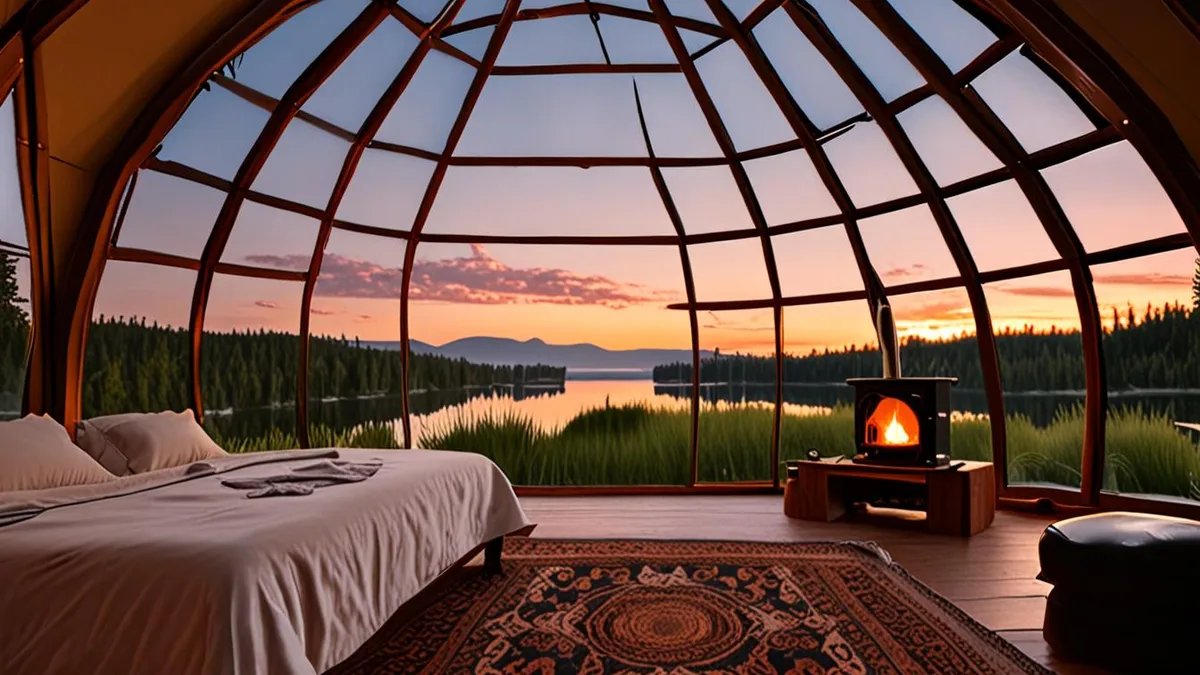
This is where the price comparison gets interesting, because a hotel room and a glamping unit aren’t really selling the same thing. A mid-range hotel puts you in a corridor, often facing a parking lot or another wing of the building. A well-sited glamping unit puts you alone in the landscape — waking up to a lake, a forest edge, or a mountain view with nobody else’s window in sight.
That privacy and setting are the core of what you’re paying for. But many sites also bundle in extras that hotels either charge for or don’t offer at all. Fire pits, kayaks, hot tubs and breakfast are common inclusions, and if you paid for them separately they could easily add $50-$100 per day to a trip. Then there’s the accommodation itself: geodesic domes, yurts and safari tents are one-of-a-kind structures, and no standard hotel room replicates them. If you’re curious how these styles differ, this guide to glamping in yurts, domes and safari tents breaks down what each one actually offers.
- Stargazing from your own deck: many units sit far from town lights, so you get dark skies at night — something a city or highway-adjacent hotel can rarely match.
- Space to spread out: a single glamping unit often includes an outdoor seating area or deck, giving your group more usable space than two adjoining hotel rooms.
- Animals at your doorstep: depending on the location, you might wake to birdsong, deer crossing the property, or loons on the lake — part of the stay, not an add-on tour.
When Glamping Is Worth the Price
Glamping earns its price tag in specific situations, and knowing whether you’re in one of them is the whole decision. The clearest case: special occasions and couple getaways where the setting itself is the point. If you’re celebrating an anniversary or planning a weekend where the highlight is sipping coffee on a deck above a lake, the premium over a hotel buys exactly the experience you came for.
The second group that gets real value: travelers who want the outdoor experience without the gear. A proper tent, sleeping pads, a stove and a cooler can cost hundreds to buy, plus hours to pack and haul. Glamping hands you the campfire-and-stars experience with the bed already made — and if you’re new to it, a complete glamping packing checklist covers the few things you still should bring. The third winner is groups, since splitting one large unit can push the per-person cost below what hotel rooms would cost.
- Birthdays and milestone trips: a dome with a private hot tub turns a simple weekend into a memorable event, often for less than a fancy hotel suite.
- Families with young kids: children get the fun of “camping” — s’mores, flashlights, bunk-style sleeping — while parents keep real beds and a proper roof overhead.
- Digital detox weekends: many sites have limited or no Wi-Fi by design, which is a feature if your goal is switching off rather than a flaw.
When a Hotel Is the Smarter Choice
Glamping shines when you spend real time at the property. On a one-night stopover, you barely get to enjoy any of it. If you’re driving a long route and just need a clean bed at 10 p.m. before an early start, a hotel near the highway does the job faster and often cheaper. You pay for the setting either way, but you only experience it for a few waking hours — and that’s before factoring in that glamping rates typically run $150-$400 per night.
Weather is the other big factor. A dome with a panoramic window is magical on a crisp fall evening and far less appealing during three days of steady rain. If the forecast or the season means you’ll be stuck inside anyway, a standard room with solid walls, blackout curtains and proper climate control simply fits the trip better. Check what heating and cooling the unit actually has before you commit.
There’s also the consistency question. Hotels are built around predictable amenities, and for some travelers that matters more than atmosphere. Before you book, it’s also worth weighing glamping against a traditional tent trip — our guide to glamping vs camping breaks down that choice if you’re torn between the two.
- Room service and on-site dining: after a long travel day, having a restaurant downstairs beats driving 30 minutes to the nearest town for dinner.
- A gym and reliable Wi-Fi: business travelers or anyone keeping up a workout routine will find these hard to replace at a remote tent site.
- Daily housekeeping: fresh towels and a made bed every day are standard at hotels and rare at glamping properties, where you often handle your own firewood and dishes.
- Consistent climate control: a thermostat you set yourself matters if you sleep hot, travel with a baby, or have family members sensitive to temperature swings.
How to Get More Value From Your Glamping Budget
The single biggest lever on glamping price is your calendar. The same unit that commands a premium in peak summer often costs noticeably less in shoulder season — and you usually get a better experience for it. Shifting a trip to May, September or early October often means milder weather for hiking, fewer crowds on trails and at the site, and a nightly rate that feels far easier to justify. For many destinations, those months hit the sweet spot where the weather is still good but demand has dropped.
Timing your booking matters just as much. Most glamping sites want reservations 2-6 months ahead for summer weekends, and waiting until the last minute usually means paying a premium for whatever units are left — or settling for a less desirable one at the back of the property. If your dates are fixed around a holiday or a wedding, book early. If your schedule is flexible, watch for midweek openings, which are often cheaper than Fridays and Saturdays at the same property.
One more tip before you commit: ask about minimum stays. Some sites require two or three nights on weekends, which changes the math for shorter trips and can quietly double the cost of a quick getaway. If a minimum stay doesn’t fit your plans, a shoulder-season midweek visit is often the smarter play — lower rates, easier availability and fewer restrictions all at once.
Questions to Ask Before You Book a Priced-Up Glamping Stay
Glamping listings can make a tent look perfect in photos while leaving out the details that decide whether you’ll actually enjoy your stay. A few direct questions before you book will tell you more than any gallery of sunset shots, and hosts who answer them clearly are usually the ones running a well-organized operation.
The bathroom question comes first, because it changes the value equation dramatically. A private en-suite bathroom justifies a premium rate; a shared bathhouse 100 yards away puts you closer to traditional camping than the price suggests. Neither is wrong — but you should know which one you’re paying for before your card is charged. Ask how many guests share the bathhouse if there isn’t one private, since a long walk at midnight loses its charm quickly.
Heating and cooling matter just as much. A wood stove or heat pump turns a chilly night into a cozy one; an unheated canvas tent can end the trip early. Ask exactly what warms and cools the unit, whether it runs all night or only when staff are on site, and what happens if it fails mid-stay.
Finally, think through the practical details that photos never show. Power access, phone signal, whether you need to bring your own bedding, and how food and drink work on site all shape the experience. Getting these answers in writing also gives you something to point to if the listing doesn’t match reality on arrival.
- Distance from parking: some sites require a 5-15 minute walk with your bags, which is romantic on arrival and less fun in the rain with a cooler and two kids in tow.
- Proximity to shared amenities: ask whether the fire pit, hot tub and bathhouse are steps away or a hike, since that shapes how much you’ll actually use them.
- Realistic weather window: ask the host when conditions are typically pleasant at that destination — a desert dome in July or a mountain yurt in mud season can be uncomfortable no matter how good the rate is.
- Noise and privacy: find out how close neighboring units are, since “secluded” can mean anything from true isolation to tents spaced 20 feet apart.
The Verdict: Is Glamping Worth the Price?
So, is that $300-per-night safari tent worth it over a hotel? It can be. Glamping at $150-$400 per night wins when the setting itself matters to you, when included extras like fire pits, kayaks or hot tubs offset the nightly rate, and when splitting a unit that sleeps 2-4 guests brings the per-person cost below two hotel rooms. In those cases, the tent isn’t a compromise — it’s the whole point of the trip.
Hotels remain the smarter pick for short one-night stops, trips during unreliable weather, and travelers who want guaranteed climate control, dining and consistency. If you do go glamping, remember two levers: shoulder-season dates and booking early. Those choices most improve the value you get for your money. Have you tried glamping — or skipped it for a hotel? Share your take in the comments.