Portugal looks perfect for a glamping trip: sunny beaches, terraced vineyards and mountain plateaus, all packed into one small country. The problem is choosing where to book. Do you wake up to ocean views on the Algarve cliffs, a dome among Douro Valley vines, or a yurt in the cool Serra da Estrela hills? With so many tempting regions, many travelers end up scrolling through listings for weeks and still feel unsure.
This guide breaks glamping in Portugal down region by region, so you can match the right stay to the right place. We’ll look at why the country works for glamping almost year-round, compare the coastal spots in the Algarve and along the Atlantic shore, and explore countryside options in the Douro, Alentejo and Serra da Estrela. You’ll also find a clear comparison of yurts, domes and safari tents, realistic price ranges and booking timelines, plus a sample coast-to-countryside route to tie it all together.
Why Glamping in Portugal Works Year-Round
Portugal is one of the few European destinations where glamping genuinely works in every season. The southern Algarve coast enjoys 300+ days of sunshine per year, which means even a January stay can involve lunch on the deck and long beach walks. Winter sites are quieter and often cheaper, though you should pack layers, as inland nights can get chilly once the sun goes down.
The shoulder season sweet spot
If you want warm days without peak-season crowds, aim for May or October. These shoulder months offer milder weather and lower prices than the summer peak, which runs June to September. You can still swim on many days, and popular areas like the Algarve feel noticeably calmer. Book 2–4 weeks ahead for shoulder season rather than the 2–4 months summer demands.
Small country, big variety
Portugal spans roughly 570 km north to south, which changes how you plan. Instead of picking one region, you can realistically combine coast and countryside in a single trip: a few nights by the sea followed by vineyard domes or mountain yurts, all without long internal flights. A full coast-to-countryside itinerary typically needs 10–14 days to feel relaxed rather than rushed.
Coastal Glamping: The Algarve and the Atlantic Shore
The Algarve is Portugal’s best-known glamping coast, and for good reason. Sites here put cliffside tents and domes within easy reach of famous beaches, including the Benagil area with its sea caves and golden limestone formations. You get the postcard scenery without giving up real beds, proper bathrooms and often a pool. It’s the easiest region for first-time glampers, especially families, since many sites sit a short drive from towns with supermarkets, pharmacies and restaurants.
Surf country on the Costa Vicentina
Head west and the vibe changes completely. The Costa Vicentina, the wild Atlantic stretch between Sagres and Zambujeira do Mar, draws surfers to low-key eco-lodges and tented camps. Expect a more rustic, community feel: communal kitchens, board rentals and evenings around a fire. If your ideal day is an early surf session followed by a long lunch, this is your coast.
Both coasts get busy in summer, and the best cliffside and beachfront spots tend to sell out first, so plan ahead if you have your heart set on a specific site. The Atlantic shore is also famously breezy, even on sunny days, so bring layers and a windproof jacket. Coastal sites often lack on-site shops, so check a complete glamping packing checklist before you go. A few extra practical tips:
- Stock up on groceries and drinking water before heading to remote beachside sites, as the nearest store can be a 20-minute drive away.
- Ask your host about surf lessons and board hire if you’re a beginner; many Costa Vicentina camps arrange both.
- Bring a dry bag for beach days, since sand and saltwater are hard on phones and cameras.
Countryside and Vineyard Stays: Douro, Alentejo and Serra da Estrela
The Douro Valley: wine with your wake-up view
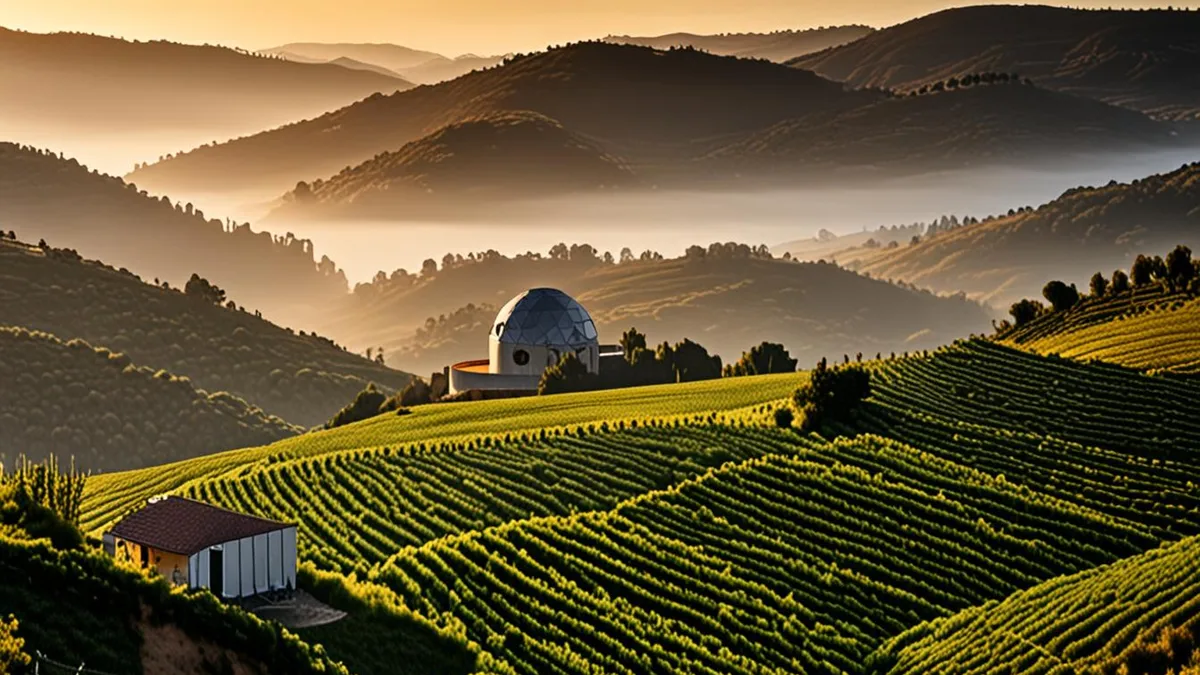
In the Douro Valley, vineyard glamping pairs wine tastings with river-valley domes set among terraced hillsides. Many sites sit on or near working quintas, so you can spend the day visiting cellars and tasting port, then return to a dome with a panoramic window over the river. The landscape is steeper and more dramatic than most visitors expect, and a car makes exploring the small villages far easier.
Alentejo’s dark skies and quiet farms
Alentejo is Portugal’s emptiest region: rolling plains, cork oaks and whitewashed towns. That emptiness is the attraction. The lack of light pollution suits dark-sky domes where you can stargaze from bed, and quiet farm stays let you wake up to olive groves rather than traffic. It’s the right choice if your idea of luxury is silence and a long dinner under the stars.
Serra da Estrela, the country’s highest mountain range, offers a third option. Mountain sites here bring cooler summer nights, a welcome break from the heat, and striking autumn foliage in the colder months. Hiking trails, sheep’s-milk cheese villages and glacial valleys are all close by, making it a natural second stop after a coastal stretch.
Choosing Your Stay Type: Yurts, Domes and Safari Tents
Portugal’s glamping sites fall into three main categories, and picking the right one matters more than picking the right region. The structure you sleep in shapes your whole experience, from how much you cook to how well you sleep at night.
Geodesic domes dominate the vineyard and stargazing scene, especially in the Douro Valley and Alentejo. Their panoramic windows and often transparent roof panels are designed for exactly those settings: waking up to rows of vines or falling asleep under a sky with almost no light pollution. Many domes come with en-suite bathrooms and small kitchenettes, so they lean toward the comfortable end of the spectrum.
Safari tents are the family workhorse, and you’ll find most of them near the coast. They typically offer real beds for four or more people, a full kitchen, and a covered deck where you can eat breakfast a few steps from the beach path. If your trip revolves around sand and swimming rather than wine and stars, this is usually the most practical choice.
Yurts are the simplest of the three and show up mostly in inland and mountain areas, such as the countryside around Serra da Estrela. Expect a more rustic setup: shared or basic bathroom facilities, fewer electrical outlets, and a cozy round space that suits couples more than families with lots of gear.
If you’re still weighing the options, it helps to read a comparison of yurts, domes and safari tents before you book.
- Insulation varies a lot: domes and safari tents usually have proper flooring and better airflow, while yurts can feel cooler at night in mountain regions, so pack an extra layer outside summer.
- Check the kitchen level: a “kitchenette” often means a two-burner stove and a small fridge, while safari tents may include a full oven—important if you plan to cook most evenings.
- Domes book out fastest: because many vineyard and dark-sky sites only have a handful of units, their availability disappears earlier than larger safari-tent camps.
- Ask about shade and wind exposure: coastal safari tents sit on open decks that can be breezy in the afternoon, while inland yurts are often tucked among trees.
What Glamping in Portugal Costs and When to Book
Glamping in Portugal costs less than most hotels with comparable views, but prices swing widely by season and structure. As a rule of thumb, budget around €60–120 per night for tents and domes, while luxury lodges with private pools or full-service setups run €150–300. Coastal Algarve sites sit at the top of each band in summer; inland Alentejo farm stays often sit at the bottom.
Timing matters as much as location. For a June to September stay, reserve well ahead, because the best-positioned domes and safari tents near the coast sell out first. In May or October, booking a few weeks ahead is usually enough, and you’ll often find midweek availability at short notice. Step outside the peak season and prices typically drop by a third or more, which is the single biggest lever on your budget. If you want a fuller picture of how nightly rates break down worldwide, this guide to typical glamping prices puts Portuguese rates in context.
- Watch for cleaning or booking fees: some platforms add a flat service charge that can add noticeably to a two-night stay.
- Ask about minimum stays: coastal sites in peak summer frequently require three or more nights on weekends.
- Compare weekday rates: arriving Sunday or Monday can shave a meaningful amount off the nightly price even in high season.
- Check what breakfast includes: farm stays often throw in local produce, which offsets a slightly higher rate.
Planning a Coast-to-Countryside Glamping Route
Portugal rewards a bit of route planning, because the distances are small but the landscapes change fast. You can drive from the northern vineyards to the southern surf beaches in a single day, yet the country stretches several hundred kilometers from top to bottom, so hopping between regions every night turns a holiday into a relay race. The trick is to pick two or three bases and let each one anchor a chunk of your trip.
- Land near Lisbon or Porto first. Both cities serve as main gateways and each sits within 1–2 hours of major glamping regions, which makes either one an easy first night after a long flight.
- Split the trip into two halves. Give roughly half your days to the southern coast, then the other half to the inland wine and mountain country, so you never feel rushed at either end.
- Decide your direction early. Starting in Porto lets you finish with beach time in the south; starting in Lisbon flips the logic and saves wine country for last, when you can linger over tastings.
- Rent a car at the airport. Rural glamping sites rarely have public transport access, and a car also lets you stop at viewpoints, markets and small villages between bases.
- Build in a buffer night. The long haul between the south coast and the Douro Valley eats up most of a day, so avoid booking check-ins back to back.
Whichever direction you choose, keep daily driving to a manageable stretch and stay two or three nights per base. That rhythm gives you time to actually enjoy each region instead of packing up every morning, and it leaves room for the spontaneous detours that often become trip highlights.
Wrapping Up Your Portugal Glamping Plan
The hardest part of planning a glamping trip to Portugal isn’t finding a great site — it’s choosing between them. The good news is you don’t really have to pick just one. With the country spanning roughly 570 km north to south, a single trip can pair a coastal stay with a vineyard or mountain escape, and Lisbon or Porto make easy gateways either way.
A simple rule of thumb: match the stay type to the setting. Domes suit inland vineyards and stargazing spots, while safari tents work best by the sea for families. Aim for May or October if you want milder weather and lower prices, and book 2–4 months ahead for summer, when rates typically run €60–300 per night. If this helped you narrow down your plans, leave a comment or share the article with a fellow traveler.