If you have ever booked a glamping trip and then lay awake wondering whether you would actually sleep in a real bed with proper linen, or on a thin camping mattress with a sleeping bag you brought yourself, you are not alone. Glamping bedding is one of the most common sources of confusion for first-time guests, because what counts as standard varies a lot between sites. Some provide made-up beds with duvets and pillows as a matter of course, while budget tent sites may charge a linen hire fee or ask you to bring your own sleeping bag.
This guide clears up the guesswork. We will look at what glamping bedding actually includes, when you need to bring your own linen, and how your bedding needs change with the season. We will also cover what makes a glamping bed genuinely comfortable, the questions worth asking before you book, and how bedding differs between domes, safari tents and treehouses, before wrapping up with the bottom line.
What Glamping Bedding Actually Includes
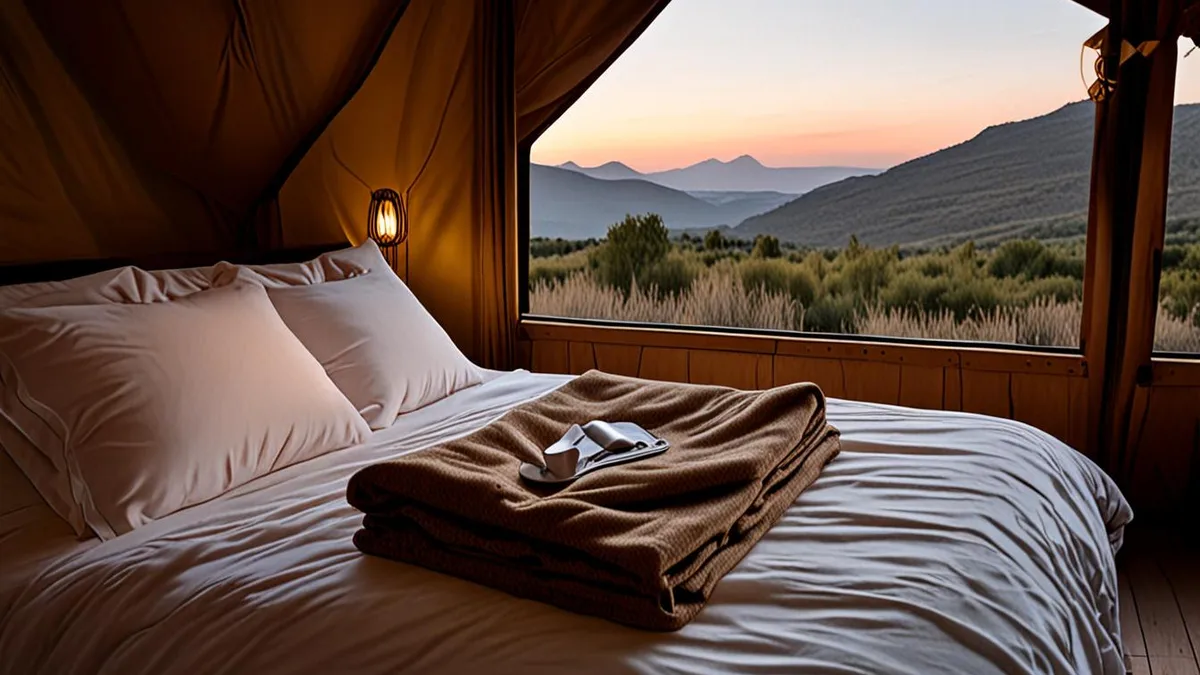
At most established European glamping sites, a real bed with a frame or slats is the standard, not the exception. This is the core difference from regular camping: you are not sleeping on an inflatable matress on the ground, but on an actual bed raised off the floor, often with a proper headboard or wooden base. Some sites use solid platform bases, others slatted frames that allow air to circulate underneath, which helps keep bedding dry in canvas structures.
The typical linen package covers the basics you would expect at a hotel: a fitted sheet, a duvet with a duvet cover, and pillows with pillowcases. Many operators also leave a spare blanket in the tent or dome, though this varies. Beds usually range from 140–180 cm doubles, with single beds commonly provided for children in family tents. If you are used to a king-size bed at home, note that 140 cm is closer to a full or queen, so check the exact size if space matters to you.
Towels are usually a separate matter
Here is where many booking pages get confusing: towels are often not part of the bedding package at all. Some sites include one towel set per guest, others charge extra per person or per set, and a few offer mid-stay towel changes for a fee. Before you book, read the accommodation listing carefully and check exactly what the package lists, including whether towels appear anywhere in the inclusions. If the listing is unclear, a quick message to the site will settle it, and it is far better to ask than to arrive expecting hotel-style service and find a bare bathroom rail.
When You Need to Bring Your Own Linen
Not every glamping site hands you a made-up bed. Budget and self-catering tent sites sometimes ask guests to bring their own sleeping bags or hire linen on arrival, and this is the single most common surprise for first-time glampers. The listing may look identical to a fully serviced safari tent at twice the price, so the difference comes down entirely to what the rate includes. This is also one of the classic pitfalls covered in mistakes first-time glampers make and how to avoid them, and bedding is right near the top of the list.
When linen is not included, hire fees typically run €10–25 per person, or €20–50 for a couple. On a short stay, that can add a noticeable chunk to what looked like a cheap booking, so it belongs in your budget from the start rather than as an arrival-day shock. The golden rule is simple: confirm bedding inclusions before booking rather than assuming linen is provided. Sites differ even within the same region and price band, and the booking summary should state clearly whether linen is in the rate.
Also worth clarifying is the state of the beds when you arrive. Some sites make them up for you, hotel-style. Others leave a linen pack folded on the bed and expect you to fit the sheets yourself, which matters if you are arriving late with tired children.
- Made-up on arrival: the site staff fit sheets and duvet covers before you get there, so you can walk in and go straight to bed, which is worth paying slightly more for on late arrivals.
- Linen pack, self-made: you receive fitted and flat sheets, possibly a duvet cover, and make the bed yourself, so allow ten to twenty minutes, and check whether a duvet cover is actually in the pack or only sheets.
- Sleeping bag option: some budget sites let you skip linen hire entirely if you bring your own sleeping bag, which can suit warmer months but feels less comfortable than a proper duvet.
- Extras to ask about: pillowcases for children’s pillows, spare blankets and mattress protectors are not always in the standard pack, so mention them when you confirm your booking.
How Glamping Bedding Changes With the Season
The same tent that feels cozy in July can feel drafty in October, so bedding needs shift more with the seasons in glamping than in any hotel room. In summer, the equation is simple: stays from June to August usually work fine with the standard duvet alone, and many guests end up sleeping with just the sheet because canvas tents and domes can warm up noticeably on sunny afternoons. If anything, ask whether a lighter summer duvet or an extra fan is available rather than worrying about warmth.
Shoulder-season nights in April–May and September–October are a different story. Temperatures can drop sharply after sunset even when days are mild, and this is exactly when an extra blanket or a hot water bottle earns its place. Many sites keep spare blankets in the unit, but not all do, so it is worth asking at booking and packing a warm layer for sleeping if you run cold.
Winter stays and layered bedding
Winter glamping in domes relies on wood stoves, with bedding chosen for near-freezing nights outside. The trick is that the stove keeps the center of the dome warm while the canvas edges stay cool, so layered bedding beats one thick duvet: a sheet, a blanket and the duvet lets you adjust through the night as the fire burns down. Canvas structures also breathe, which is healthy but can feel slightly damp in cold weather, so layers again win over a single heavy duvet that traps moisture. If you are planning a cold-season trip, it helps to read up on how cold a dome or tent actually gets in winter and how to stay warm before deciding what to pack.
Sleep Quality: What Makes a Glamping Bed Comfortable
The single biggest factor in how well you sleep in a glamping unit is not the mattress itself but what sits underneath it. A slatted or solid bed base keeps you stable, lets air circulate under the mattress and stops that sagging, hammock feeling you get from a bed placed straight on a platform. When a site invests in a proper frame, the rest of the sleeping setup usually follows.
Light is the second thing to think about. Blackout curtains are rare in canvas structures, and in summer the sun rises early, sometimes before five in the morning in northern Europe. A simple eye mask weighs almost nothing and makes a real difference. If you enjoy waking with the light, though, canvas can be a pleasure — many travelers specifically choose a night of stargazing from bed in a transparent dome and accept the dawn trade-off.
Before you book, it is reasonable to ask two housekeeping questions: what type of mattress the site uses, and whether bedding is fully replaced between guests. Reputable operators answer both without hesitation. And if your unit has a wood stove, use it — light the stove an hour before bed on cold nights and the bed area will be warm by the time you climb in. A few extras worth packing or asking about:
- A thin hot water bottle covers shoulder-season nights when the duvet alone is not quite enough.
- Earplugs help in safari tents, where canvas carries bird calls and neighboring-site noise more than a hotel wall would.
- A folded blanket under the sheet adds insulation on the mattress side, which is where cold creeps in first.
- If you share a bed, check whether it is a true double or two singles pushed together — the seam matters over a full night.
Questions to Ask About Glamping Bedding Before You Book
Bedding is one of the easiest things to get wrong when booking a glamping stay, because listings often show a beautifully made bed without saying who made it. Photos can’t tell you whether the beds come made up, whether towels count as part of the package, or whether the duvet is enough for the nights you’ll actually be there. A short set of questions before you pay will settle most of it, and any site worth booking will answer them without hesitation. Work through them in this order:
- Confirm the bed configuration. Couples should check whether the unit offers one double — commonly in the 140–180 cm range — or two singles. Family tents often mix doubles with single beds for children, so ask for the exact layout rather than the number of guests it sleeps.
- Ask exactly what the linen package includes. A standard package covers a fitted sheet, duvet, duvet cover and pillows with pillowcases, but towels are often charged separately, so check whether they appear in the rate or on an extras list.
- Check whether beds are made up on arrival or supplied as a linen pack for you to make yourself. Both are common; you just want to know before you arrive tired in the dark, fumbling with a duvet cover by lantern light.
- Ask about mid-stay changes. Some sites include a towel and linen change for longer stays, others charge for it, and some skip it entirely.
- Check the heating setup. A wood stove, electric blanket or heated floor changes what bedding you actually need, especially if you run cold at night.
- For winter trips, ask how warm the unit stays overnight and whether extra duvets are available on request. A stove that burns out at two in the morning is the detail that decides whether you sleep.
Sites that answer these questions quickly and specifically are usually the ones that have their bedding sorted. Vague answers are a signal to keep looking, or at least to pack a sleeping bag liner as insurance. Getting these details confirmed in writing also gives you something to fall back on if the tent doesn’t match the photos.
Glamping Bedding by Stay Type: Domes, Safari Tents and Treehouses
The structure you book shapes your night’s sleep more than the price you pay for it. Two units at similar rates can sit in completely different comfort zones, so compare what each structure actually offers rather than the nightly rate alone.
Safari tents and domes
Safari tents usually deliver the most hotel-like setup in the glamping world. You get proper bed frames, full linen, duvets and pillows as standard, often with a separate sleeping area for children on single beds. If your priority is a night that feels close to a hotel room, this is the structure to look for first.
Glamping domes also pair real beds with proper linen, and many add a wood stove for cold nights. The trade-off is geometry: canvas panels sit close to the bed, and the edges of a dome can feel noticeably cooler than the center, especially in wind. Choosing a dome with the bed positioned away from the canvas, or asking for an extra blanket, solves most of it.
Treehouses
Treehouse beds are often compact or custom-built to fit an unusual floor plan, so dimensions vary more here than in any other stay type. If you share a bed, ask for exact measurements before booking — a “double” in a treehouse may be narrower than the 140–180 cm doubles typical of safari tents and domes. Check ceiling height over the bed too, since sloped walls can make one side of the bed awkward to get in and out of.
Whichever structure you choose, the bedding questions stay the same: what linen is included, how the beds are configured and how the space is heated. Answer those three and any of these stay types can deliver a genuinely good night’s sleep.
The Bottom Line on Glamping Bedding
So, will you get a real bed or just a camping mat? At most established European glamping sites, the answer is a proper bed with a frame, a duvet, pillows and full linen as standard. The worry about dragging sleeping bags into a tent applies mainly to budget sites, and even then a linen hire fee is usually an option.
The three checks that matter are linen inclusions, bed configuration and seasonal warmth — confirm those before booking and you know exactly what to pack. With that sorted, glamping bedding genuinely delivers a hotel-style night’s sleep in a tent or dome. If you have questions or experiences to add, leave a comment or share this article with a fellow traveler.