You’ve booked a villa with a private pool for your family holiday, and the photos looked idyllic. But now a quieter question creeps in: is that pool actually safe for a toddler or young child? Many parents arrive at their villa only to find an unfenced pool steps from the bedroom door, with no lifeguard and no signage. Villa pool safety is something you need to check before you book and again the moment you arrive, not after the first swim.
This guide walks you through the whole process. We’ll cover why villa pools are different from resort pools, the questions to ask your host before booking, what to inspect on arrival day, how to organize supervision, what safety kit to pack, and the pool rules to set with your children on day one. Follow these steps and an unfamiliar pool becomes a manageable one.
Why Villa Pools Are Different From Resort Pools
The biggest difference comes down to one word: lifeguard. Resort pools are usually supervised during opening hours, with staff trained to spot trouble. A private villa pool has nobody watching but you, for every minute of your stay, from the day you arrive to the day you leave. That responsibility doesn’t pause at mealtimes or when you’re unpacking.
The pool itself is often less forgiving
Many holiday villas have pools that sit close to terraces and bedrooms, sometimes with no fence at all between the living space and the water. They’re often unheated too, which matters more than parents expect, because cold water tires young swimmers quickly and can make them panic. And unlike a hotel pool, a private pool may be deeper than it looks, or drop off suddenly from a shallow ledge to deep water with no signage or markings to warn you.
None of this means you should avoid villas with pools. It means the safety work shifts entirely to you: vetting the property before booking, inspecting it on arrival, and supervising actively for the whole stay. Drowning is a leading cause of accidental death for children aged 1-4, and most toddler drownings happen silently, in under 2 minutes, so preparation is not optional. The rest of this guide breaks that work into practical, doable steps.
Questions to Ask the Host Before You Book
The cheapest time to fix a pool safety problem is before you pay the deposit. A host who answers detailed questions promptly and willingly is usually a host who maintains the property well; vague or evasive answers are a signal to keep looking. Send your questions at booking time, ideally 4-8 weeks before travel, so you still have time to switch villas if the answers disappoint you. Don’t be shy about asking for specifics — a good host will expect questions from families with small children, and many will happily send extra photos or a short video walkthrough if you ask. If a host takes days to reply to a simple safety question before you’ve paid anything, that pattern rarely improves once your money is with them.
It also helps to know how to read a host before you commit. If you’re booking directly rather than through a big platform, it’s worth reading how to vet a villa host before you book directly alongside these questions. Direct bookings give you more room to negotiate extras like a pool cover or temporary fencing, but they also mean less of a safety net if something goes wrong, so the vetting matters even more.
Here are the questions that matter most, and why each one counts:
- Barrier and alarm: Ask whether the pool has a fence, cover, alarm or safety net, and request recent photos of the pool area taken from the terrace and bedroom side, not just the marketing angles. Photos show you the real distance between the water and where your children will sleep and play.
- Depth profile: Ask for the depth at both ends and whether there is a shallow section under 0.9 meters. A pool that’s 1.8 meters deep at both ends is a very different proposition for a four-year-old than one with a proper shallow shelf.
- Heating: Ask if the pool is heated and what temperature it holds in your travel month. An unheated pool in cooler months can be too cold for young children to swim comfortably at all, which changes your plans.
Get the answers in writing so you can refer back to them if the property doesn’t match what was promised. A screenshot of a message thread is enough in most cases, and platforms keep chat histories on file. Written answers also give you something concrete to raise with the host on arrival if the fence, cover or heating isn’t as described — and they give the host a clear reason to put things right quickly rather than argue about what was said.
Checking villa pool safety on Arrival
Arrival day is your inspection window, and the first hour is when you should use it, before the children are settled in and everyone slips into holiday mode. It’s tempting to hand the kids a snack and start unpacking, but a pool that looks fine at a glance can hide real problems. Walk the pool area deliberately, with your safety checklist in mind, while your partner or another adult keeps the children occupied indoors. If something is wrong, you want to raise it with the host while there’s still time to fix it or change rooms, not halfway through the week.
- Measure and test the barrier. Check the fence is at least 1.2 meters tall with a self-closing gate, and give the gate a few firm pushes to confirm it actually latches on its own. A gate that stays open defeats the entire fence.
- Test the alarm or cover. If the villa has a pool alarm or a cover mechanism, test that it works on the spot, and report any fault to the host immediately rather than at checkout. A device that doesn’t function is worse than none, because it creates false confidence.
- Scan the surfaces and fittings. Look for slippery tiles, broken glass, exposed drains and loose pool ladders. Note anything hazardous and either ask for it to be fixed or keep children well away from that spot for the whole stay.
- Map the bedrooms. Work out which bedrooms open directly onto the pool terrace, and move children’s rooms if needed so no young child exits straight onto the water side, especially at night.
While you’re walking the property, it’s also sensible to run through the villa security checklist for a safe stay, covering locks, lighting and access, so you cover the whole property in one pass rather than doing two separate inspections. Ten extra minutes on arrival can save you a week of low-level worry.
Layered Supervision on Site
Supervision is the layer that actually prevents drowning, and at a villa there is no one to share that job with. For children under 5, the accepted rule is one adult per child whenever you are around water. That means hands free: no phone in one hand and no drink in the other, because a toddler can slip under silently in under 2 minutes and you will not hear it happen.
Group settings are where villa pool supervision usually breaks down. Everyone assumes someone else is watching, especially at lunch or during evening drinks on the terrace. The fix is simple: one named adult is the water watcher at any given moment, and the role rotates every 15-20 minutes so nobody’s attention fades. When it is your turn, you stay poolside and out of the conversation.
Before anything else on day one, set the ground rules with every child in the group, then reinforce them with a few practical habits:
- Make the pool area a no-entry zone without an adult, and treat the fence line or terrace edge as the boundary, not the water itself, so the rule triggers before a child ever reaches the pool.
- Give older siblings an alarm word, such as “pineapple”, that they shout the instant they see a younger child near the water alone, and explain that using it is never embarrassing or “telling tales”.
- Agree that the water watcher never hands the role to another child or teenager, only to another adult, and says the handover out loud so there is never a gap in coverage.
- Position the responsible adult with their back to the sun where possible, so glare off the water does not hide a submerged child.
Safety Kit Worth Packing
A small amount of kit in your suitcase covers the gaps that even good supervision can leave. A wearable pool alarm for toddlers is the best example: the child wears it on the wrist and it sounds if it hits the water. These typically cost 30-80 EUR and are a backup, never a substitute, for watching the pool yourself.
Flotation is the next thing to get right. Villa pools are usually stocked with novelty inflatables, which are toys, not safety equipment, and they can deflate or tip a child face-down without warning. Bring armbands or a float suit in your child’s current size, tested at home before you travel, so you know they fit and stay inflated.
If your children will swim a lot, especially in a villa where the pool may be unheated, pack a simple pool thermometer. Young children swim comfortably and safely in water around 29-31C, and a quick check tells you whether an afternoon swim is a good idea. If water temperature is a priority for your trip, it is worth reading up on heated versus unheated villa pools before you book, since it affects both comfort and how long children can safely stay in.
Finally, round out your kit with the small items that villa kitchens never seem to have:
- Waterproof plasters in child sizes, because wet pool tiles and bare feet produce the most common minor injuries of any villa holiday.
- Oral rehydration salts, useful after a long flight or a hot morning in the sun when children have been swimming and drinking too little.
- Tweezers and antiseptic wipes, handy for the splinters and grazes that come with unfamiliar garden furniture and stone terraces.
- A spare pair of armbands, since one puncture mid-holiday can otherwise end swimming for the week.
Pool Rules to Set With Your Children on Day One
The safest villa pool routine is one your children understand without being reminded every five minutes. On the first morning, before anyone swims, walk the pool area together and show them exactly where the boundaries are: the fence line, the steps, the shallow end. Point out anything that could trip or cut a bare foot, and agree together on the paths they may walk on their own and the areas that are off-limits without an adult beside them.
Practise the core rule in daylight, not after dark. On day one, have your children rehearse what they do if they want to swim: find an adult, ask, wait. Rehearsing in daylight means they learn the route and the routine while everyone is calm and visible, rather than trying to explain the rule at dusk when everyone is tired and the pool is hard to see. Repeat the walk-through after a day or two, especially if jet-lagged mornings have blurred the message.
Beyond the basics, a few specific rules close the gaps that catch families out:
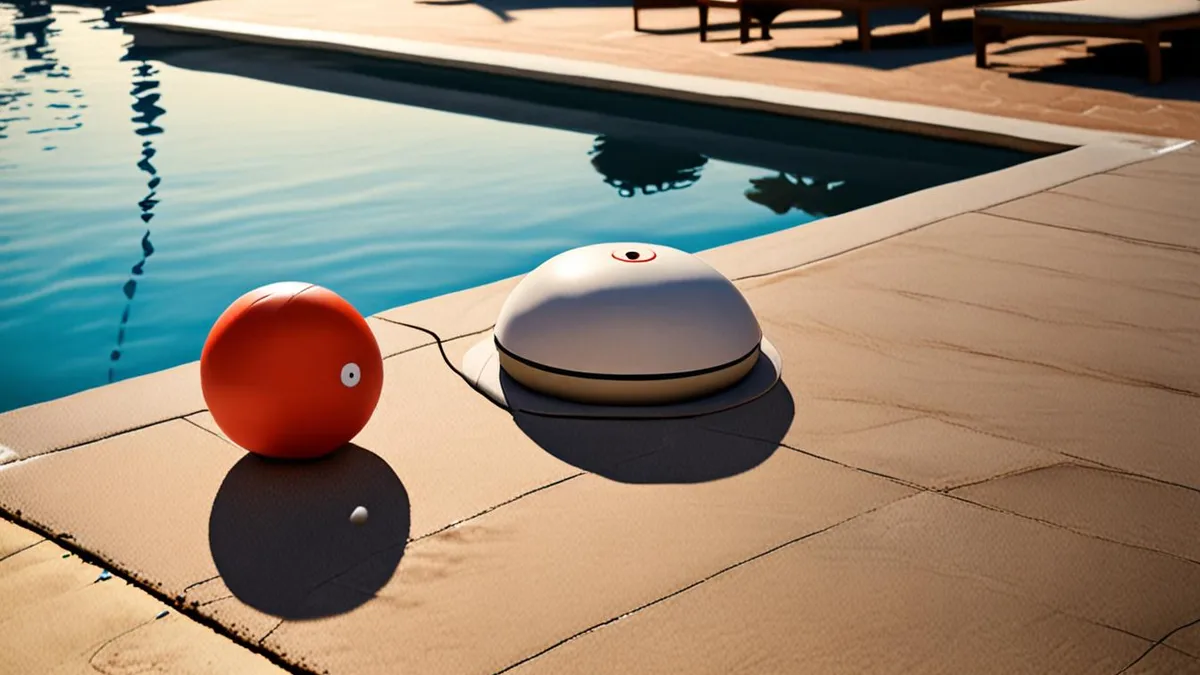
- Keep pool toys out of the water and stored away when swimming time is over, because a bright ball floating in the middle of the pool is a powerful temptation for a toddler to reach in from the edge.
- End all pool games at dusk, and say it in advance so it is expected, since fading light makes it far harder to see a child under the surface.
- Make a rule that toys thrown out of the pool stay there until an adult retrieves them, so no child leans or climbs over the edge to fish something out.
- Tell children that if anyone ever goes into the pool without an adult, swimming stops for everyone for the rest of the day, so siblings help enforce the rule rather than ignore it.
Wrapping Up Your Villa Pool Safety Check
A villa pool can be the highlight of a family holiday — private, quiet and available whenever your children wake up ready to swim. But it is not a supervised facility, and that changes how you approach it. The safety work falls entirely on you, and it starts long before you land, not once you are standing at the pool edge with towels under your arm.
The good news is that the preparation is straightforward. A few well-chosen questions to your host at booking stage, a short walk around the pool area when you arrive, a simple supervision system agreed between adults, and a small bag of safety items take care of most of the realistic risks. None of it is complicated, and none of it takes more than a few minutes.
Done this way, you get what you booked the villa for in the first place: children who are happily worn out from swimming, and parents who can relax on the terrace instead of hovering anxiously. The aim is not to worry your way through the holiday, but to know you have covered the essentials and can then enjoy the water. If this helped you plan a safer villa stay, leave a comment or share the article with another traveling family.