Booking a villa feels like a dream until a quiet question creeps in: what if this unfamiliar, often isolated property hides safety risks no hotel review would ever reveal? Unlike a hotel, there is no front desk down the hall, no corridor cameras, and no staff member a few steps away if something feels wrong. That is exactly why villa security deserves its own checklist before you book, not after you arrive.
This guide walks you through the practical checks that matter: how villas differ from hotels when it comes to safety, what to verify about doors, locks and entry, how to assess pool and garden safety for children, how to vet the host and the listing, and how to read the location and neighborhood before committing. We finish with simple habits that keep you secure once you are on site. A few careful questions asked in advance can make the difference between a relaxing stay and an uncomfortable surprise.
Why Villa Security Differs from Hotel Safety
A villa is a fundamentally different proposition from a hotel room, and the safety gap starts the moment you arrive. Hotels typically offer a front desk, staffed corridors, CCTV in common areas and someone on duty around the clock. A villa offers none of that. It is a standalone property, often on its own lane or hillside, and the responsibility for watching doors, windows and access falls entirely on you.
Distance changes how fast help arrives
Isolated countryside and coastal villas are part of their charm, but that isolation works both ways. Neighbors may be several hundred meters away rather than behind the next door, and in an emergency, help can take noticeably longer to reach you than it would in a town center or resort. Before booking, it pays to think honestly about how comfortable you are with that distance, especially if you are traveling with children or older family members.
Self check-in shifts the responsibility to you
Self check-in is now common at villas: you might collect a key from a lockbox or meet a caretaker briefly, then be left alone for the rest of your stay. That means no one else is checking whether the locks actually work or whether the gate closes properly. Verifying access and locks becomes part of your job as the guest, which is why the questions you ask before booking matter so much.
Villa Security Checklist: Doors, Locks and Entry
Doors and locks are the first line of defense at any villa, and they deserve more attention than most travelers give them. Start with the main entrance: confirm it has a proper deadbolt or a multi-point lock, not just a basic latch that anyone could work open. Ground-floor windows and doors account for most villa break-in points, so these are the details worth confirming in writing before you pay. Ask the host directly whether ground-floor windows and terrace doors lock from the inside, and whether the property sits behind a gated entrance. If there is a gate, find out who holds the key and whether you will have it for the whole stay.
It also helps to think about how the doors will actually be used during your stay. If you plan to spend evenings outside on the terrace, check whether the main door can be locked from the outside and opened again easily, and whether sliding doors have a secondary lock or bar in addition to their standard catch. Older properties sometimes have charming but flimsy fittings, so asking about recent upgrades is a reasonable request rather than an awkward one. Request the exact check-in procedure 2-4 weeks before arrival so there is time to sort out any gaps before you travel.
- Ask about secondary exits. A villa with a back door, garden gate or garage entrance should have every one of those points secured, not just the front door you see in the listing photos.
- Check for spare key arrangements. Find out where keys are kept during your stay and whether previous guests could still hold copies, which is a fair question to put to any host.
- Confirm lighting at the entrance. A strong lock matters little if you are fumbling for it in the dark on an unlit path, so ask whether the entry area and driveway have outdoor lighting.
- Get the check-in steps in writing. Ask for the exact sequence: where you collect keys, who meets you, and what happens if your flight is delayed, so nothing is improvised on arrival day.
Pool and Garden Safety for Families
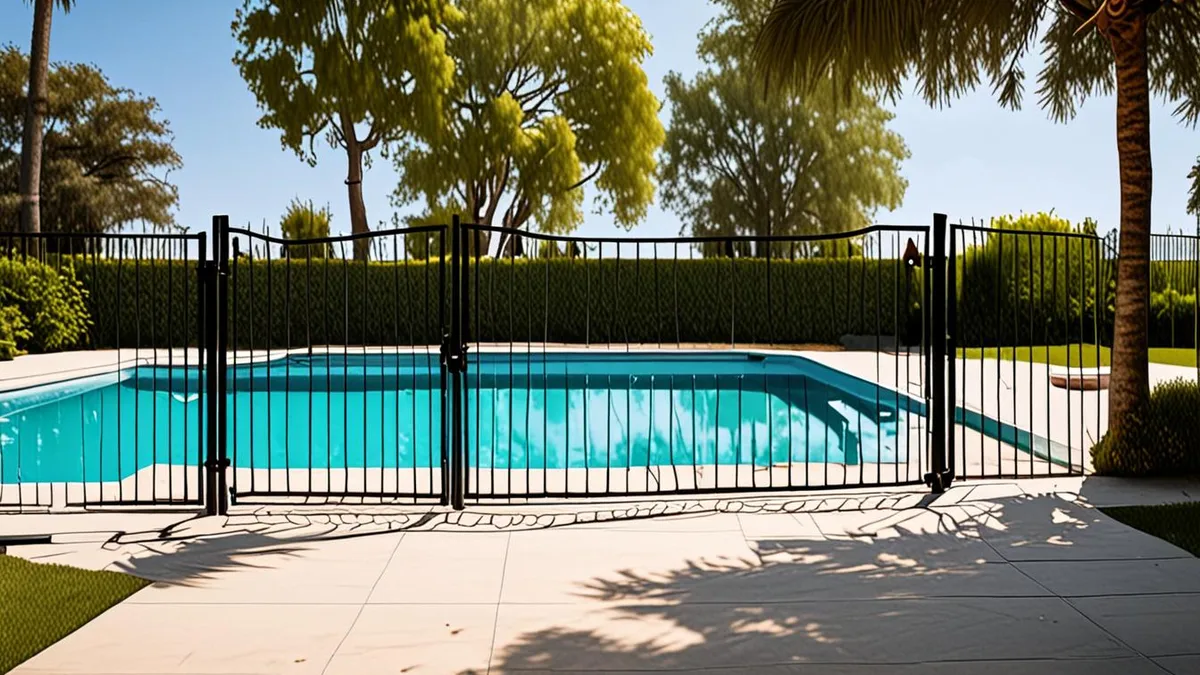
If you are traveling with children, the pool and garden deserve as much scrutiny as the front door. Start by asking for the pool depth, which in private villas typically ranges from 1.0 to 2.5 m, and whether the pool area is fenced at all. A deep, unfenced pool a few steps from the terrace is a genuine risk with toddlers around, no matter how careful you plan to be. Ask these questions when you first message the host, and expect a clear, specific reply rather than a vague reassurance that everything is safe.
If there is a fence, follow up by asking whether the pool gate locks, and who controls the key or latch. A gate that swings open freely defeats the purpose of the fence. Then go back through the garden photos with a critical eye, looking for unlit steps, uneven terraces or unfenced drops that could catch out both children and adults after dark. If the photos leave you unsure, ask the host to send extra pictures of the exact areas you are worried about.
- Ask about pool access from the house. Some villas open directly from a living room or bedroom onto the pool deck, which changes how closely you need to supervise young children compared to a pool set apart in the garden.
- Check for pool covers and alarms. Some hosts provide a safety cover or a surface alarm; these are useful extras, but confirm what actually exists rather than assuming one will be there.
- Look at terrace edges in photos. Many coastal villas sit on sloped ground, so zoom in on where terraces end and whether railings or walls separate them from drops, retaining walls or rocky ground below.
- Count the outdoor lighting. Photos taken at dusk can reveal whether garden paths, steps and the pool area are lit, which matters both for safety and for simply finding your way back after dinner.
Vetting the Host and the Listing
The person who hands you the keys matters as much as the locks on the doors. A villa can look perfect in photos, yet a slow, vague or careless host is one of the clearest warning signs you will get before arrival. Before you commit to a booking, spend some time testing how the host communicates and what past guests say about feeling safe on the property. Send a short message, read the reviews properly and pay attention to how quickly and thoroughly you get answers. A few pointed questions now can save you an uncomfortable surprise later, and they cost you nothing except a few minutes of your time.
- Send a safety question before booking. Ask something specific, such as whether the terrace door locks from the inside. A reliable host typically answers within 24-48 hours. If the reply takes a week or feels vague and evasive, treat that as a red flag about how they will handle problems during your stay.
- Read reviews with safety in mind. Skip the comments about the view and search for mentions of locks, lighting around the property, working shutters and how the neighborhood feels at night. Reviews that describe guests sleeping well with the windows open, or complaints about broken gates, tell you more than star ratings ever will.
- Book early for summer. Peak villa season in most European destinations runs June to August, and the best properties fill first. Booking 3-6 months ahead gives you time to verify all the safety details and cancel without panic if the answers disappoint you.
Think of this stage as an interview running in both directions. Hosts who welcome detailed questions usually take their property seriously, and that attitude tends to show up in the state of the locks, the lighting and everything else you cannot see through listing photos. If a host answers quickly before you have paid, that same responsiveness will likely continue if you arrive to a broken shutter or a jammed gate. If they go quiet the moment you ask about security, imagine how the conversation will go once your money is already transferred. Trust your instincts here: a booking you walk away from costs nothing, while a villa with an unresponsive host can affect your entire trip.
Location and Neighborhood Checks Before You Book
Even a villa with perfect locks can feel unsettling if it sits alone down an unlit dirt road. Location shapes how safe you will feel after dark, so study the surroundings before you pay the deposit rather than after you arrive.
Start with the map view on the listing. Zoom out far enough to see whether the villa is truly isolated or within walking distance of a village with a taverna, a small shop and other houses. Both options can work well, but they suit different travelers. If you want an evening stroll for dinner or groceries, an isolated property means driving every time.
Coastal villas after dark
In coastal areas, check how far the property sits from lit, populated streets. A villa a short walk from a seaside town feels very different at night from one reached only by a long, dark track. Look at satellite view to spot the actual road, not just the straight-line distance.
Timing matters too. Shoulder-season stays in May or September are quieter and often emptier, which many guests love, though surroundings can feel more deserted than in high summer. If you prefer some life nearby outside peak season, weigh that against the lower rates. For help choosing a setting that matches your comfort level, see our guide to the best regions for renting a villa in Portugal.
Simple Habits for a Secure Stay On Site
Once you have picked a villa with solid locks and a responsive host, the last layer of security is your own daily routine. Good habits cost nothing and take only a minute or two, yet they cover the small gaps that no property can fully close on its own. The key is to start them on the very first evening, not halfway through the week when routines have not yet formed.
Make locking up part of your natural rhythm, the same way you would at home. Close the shutters at night and whenever the whole group leaves the property, even for a short swim or a quick trip to the village shop. Since most break-ins at villas happen through openings at ground level, an open downstairs window in an empty villa is the single easiest opportunity to remove. A quick walk-around before you head out takes less than two minutes and quickly becomes automatic.
- Use the safe properly. If the villa provides a safe, put passports, spare cash and spare cards in it on day one, not on the last night. If there is no safe, split valuables between locked luggage in different rooms so nothing sits in one open bag.
- Save emergency contacts before arrival. Store the local emergency number and your host’s phone number in your phone before you travel, and write them on paper as a backup in case your battery dies or you lose the device.
Do this on the first evening rather than mid-week, and the whole stay runs more smoothly. Security at a villa is mostly about removing easy opportunities, and these small routines do exactly that.
Wrapping Up Your Villa Security Plan
That worry about an unfamiliar villa hiding safety risks no hotel review would reveal is a fair one, but it is also one you can resolve before you hand over any money. Villa security comes down to four things you can check from your sofa: the locks and entry points, the pool and garden setup, how responsive the host is to safety questions, and where the property actually sits on the map. A host who answers within 24-48 hours and can describe the deadbolt, the pool fence and the nearest lit street tells you more than any photo gallery.
Timing does the rest. Run through your final safety check in the last few weeks before departure, which leaves room to ask follow-up questions, and book 3-6 months ahead for a June-August stay so you can cancel without panic if the answers disappoint. Once on site, simple habits like locking up at night and saving emergency contacts complete a safe villa stay. If this checklist helped you, leave a comment or share the article with a fellow traveler.