You’ve been there before: the villa looked flawless online, all whitewashed walls and infinity-pool sunsets, and then you arrived to find a cramped terrace, a road you could hear all night and a pool half the size it appeared. The listing had a great rating, plenty of stars and glowing comments, yet somehow the reality never matched the photos. If that stings, you’re not alone, and it’s exactly the problem this guide tackles.
Villa ratings and reviews are useful, but they only tell half the story. The other half is hidden in how photos are shot, which rooms never appear in the gallery, when the images were taken and what reviewers hint at between the lines. Below, you’ll learn why a high rating can still mislead you, how to read reviews like an inspector, how to spot staged and misleading photos, what an honest gallery should show, how to match photos to your travel season, and which questions to ask a host before you pay a deposit.
Why Villa Ratings and Reviews Only Tell Half the Story
It’s tempting to treat a 4.8 rating as a guarantee, but a high score measures overall satisfaction, not whether the photos matched reality. A guest can love a villa’s location and host, rate it five stars, and never mention that the walls are thin enough to hear the neighbors’ conversations, that the access road is so steep you’ll need a confident driver, or that the pool feels noticeably smaller in person than it did on screen. Those details live in the review text, not the star average.
That’s the core limitation of ratings: they compress everything, good and bad, into a single number. A villa with a stunning view can score 4.8 despite a disappointing kitchen, because the view outweighed the inconvenience for most guests. Whether that trade-off works for you depends entirely on what you’re looking for, and no rating can tell you that.
Few reviews are a weak signal
Recency and volume matter as much as the score itself. A listing with a handful of reviews, all collected in a single season, gives you a much weaker signal than a villa that has been welcoming guests for years. Management changes, furniture wears out, pools get resurfaced or neglected, and a property that impressed visitors two seasons ago may have slipped since. When you’re comparing options, give real weight to long-standing properties with a track record, and treat brand-new listings with glowing but sparse reviews as unproven rather than excellent.
How to Read Reviews Like an Inspector
Reading reviews well means working through them like an inspector, not skimming the top three. Start with recency: reviews from stays in the last 6-12 months are the most reliable, because management, upkeep and even ownership can change quickly in the villa rental world. A property that earned its reputation three years ago may be running on that reputation today.
Next, use the search function. Most booking platforms let you search within reviews, and a few well-chosen keywords will surface complaints that never made it into the average score. A review titled “Wonderful week!” can still contain the sentence “the road up is a bit hair-raising,” and that sentence matters if you’re renting a car.
Pay special attention to the middle of the scale. Reviews in the 3-4 star range are often the most honest you’ll find, because these guests had no terrible experience to vent about and no perfect one to gush over. They tend to describe the villa as it actually is, flaws included.
- Search for the word “photos”: if multiple guests mention that the villa looked different in person, you’ve found a pattern the star rating will never reveal.
- Search for “smaller” and “noise”: these words catch the two most common disappointments, an undersized pool or terrace and road or neighbor noise that interiors shots never show.
- Search for “road”: coastal and hillside villas often sit at the end of steep or narrow access roads, and reviewers will describe the drive if you ask the text directly.
- Check the host’s responses: a host who answers negative reviews calmly and explains how they fixed the problem is a far better bet than one who ignores criticism or argues with guests.
Spotting Staged and Misleading Villa Photos
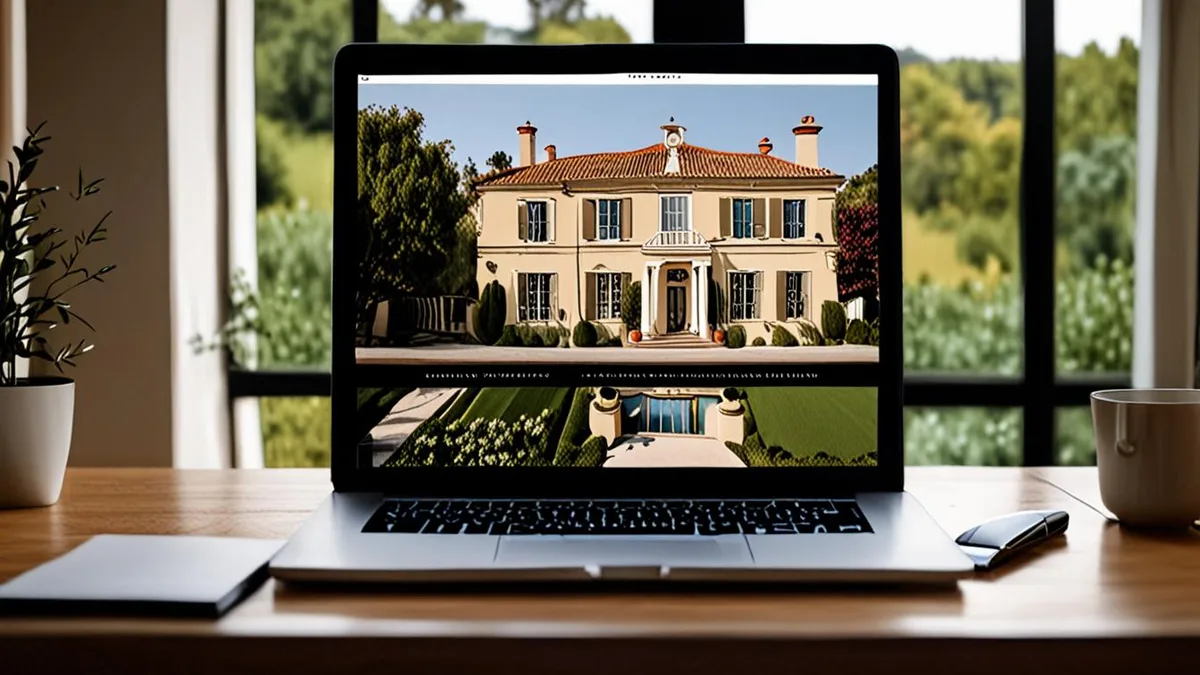
Villa photography is a craft, and its main tool is the wide-angle lens. Professional listing photos are usually shot with wide-angle lenses that make rooms look 20-30% larger, which is why that “spacious” living room can feel surprisingly compact when you walk in with your luggage. The fix is simple: compare the proportions in the photos to the listed square meters. If a living room looks like it could host a dinner party for twelve but the villa is listed at 90 square meters in total, trust the number, not the lens.
Photo order tells a story too. Galleries are usually arranged from best to worst, so key rooms buried at the end, the second bathroom, the kitchen, the spare bedroom, often have flaws the photographer wanted to minimize. Scroll the entire gallery, not just the first ten images.
Consistency is another test. Furniture, curtains, lighting fixtures and even the style of decor should match from photo to photo. Mismatched styles can mean the images come from different villas, from an older renovation, or from a marketing shoot that predates the current condition of the property.
- Run a reverse-image search: save one or two photos and search them through a reverse-image tool; if the same images appear on multiple listings, possibly in different locations, the gallery is not trustworthy.
- Look at what’s outside the windows: a sea view that appears in the hero shot but vanishes in the bedroom photos may only exist from one precise angle on the terrace.
- Check the lighting direction: photos of the same room shot at different times of day, or with obviously different light sources, can hint that images were borrowed or heavily staged.
- Count the people-free zones: galleries that never show the entrance, the parking area or the neighboring properties are leaving out exactly the context you need before booking.
What Every Honest Villa Gallery Should Show
A villa gallery is a promise, and an honest one covers the whole property, not just its best angles. Start with the pool, usually the most expensive part of your booking. A trustworthy gallery shows the pool in at least 3-4 different photos, and one of those should be a distance shot that reveals its true size plus the surroundings: neighboring buildings, fencing, shade and how much space actually separates your lounger from the next one.
Inside the villa: every room, no exceptions
Expect clear, well-lit photos of every bedroom, both bathrooms if there are two, and the kitchen. If a listing advertises three bedrooms but only shows two, that silence usually means the third room is small, dark or awkwardly laid out. The same goes for the view: the gallery should show the exact sightline from the terrace, not a telephoto shot of the sea taken from the end of the driveway.
Outside matters more than you think
In coastal and countryside locations, outdoor areas, parking and the approach road matter as much as the interiors. A tight, gravel switchback can change your daily routine more than a dated sofa. Look for photos of terraces, gardens, gates and where a car actually parks. If you are still choosing between regions, it helps to understand which Portuguese regions suit which travelers best before comparing galleries. When a specific area is missing from the gallery, like the second bathroom or the garden, treat that as a reason to ask the host directly rather than to assume the best.
Matching Photos to the Season You Book
Photos are frozen in time, and the season they were taken in shapes everything you see. Most peak-season galleries come from June to August, when the sun is high, gardens are lush and the light flatters every terrace. If you plan to travel in those same months, you get a fairly like-for-like match between photo and reality, which is the easiest scenario for judging a listing.
Shoulder-season stays need extra imagination
Booking in May or September changes the picture. Shoulder-season landscapes are often greener and prettier than in midsummer, but photos taken in spring show longer, softer daylight than you may actually get in the evening of your stay. A terrace that looks golden at 8 pm in an April photo may already be in shadow at dinner time in September. Check which direction the main outdoor space faces and, if it matters to you, ask the host directly when the sun leaves the terrace.
How old are these photos, really?
Always ask hosts when the photos were taken. Galleries older than 2-3 years may not reflect the current condition of furniture, pool finishes or gardens, especially after a change of management. Finally, timing helps you judge properly: book 4-6 months ahead for peak season so you have time to compare photo-verified villas at leisure, before the best-documented ones fill up and you are left choosing from thin galleries under pressure.
Questions to Ask the Host Before You Trust the Listing
Once the reviews and the gallery look promising, a short conversation with the host will tell you more than another hour of scrolling. Honest hosts answer specific questions quickly and without hedging, while evasive or copy-paste replies are a signal to slow down. Ask for recent, unedited photos of the pool, the terrace view and any room that is missing from the gallery, and ask when those photos were taken. A confident host will usually send them the same day and explain exactly what you are looking at. If a reply dodges the question twice, treat that as an answer in itself and move on to another villa. It also helps to put your key questions in writing through the booking platform, so you have a record of what was promised if anything looks different on arrival.
Distances deserve special attention. The word “nearby” can cover anything from a five-minute stroll to a drive on a narrow coastal road, so confirm exact distances to the beach, shops and restaurants before you pay. Ask whether those distances are walking or driving times, and whether the route involves hills or unpaved sections. If reviews mention the same issue repeatedly, like noise from a nearby road or tricky access, ask the host to clarify it in writing rather than hoping it will not affect you. The questions below cover the details travelers most often regret not checking:
- Pool logistics: ask whether the pool is private or shared, and whether it is heated if you swim outside the June to August window, since an unheated pool can be too cool in shoulder season.
- Access details: request a description of the approach road, parking situation and any steps or slopes, which matters if you travel with small children or older relatives.
- Noise specifics: ask what sits on the other side of each boundary, whether that is a road, a neighboring property or an event venue, and whether the villa has ever received noise complaints.
- Repeat review themes: if several reviewers mention the same thing, such as slow air conditioning or a smaller pool than expected, ask the host to respond to that point in writing.
Judging Villas with Confidence
If you have ever arrived at a villa that looked nothing like its listing, the fix is not to trust ratings more blindly — it is to stop relying on any single signal. Combine recent reviews from the last 6-12 months, a careful look at how the photos were shot and ordered, and direct questions to the host. Together, these three checks catch most of the flaws a polished gallery tries to hide.
Before you pay, cross-check the gallery against the listed square meters, the season you plan to travel and the real distances to the beach and shops. And pay attention to how a host responds: a villa whose owner answers questions quickly and honestly is usually as good as its photos suggest. If this guide helped you see through a listing, leave a comment with your own experience or share the article with a friend planning a villa trip.