You booked a resort for peace and quiet, then spent your first night listening to a pool bar playlist thumping through your window until the entertainment wound down around 23:00. If that sounds familiar, you already know the problem: resort noise levels are rarely mentioned on booking sites, yet they can make or break a vacation. The good news is that noisy rooms are largely predictable, and with a little research before you pay, you can avoid ending up above the party again.
This guide walks you through exactly how to do that. You’ll learn why noise matters more than star ratings, how to map a resort’s noise sources before booking, and how to pick the right floor, wing and room position. We’ll also cover the calmest times of year to travel, the questions worth asking the resort before you pay, and some backup tactics if you still land a loud room. By the end, you’ll have a simple checklist for finding a genuinely quiet room.
Why Resort Noise Levels Matter More Than Star Ratings
A five-star lobby and a champagne welcome mean nothing if you spend every night lying awake at 22:30 while the pool bar DJ runs through his set. Star ratings describe facilities, service standards and amenities — not where the standard rooms sit in relation to the evening entertainment stage. Plenty of well-rated resorts put their cheapest categories directly above or beside the show venue, and a four-star badge won’t muffle a bass speaker through a floor slab.
If you doubt how big a deal this is, skim recent resort reviews before your next booking. Noise complaints are among the most common negative points travelers raise, appearing more often than complaints about food or service. That tells you something important: resorts get the food right and the staff right far more often than they get the room placement right — or at least, more often than they warn you about it.
Sleep Beats Square Meters
On a two-night stay, a mediocre night’s sleep is an annoyance. On a seven-night or longer resort vacation, it compounds. Poor sleep affects your energy for excursions, your patience with travel companions and how much you actually enjoy the money you spent. In practice, noise will shape your experience more than room size, a balcony or the view from your window.
The fix costs nothing but a few minutes of research. Before you book, work out where the noise lives at that particular resort, and remember that pools and evening entertainment zones are typically loudest between 20:00 and 23:00 — exactly the hours you’ll want to wind down. A resort can be genuinely quiet and still run a loud show every night; the difference is simply whether your room is on the wrong side of it.
Map the Noise Sources Before You Book
Most resorts publish a property map on their booking page, and it is the single most useful document for predicting noise. Zoom in and look at where the pools, pool bars, stage areas, kids’ clubs and loading docks sit in relation to the room categories. If the map only shows buildings without amenities, check the resort’s own website or recent guest photos, which often reveal where the action is concentrated. A room category can sound idyllic in the description yet sit a few meters from the loudest spot on the property.
Kitchens are the noise source travelers overlook most often. Rooms near the main restaurant, and especially near the kitchen entrance, get early morning delivery trucks, crate handling and prep work starting well before breakfast service. That clatter begins hours before most guests want to wake up, and it repeats every single day of your stay. If the restaurant is listed as the “main” one, assume its back-of-house runs like a small warehouse.
Roadside and parking-lot-facing rooms have their own rhythm: arrivals and departures. Car doors slamming, taxis idling and luggage trolleys rolling over pavement tend to peak in the early morning and late evening, exactly when you are trying to sleep. These rooms are often cheaper, which is why they sell first to noise-sensitive guests who skip this step.
- Beachfront buildings can carry evening beach-party noise in high season, since many resorts host bonfires, DJs or themed dinners right on the sand, and sound carries across open water with almost nothing to block it.
- Loading docks and service yards are usually marked as small rectangles near the back of the map; a room overlooking one means delivery vans and staff chatter at all hours.
- Kids’ clubs and playgrounds generate noise in bursts rather than continuously, so a room facing one may be peaceful at night but loud from mid-morning onward.
- Stage areas matter even if shows end by 23:00, because sound checks and equipment setup often start an hour or more earlier.
Choosing the Right Floor, Wing and Room Position
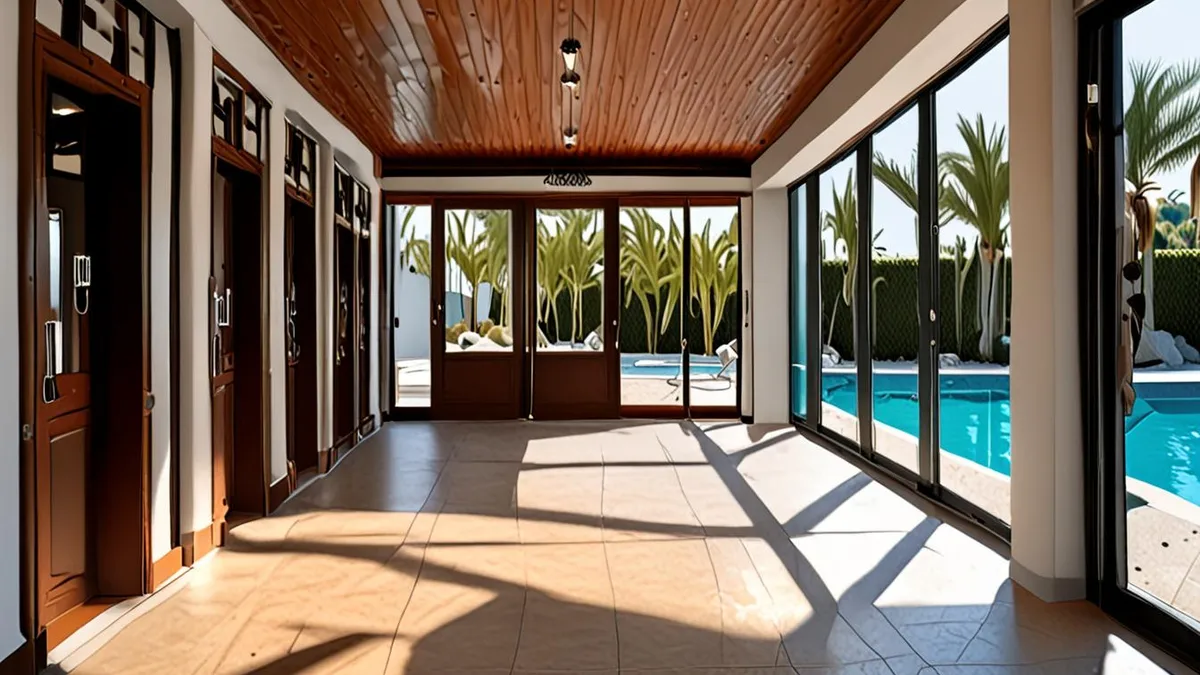
Once you know where the noise sources are on a resort map, the next step is positioning yourself well within the buildings themselves. Vertical position matters more than many travelers expect: ground-floor rooms sit directly in the path of foot traffic, luggage trolleys and anyone cutting across the terrace late at night. A room at least 2 floors above ground level avoids most of that ground-floor foot traffic noise, and it also lifts you above the general hum of poolside activity drifting up from below.
Horizontal position matters just as much. Rooms at the end of a corridor see far less footfall passing their door, because most guests turn off toward their own rooms before reaching yours. The same logic applies to elevator banks: every floor near the lifts hears the ding, the doors sliding and the chatter of arriving groups throughout the day and well into the night.
Here are the specific room positions that consistently deliver a quieter stay:
- Corner rooms share fewer walls with neighbors, which cuts noise transfer significantly. You may hear one adjacent room instead of two, and corner rooms often gain an extra window or a side aspect as a bonus.
- Rooms 30-50 meters away from pools, lifts and dining areas are noticeably quieter than those right on top of them. If the resort has several buildings spread across the grounds, ask for one on the outer edge of the property.
- Avoid rooms directly above or below the pool bar, gym and laundry areas. Pool bars are loudest between 20:00 and 23:00, while gyms drop weights early and laundry equipment runs on industrial cycles that vibrate through the floors.
- Service corridors and housekeeping stores are worth avoiding too. Trolley wheels on hard floors and early-morning linen deliveries start before most guests are awake, so ask whether the room backs onto a staff area.
Timing Your Stay Around Resort Noise Levels
The calendar matters more than most travelers realize. Even a well-designed resort turns into a different place when the pool deck is full of families and the evening show runs every night. If your dates are flexible, you can often get a quieter stay in the same room category without paying for an upgrade.
At most European resorts, peak family season runs from mid-June to late August. During those weeks, pools are at their loudest all day and evening entertainment fills the stage area well into the night. Shoulder season is the opposite: May, September and early October are typically the calmest months, with fewer children at the pool and lighter entertainment schedules.
The day of the week matters too. Midweek arrivals, roughly Sunday through Thursday, tend to be quieter than weekend check-in days, when new waves of guests arrive, unpack and celebrate. Ski and mountain resorts follow their own rhythm and are quietest outside the Christmas, New Year and February half-term weeks. For a genuinely peaceful mountain stay, consider one of the quiet nature resorts in Slovakia, where the pace is slower than at a large family complex.
- Shoulder-season rooms cost less too: traveling in May or early October often means lower rates at the same time as quieter pools, so calm comes without a premium.
- Weekend stays amplify entertainment: resorts often schedule their biggest shows and themed parties on Friday and Saturday nights, so a Tuesday-to-Saturday stay can miss the loudest evenings entirely.
- Half-term weeks affect beach resorts as well: school breaks in October and February bring family crowds to warm-weather destinations, so check school calendars for your destination before booking.
- Early-season stays may mean limited facilities: some pool bars or kids’ clubs open only in high season, which is exactly why shoulder season is quieter — confirm what is open if that matters to you.
Questions to Ask the Resort Before You Pay
A five-minute conversation before you pay can save you a week of broken sleep. Resorts rarely volunteer information about which buildings are quiet, so you need to ask directly and specifically. Front desk and reservations staff know exactly where the loud zones are, but vague requests get vague answers. Frame every question around a concrete noise source — a pool bar, a stage, a service corridor — and you will get far more useful replies than with a generic “I’d like a quiet room.”
- Ask which building and floor is furthest from the pool bar and evening stage. Pool bars and evening entertainment zones are loudest between 20:00 and 23:00, which is precisely when you are trying to wind down. Once you have a building name, ask for a room on an upper floor in that building. As a rule of thumb, rooms 30-50 meters away from pools, lifts and dining areas are noticeably quieter than those right next to them.
- Request a garden or sea-facing room instead of a pool-facing one. Rooms facing the sea or garden are typically quieter than pool-facing rooms, because the pool deck is where daytime music, splashing and organized activities happen. A garden view also usually means you are on the calm side of the property, away from the main foot traffic.
- Confirm whether the entertainment program runs nightly or only in peak season. A resort may be calm in May but host shows every evening during peak family season, which runs from mid-June to late August. If you are traveling in shoulder season, ask whether the stage area will actually be in use during your specific dates — the answer often changes depending on occupancy.
- Ask if quiet rooms can be guaranteed at booking or only requested at check-in. Some resorts will note a quiet-room preference on your reservation; others treat it as a request only, honored when availability allows. Knowing this in advance tells you whether to follow up a few days before arrival or plan a check-in strategy instead.
Get any promise in writing if you can — a note on your booking confirmation or a short email from the resort confirming your preference. Even a written preference request gives you something concrete to point to at the front desk if you arrive to find a room above the pool bar. It also shifts the conversation from a complaint to a simple fulfillment of an agreed request, which front desk staff tend to respond to much more readily.
Backup Tactics If You Still Get a Noisy Room
Even careful planning sometimes fails. Rooms get reassigned, buildings get overbooked, and the quiet wing may be full when you arrive. That does not mean your trip is ruined — it means you need a few backup tactics ready before you check in.
Your first move happens at the front desk. Asking for a room away from elevators and ice machines costs nothing, and it is worth doing even if your room already looks fine on the map. Service corridors and elevator banks generate door slams, trolley noise and humming equipment all night long, and a simple request often moves you several doors down the hall.
If the noise is unacceptable on night one, request a room change immediately. Empty rooms are genuinely available on your first evening; by night three, the better options may be gone. Act while alternatives still exist, and be as specific as possible about what you need.
- Bring proper earplugs, not just the hotel pair: foam earplugs with a high noise reduction rating block corridor and neighbor noise far better than the thin pairs some resorts leave on the nightstand.
- Use a white-noise app on your phone: steady sound masks intermittent noise like doors closing or voices in the corridor, which is the type of noise that wakes light sleepers most often.
- Time your room-change request for early evening: the duty manager usually has the fullest picture of vacant rooms around check-in time, before night staff take over with less authority to move you.
- Phrase requests precisely: a polite, specific request such as “away from the pool bar” gives staff something actionable, while a generic complaint about noise leaves them guessing and less able to help.
Picking a Quiet Room: The Essentials
So the fix for next time is simple: treat your room location as seriously as the resort itself. Before you pay, check the map for noise sources, aim for a higher floor in a corner or end-of-corridor position facing the garden or sea, and travel in shoulder season when the whole property is calmer. A few specific questions to the resort before booking will tell you more than any star rating ever will.
And if you still land above the pool bar anyway, remember your backups: a polite, specific request at check-in and a quick room change on night one usually solve it. Sleep well, and if this helped you dodge a noisy room, leave a comment or share this article with a fellow traveler.