There’s nothing worse than arriving at a lodge you booked months ago, towel in hand, only to find that the hot tub is shared with three other cabins, cloudy from the last guests, or switched off for the winter. Lodge holidays with a hot tub are easy to book badly, because listings often bury the details that matter most: whether the tub is private, how it’s cleaned, and whether it even works in your travel season.
This guide walks you through the questions to ask before you pay. We’ll look at why peak-season prices climb so sharply, how far ahead you should book, and how to confirm the tub is private and properly maintained. We’ll also cover deposits and house rules, and help you match the lodge setting — forest, mountain, or coast — to the trip you actually want.
Why Lodge Holidays with a Hot Tub Cost More in Peak Season
Hot tub lodges are among the first properties to fill up and the last to offer discounts, so timing has a real effect on what you pay. Expect roughly 30-60% higher nightly rates in summer and holiday weeks compared with a midweek off-season stay. The tub itself is part of the reason: heating and maintaining it costs the host money, and demand for that experience spikes exactly when everyone else wants it too.
What a private hot tub lodge typically costs
As a rough guide, a private hot tub lodge in the UK or Western Europe typically runs £150-£400 per night, while similar lodges in Eastern Europe usually sit in the £80-£180 range. Location, group size and views all push prices up or down within those ranges, so treat them as a starting point rather than a quote.
Check the total, not the nightly rate
Here’s the trap that catches many travelers: a lodge that looks cheap per night may require a 2-3 night minimum stay on weekends and holiday periods. That means your actual bill could be double or triple the headline rate. Before comparing two lodges, multiply the nightly rate by the required stay and add any cleaning fees. A £200-per-night lodge with a two-night minimum can easily cost more in total than a £260-per-night lodge you can book for a single night.
When to Book: Lead Times for Hot Tub Lodges
Hot tub lodges sell out on a very different schedule from ordinary cabins, because the tub is the draw. For summer holidays, Christmas and New Year weeks at popular properties, aim to reserve 3-6 months ahead. The best-rated lodges with private tubs and strong reviews often have their peak calendar locked in by early spring, so waiting usually means settling for awkward dates or a lesser property.
Low-season flexibility works in your favor
If your dates are flexible, midweek stays in low season are a different story. These are often bookable just 2-4 weeks ahead, and availability is far better. You’ll also find hosts more willing to answer questions about the tub, since they’re not juggling back-to-back peak bookings. A Tuesday-to-Thursday break in November can get you the same lodge and the same tub for noticeably less than a summer weekend.
Heated versus unheated tubs
One detail matters more than any other when booking for the colder months: whether the tub is heated. Year-round heated tubs are the most in-demand properties in autumn and winter, and they sell out fastest — sometimes well ahead of the summer calendar. Unheated tubs are a different story: at some mountain lodges, tubs are typically closed roughly November through February, when freezing temperatures make them impractical. If a snowy soak is the whole point of your trip, confirm in writing that the tub is heated and operational for your dates before you book.
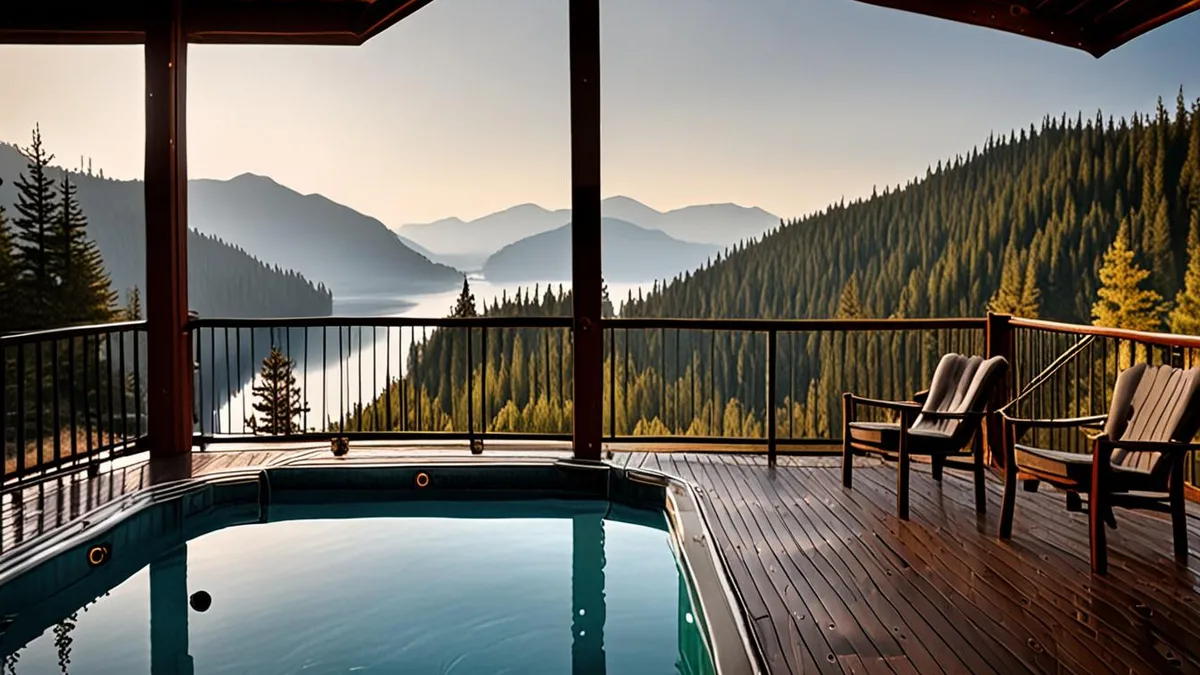
Private or Shared: Checking the Tub Before You Pay
The single most common disappointment in lodge reviews is a guest who booked expecting a private soak and arrived to find a shared one. Some lodges advertise “hot tub” when the tub is actually communal, sitting in a garden or terrace area used by several cabins. The fix is simple: read the listing text carefully and confirm in plain words that the hot tub is private to your lodge. If the listing says “shared hot tub,” “communal tub,” or only mentions a tub in the site facilities rather than the lodge description, assume it’s not yours alone.
Size matters too. Most private hot tub lodges sleep 2-6 guests, which is why they suit couples and small families so well. Larger group lodges — the ones sleeping eight or more — usually share a single tub between all guests, which changes the experience considerably. If a big lodge lists a tub at a suspiciously low price, this is often the reason.
Photos are your best defense, but only if you ask for the right ones. Request recent photos of the tub itself, not just the lodge, and look closely at what they show:
- Size and shape: a tub for two looks very different from a square six-seater, and the photo tells you whether your whole group fits comfortably or takes turns.
- The cover: a fitted, undamaged cover suggests the tub is kept closed and protected between uses; a missing or torn cover is a sign of a tub that may be dirtier and slower to heat.
- Condition and surroundings: check for staining, scum lines or worn jets, and look at what’s around the tub — railings, lighting, screening — since that’s where you’ll actually spend your evenings.
- Photo age: ask when the photos were taken. A listing photo from several years ago may not reflect the tub’s current condition.
Cleaning, Changeovers and Hygiene Standards
A proper hot tub changeover involves more work than most guests realize. The standard routine between stays includes draining the tub completely, scrubbing the surfaces, and refilling it with fresh water. This process typically takes 2-4 hours, which is why changeover days at hot tub lodges run longer than at ordinary cottages. It also means the water you find on arrival should be genuinely fresh, not leftover from the previous guests.
Because of that turnaround time, it pays to ask the host one key question: is the water tested and the chemical balance checked daily during your stay, or only at changeover? Daily checks keep sanitizer levels where they should be, especially if you are using the tub every evening. A host who only treats the water once between guests may let levels drift over a week-long stay.
Arriving to a cold tub
Another detail worth confirming: a tub that was filled just hours before your arrival may still be warming up. Heating a freshly filled tub from cold takes time, so it might not reach full temperature until later that evening or even the next morning. Ask the host what the target temperature should be at check-in, and what it will realistically be when you arrive. If that first evening in the tub is the main reason you booked, say so when reserving so the host can plan the fill and heating schedule accordingly. Planning to arrive early? Keep in mind that the 2-4 hour changeover may still be underway, so a slightly later check-in can actually work in your favor.
Deposits, House Rules and Cancellation Terms
Hot tub lodges often come with stricter financial terms than standard holiday rentals, and the reason is simple: the tub itself is expensive to maintain and easy to damage. Many hosts hold a refundable damage deposit of £100-£300 for hot tub lodges, taken separately from your booking payment or frozen on your card. Read exactly what the deposit covers before you arrive, so you are not surprised by a claim later.
House rules are the other area where hot tub lodges differ. Hosts set these rules to protect the equipment and keep neighbors happy, and they can vary a lot between properties. Before you pay, check the listing or message the host directly about the points below.
- Tub use hours: many lodges restrict soaking to daytime or early evening hours, particularly in residential areas or lodges with thin walls, so a late-night dip may not be allowed.
- Children in the tub: some hosts set a minimum age for tub use or require adult supervision at all times, which matters if you are traveling with kids.
- Maximum soak group size: a tub built for four can be strained by eight bathers, and exceeding the stated limit can void your deposit, so check the number before planning a group soak.
Finally, review the cancellation terms carefully. Hot tub lodges often mirror standard cottage policies, but there is a twist: deposits may become non-refundable if the tub is damaged during your stay, regardless of when you cancel. Make sure you understand which part of your money is protected and which part is at risk.
Matching the Lodge Setting to Your Trip
The setting around your lodge shapes the whole trip, so match it to what you actually want from the break. Forest and lakeside lodges are the classic choice for quiet couples’ getaways: you get trees, water and silence, and the tub becomes the evening’s main event rather than an add-on after a busy day. If that sounds like your kind of trip, Sweden romantic lodges for couples are a particularly strong fit, with tub-side scenery of lakes and pine forest doing most of the work.
Mountain and coastal settings
Mountain lodges pair a hot tub with hiking or skiing right from the doorstep, which makes the tub a genuine recovery tool after a day on the trails or slopes. The catch is winter: some unheated mountain lodges close their tubs roughly November-February, so if a snowy soak is the highlight you are booking for, confirm the tub is heated and running year-round before you commit.
Coastal and fjord locations offer the most dramatic views from the tub, but a view is only as good as your deck’s orientation. Study the photos to see which way the deck faces, whether the sunset or the water is actually visible from the tub itself, and whether there is privacy screening between your deck and neighboring lodges. A tub facing a parking area is a very different experience from one facing the fjord, so this is a detail worth checking before you pay rather than after you arrive.
Wrapping Up Your Hot Tub Lodge Booking
A lodge with a hot tub should deliver exactly what you booked: a private, clean, warm soak at the end of the day. Most disappointments come down to details you can check before paying. Budget for peak-season premiums of 30-60% and book 3-6 months ahead for busy dates, since the best lodges fill early. Midweek low-season stays are easier to land if your schedule is flexible.
Before you confirm, verify the tub is private to your lodge, cleaned and refilled at changeover, and heated for your travel season. Factor in the refundable damage deposit and the house rules on tub use, then match the setting to the trip you want, whether that is forest, mountain or coast. Get those basics right and the tub will be ready when you arrive. If this helped you plan your stay, leave a comment or share the article with a fellow traveler.