Picture this: you’ve booked what the website called a wheelchair friendly resort, only to arrive and find three steps at the entrance, a bathroom door too narrow for your chair and a pool you can see but never enter. It’s one of the most common and most frustrating experiences for travelers with limited mobility or other special needs, and it happens because “accessible” on a booking page rarely means what you need it to mean. The good news is that resort accessibility can be verified before you pay, with a few targeted questions and some written confirmation.
This guide walks you through the whole process. We’ll explain what accessibility features actually matter, how to confirm them with the resort before booking, and which measurements to request for rooms, bathrooms and common areas. You’ll also learn when to book, which questions reveal tricky terrain like slopes and gravel paths, and how to match different resort types to your specific needs.
What Resort Accessibility Actually Means
When travelers see the words “wheelchair friendly” on a resort listing, they often assume it means a complete package: step-free entry, wide doorways, a roll-in shower, grab bars where they matter and an elevator to every floor. In reality, real accessibility is a set of specific, physical features, and any one of them can be missing. A resort can genuinely call itself accessible while its pool has no lift and its restaurant sits behind two steps.
Labels also vary enormously from country to country. In one destination, an “accessible” room may be a fully adapted space with a roll-in shower and grab bars; in another, it may simply mean a ground-floor room with a standard bathroom that no wheelchair user can actually use. There is no universal standard that booking platforms enforce, so the word on the screen tells you very little on its own.
Accessibility is more than mobility
It’s also worth separating mobility needs from other requirements. A traveler who is deaf may need visual fire alerts and a vibrating alarm clock rather than a ramp. A guest with low vision may need high-contrast signage and tactile markers, while someone with sensory sensitivities might prioritize a quiet room away from the pool bar and evening entertainment. None of these show up under a generic “accessible” label, so think about your own specific needs first, then verify each one individually with the resort.
How to Verify Accessibility Before You Book
The single most effective habit in accessible travel is simple: email the resort directly and get answers in writing before you pay. A phone call is easy to misremember, and a friendly “yes, we’re accessible” means nothing if the shower turns out to be a tub. Written answers also create a record you can refer back to, which matters far more than a good impression made over the phone. Here’s how to verify properly.
- Email the resort with specific questions. Don’t ask “is your hotel accessible?” Ask precisely: do you have a roll-in shower, what is the door width of the accessible room and bathroom, and is there ramp or lift access from the entrance to all floors? Specific questions get specific answers, and vague replies tell you the resort may not actually know its own features.
- Request photos of the actual accessible room and bathroom. Marketing images usually show the lobby, the pool and a standard room. Ask the resort to send photos of the accessible room itself, including the shower, toilet area and the space beside the bed. Real photos reveal details that descriptions gloss over, such as a shower lip or cramped turning space.
- Confirm the step-free route. Ask how a guest gets from the parking area or drop-off point to reception, and from reception to the restaurant and pool. A resort can have one accessible room while every path between buildings involves stairs, which makes the room nearly useless in practice.
- Keep every confirmation in writing. Save the emails, and ask the resort to confirm the features in a reply rather than just over the phone. If something is missing on arrival, written confirmation gives you something concrete to point to when requesting a fix, a room change or a refund.
This process takes one or two emails, and it’s the difference between hoping for the best and knowing what you’ve booked. Resorts respond well to clear, specific requests, and a property that dodges your questions is telling you something important. If replies are slow or evasive before you’ve paid, that rarely improves after your card has been charged. A resort that answers promptly, sends photos and puts details in writing is showing you exactly how it will treat you as a guest.
Checking Rooms, Bathrooms and Common Areas
Once a resort confirms it has an accessible room, the next step is checking whether that room actually works for your body and your equipment. The most reliable way to do this is to request measurements in writing. Doorways of at least 80-90 cm suit most wheelchair users, and a turning space of about 150 cm in both the room and the bathroom makes the difference between independent movement and needing help. If a resort can’t or won’t provide these numbers, treat that as a warning sign.
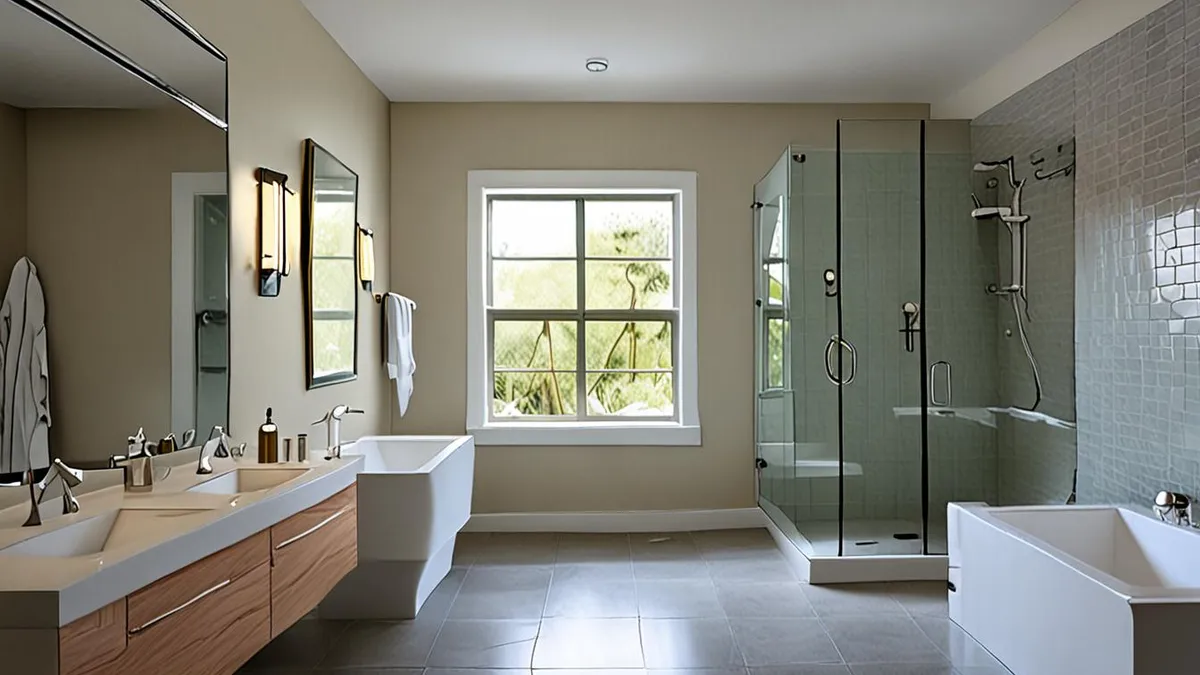
The bed and bathroom deserve special attention, because they’re where problems most often appear. Ask about bed height and whether there’s clear space beside the bed for a safe transfer. Confirm the bathroom has a roll-in shower rather than a tub, since a tub with a wall-mounted shower head is unusable for many travelers, even in rooms sold as accessible.
Don’t stop at the room itself. The features most often missing despite an “accessible” label are pool lifts, roll-in showers and step-free routes, so check the shared spaces too:
- Pool access: ask whether the pool has a lift or hoist, and whether it’s actually working during your travel dates rather than just installed.
- Terraces and outdoor areas: confirm the terrace, garden and bar areas are reachable without steps, including any ramps and their condition.
- Restaurant seating: ask whether there are tables a wheelchair user can sit at comfortably, not just high bar seating or crowded corners.
- Accessible toilets: check that adapted toilets exist in the restaurant, lobby and pool areas, not only inside the accessible room.
A resort that answers all of these questions with specifics is one you can book with far more confidence.
Timing and Booking Strategy for Accessible Rooms
Accessible rooms are the first rooms to sell out at most resorts. With properties typically offering only 1-3 accessible rooms out of their entire inventory, the margin for error is small. If your trip falls in the June-August high season, aim to book 2-3 months ahead. Waiting until a few weeks before departure often means the adapted rooms are gone, leaving you with a room category that looks fine on paper but does not meet your needs.
Why shoulder season helps
Traveling in May, September or October changes the math considerably. Off-peak months offer more availability across the board, which means a better chance of securing an accessible room even with less lead time. Prices are typically lower, and facilities such as pools, restaurants and terraces are calmer, which makes moving around with mobility equipment easier and less stressful. Weather in many popular resort destinations is still pleasant during these months, so you rarely sacrifice much in exchange for the quieter setting.
Whenever you travel, be specific when you reserve. Ask the resort to hold a particular accessible room number, not just an “accessible category” that could be assigned to any room on arrival. Categories can be vague, and a booking that simply says “accessible room” gives the resort room to substitute something less suitable. A named room, confirmed in writing, is much harder to reallocate.
Finally, reconfirm your reservation 1-2 weeks before arrival. A short email or phone call gives the resort a chance to fix any mix-up before you arrive, and it creates a fresh written record of what was promised. This small step takes minutes and can save you from arriving to find your room given away or reassigned.
Questions to Ask About Terrain and Location
Resort location shapes how usable an accessible room really is. A perfectly adapted room loses its value if the path to dinner involves a steep ramp or loose gravel. Hillside and lakeside resorts are especially prone to slopes, stairs and uneven surfaces, because the terrain itself dictated the layout. Before booking, ask directly about the gradient of paths and what they are made of: paved, tiled, wooden boardwalk or gravel behave very differently for wheelchair users and anyone with limited balance.
Distances matter too. Ask how far the accessible room sits from the pool, the restaurant and the beach or lakefront, and whether the resort shuttle, if it runs one, is step-free with space for a wheelchair or scooter.
Ski and mountain resorts need a separate set of questions. Confirm lift access, how adapted ski equipment is stored and moved, and whether paths are cleared of snow and ice in winter.
- Gradient specifics: ask whether slopes on the property meet common accessibility guidance, or whether staff can describe the steepest section between your room and the main facilities.
- Surface after rain: find out which outdoor routes stay firm and slip-resistant in wet weather, since some boardwalks and stone paths become hazardous when damp.
- Winter path clearing: at mountain properties, ask who clears snow, how often and whether cleared routes reach the lift base, not just the main building.
- Shuttle boarding: confirm whether drivers assist with boarding and whether the vehicle has a ramp or lift rather than steps only.
Matching Accessibility Needs to the Right Resort Type
Different resort types suit different accessibility needs, and knowing where your requirements fit saves weeks of searching. Family resorts are often a strong match for mixed-ability groups. They typically offer ground-floor rooms, shallow or sloped pool entry and flexible meal times, which helps when someone in your party needs a quieter pace or extra support at dinner. Ask whether the kids’ pool area has step-free access and whether staff can adapt meal arrangements.
Flat terrain by the water
Lake and coastal resorts usually win on terrain, since waterfront settings tend to be flatter than hillside properties. That makes them a natural choice for wheelchair users who want to move around independently. The weak point is often the water itself: many beaches reach the water via steps or soft sand. Confirm whether the resort provides beach access boards or ramps rather than steps, and whether the pool has a hoist. If a calm lakeside setting appeals to you, our guide to peaceful lake resorts in Serbia shows what to look for in this category.
Do not assume luxury means accessible
Luxury properties more often provide pool hoists, adapted suites and attentive service, and their spacious layouts can suit equipment users well. But price is no guarantee of accessibility. Some high-end resorts convert accessible rooms into standard suites or hide steep terraces behind elegant landscaping. Always verify the specific features in writing, whatever the nightly rate.
Wrapping Up Your Accessible Resort Search
Finding a suitable resort comes down to one simple principle: verified features, not labels. Email the resort directly, ask for written confirmation of the room, bathroom and step-free routes, and keep every reply so you have something to fall back on if anything is missing when you arrive. That single habit prevents most unpleasant surprises.
Remember that accessible rooms are scarce, often just a handful per property, so book 2-3 months ahead for summer stays or consider May, September or October for better availability and calmer facilities. Match the terrain and resort type to your specific needs before paying, whether that means flat paths by a lake or a pool hoist at a luxury property. If this guide helped you plan a trip, leave a comment or share it with a fellow traveler.