Many travelers book a resort based on photos of the pool or the beach, then arrive to discover that the building type shapes almost everything about their stay. The choice of single-storey vs high-rise resorts affects how far you walk to breakfast, whether you hear your neighbors, what you see from your bed, and even how easily you move around with kids and beach gear.
This guide walks through what each style feels like in practice. We compare what single-storey resorts are like day to day, what high-rise resorts offer in exchange, and how they differ on noise, privacy and views. We also look at which building type suits families, couples and older guests, how prices and floor choices differ, where each type fits best across coast, mountains and cities, and finally how to choose between them for your next trip.
What Single-Storey Resorts Are Like Day to Day
Single-storey resorts spread their rooms across one or two floors, usually in long low blocks or clusters of bungalows set in gardens. Because the buildings stretch outward rather than upward, you often walk 50-200 meters from your room to the pool, the restaurants or the beach. That sounds like a lot until you compare it with waiting for a lift, and most guests find the walk pleasant once they settle in.
The big advantage is what happens right outside your door. Ground-level rooms typically come with a terrace and direct access to the garden, so you can step straight outside with a stroller, a cooler bag or an armful of snorkeling gear. There are no lifts to wait for, no corridors to navigate with wet children, and coming back from the beach feels effortless.
Open-air corridors change the atmosphere
Walkways between rooms are usually open-air rather than enclosed, which keeps the whole place feeling casual and resort-like rather than hotel-like. You hear birds instead of luggage trolleys, and the layout encourages that relaxed, barefoot rhythm most people book a beach holiday for.
The trade-off is that you feel the elements more. Rain means dashing to dinner under an umbrella, humid evenings follow you along the walkways, and insects are part of the deal. Pack repellent and check that your room has good screens or a mosquito net if you are traveling somewhere tropical, and the open-air style becomes a feature rather than a flaw.
What High-Rise Resorts Offer in Exchange
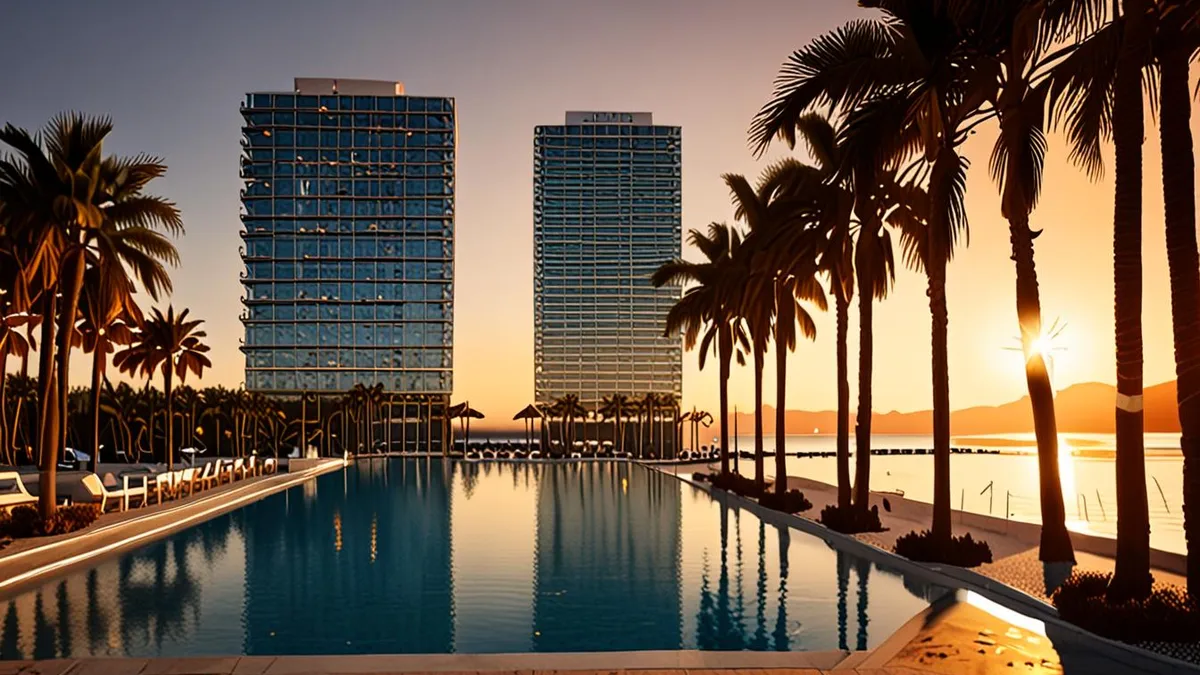
High-rise resorts trade garden space for elevation, and on upper floors the payoff is immediate. From around level 8 upward you get wide, unobstructed sea or skyline views, the kind where the horizon fills the window and sunsets become a nightly event. That elevation comes at a price: upper-floor views can add 15-30% to the nightly rate compared with standard rooms, so decide early whether the view is central to your trip or a nice-to-have.
Living with lifts
Vertical travel is handled by lifts, which work well but add roughly 2-5 minutes per trip to and from your room. That may not sound like much, yet it becomes noticeable at breakfast time and during peak pool hours, when you may wait for a crowded car or ride down with a full load of towels and floaties. If you are making several trips a day with kids, those minutes add up.
In exchange, the indoor environment feels far more controlled. Corridors are enclosed and air-conditioned, so you walk from your room to breakfast without feeling the heat, rain or wind. Soundproofing between stacked floors is generally better than open-air walkways, which makes high-rises feel more hotel-like: quieter, cooler and more predictable, especially in hot or rainy climates where that insulation is a genuine comfort rather than a luxury.
Noise, Privacy and Views Compared
Noise behaves very differently in the two building types, and understanding the pattern helps you pick the right room. In single-storey resorts, noise travels horizontally rather than vertically. You may hear neighbors chatting on adjacent terraces or music drifting from a nearby bungalow, but you will rarely hear anyone above or below you, simply because there is no one above or below you.
How noise moves in each type
High-rise resorts concentrate noise vertically. The areas around lifts, and floors facing the pool, tend to be the liveliest, since every guest passes through the lift lobby and pool-facing rooms absorb daytime activity from below. Higher floors are generally quieter and further from the commotion, which is one reason they command a premium over lower levels.
Privacy follows a similar split. In low-rise buildings, how private your terrace feels depends largely on the garden layout: well-spaced bungalows and screening plants can make a ground-floor terrace feel like your own courtyard, while tightly packed blocks can leave you waving at neighbors over the hedge. In high-rises, lower-level balconies often overlook each other, so a balcony on floor 3 may look straight into the one next door. If privacy matters to you, either ask about garden spacing in a low-rise resort or push your budget toward a higher floor with a wider view corridor.
Which Building Type Suits Families, Couples and Older Guests
The right building type depends heavily on who is traveling with you. Families, couples and older guests all run into different friction points, and the layout of the resort plays a bigger role than most people expect when booking.
Families tend to do best in single-storey resorts. With no lifts to wait for and rooms spread across one or two floors, you can step straight from your terrace onto a path leading to the pool or breakfast area. Family rooms are also more common in these layouts, often around 30-40 m2, which makes a real difference once you add a cot, stroller and beach bags.
Couples usually want something different: a polished atmosphere, an evening view and a sense of escape. High-rise upper floors deliver all three, which is why they tend to book out first. If a sea-view room at height is the main reason you picked the resort, plan on reserving it 3-6 months ahead rather than hoping for an upgrade at check-in.
- Families with toddlers: ask whether the family rooms sit close to the kids’ pool and restaurant, since even a 50-200 meter walk feels long with wet towels and a tired child.
- Couples: check whether the upper-floor rooms include a balcony with seating, because at height the view is the experience and a standing-only balcony limits it.
- Guests with limited mobility: confirm in writing that the high-rise has reliable lift access from reception to your floor, or request a low-rise room nearest the main facilities.
- Mixed groups: consider splitting rooms across types if the resort offers both, keeping grandparents in a ground-floor room and others higher up.
Whatever your group, the practical move is the same: name your priority out loud before booking. If it’s space and easy movement, lean low-rise; if it’s views and atmosphere, lean high-rise and book early.
How Prices and Floor Choices Differ
Floor level is one of the biggest hidden price levers in resort booking, and it works differently depending on the building type. Knowing where the premiums sit helps you decide what you’re actually paying for before you commit.
In low-rise resorts, the ground and lower floors often cost 10-20% more than upper floors. That sounds counterintuitive if you’re used to city hotels, but it makes sense here: ground-floor rooms come with terraces, direct garden access and the shortest route to the pool or beach. You’re paying for convenience and outdoor space, not elevation.
High-rise premiums
In high-rise resorts the logic flips. The most desirable upper-floor rooms with wide sea or skyline outlooks command a noticeable surcharge over standard city-view rooms in the same building — often enough to matter on a week-long stay. The room itself may be identical in size and finish; what you’re buying is the outlook and the quiet that comes with height. If the surcharge feels steep, ask for a mid-floor room facing away from the lift lobby as a middle ground.
Timing your booking
Booking 3-6 months ahead is what gives you real choice over floor and room type. At that stage you can compare a ground-floor terrace against an upper-floor view and pick deliberately. Last-minute bookings usually mean accepting whatever levels are left, which is often a mid-floor room with a partial view at a mid-range price.
A useful approach is to set your budget ceiling first, then ask which floor categories remain within it. If the view premium pushes you over, a lower-floor room with good outdoor space can deliver better value than a compromise room at height.
Where Each Type Fits Best: Coast, Mountains and Cities
Building type and destination are closely linked, and once you know the pattern you can predict what a resort will look like before you ever open the listing. Location shapes what architects build.
Beach destinations favour single-storey resorts. When the whole point of the trip is getting to the water, short walks matter far more than elevation, and sprawling bungalow clusters put rooms within easy reach of the sand. Along the Mediterranean, this pattern is easy to spot — you can see it across much of the Croatian coast, where low-rise resort villages sit directly behind the pebble beaches.
Mountain and lake destinations lean low-rise too, but for a different reason: buildings that blend into the landscape. A tower would look absurd above an alpine meadow or a lakeshore, so resorts there use chalet-style blocks and lodge buildings that keep sightlines open.
- Beach resorts: check the actual walking distance to the shore, since some low-rise properties sit 50-200 meters from the water and the “beachfront” label can stretch.
- Mountain resorts: low-rise buildings often mean sloped paths between rooms and facilities, so ask about gradients if you’re carrying ski gear or traveling with older relatives.
- Lake destinations: height restrictions near shorelines keep buildings low, which is why lake resorts rarely offer the elevated views high-rises provide.
- Urban and dense coastal strips: high-rise resorts dominate here because land is scarce — towers trade private grounds for panoramic views and walkable central locations.
The takeaway is simple: match your expectations to the destination. Expecting a tower with a panoramic suite on a quiet beach island, or gardens and bungalows in a dense city center, sets you up for disappointment. Look at what the location naturally offers and book accordingly.
Choosing Between Single-Storey and High-Rise Resorts
The building type shapes your stay more than most travelers realize, from how you hear your neighbors to how smoothly your days unfold. Single-storey resorts suit families and relaxed trips: easy access, garden space and larger rooms, with a 10-20% premium for ground floors. High-rise resorts suit view-seekers and couples: upper floors add 15-30% and lifts cost 2-5 minutes per trip.
The simplest way to decide is to match the building type to your destination, then book 3-6 months ahead for the floor you actually want. If you have stayed in one type or the other and found a surprise worth warning others about, leave a comment or share this article.