You want a nature escape that doesn’t mean sleeping on a thin pad in a leaky tent, but you’re not sure where in Slovenia to start or what glamping there actually involves. Will you get a real bed? A bathroom? Is it worth the price? Those are fair questions, especially in a country where the options range from vineyard-side safari tents to glass-domed pods under the Julian Alps.
This guide to glamping in Slovenia walks you through the essentials. We’ll look at why the country has become such a popular glamping destination, which regions suit different travel styles, and what types of accommodation you can actually book. You’ll also find practical advice on when to go, how far in advance to reserve, what a night typically costs, and what to expect once you arrive on site. Whether you’re after a romantic dome with a mountain view or a quiet treehouse among the vines, the sections below will help you pick the right region, the right stay and the right dates.
Why Glamping in Slovenia Is Having a Moment
Slovenia is one of those rare countries where you can wake up beside an alpine lake, drive a couple of hours through wine country, and still make it to the coast for dinner. Mountains, lakes and vineyards all sit within a 2-3 hour drive of each other, which makes it easy to base yourself in one glamping site and still see a surprising amount of the country.
Small sites, big design
Slovenia has a strong eco-tourism culture, and that shows in how glamping has developed here. Many sites are small and design-led rather than mass-market: think a handful of carefully placed units on a family farm or the edge of a forest, not a field of identical tents with a reception block. The emphasis is on local materials, low-impact construction and scenery doing the heavy lifting.
The other draw is price. You get genuinely alpine scenery — peaks, emerald rivers, dense forests — at a lower price point than neighboring Switzerland or Austria, where comparable nature-focused stays often cost noticeably more. In Slovenia, that same landscape comes with a more relaxed pace and friendlier nightly rates, which is a big part of why glamping here has taken off in recent years.
Best Regions for Glamping in Slovenia
Slovenia is small enough that you could argue every corner works for glamping, but a few regions stand out for different reasons. The right choice depends on whether you want iconic views, adrenaline on the water, wine with your sunset or a quiet forest retreat. Each area has its own rhythm, its own landscape and its own style of accommodation, so it pays to match the region to the kind of trip you actually want rather than defaulting to the most famous name.
- Lake Bled and the Julian Alps: the most photographed corner of the country, and the easiest to reach — Bled is about 55 km from Ljubljana, roughly 45 minutes by car. Expect domes and tents positioned for mountain and lake views, with easy day trips to the lake itself and the surrounding alpine trails.
- Soča Valley: roughly 100 km from the capital, about 1.5-2 hours by car, and home to one of Europe’s most strikingly emerald rivers. It’s the pick for rafting, kayaking and hiking, with sites tucked into the river valley where the sound of running water replaces any resort noise.
- Vipava Valley and the Karst: wine country with a milder climate, where some sites sit right beside the vineyards. Good for travelers who want warmer evenings and winery visits rather than high-altitude trails, and a slower pace built around long dinners and local vintners.
- Pohorje and Styria in the east: forests, rolling hills and traditional spa towns. This is the quieter and generally cheaper end of the spectrum, ideal if you want to unwind rather than sightsee, with walking and cycling routes right from your tent or treehouse door.
Whichever region you choose, pack for changeable conditions — a good checklist makes a real difference. Our complete glamping packing checklist covers the layers, footwear and small extras that alpine and valley sites both demand. If you can’t decide between regions, note that a relaxed 3-4 night trip comfortably covers one, or two at a slower pace. Whichever you pick, the combination of small, design-led sites and dramatic scenery means you’re rarely more than a short drive from your next highlight.
Types of Glamping Accommodation You’ll Find
Glamping in Slovenia covers a wider range of accommodation than many travelers expect, and the type you choose shapes the whole experience — from how much you pay to how close you are to the landscape.
Geodesic domes
Geodesic domes with panoramic windows are the signature style around Lake Bled and Triglav National Park. They let you watch the mountains from bed, and many come with en-suite bathrooms and small terraces. Because of the views and the engineering, domes typically sit at the top of the price range.
Safari tents, treehouses and yurts
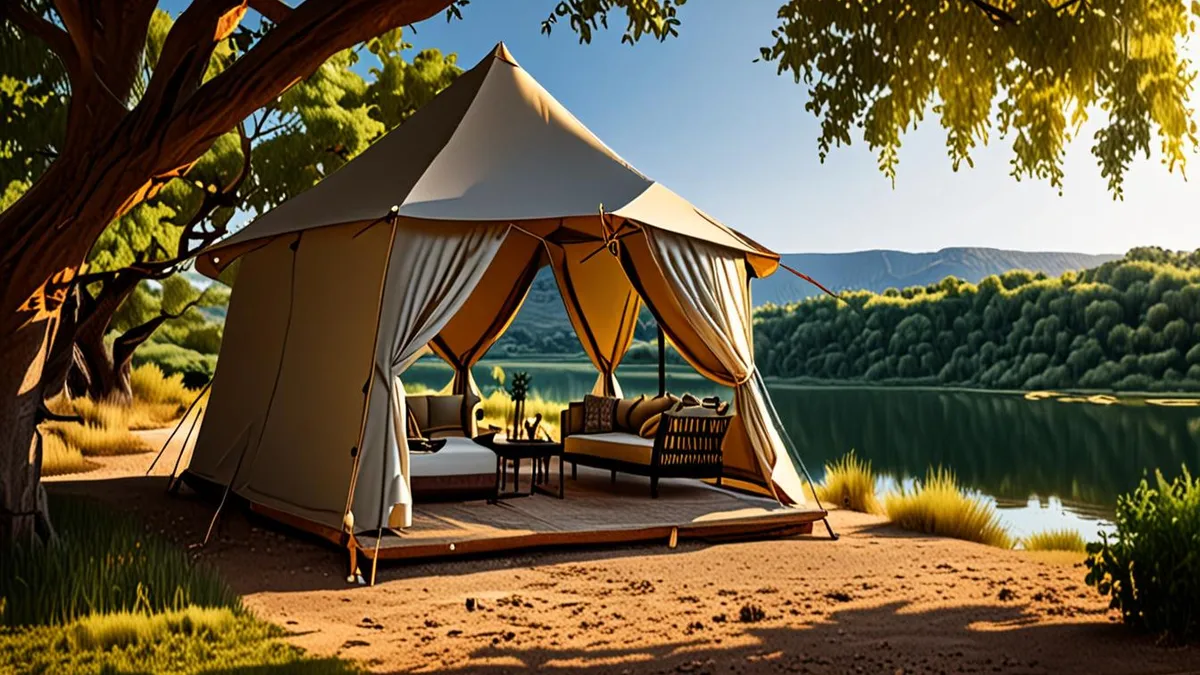
Safari tents with real beds and proper bathrooms are popular in valley and vineyard settings, where the gentler terrain makes larger canvas structures practical. They usually land in the middle of the price range and suit couples who want comfort without the glass-and-steel feel of a dome.
Luxury treehouses and yurts round out the options, and they’re often adults-only or deliberately small-scale — sometimes just one or two units on a property. If you’re torn between styles, it helps to understand the practical differences first: our guide to the key differences between yurts, domes and safari tents breaks down insulation, space and what each type handles well in different weather. As a rule of thumb, book domes and treehouses earliest — they’re the most photographed, and they sell out first in peak season.
When to Go and How to Book
Slovenia’s glamping season is short and clear-cut, which makes timing your trip one of the easiest planning decisions you’ll make. Unlike destinations where you can gamble on shoulder-season weather, Slovenia has a defined operating window for most small, design-led sites, and booking outside it often means finding gates locked or services reduced. The good news is that even the quieter months deliver excellent conditions, so you don’t have to fight peak-season crowds to get a great experience. Here’s how to pick your dates wisely.
- Target May to September. This is the window when glamping sites operate at their best, with warm days, open facilities and full access to hiking, rafting and lake activities. Outside these months, many smaller sites close or run reduced services, so check directly with your chosen site before booking spring or autumn dates.
- Accept the July and August trade-off. These are the warmest months and the best bet for swimming in Lake Bled or the Soča River, but they’re also the busiest. Expect fuller sites, livelier lakeside towns and the least availability, especially on weekends.
- Book 2-3 months ahead for peak season. The most popular domes and treehouses around Bled and in the Soča Valley fill early. Also note that most sites require a 2-night minimum stay on weekends, so plan your arrival day accordingly.
- Consider May, June or September for value. These shoulder months bring prices toward the lower end of the €90-250 range and the sites are noticeably quieter. The weather is still pleasant for hiking, and you’ll often get the same dome or safari tent for significantly less than in August.
Before you commit to dates, it helps to think about what kind of site actually suits you. A honeymooning couple may want an adults-only treehouse with a hot tub, while a family with young kids will prioritize space, kitchenettes and safe outdoor areas to run around in. Your dates should follow from that choice, not the other way around. If you’re new to this style of travel, reading up on how to choose the perfect glamping site for your first trip will help you match your expectations on comfort, location and atmosphere to the right property.
One last practical tip: once you’ve settled on a region and a rough window, email two or three sites at the same time to compare availability. Small Slovenian sites often respond quickly and personally, and they’ll tell you honestly which weeks offer the best balance of weather, price and peace and quiet.
What Glamping in Slovenia Costs
Glamping in Slovenia sits comfortably in the mid-range of European prices, which is part of its appeal. For a couple, expect to pay noticeably less than you would for an equivalent stay in Switzerland or Austria, with the final cost depending on the region, the season and the type of accommodation you choose. That usually covers the accommodation itself; extras like hot tubs, meals or airport transfers are typically charged separately, so check what’s included before you book.
Where you go matters. Sites around Lake Bled and in Triglav National Park tend to command the highest rates, simply because demand is highest there. The Soča Valley and the Vipava Valley sit in a similar band, while forest and spa regions in the east are generally the most affordable.
How accommodation type affects the price
Domes and luxury treehouses sit at the top of the range, often because they come with panoramic windows, larger terraces and more elaborate bathrooms. Safari tents usually fall somewhere in between, offering real beds and private bathrooms at a friendlier price point. Simple yurts and smaller cabins can dip toward the lower end, especially outside peak months.
If you want to pay less without sacrificing much, the formula is simple: travel in May, June or September and stay Sunday through Thursday. Shoulder-season weekday stays are the easiest way to bring a top-of-the-range dome down to a much gentler rate, and you’ll share the site with far fewer guests at the same time.
What to Expect On Site
Slovenian glamping leans firmly toward comfort rather than roughing it. At mid and upper-range sites, private bathrooms, kitchenettes and your own terrace are standard, not upgrades. You’ll typically arrive to a made-up bed, a stocked kitchenette with basic cooking equipment, and a terrace with chairs and a view — no communal shower blocks or camp kitchens unless you’ve deliberately booked a budget option. Many units also come with small extras that make a stay feel effortless: quality bedding, a coffee setup, board games or a fire pit outside. If any of these matter to you, check the unit description before booking rather than assuming, since exactly what’s included varies from site to site.
The atmosphere is the other thing that sets Slovenia apart. Most sites are deliberately small, usually somewhere between 5 and 15 units, which means quiet evenings, the sound of the river or forest, and hosts who actually get to know you. Don’t expect resort entertainment, evening shows or kids’ clubs; the draw here is scenery and stillness, not a program of activities. That intimacy is exactly what many travelers come for, but it’s worth matching your expectations to the setting before you book.
A few things are worth knowing before you pack:
- Warmth add-ons are usually optional extras. Hot tubs, saunas and wood-fired baths are common at Slovenian sites, but they’re often booked and paid separately — reserve in advance if a soak under the stars is a priority, since availability can be limited at small properties.
- Alpine nights get genuinely cold. Even in midsummer, temperatures can drop below 10°C after dark in mountain areas like the Julian Alps, so pack layers, warm socks and something cozy for evenings on the terrace.
- Self-catering is the norm. With a kitchenette in most units, many guests cook breakfast and dinner themselves. Plan a food shop on your way in, since small sites rarely have restaurants and local shops can be a drive away.
- Lighting and power are thoughtfully done. Most domes and tents have proper electricity, but lighting tends to be soft and low-key, so a small headlamp or book light is handy for late-night reading.
Planning Your Slovenian Glamping Trip
If a nature escape with a real bed, a private bathroom and a hot soak under the stars sounds like your kind of trip, glamping in Slovenia fits the bill. The country works especially well for travelers who want scenery and comfort without resort crowds: sites are typically small, quiet and close to mountains, rivers or vineyards, so your evenings sound like crickets rather than poolside music.
The simplest way to plan is to pick your region first, whether that’s the Julian Alps, the Soča Valley, wine country or the quieter east, then choose the type of stay that suits you, from domes to safari tents to treehouses. If you’re set on July or August, book 2-3 months ahead. A 3-4 night trip covers one region comfortably, or two at a relaxed pace. If you’ve glamped in Slovenia or have questions, leave a comment or share this article.