Scroll through any villa rental site and you will see the word “eco” everywhere. Some eco villas genuinely run on solar power, harvest rainwater and employ local staff. Others simply hang a leaf on the listing photo and hope you will not ask questions. For travelers who care about their footprint, telling the difference has become the hardest part of booking.
This guide walks you through exactly how to separate real sustainability from greenwashed marketing. We will look at what makes a villa genuinely eco, which green certifications actually involve independent audits, and the specific questions about energy and water worth asking before you pay a deposit. We will also cover how location and local hiring affect a property’s true impact, when to book and what a certified villa typically costs, the red flags that expose greenwashing in listings, and a simple way to choose an eco villa with confidence.
What Makes a Villa Genuinely Eco
A genuine eco villa starts with the building itself, not with a label on the website. Sustainability is designed in from the ground up: thick insulation that keeps bedrooms cool in summer, passive cooling through cross-ventilation and shading, and an orientation that uses the sun’s path rather than fighting it. Local materials such as stone, lime plaster or regionally sourced timber also matter, because they cut the carbon cost of construction and help the building blend into its landscape.
Look for systems, not slogans
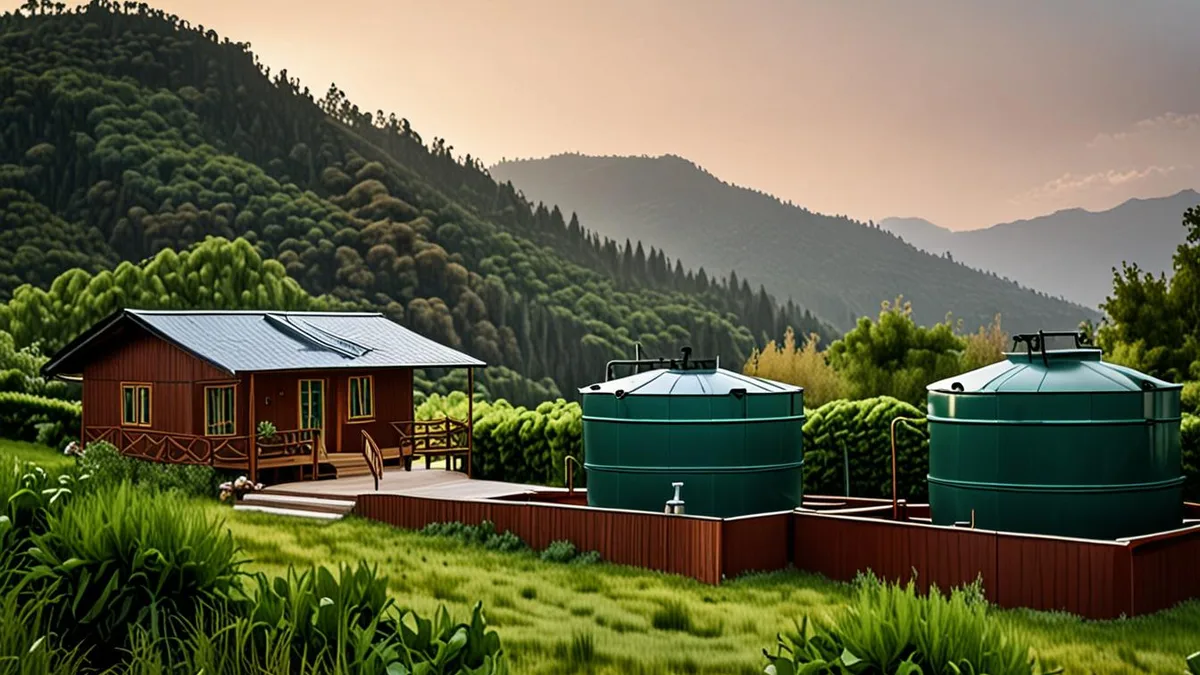
The next thing to check is how the villa actually operates day to day. Real properties run on working systems: solar hot water on the roof, rainwater harvesting tanks in the garden, greywater recycling that feeds the plants, and composting for kitchen waste. These are visible, physical features, and a serious owner will happily explain where they are and how they work.
That willingness to share detail is your best test. Genuine eco villas usually publish specifics about their systems in the listing or on their own site, sometimes with photos of the panels or tanks. Vague claims like “environmentally friendly” with nothing behind them are a red flag. If a description praises the villa’s harmony with nature but never mentions insulation, water or energy, you are probably looking at marketing rather than a genuinely sustainable rental.
Green Certifications You Can Trust
Self-declared labels cost nothing. Any owner can write “eco-certified” next to their listing without anyone ever checking. That is why third-party certifications matter: schemes such as EU Ecolabel, Green Key, LEED and EarthCheck all require independent audits, where an external verifier inspects the property and its systems before awarding the certificate.
Even a real certificate is only as good as its current status. Certifications need renewing, and properties change ownership or let standards slip. Before booking, visit the certifying body’s own website and confirm the villa’s certificate is active and not expired. Legitimate owners list their certificate number precisely because they want to be checked.
Be equally careful about badges that come from the booking side rather than the property itself.
- Platform-created “eco badges”: some booking sites and agencies award their own green tags based on a short self-completed questionnaire, with no external verification or site visit involved.
- Unfamiliar logo names: if a badge comes from an organization you have never heard of and cannot find an official website for, treat it as decoration rather than proof.
- Missing certificate numbers: a genuine certification can always be traced; an unverifiable one usually cannot, which is exactly why some listings rely on it.
When in doubt, ask the host which certification they hold, who issued it and when it was last audited. A confident, specific answer is a good sign; a vague one tells you the badge is doing the talking.
Energy and Water: Questions to Ask Before Booking
Once a listing looks promising, a few direct questions will tell you whether the sustainability claims hold up. Hosts of genuinely eco villas answer these easily, because the systems are part of their daily life. They know the size of their solar array, the capacity of their rainwater tanks and how their waste is sorted, because they live with those systems every day. Hosts of greenwashed properties tend to go quiet, reply with vague reassurances or simply stop responding. Silence is an answer in itself. Email the host before booking and work through the following points, ideally in a single message so you can judge the full reply rather than a series of short answers.
- Ask about the solar share. Find out what percentage of hot water and electricity comes from solar. In southern Europe, a properly sized solar hot water system typically covers 50-70% of a villa’s hot water needs, so a host should be able to give you a figure in that region rather than a shrug. If they mention backup electric or gas heating too, that is a good sign, since it shows they understand how the system actually performs.
- Ask about water. Check whether the villa harvests rainwater, and how irrigation for the garden and pool is handled. Villas with storage tanks and drip irrigation use far less treated mains water than those hosing down terraces from the tap. Ask where the tanks sit, roughly how much they hold and whether the pool cover is used to cut evaporation in summer.
- Ask about the energy-hungry extras. Pool heating and air conditioning can double a villa’s energy use. Good owners manage them with heat pumps, timers or natural shading from pergolas and trees, and they will explain exactly how. Ask how the villa is cooled without air conditioning, since shutters, cross-ventilation and ceiling fans often make it unnecessary on all but the hottest nights.
You do not need technical expertise to judge the answers. What you are looking for is specificity: numbers, equipment names and a willingness to explain. A host who replies with “we do our best for the environment” has told you everything you need to know. A host who sends photos of the solar panels, the rainwater tanks or the compost bins, or who links to a page with real performance data, has told you something far more valuable. These conversations also set the tone for your stay: owners who answer thoughtfully are usually the same people who leave clear instructions, good local tips and a well-maintained villa waiting for you when you arrive.
Location and Local Impact
One of the most overlooked aspects of a sustainable villa rental is simply where it sits. A villa within walking or cycling distance of a village lets you leave the car parked for groceries, dinner and morning coffee, while a remote hilltop property practically demands daily drives down winding roads. Neither choice is wrong, but if you genuinely want to reduce your footprint, proximity matters more than any solar panel.
Who works at the villa, and where does the food come from?
Genuinely sustainable owners invest in their local community, not just their building. They hire local staff year-round, buy from nearby farmers and producers, and treat the villa as part of the local economy rather than an isolated bubble. This is easy to check: ask where the breakfast basket or welcome goods come from. A host who can name the farm, bakery or olive oil producer is telling you something real about how they operate.
Another question worth asking is about the building’s history. A villa converted from an existing farmhouse, barn or stone house has a far smaller footprint than one newly constructed on undeveloped land. Renovation reuses existing walls and materials and avoids disturbing virgin terrain, drainage patterns and habitat. Many of the most convincing eco villas in the Mediterranean are exactly this: old farm buildings brought back to life with modern water and energy systems grafted onto them.
None of this appears on a booking page automatically, so make it part of your pre-booking email. Owners with a genuine local commitment answer these questions quickly and with specifics.
When to Book Eco Villas and What They Cost
Certified eco villas are still a small slice of the rental market, and the best ones get snapped up early. For a summer stay in the June-August peak, plan to book 4-6 months ahead. Because the number of genuinely certified properties is limited, waiting until spring for a July booking usually means choosing from whatever is left rather than the villas that actually walk the talk.
What should you expect to pay?
Sustainability has a price, and it is usually a modest one. Expect a 10-20% premium over comparable standard villas, which reflects the real cost of solar installations, quality insulation and water treatment systems. That premium typically pays itself back in lower running costs and a more comfortable villa, since well-insulated properties stay cooler without constant air conditioning. If you want a benchmark for what villas cost in a specific market, our guide to villa rental prices in Croatia breaks down what to expect by season and property type.
Timing also works in your favor. Traveling in May, September or October lowers the nightly rate and shrinks the property’s energy and water footprint at the same time. Shoulder-season demand is gentler, so solar and rainwater systems are under less strain, and hosts often have more flexibility on minimum stays. You get a quieter version of the same destination, a fairer price and a lighter impact in one move.
Red Flags of Greenwashing in Villa Listings
Greenwashing is common in villa listings precisely because there is rarely anyone checking the claims. Anyone can put the word “eco” in a title or add a photo of leaves to the gallery, and most booking platforms do not verify any of it. The good news is that fake sustainability is surprisingly easy to catch, because genuine owners talk about systems while marketers talk about feelings. A real listing names its solar array, its rainwater tanks, its insulation or its certification body. A fake one relies on atmosphere.
The fastest test is a direct email. Hosts of genuinely eco villas answer specific questions about hot water, irrigation and waste within a day or two, often with enthusiasm. Evasive or generic replies tell you everything you need to know. Watch for these warning signs as well:
- The house rules mention daily linen and towel changes. Water- and energy-conscious properties usually default to changes every few days or on request, not an automatic hotel-style refresh.
- No recycling instructions anywhere. A genuinely sustainable villa explains how to separate waste, where bins go and what to do with glass, plastic and compost, because the owner runs that system at home too.
- Single-use plastics in the welcome setup. Small bottled waters, plastic-wrapped toiletries and disposable kitchenware signal a property that treats “eco” as decoration rather than practice.
One or two of these signs might be an oversight, especially with a new host. But a listing with an “eco” title, no systems described and no answers to your questions is almost certainly greenwash. Move on to a villa that can back up its claims.
Choosing an Eco Villa with Confidence
So many villa listings sprinkle the word “eco” across their descriptions that it has almost lost its meaning. The good news is that genuinely sustainable properties are easy to separate from greenwashed ones once you know what to look for: verified third-party certifications, concrete details about solar, water and waste systems, and a visible commitment to the local community.
Put it into practice by emailing the host three or four specific questions before you book, and by planning ahead. Certified eco villas are limited in number, so booking 4-6 months ahead and traveling in the shoulder season gives you the best properties at fairer prices. A little scrutiny goes a long way. If you have stayed somewhere that impressed you with its sustainability, or have questions of your own, leave a comment below or share this article with a fellow traveler.