Scroll through any villa listing and you’ll see sun-drenched pools, wide terraces and stylish interiors. What you won’t see is whether the pool has a fence, if the balcony railings are high enough for a curious toddler, or whether there’s a stair gate anywhere in the house. That gap between the photos and reality is exactly what makes villa safety for kids so tricky for parents booking online.
The good news is that you don’t have to wait until arrival to find out. In this guide, we cover why villa safety for kids starts before you book, the pool safety questions to ask every owner, what to check on balconies and railings, and the indoor hazards like stairs and gardens that listings rarely mention. We’ll also help you match the villa’s location to your family’s needs, share the questions worth sending to the owner or manager before paying a deposit, and wrap everything up in a simple safety checklist you can use on your next booking.
Why Villa Safety for Kids Starts Before You Book
Most villa listing photos are taken to sell a dream: sunlit terraces, sparkling water, wide-open living spaces. What they almost never show is a pool fence, the actual height of a balcony railing or a staircase with no gate. That means the safest features of a villa are invisible exactly where you’d expect to see them, and the only way to find out is to ask direct questions before you commit.
Treat the booking stage as your first safety check. Owners and managers of genuinely family-focused villas are usually happy to answer specific questions and send extra photos, and many can do so within 24-48 hours. If replies are vague, slow or defensive, that itself is useful information about how the property will be managed once you arrive.
Book early for the safest options
Villas that are properly set up for children are a small share of the market, and they go first. For July and August stays in most Mediterranean destinations, book 4-6 months ahead to get real choice among the safest properties rather than settling for whatever is left. Peak villa season generally runs June to September, so the same logic applies to late bookings in any summer month: the family-friendly stock disappears early.
It also helps to budget realistically. Villas explicitly marketed as family-friendly, with safety equipment included, typically carry a price premium of around 10-20% over comparable properties. That extra cost buys more than a stair gate: it usually signals an owner who has thought about children throughout the property, from the pool area to the garden. Check current rates directly with owners or booking platforms, as prices vary by destination and season.
Pool Safety Questions to Ask Every Villa Owner
Pool safety is the single biggest question mark when renting a villa with kids, and the answer is rarely visible in listing photos. Ask the owner or manager directly whether the pool has a fence, a locked gate, a cover or an alarm — and request photos of whatever protection they describe. Many owners can send these photos within 24-48 hours, so there is no reason to pay a deposit before you have seen the setup yourself.
Do not assume any protection exists until it is confirmed. Unfenced pools are common in private villa rentals, especially in Portugal, Croatia and Montenegro, where open-access infinity pools are often marketed as a design feature rather than a hazard. If you are comparing options along the Portuguese coast, it helps to know which regions tend to offer more family-oriented properties — our guide to the best areas to rent a villa in Portugal breaks this down by region.
Depth and entry matter as much as barriers, particularly for children who are confident but not yet strong swimmers. Ask about the layout of the pool itself, and use these specific questions:
- Depth markings: ask whether the deep and shallow ends are clearly marked, and what the actual depth is at each end so you can judge whether your child can stand comfortably.
- A shallow child-friendly section: some villas have a separate paddling area or a wide shallow shelf; confirm whether one exists and roughly how deep it is.
- Type of entry: wide steps or a gradual beach-style entry are far easier for small children than a ladder or a sudden drop-off, so ask exactly how you get in and out.
- Supervision sightlines: if the pool sits away from the terrace, ask whether you can see swimmers from the main seating and dining areas while you are outdoors with the kids.
Balconies, Terraces and Railings: What to Check
Balconies are one of the most overlooked risks in villa rentals, partly because they photograph beautifully and rarely get a second thought until you arrive with a curious three-year-old. The good news is that this is one of the easiest risks to assess in advance, as long as you ask the right questions.
Railing height and gaps
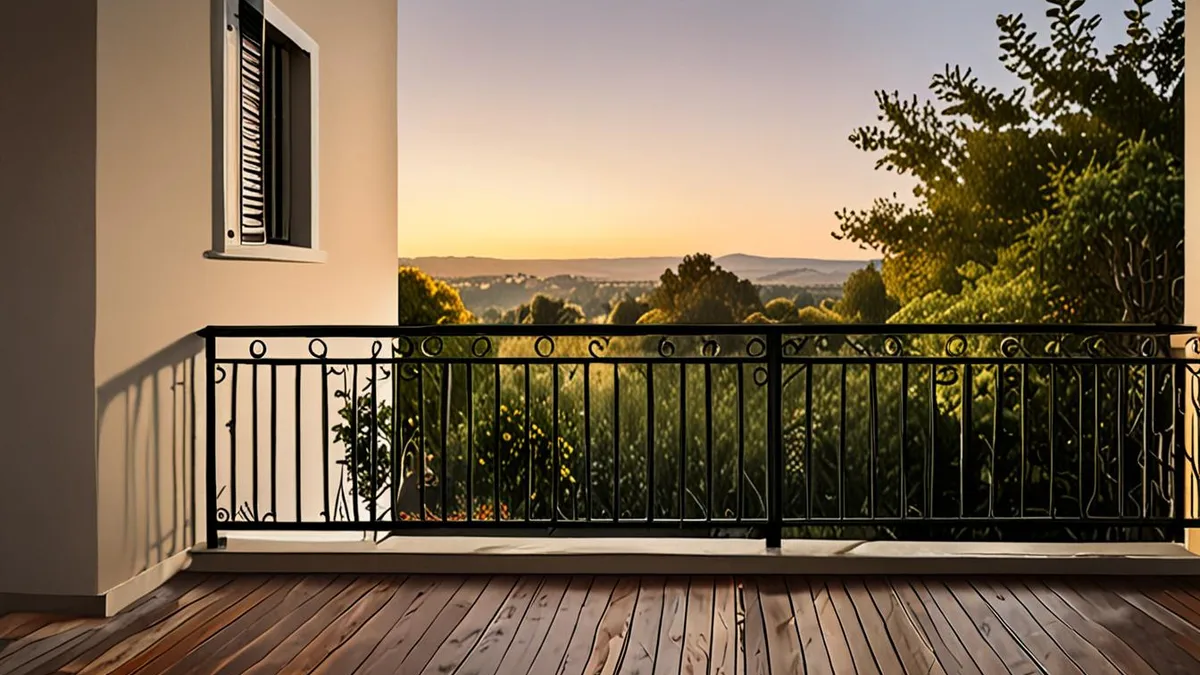
European building norms commonly require balcony railings at least 110 cm high with gaps under 10-12 cm, so that a small child cannot slip through or climb over easily. Older farmhouses and renovated stone properties don’t always meet these standards, and some villas have decorative railings with wide horizontal bars that work like a ladder. Ask the owner to confirm the actual measurements and, ideally, to send a photo taken from a child’s eye level.
Pay attention to the railings themselves, not just the height. Vertical bars are safer than horizontal ones, and solid glass or masonry panels leave no footholds at all. If the railing has crossbars or wide gaps between posts, treat it as a climbing frame until you’ve seen it in person.
Which rooms have balcony access
Ask whether bedroom balconies are accessible from children’s rooms or only from living areas. A toddler waking up early and wandering onto an unsupervised balcony is a very different scenario from one you can manage. If the children’s bedroom opens onto a balcony, check whether the door can be locked or fitted with a simple high-mounted latch, and whether the balcony connects to other levels.
Terraces need the same scrutiny. Check the edges and the drop height to gardens below, since even a one-meter fall onto stone or gravel can cause real injury. Also ask whether outdoor furniture sits near the railing: a table, bench or planter next to a low railing gives children a ready-made climbing route. Request that furniture be moved or that you be allowed to rearrange it on arrival, and do a quick walk-around before the kids are let loose outside.
Stairs, Gardens and Indoor Hazards in Villas
Indoors, the biggest hazard in most villas is the staircase. Multi-level properties often feature open-riser designs that look stunning in photos but give toddlers a clear view and an easy route to a fall. Before you book, ask the owner directly whether a stair gate can be provided or fitted at the top and bottom of the stairs. Many owners keep one on hand for previous family guests; others will happily install a pressure-mounted gate if you ask early enough.
If you are traveling with children under five, it is worth prioritizing ground-floor or single-level villas. These remove most stair and balcony risk entirely, which means far less constant supervision indoors and a more relaxing stay for everyone. You will usually still get outdoor space, and often more of it, than in a stacked multi-level property.
The garden deserves a walk-through too, ideally before your kids discover it on their own. Look out for these common hazards:
- Unfenced drops, such as terraces or retaining walls edging onto lower garden levels, which may have no barrier at all
- Ponds and water features, which can be shallow enough to be dangerous for a toddler yet easy to miss in listing photos
- Barbecues and fire pits, which stay hot long after use and are often placed at child height
- Outdoor equipment left accessible, including lawnmowers, tools, cleaning chemicals stored in sheds, and ladders leaned against walls
Ask the owner to confirm that the garden is enclosed and whether any of these features can be secured or covered before you arrive. A short message now saves a stressful first hour on arrival day.
Matching Villa Location to Your Family’s Needs
Where your villa sits matters almost as much as what is inside it. The right location can reduce risk, or quietly add new hazards you had not planned for.
Coastal villas: the sea is a second pool
A villa a two-minute walk from the beach sounds idyllic, and it often is. But remember that coastal locations add water exposure beyond the pool itself. Consider how far the sea actually is, whether the path crosses a road, and how steep the route back is with sandy, tired children. A clifftop villa with dramatic views may also mean an unfenced drop between you and the water, so ask about garden boundaries near the coast.
Countryside and urban-adjacent options
Lake and countryside villas often mean quieter roads and gentler terrain, which suits families with small children well. There is usually less traffic to worry about when kids ride bikes or scooters, and the terrain around the property tends to be easier to manage than steep coastal hillsides.
Urban-adjacent villas trade space for walkability. You may get a smaller garden, but you can typically walk to pharmacies, doctors and supermarkets within minutes, which is genuinely useful with young kids. If your child needs regular medication or you simply want quick access to a doctor without a car journey, that convenience can outweigh a smaller pool. Weigh what matters most for your family: space and quiet, or services on foot.
Questions to Send the Owner or Manager Before Booking
The simplest way to avoid nasty surprises is to send one organized message before you commit to a booking. Owners respond better to a clear checklist than to a string of separate questions, and their answers tell you a lot about how seriously they take family guests. A well-structured message also saves you time: instead of chasing details over several emails, you get everything documented in one reply that you can refer back to when comparing villas. Here is how to structure it.
- Ask about pool protection. Request photos of any fence, locked gate, cover or alarm, and ask about the pool’s depth markings and whether there is a shallow section suitable for small children. Many owners can send these photos within 24-48 hours, so there is no reason to book blind.
- Confirm balcony safety. Ask for the railing heights and the gap widths, especially on any balconies accessible from children’s bedrooms, so you can compare them against common European norms.
- Check indoor equipment. Ask if a safety gate can be installed at the top of the staircase, and whether a cot and high chair are available at no extra charge, so you know exactly what to pack from home.
- Find out who responds on-site. Ask who handles issues during your stay and how quickly they can attend, in case a safety problem appears after check-in, such as a broken gate latch.
- Confirm arrival logistics. Ask whether parking is off-road, whether the driveway is safe for children getting out of the car, and whether the entrance is gated.
Send this message before paying any deposit, not after. Most owners reply within a day or two, and the ones who answer clearly and willingly are usually the ones whose villas are genuinely set up for families. If replies are vague or evasive, treat that as useful information too and keep looking. A host who cannot answer basic safety questions is unlikely to prioritize them once your money is received.
Wrapping Up Your Villa Safety Checklist
Since listing photos rarely show pool fences, balcony railings or stair gates, villa safety for kids comes down to asking about pools, balconies, stairs and gardens before you pay. One checklist message covering pool protection, railing heights, stair gates and cot availability tells you far more than any photo gallery. Booking 4-6 months ahead for July and August also gives you the widest choice of genuinely family-safe villas, before the best ones are taken.
The rest is simple prioritising: single-level villas remove most stair and balcony risk for toddlers, and one pre-booking checklist message removes most of the uncertainty about everything else. If a host answers your questions clearly and quickly, that is usually a good sign of how they handle issues during your stay too. If this helped you plan a safer family villa trip, leave a comment or share the article with other traveling parents.