You love the idea of falling asleep under the stars, but the thought of sleeping on the ground, fumbling with tent poles in the dark, and shivering on a thin sleeping pad makes you hesitate. That’s where many travelers find themselves, and it’s exactly why so many start asking: what is glamping, and could it be the comfortable middle ground between a hotel and a traditional campsite?
In short, glamping—glamorous camping—lets you enjoy nature without giving up a real bed, and often much more. This beginner’s guide walks you through everything you need to know before booking your first trip: what glamping actually is, how it differs from regular camping, the main types of accommodation from safari tents to cabins, the amenities you can typically expect, what it usually costs, and how to plan your first stay. We’ll finish with an honest look at whether glamping is right for you.
What Is Glamping, Exactly?
Glamping is short for glamorous camping, and the name is fairly accurate. It describes overnight stays in nature where the shelter is already set up for you and the comfort level is much closer to a hotel than a campsite. Instead of sleeping on the ground in a bag, you get a proper bed, solid flooring and, in many units, lighting and heating that simply work at the flip of a switch.
No pitching, no packing, no gear haul
The biggest practical difference is who does the work. The host erects the tent, yurt or dome before you arrive, often with furnishings, rugs and decor already in place. You show up with a duffel bag and groceries, park nearby, and walk straight into a ready-made space. There is no wrestling with poles, no guessing whether you packed the tent stakes and nothing to take down on checkout morning.
A wide range of comfort levels
Glamping stays span a broad spectrum. At the simpler end, you will find canvas tents furnished with real beds and a lamp or two, sharing bathroom facilities with other guests. At the high end, fully furnished domes and large tents come with private bathrooms, kitchenettes, wood stoves and even hot tubs on the deck. Most first-timers land somewhere in the middle: a comfortable, weatherproof unit with a real bed and electricity, close enough to nature that you still hear the wind in the trees at night.
Glamping vs Camping: The Real Differences
At first glance, camping and glamping look similar: both put you outdoors, often near forests, lakes or mountains. The experience, however, differs in almost every practical way, starting with who brings the gear.
Gear, beds and power
Traditional camping requires you to own, pack, transport and set up everything: tent, sleeping pads, stove, coolers, lanterns and more. A glamping unit arrives fully furnished, so your packing list shrinks to clothes, food and personal items. Inside, you typically get a real bed with linens, heating for cold nights and electricity for charging phones and running lights. Campsites usually offer little more than a flat patch of ground and, at best, a power hook-up for RVs.
Weather matters far less
Rain is the classic camping trip-ruiner, and cold nights are a close second. Glamping structures handle both far better. Solid floors, insulated walls, proper roofing and wood stoves or heaters mean a storm outside often feels cozy rather than miserable. If you have ever abandoned a trip because the forecast turned, this alone can justify trying a glamping stay. For a deeper side-by-side comparison of costs, comfort and preparation, see our guide to glamping vs camping and which outdoor stay suits you best.
The Main Types of Glamping Accommodation
Not all glamping units are the same, and the type you choose shapes the whole experience. Some feel close to a boutique hotel room, while others keep a rustic edge. The four most common options are safari tents, yurts, geodesic domes and solid cabins, and each has a distinct personality. Before you book, think about how much space you need, how warm you want to be, and how close to “real house” you want the setup to feel. If you want a detailed comparison, our article on the key differences between yurts, domes and safari tents breaks them down further.
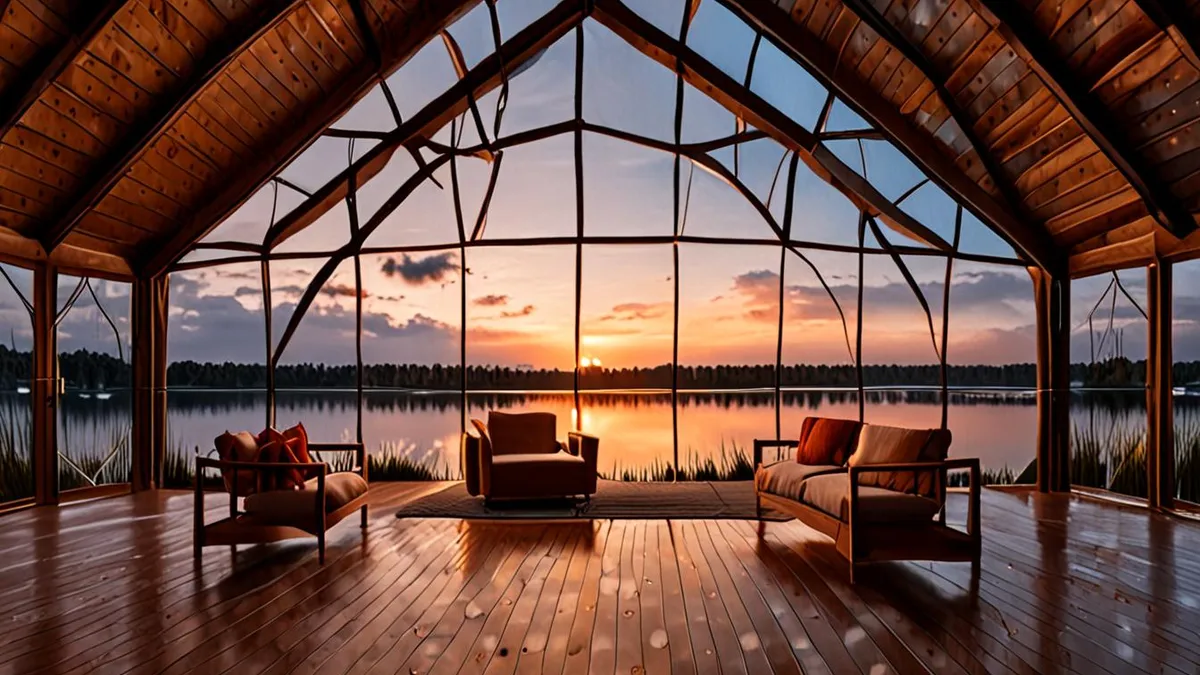
Safari tents are the roomiest choice, often built on wooden platforms with a covered deck and an en-suite bathroom. Yurts are circular structures with a warm, enclosed feel that holds heat well in cooler months. Geodesic domes are the photogenic option, with curved frames and large panoramic windows that make them popular for stargazing stays. Cabins and A-frames are the most house-like of all, with solid construction that feels closer to a small cottage than a tent.
- Safari tents: the generous floor space usually fits a separate sitting area, making them a good pick for longer stays or travelers who want room to spread out.
- Yurts: the round layout and lattice walls give a soft, cocoon-like atmosphere, and many include a wood stove at the center for chilly evenings.
- Geodesic domes: the curved shell sheds wind and snow efficiently, and the skylight or window overhead lets you watch the night sky from bed.
- Cabins and A-frames: rigid walls, lockable doors and full weatherproofing make them the safest bet for beginners nervous about canvas or first-time trips in unpredictable seasons.
What Amenities and Comforts to Expect
The biggest difference between glamping and a night under the stars comes down to what is waiting for you when you arrive. Nearly every unit comes with a real bed made up with proper linens, so you can skip the sleeping bag entirely. Lighting is already installed, and most units have heating for cool nights or fans for warm ones. Power outlets are standard too, which means your phone, camera and e-reader stay charged without any tricks.
Bathrooms are the one area where you really need to do your homework. Some units come with a private en-suite bathroom, complete with a hot shower and a flush toilet just steps from your bed. Others rely on shared facilities located a short walk from the tent, which can be perfectly fine but is a very different experience at two in the morning. Always check the bathroom setup before you book, especially if you are traveling with children or anyone who minds a nighttime stroll.
Extras That Make the Stay Special
Beyond the basics, many sites add touches that turn a good stay into a memorable one. Fire pits with seating are common and perfect for an evening outside. Some units include outdoor kitchens or grills, private hot tubs, or even breakfast delivered to your deck. Since amenities vary widely between properties, it helps to know what to bring yourself, and this complete glamping packing checklist covers exactly that so you arrive prepared.
How Much Does Glamping Cost?
Glamping prices vary more than most first-timers expect, and the range depends almost entirely on the type of unit and what it includes. The good news is that there is a genuine entry point at every budget, from a simple canvas tent to a dome with panoramic windows and a private hot tub.
At the lower end, budget units in tents and small yurts typically run $50-$150 per night. Mid-range safari tents and domes with private bathrooms cost $150-$300 per night, and this is where most first-time glampers land. Luxury stays with hot tubs and full kitchens can reach $300-$800 per night, putting them in the same price bracket as a boutique hotel.
- Location drives the price. Units near popular national parks, coastlines or wine regions usually cost more than the same setup in the countryside an hour away.
- Private bathrooms add a premium. Two units that look similar online can differ in price mainly because one has an en-suite and the other uses shared facilities.
- Weekends cost more than weekdays. Friday and Saturday nights often carry higher rates, so a midweek stay stretches the same budget further.
- Minimum stays may apply. Some properties ask for two or more nights on weekends and holidays, which affects the total cost of your trip.
Timing matters just as much as the unit itself. Prices peak between May and October, when demand is highest, so shoulder-season dates can cut rates noticeably. If your schedule is flexible, a weekend in late spring or early fall often gets you the same unit for noticeably less.
How to Plan Your First Glamping Trip
Your first glamping trip should feel like a treat, not a logistical challenge. A little planning up front makes the difference between a smooth, relaxing night and a stressful one, so work through these steps before you pay for anything. None of them take more than a few minutes, and together they remove almost every common source of disappointment.
- Pick a site close to home. Choose a site within 1-2 hours of home for your first overnight stay. If the weather turns bad or something at the unit is not as expected, you can simply head back without disrupting a long-planned vacation. A nearby site also lets you test the experience with minimal commitment before booking something more ambitious later.
- Book well in advance. Reserve 2-3 months ahead for most dates, or 4-6 months ahead if you want a summer weekend or a holiday between May and October. The most attractive units, especially those with hot tubs or the best views, tend to be claimed first, and last-minute availability is rarely the good stuff.
- Match the unit to your group size. Check the sleeping capacity carefully, since most units sleep 2-4 guests and family units go up to 6. Squeezing in extra people usually means poor sleep and unhappy companions, so count heads honestly before you commit.
- Confirm exactly what is included. Read the listing before you pay and check whether bedding and towels are provided, whether there are cooking facilities or a kitchen, and what the bathroom arrangement is. A quick message to the host resolves most questions in minutes and gives you a sense of how responsive they are.
Once your booking is confirmed, the hardest part is done. Save the check-in instructions on your phone, note the host’s contact details in case of delays, and pack a small bag with your personal essentials. Double-check arrival times, then prepare for a night outdoors that comes with a real mattress at the end of it.
Is Glamping Right for You?
So, is glamping right for you? If you love the idea of falling asleep to crickets and waking up to birdsong but dread the thought of a thin mat on hard ground, the answer is probably yes. Glamping gives you the outdoor setting without the sacrifice: real beds, heating, electricity and, in many units, a private bathroom. You still get the campfire and the stars, just without hauling gear or pitching anything yourself.
On the practical side, nightly prices typically run from $50-$150 for budget tents and yurts up to $300-$800 for high-end domes and safari tents with upscale extras. For a first trip between May and October, booking 2-3 months ahead secures the best choice of unit. If that sounds like your kind of compromise between comfort and the outdoors, glamping is well worth trying. Have you tried it yet, or are you planning your first trip? Share your thoughts in the comments or pass this article along to a fellow reluctant camper.