Many lodges advertise themselves as pet friendly, but the reality often only becomes clear after you have paid the deposit. Restrictions on dog numbers, breed rules, extra cleaning charges and gardens that turn out to be shared or unfenced are frequently buried in the small print. By the time you discover them, cancellation can be costly and your holiday plans are already in motion.
This guide to lodge holidays with dogs walks you through everything to check before booking. We start with the pet policy questions to ask, then look at the true costs, from cleaning fees to seasonal pricing. You will also find advice on enclosed gardens and secure grounds, choosing a location with good walking access, the best times to book, and practical checks on facilities, cleaning standards and arrival. A short summary at the end pulls the key points together so you can book with confidence.
Pet Policies: The Questions to Ask Before You Pay
Before you pay anything, get the lodge’s pet policy in writing. “Pet friendly” on a booking page can mean very different things at different properties, and the details that matter most are often the ones least visible. Some sites use the phrase loosely to attract searches, while the actual rules turn out to be far stricter than the listing suggests. A quick phone call or email before booking can save you from arriving with a dog that is not actually welcome, which is a mistake nobody wants to make after a long drive.
Start by confirming the basics, then work through the finer points. Many lodges cap bookings at one or two dogs, so a family with three dogs may need to look elsewhere or split across two lodges. It is also worth asking how the policy applies to your specific dog, not just dogs in general, since individual breed, size and temperament rules can change the answer entirely.
- Number of dogs: confirm the exact limit per booking, and ask whether it applies to the whole property or per lodge, since some sites count pets across all their units.
- Breed, size and weight rules: some lodges exclude certain breeds or set weight limits in the small print, so check whether your dog’s breed or size is affected before booking.
- Room access: dogs are sometimes restricted to ground-floor lodges or specific pet-designated units, so confirm your allocated lodge type allows dogs.
- Leaving dogs alone: some properties forbid dogs being left unattended entirely, while others allow it only in a crate, so clarify this if you plan days out without your dog.
Ask for answers in an email rather than over the phone. A written confirmation gives you something to refer to if a dispute arises at check-in, and it encourages the lodge to be precise rather than vague. Keep the reply on your phone or print a copy for your travel folder, so you can show it on arrival if any point is questioned. If a lodge refuses to put its pet rules in writing, treat that reluctance as a warning sign and consider booking somewhere more straightforward.
Costs: Pet Fees, Cleaning Charges and Seasonal Pricing
Pet-friendly lodges rarely cost the same as their standard equivalents, and the differences go beyond the headline rate. The most common extra is a cleaning fee. Most pet-friendly lodges charge roughly £20–£50 per dog per stay, so a two-dog booking can add a noticeable amount to your total. Always confirm whether the fee is charged per stay or per night, because a per-night charge adds up quickly over a week.
Timing matters just as much. Off-peak weekly rates for dog-friendly lodges often run £400–£700, while peak summer weeks can climb above £900. If your dates are flexible, traveling outside the school holidays can save you hundreds of pounds, and your dog will usually find quieter trails too.
What counts as an extra?
Some lodges provide dog bedding, bowls and towels as standard, while others expect you to bring your own or charge for them. Ask before you pack, since a large dog bed takes up valuable boot space. It is also worth checking whether pet-friendly bookings require a higher damage deposit than standard ones. Deposits vary widely between properties, so ask for the amount and the refund conditions in writing before you pay.
Grounds and Gardens: Enclosure, Space and Security
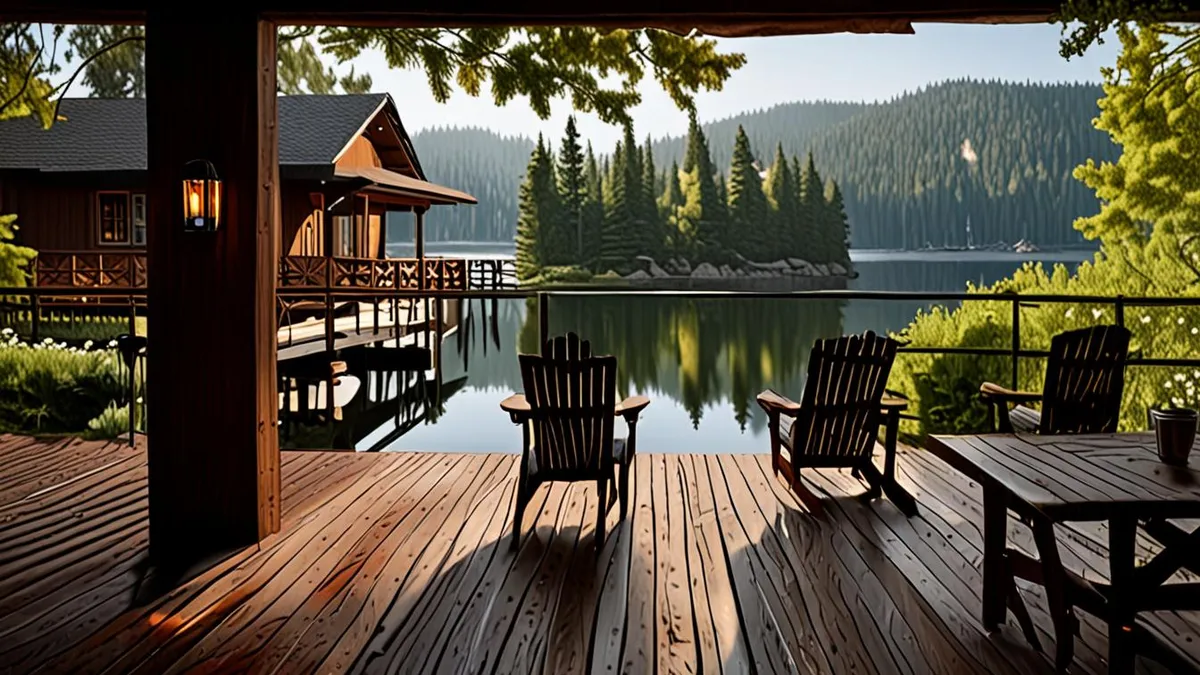
The garden can make or break a lodge holiday with a dog, especially if you have an energetic breed that needs somewhere to burn off energy between walks. A photo of a lawn tells you very little. What you need to know is whether that lawn is genuinely secure, and for whom.
A good dog-friendly lodge garden is typically fully enclosed with fencing at least 1.2 meters high. An open lawn that looks out onto a field or a shared site is not the same thing. Ask specifically whether the fencing runs all the way around, including along any boundaries shared with neighboring plots, and whether there are gaps under hedges or gates that a determined dog could squeeze through.
Private or shared, and how secure?
Check whether the garden is private to your lodge or shared with other guests. A shared space means you cannot let your dog off the lead freely, particularly if other guests have children or dogs of their own. If your dog is prone to wandering, also ask about gates, driveways and road access. A lodge that opens directly onto a lane or car park needs far closer supervision than one set back behind a gated drive.
Finally, ask what borders the property. Livestock on adjacent farmland is common in rural lodge locations, and even a well-fenced garden may back onto a field with sheep or cattle. Knowing this in advance lets you judge whether the enclosure is adequate for your dog, and whether you will need to keep it on the lead near boundaries.
Location: Walking Trails, Water and Nearby Hazards
The best lodge holidays for dogs start at the front door, not in the car. If trails begin within 1–2 km of your lodge, you can walk your dog every morning and evening without ever touching the ignition. That single detail shapes the whole trip, especially if you are staying for a week and your dog needs two or three proper walks a day.
Water is the next thing to look at. A lake or river on the map is no guarantee your dog can actually swim there. Some bodies of water welcome dogs all year, while others only allow them outside the busiest months, and a few ban them completely. Before you book, ask the owner or check the local council website for the rules on the specific stretch of water nearest your lodge.
Coastal destinations need extra care. Many beach resorts restrict dog access during the main tourist season, often from May to September, so a summer coastal break can mean driving to a more distant dog-friendly beach instead of strolling from your lodge. If the Wild Atlantic appeals to you, our guide to Ireland coastal lodges for Wild Atlantic trips covers destinations where dogs and dramatic coastlines go together well.
Finally, ask the owner directly about what surrounds the property. They know the lanes, fields and footpaths better than any listing description.
- Livestock boundaries: Sheep and cattle fields often border lodge grounds, so ask which routes pass through grazing land and whether your dog must stay on a short lead the entire way.
- Road crossings: A trail can start at your door but cross a busy country lane within the first few hundred meters, so ask how much road walking the nearest loop involves.
- Stiles and gates: Footpaths with ladder stiles or kissing gates can be difficult for larger dogs or older pets, so request a description of the access points on the closest routes.
- Ground conditions: Ask which nearby paths turn to mud or flood after rain, so you can pack towels and plan drier alternatives.
When to Book: Seasons and Lead Times for Dog-Friendly Lodges
Dog-friendly lodges are among the first accommodations to sell out, particularly for summer school-holiday dates. Families with pets compete for a much smaller pool of properties, so if you want a July or August break, book 3–6 months ahead. Leaving it until spring usually means choosing from whatever is left, often the least suitable lodges for you and your dog.
Why shoulder months work best
May–June and September–October offer the widest pet-friendly availability, and the trails are noticeably quieter. Your dog gets more off-lead freedom, beaches and paths are less crowded, and weekly rates sit well below peak summer prices. If your dates are flexible, shifting a trip by a few weeks is the single easiest way to get a better lodge for less money — and a calmer experience for a dog that startles around crowds.
Midweek stays outside school holidays are also easier to secure with a dog than weekends. Many owners run Friday-to-Friday changeovers in summer, but midweek gaps between bookings are often open to shorter pet-friendly stays, so it pays to ask directly rather than filter only for full weeks.
Winter bookings need extra questions
Colder months bring a change in house rules. Some lodges tighten their indoor pet policies in winter, when wet dogs and muddy floors are a bigger concern, so confirm what applies to your specific dates before paying. Ask whether the outdoor space and any nearby walking routes you plan to use are still accessible in bad weather, as flooded paths or closed ground can change a trip quickly.
On the other hand, a lakeside lodge in the off-season can be wonderfully peaceful, with fewer dogs, fewer people and more room to roam. Our guide to Finland lakeside lodges for summer holidays shows how different the seasons can look at the same destination, which is useful if you are weighing a quiet autumn break against a busier summer one.
Practical Checks: Facilities, Cleaning Standards and Arrival
The little details make the difference between a relaxing lodge stay and a week of mopping floors. Start with the flooring itself. Carpet in a living room or bedroom that your dog will use is hard work after a rainy walk, so ask for hard flooring or washable rugs in those rooms. Some owners will happily point you toward their most practical lodges if you simply explain what you need.
Mud management matters just as much. A lodge with an outdoor tap, a utility room or a covered porch gives you somewhere to rinse paws before your dog trots across the floor. Without one, you will be cleaning the same carpet every evening, so make this a specific question rather than an assumption.
Think ahead about emergencies too. Before you travel, find the nearest veterinary practice to the lodge and save its details in your phone. Ask whether the lodge keeps emergency contact information on file for guests, and confirm what the owner would want you to do if your dog needed urgent care at night.
- Towels and drying space: Ask whether the lodge provides dog towels or has a drying rack, so you are not using the bath towels meant for human guests.
- Waste bins: Confirm there is an outdoor bin for dog waste, since carrying bags around for days is unpleasant and some rural lodges have limited disposal options.
- Arrival exercise space: Check whether the enclosed garden is available the moment you arrive, so your dog can stretch its legs straight after a long drive instead of waiting through check-in paperwork.
- Local hazards briefing: Ask the owner to flag anything specific on site, such as a pond, steep drops or electric fencing, before you let your dog explore.
Ready to Book Your Dog-Friendly Lodge
Finding a lodge that truly welcomes your dog comes down to asking the right questions before you pay anything. Many properties advertise as pet friendly, then reveal restrictions, hidden charges and unsuitable grounds only after you have committed your deposit. So verify how many dogs are allowed, check the breed rules, and confirm the pet cleaning fee — typically £20–£50 per dog per stay — before you hand over any money.
Once the policy is clear, focus on value and comfort. An enclosed garden, walking trails within 1–2 km of the door and shoulder-season dates in May–June or September–October will give you the best experience for your money. And if you have your heart set on a summer trip, book 3–6 months ahead, because the most dog-friendly lodges sell out first. Found this useful, or have a lodge tip of your own? Leave a comment or share this article with a fellow dog owner.