With hundreds of alpine lodges across several countries and price gaps that can double within one valley, choosing the right ski lodge in the Alps for a winter trip quickly becomes overwhelming. Two lodges with similar photos and ratings can sit ten minutes apart, yet differ sharply in slope access, snow reliability and what you actually pay once extras like transfers and ski storage are added. Getting this choice right shapes your whole week on the snow.
This guide breaks the decision into manageable steps. We start with picking the right country and region, then look at how location and slope access affect both convenience and cost. From there, we cover the best weeks to travel, how to set a realistic budget, which facilities matter for your group, and how to book smart. A final summary pulls everything together so you can compare options with confidence.
Pick the Right Alpine Country and Region for Your Ski Trip
The Alps stretch across several countries, and each one offers a noticeably different lodge experience. France and Austria have the largest linked ski areas and the widest choice of accommodation, from simple family-run guesthouses to large resort lodges. If this is your first alpine trip, either country is an easy starting point: you will find plenty of ski schools, rental shops and English-speaking staff, and you can usually find a lodge that matches most budgets.
Switzerland delivers the most dramatic scenery and polished infrastructure, but it also comes with the highest prices for lodging, lift passes and dining. It suits special-occasion trips where you want the full premium experience and are prepared to pay for it. Italy and Slovenia, by contrast, offer strong value for money and noticeably quieter slopes. They suit travelers who care more about mountain views, good food and relaxed skiing than lively après-ski scenes.
Match the region to your airport
Before falling in love with a lodge, check how you will reach it. Geneva works well for the French and Swiss valleys to its south and east, Munich and Innsbruck serve much of the Austrian Alps, and Milan is the natural gateway for Italian resorts. A lodge that looks affordable can lose its appeal if the transfer adds hours and cost, so pick your region with the airport in mind.
Choose a Ski Lodge in the Alps by Location and Slope Access
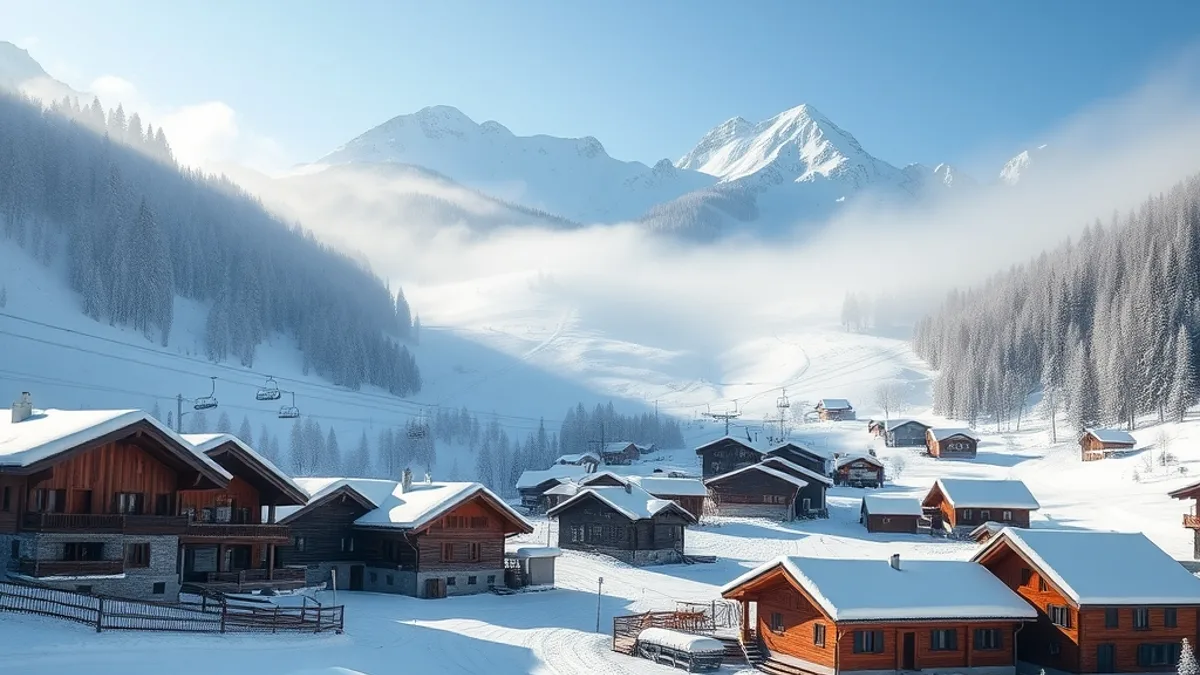
Where your lodge sits relative to the lifts makes a bigger difference to your ski week than most people expect. Ski-in/ski-out lodges let you clip into your skis at the door and glide back at the end of the day, which saves a daily scramble with boots, poles and children. That convenience comes at a price: expect to pay roughly 20-40% more than for a lodge a short distance from the lifts. On the other side of the ledger, staying in a village 10-20 minutes by shuttle from a major resort can cut your accommodation costs by 30-50%, money you can redirect toward lift passes or meals.
Whichever option you choose, do some homework on distances before booking, especially if you travel with children or beginner skiers. A useful checklist:
- Walking distance to the lifts: aim for a lodge you can reach in ski boots in under ten minutes, or confirm how frequent and reliable the shuttle service is during peak weeks.
- Proximity to ski schools: beginners and children often have morning lessons, so a lodge near the meeting point saves stressful early starts.
- Rental shops nearby: being able to swap or adjust boots and skis within a few minutes of your lodge turns equipment problems into a minor hiccup rather than a lost ski day.
- Altitude of the village: lodges above roughly 1,200 meters generally enjoy dependable snow cover from December to April, reducing the risk of a thin or patchy base outside your door.
If you are torn between a cheaper lodge with a shuttle and a pricier ski-in/ski-out option, calculate the daily time and hassle the shuttle adds for your group. Families with young children often find the convenience premium worthwhile; groups of confident skiers frequently prefer the savings.
Time Your Winter Trip: Season and Snow Reliability
The alpine ski season runs roughly from late November to mid-April, but snow quality varies far more than the calendar suggests. The most reliable conditions fall between January and March, when cold temperatures keep the slopes in good shape and most high-altitude areas have a deep, well-settled base. If dependable snow is your priority, aim for this window.
Mid-January and March deserve a special mention. Both combine solid snow with quieter slopes and lower lodge rates, since you avoid the school-holiday crowds that push prices up. For adult groups and couples, these weeks often deliver the best balance of conditions, atmosphere and cost.
Weeks to treat with care
December and the Easter weeks are family-heavy, so expect fuller lodges, livelier slopes and higher prices throughout. Early December carries an extra risk: at lower altitudes the snow cover can still be thin, and some lower runs or lifts may not yet be fully open. If you want a pre-Christmas trip, choose a higher resort and check snow reports before committing.
If your winter travel plans stretch beyond the Alps, a guide to Sweden winter lodges for snow travelers shows how conditions and lodge culture differ further north.
Set a Realistic Budget for Your Alpine Lodge Stay
Budgeting for an alpine lodge is easier once you know the typical spread. A simple, clean budget lodge generally runs about EUR 60-110 per night in low season, while the same room can climb to EUR 150-300 during peak weeks like Christmas, New Year and the busiest February dates. That swing is significant, so the exact week you travel often matters more than the lodge category itself.
One of the smartest ways to control costs is choosing half-board. In small alpine villages, restaurants are often limited and pricey, and dinner for a family can quickly rival the cost of the room. A lodge that includes breakfast and an evening meal locks in your food spending and usually serves generous, hearty portions that suit skiers well.
Also look beyond the nightly rate. Some lodges advertise an attractive price, then add extras that quietly change the total. Before you book, ask what is included and what is not, especially for the following:
- Ski storage: heated boot rooms and lockers are sometimes charged per pair of skis or per week.
- Parking: covered or underground parking in ski villages can carry a daily fee, while some lodges include it.
- Airport transfers: shared shuttles or lodge-arranged pickups are often billed separately per person, each way.
- Tourist taxes: many alpine destinations add a local visitor tax, collected at check-in rather than shown in the room rate.
For group trips, run the numbers both ways. Shared chalets are usually priced per person and can work out cheaper for larger parties, while private rooms in a lodge give couples and friends more privacy. Compare the per-person total in each setup, including meals and extras, before committing.
Match Lodge Facilities to Your Group and Ski Level
The best lodge for your trip depends heavily on who is traveling with you. A lodge that delights a group of friends may frustrate a family with young children, and a romantic hideaway can feel too quiet for a lively ski crew. Think about your group’s daily rhythm first, then match the facilities to it.
For families and beginners
Families should put ski schools at the top of the checklist. A lodge within easy walking distance of the meeting point saves cold, gear-laden mornings and makes dropped gloves and forgotten hats manageable. Look for family rooms that actually sleep everyone comfortably, and a proper boot room with heated dryers, because drying wet boots and gloves overnight is what makes day four as pleasant as day one.
Beginners need easy terrain, not just a good room. Before booking, confirm that green and blue runs are reachable from the lodge without a long chain of lift journeys, since a beginner who faces a gondola ride just to reach a nursery slope loses confidence and time. Ski rental shops nearby are another practical plus for first-timers.
For couples and groups
Couples often get more from smaller lodges with a spa, sauna or mountain-view terrace, where the after-ski hours matter as much as the slopes. Groups, on the other hand, benefit from shared lounges for evening gatherings, secure equipment storage for the whole party, and flexible meal times that survive a slow lunch on the mountain.
Book Smart: When and How to Reserve Your Lodge
Alpine lodges in the best locations fill up early, especially for the weeks everyone wants. A little planning discipline goes a long way, and the booking process itself deserves as much attention as the choice of lodge. Rather than scrolling listings and hoping for the best, treat the reservation like a small project: decide your priorities, check the practical details, then commit. Work through these steps in order and you will avoid the most common mistakes first-time alpine travelers make.
- Pick your dates, then book 3-6 months ahead for peak weeks. Christmas, New Year and February half-term see the most desirable lodges reserved first, and late bookers are left with the remaining rooms at the remaining prices. If your dates are fixed, book early; if they are flexible, you have more leverage.
- Consider January or late March instead. These quieter stretches often come with discounts and wider room availability, so you can sometimes upgrade your lodge for the same money you would have spent in peak season.
- Read the cancellation terms line by line. Alpine trips depend on weather, snow conditions and travel, so know exactly when your deposit becomes non-refundable and what happens if you need to move dates.
- Confirm transfers before paying a deposit. Check how you will actually reach the lodge from the nearest airport or train station, how often that service runs, and whether it needs to be reserved in advance.
Once those boxes are ticked, book with confidence and keep a copy of the confirmation with all inclusions spelled out: meals, ski storage, parking and transfers. If anything is unclear, email the lodge and get the answer in writing before you pay. If you like the idea of stretching your travel budget further, the same early-planning mindset applies elsewhere too, as shown in this guide to budget lodges in the United Kingdom for smart trips. A well-timed reservation is often the difference between an average lodge and a great one at a fair price.
Your Alpine Lodge Choice at a Glance
Choosing a ski lodge in the Alps feels overwhelming at first, with hundreds of options across several countries and prices that can double within a single valley. The trick is to work through four decisions in order: region, slope access, season and budget. Once those are set, the shortlist shrinks fast.
In practice, that means aiming for January to March for the most reliable snow, with mid-January and March offering the best mix of quiet slopes and lower rates. Booking 3-6 months ahead secures the lodges you actually want, and weighing ski-in/ski-out comfort against the savings of a shuttle village is usually where the best deal hides. Get those calls right and the rest is just picking a room with a view. If this helped you plan your trip, leave a comment or share the article with your ski crew.