You have probably seen “ski-in ski-out” on dozens of Alps listings by now, and it almost always comes with a higher price tag. But what does the phrase actually guarantee when you hand over that premium? In some cases, you really can clip into your skis outside the door. In others, you will discover a 400-meter walk in ski boots that the listing photos conveniently cropped out.
This guide explains how ski-in ski-out resorts work in practice. We cover what the term truly means and where marketing stretches it, how slopeside access changes your daily routine on the mountain, and what the premium typically costs. You will also find advice on snow reliability at different altitudes, a checklist for verifying a ski-in ski-out claim before you book, and timing tips for securing the best slopeside stays in peak weeks.
What Ski-in Ski-out Actually Means in the Alps
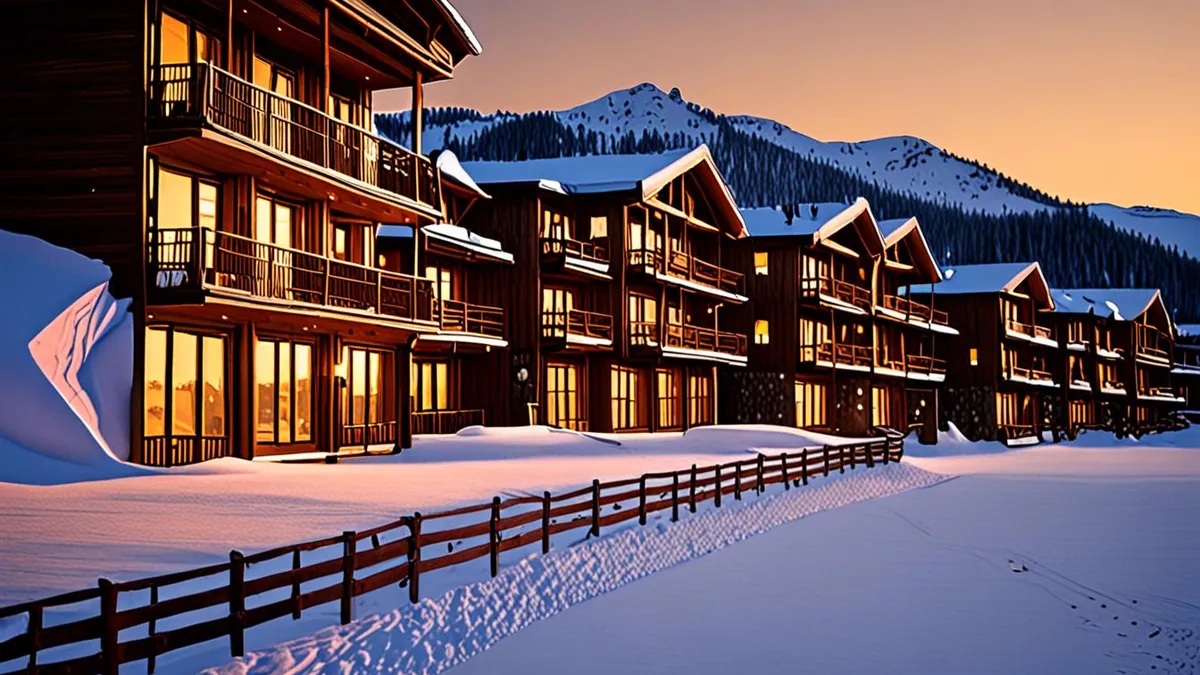
At its truest, ski-in ski-out means the piste starts and ends at your accommodation. You step out of the building with your skis on in the morning, ski down to the lift system, and at the end of the day you ski all the way back to the door. No boot walks, no shuttle, no carrying skis across a parking lot in the afternoon slush.
The reality on booking sites is often looser. Many properties sit 200-500 m from the slope or the nearest lift and still get labeled as part of a “ski-in ski-out area.” That phrasing suggests proximity rather than genuine door-to-door access, and the difference becomes very real at 4 p.m. when you are walking the last stretch in heavy boots.
Why the term gets stretched
There is no official body that regulates the phrase, so anyone can use it. Listings inflate the claim with soft language like “near the slopes,” “a short stroll from the piste,” or “ski-in ski-out area,” which can describe anything from a genuine slopeside chalet to an apartment several hundred meters uphill of the lift station. The term is unregulated, so the burden of verification falls on you as the traveler. Before paying a slopeside premium, treat the phrase as a starting point for questions rather than a guarantee, and check exactly where the building sits relative to both the piste and the lift.
How Slopeside Access Shapes the Resort Experience
The most obvious benefit is what disappears from your day: no morning walk in ski boots, and no shuttle bus ride between your accommodation and the lifts. You step outside, click in, and you are on the mountain within a minute. At the end of the day, the same applies in reverse, which matters a lot when legs are tired and boots feel two sizes too small.
Slopeside access also changes your midday rhythm. Instead of paying mountain restaurant prices for a mediocre plate of pasta, you can ski back to your own base for lunch, make something simple in the kitchen, and rest on your own sofa before heading out again. If you are planning a longer Alps trip beyond winter, the same base-camp logic applies to summer, as covered in this guide to Austria Alps resorts for summer holidays.
Ski-in ski-out matters most for two groups in particular:
- Families with young children: small legs tire fast, and carrying a child plus their skis even 300 m from a shuttle stop turns a good day into a hard one. Door-to-door skiing removes that daily friction.
- Short stays of 3-5 nights: on a long trip you can absorb the hassle of walking to the lifts. On a quick weekend, losing an hour a day to logistics eats a big share of your ski time.
There are trade-offs. Purpose-built slopeside developments often sit slightly apart from the village center, which means less atmosphere in the evenings and fewer shops and restaurants within walking distance. If lively après-ski and a choice of eateries matter to you, check what the immediate surroundings actually offer before committing.
What the Slopeside Premium Costs
Location on the piste is one of the biggest price drivers in Alpine accommodation. Slopeside properties typically cost 20-40% more than equivalent accommodation 200-500 m from the lifts. You are paying for convenience, and in a market where genuine door-to-door skiing is scarce, that convenience commands a real premium.
When the gap widens
The price difference is not uniform across the season. In peak weeks, especially February half-term and Christmas/New Year, slopeside stock is the first to sell out and the gap between slopeside and off-piste locations widens further. Families competing for the same handful of true door-to-door chalets push prices up, while properties a short walk away fill in more slowly and hold their rates better.
When the premium is worth paying
The premium makes the most sense in three situations. On short stays of a few nights, the time saved each morning and afternoon translates directly into extra runs. For families with young children, skipping the boot-walk and shuttle can be the difference between an enjoyable trip and an exhausting one. And for non-skiers or mixed groups, a slopeside terrace means the non-skiers can watch the action, meet the group at lunch, and feel part of the trip without ever clipping into bindings. If none of these apply and you are comfortable with a short walk, the equivalent property a few hundred meters away often delivers nearly the same experience for noticeably less money.
Snow Reliability and Season Length
The Alpine ski season generally runs from early December to mid or late April, depending heavily on altitude. Lower villages in big ski areas can open as soon as the snow allows, but their home runs depend on natural snowfall and snowmaking. Higher resorts simply hold their snow longer, which changes what “ski-in ski-out” means in practice as winter wears on.
If snow security is your priority, aim high. Glacier and high-altitude resorts such as Zermatt, Obergurgl and Val Thorens offer near-guaranteed snow from November to May. In these places, a slopeside apartment is genuinely slopeside for almost the entire season, and you can book a spring trip without worrying that the run outside your door has turned to grass.
The late-season catch
The risk comes at the other end of the calendar. Many properties marketed as ski-in ski-out are only fully ski-out in good snow. In April, when snow thins and pistes narrow, some lower “ski-in ski-out” buildings can require a short walk to reach skiable terrain, sometimes in ski boots over patchy ground. If you are planning a late-season trip, ask the property directly how the ski-out route holds up in spring, and favor higher-altitude locations where the season runs longest.
How to Verify a Ski-in Ski-out Claim Before Booking
Because the term is unregulated, a “ski-in ski-out” listing can mean anything from a run at the door to a five-minute walk in boots. Some properties are only fully ski-out in good snow, and late in the season a short walk in ski boots may be unavoidable. A few checks before you book will tell you which one you are actually getting, and they take less time than you might expect.
- Check the piste map. Find the property’s location and confirm that a marked run actually reaches the building and that a lift starts there. If the nearest lift icon sits a few hundred meters away, the listing is stretching the term.
- Ask about the ski-out route in low-snow weeks. Email the property and ask specifically how the return route works when snow cover is thin, for example in early December or April. A confident, specific answer is a good sign; vague reassurance is not.
- Confirm lift operating hours. Gondolas and chairlifts typically run from around 8:30-9:00 in the morning until 16:00-16:30 in the afternoon. Ski-in only works while lifts run, so if you like a late finish, you will need to check closing times for the lifts nearest your building.
- Read recent winter reviews. Search guest reviews for phrases like “walk to the slope” or “shuttle”. Comments from guests who stayed in February or March are far more revealing than the listing’s own description.
Twenty minutes of checking can save you a week of hauling skis along a road you were told was a piste. If a property fails these checks but the price is right, treat it as near-the-slopes accommodation and price it accordingly in your mind. That way you compare it fairly against genuinely slopeside options, which often carry a noticeable premium, and you will not feel shortchanged when you arrive and discover the truth about the “piste at the door”.
Booking Timing for Slopeside Stays
Slopeside accommodation is the scarcest stock in most Alpine resorts, so timing matters more than it does for ordinary apartments. During the busiest weeks, the buildings that genuinely sit on the piste are often fully booked long before anything else in the resort.
Peak weeks: book early
For February half-term and the Christmas and New Year weeks, plan to book 4-6 months ahead. These are the weeks when slopeside stock is smallest relative to demand, and the best true ski-in ski-out apartments tend to disappear first. If you wait until autumn to look, you will usually be choosing between leftovers and listings that stretch the term.
Shoulder weeks: more choice, better rates
If your dates are flexible, aim for January or March. These shoulder weeks offer noticeably better availability and lower slopeside rates, and the snow is often excellent, especially at altitude. Mid-January after the holidays is a favorite among regulars for exactly this reason. You can also look beyond the famous names: smaller and less expensive ski areas, such as the Slovakia ski resorts for winter trips, can deliver good slopeside value when French and Austrian heavyweights are full.
One more tip for early-season trips: choose flexible-cancellation bookings. A December slopeside stay depends on snow actually being there, and a refundable rate lets you shift dates if the season starts slowly. Check the cancellation terms carefully before paying, since slopeside properties often have stricter policies than standard rooms.
Wrapping Up: Choosing Your Alps Ski-in Ski-out Stay
Ski-in ski-out in the Alps means the piste starts and ends at your door, with skis on, morning and evening. But since the term is unregulated, listings stretch it, so check the piste map before you pay. That verification matters because slopeside locations typically cost 20-40% more than equivalent accommodation a few hundred meters from the lifts.
Whether that premium makes sense depends on your trip. Families with young children and short stays of 3-5 nights get the most out of it, while high-altitude resorts like Zermatt, Obergurgl and Val Thorens add reliable snow from November to May. Match the location to how you actually ski, and the extra cost pays for itself. If this helped you plan your Alps trip, leave a comment or share the article.