Every resort pool photo looks tempting: turquoise water, palm trees, a lounger with your name on it. But resort pools are not interchangeable. A lagoon pool, an infinity pool and a kids’ pool offer completely different experiences, and picking the wrong one can quietly spoil a trip you spent months planning.
A couple chasing a sunset view will be frustrated by a splash zone full of water cannons. A family with toddlers will struggle at a hillside infinity pool with no shallow edge. This guide breaks down what each pool type actually delivers, how many pools a good resort should have, and the practical details, from heating to towel policies, that determine whether the pool matches the photos.
What Is a Lagoon Pool and Why Resorts Build Them
A lagoon pool is the opposite of a lap pool. Instead of a straight rectangle, it is a large, free-form pool that curves around landscaping, bridges, small islands and planted peninsulas. You swim around features rather than up and down lanes, and the layout usually blends into gardens and walkways so the whole area feels like a landscape rather than a sports facility.
The main reason resorts build them is simple: scale. Lagoon pools typically cover 500-2,000 m², which is several times the size of a standard hotel pool. That sheer surface area spreads swimmers out, so even at full occupancy the pool rarely feels packed. You can find a quiet cove behind an island even when the sunbeds near the bar are all taken.
Who a lagoon pool suits best
Lagoon pools reward guests who want a scenic swim-and-wander experience: drifting past a bridge, rounding an island, discovering a quieter corner. They are less appealing if your priority is lap swimming or a deep, uniform swim space, because depth and shape vary constantly. If your ideal pool afternoon involves exploring rather than exercising, this is the type to look for.
Infinity Pools: The View-First Pool Type
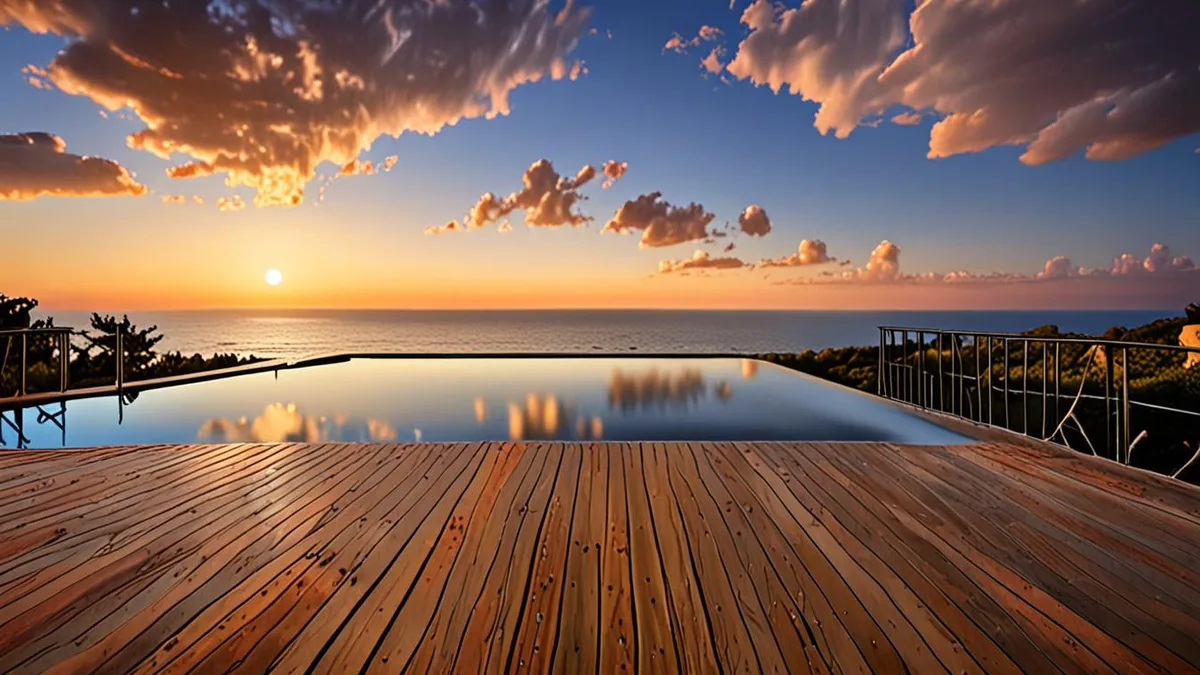
An infinity pool has one edge built level with the horizon, so the water appears to flow straight into the sea, a valley or a city skyline. There is no visible wall or rim on that side; the water spills into a hidden catch basin below, and your eye completes the illusion. Done well, it is the single most photogenic feature a resort can build.
Where you will find them
Infinity pools need a level drop to work with, which is why they appear mostly on hillside, rooftop or seafront resorts. A hillside property can make the water seem to pour down the slope toward the coast, while a rooftop pool can merge with the skyline. On flat beachfront land, a true infinity edge is much harder to achieve, so if the view is your priority, filter your search toward elevated or cliffside properties.
The trade-off: views over play
The compromise is depth and calm. Most infinity pools are shallow-ish, quiet zones oriented to the view rather than to swimming or play. Expect limited space for proper laps, little room for games, and an atmosphere that leans toward adults with a drink in hand. Treat an infinity pool as a scenic soak with a spectacular edge, not as the main pool for an active family afternoon.
Kids’ Pools: Depth, Heating and Safety Features
Kids’ pools are built around one principle: shallow water. They typically run 30-60 cm deep, which lets young children stand, splash and play with minimal risk while parents stay close by. Most are dressed up with slides, fountains, spray cannons or dedicated splash zones, turning the pool itself into the entertainment rather than a backdrop to it. That matters on a long afternoon: a pool with real play features can hold a child’s attention for hours, while a plain shallow basin often loses its appeal within a day or two.
Temperature matters more than many parents expect. In cooler climates, many kids’ pools are heated to 28-32 °C, which is the difference between children who swim for hours and children who shiver after ten minutes. Because heating adds running costs, a warm kids’ pool is more commonly found at 4-5 star properties than at budget ones, so it is worth confirming before you book. Indoor kids’ pools go one step further and make shoulder-season stays workable, since rain or a cool wind no longer ends the pool day.
What to check before you book
- Separation from the main pool: the best resorts place the kids’ pool away from the adult swimming area, so neither age group disturbs the other and noise travels less.
- Shade coverage: young children burn quickly, so look for pools with sails, pergolas or shaded play structures rather than full sun exposure all day.
- Non-slip surfaces and gradual entry: a beach-style or stepped entry lets toddlers wade in on their own terms instead of being lowered into water over their heads.
- Supervision sightlines: check whether loungers near the kids’ pool give you a clear, unbroken view of the water, since shallow depth reduces risk but does not replace watching.
If a resort’s website shows a proper, separate kids’ pool with these features, that tells you more about how family-friendly it really is than any kids’ club brochure.
How Many Pools Should a Good Resort Have?
The number of pools at a resort is one of the clearest signals of who it is built for. Family resorts commonly offer 2-4 separate pools, which lets them split guests into distinct zones: a shallow kids’ pool with splash features, a livelier main pool for swimmers and games, and a quieter pool for adults who just want to read in peace. When these groups share one pool, everyone ends up slightly annoyed.
Boutique and adults-oriented properties often run just 1-2 pools, sometimes only one. That can be perfectly fine if you are traveling as a couple and want an intimate setting, but it pays to check the details before booking. If a property advertises a single pool, look at the description or ask the hotel directly whether one pool is adults-only. At a family resort with two pools, one may be reserved for adults, which changes where you will actually want to spend your days.
Indoor pools and the shoulder seasons
Indoor pools are the quiet heroes of cooler destinations. In places where outdoor pools close after September, an indoor pool extends the swimming season to year-round, making a late-autumn or winter stay far more enjoyable than the weather suggests. If you are booking a trip outside the main summer months, check the hotel’s facilities list specifically for an indoor pool rather than assuming the outdoor one will be open and warm.
Choosing the Right Pool Type for Your Trip
The right pool type depends less on the resort’s star rating and more on who is traveling with you. A stunning infinity pool means little to a four-year-old who wants a slide, and a sprawling kids’ splash zone holds no appeal for a couple chasing a sunset view. Before you book, think about how you will actually spend your pool hours, not just how the photos look.
Couples and view-seekers should put infinity pools at the top of their list, especially on hillside or seafront properties where the edge blends into the horizon. Families with young children should prioritize a heated or indoor kids’ pool over the total number of pools, because a warm, shallow pool in the shoulder season beats three cold outdoor ones. Mixed groups, such as families with teens or friends traveling together, tend to get the most from lagoon-style layouts, which offer both shallow edges for wading and deeper zones for real swimming.
- Honeymooners: look for hillside infinity pools with a swim-up or quiet edge, since these positions usually mean fewer children and a calmer atmosphere around the water.
- Toddlers in the group: confirm the kids’ pool depth before booking, since very young children need the shallowest entry-slope designs rather than standard shallow sections of a main pool.
- Groups with teenagers: lagoon pools work best here, because the winding layout creates separate bays where teens can swim or play without dominating the whole pool.
- Shoulder-season travelers: a heated kids’ pool matters more than pool count, since heated outdoor pools are typically found at 4-5 star properties and make cool mornings usable.
Resort Pool Etiquette and Practical Tips
Pool days run more smoothly when you know the unwritten rules and a few practical details before you arrive. The biggest one concerns sunbeds. In July and August, sunbeds near the main pool are often claimed by 9-10 am, sometimes earlier at busy family resorts. If you want a prime spot, go early; if you would rather skip the morning rush, pick a quieter edge of the pool or a spot in the shade, which often stays free until mid-morning.
Towels, deposits and small print
Towels are another detail worth checking in advance. Many resorts provide pool towels free of charge, but plenty charge for them or require a deposit, sometimes with an exchange system that limits how often you can swap them. A quick look at the hotel’s facilities page or an email to reception before you travel settles the question and saves you from packing towels you do not need.
Finally, confirm the pool season dates before booking if swimming is central to your trip. In Central Europe, outdoor pools generally operate May to September only, so a stay in late September or early May may leave you with a closed or unheated pool. If swimming matters to your stay, either travel within the main season or choose a property with an indoor pool that runs year-round. A two-minute check now beats a disappointed arrival later.
Wrapping Up: Matching Pool Types to Your Stay
Resort pool photos all look tempting, but each type delivers a very different stay. Lagoon pools spread crowds out across their winding layout, infinity pools trade swim space for views, and kids’ pools win on depth and heating. The number and type of pools a resort offers also tells you a lot about who the property is built for, whether that’s families, couples or a mix of both.
So before you book, match the pool setup to your travel group. Prioritize the pool style that fits your days by the water, and the resort is far more likely to deliver on its photos. If this helped you plan your next trip, leave a comment or share the article with a fellow traveler.