Booking a resort with a “beach” sounds simple enough, until you arrive and realize the photos told you nothing about who can actually use that shore. Some resort beaches are private strips reserved for guests, others are public stretches where anyone can spread a towel, and some carry a Blue Flag award for water quality and safety. The difference shapes your whole stay, from crowd levels to what you pay for a lounger.
This guide breaks down the three common types of resort beaches and what each one really offers. We explain what counts as a resort beach, what you actually get on a private one, what the Blue Flag award means in practice, and the honest trade-offs of public beaches near resorts. You will also find advice on choosing between them based on who you travel with, how the beach type changes by season and destination, and a clear bottom line to help you book the holiday you actually pictured.
What Counts as a Resort Beach
A resort beach is any shoreline marketed together with a resort stay, and that covers a surprisingly wide range. At one end sits a managed private strip where access is limited to guests, and at the other a fully public beach that the resort simply happens to sit near. Both can appear in listings as “beachfront,” which is exactly why the label alone tells you very little.
In practice, you will encounter three common types. A private beach is leased or owned by the resort, so entry is controlled and facilities are run by the hotel. A Blue Flag beach is public or semi-private but carries an international environmental award for water quality, safety and services. And a fully public beach is open to everyone, free of charge, with the resort as your base nearby.
Why the type matters before you book
The category affects almost everything about your beach days. It shapes the price, since private beaches may charge for loungers while public ones cost nothing to enter. It shapes crowd levels, because guest-only access naturally thins out numbers in peak season. It determines the facilities you can count on, from showers and beach bars to lifeguards. And it affects the simple logistics of how far you walk from your room to the water, which can range from a few steps to a fifteen-minute stroll. Knowing which type you are booking is the single most useful detail to check before you pay.
Private Resort Beaches: What You Actually Get
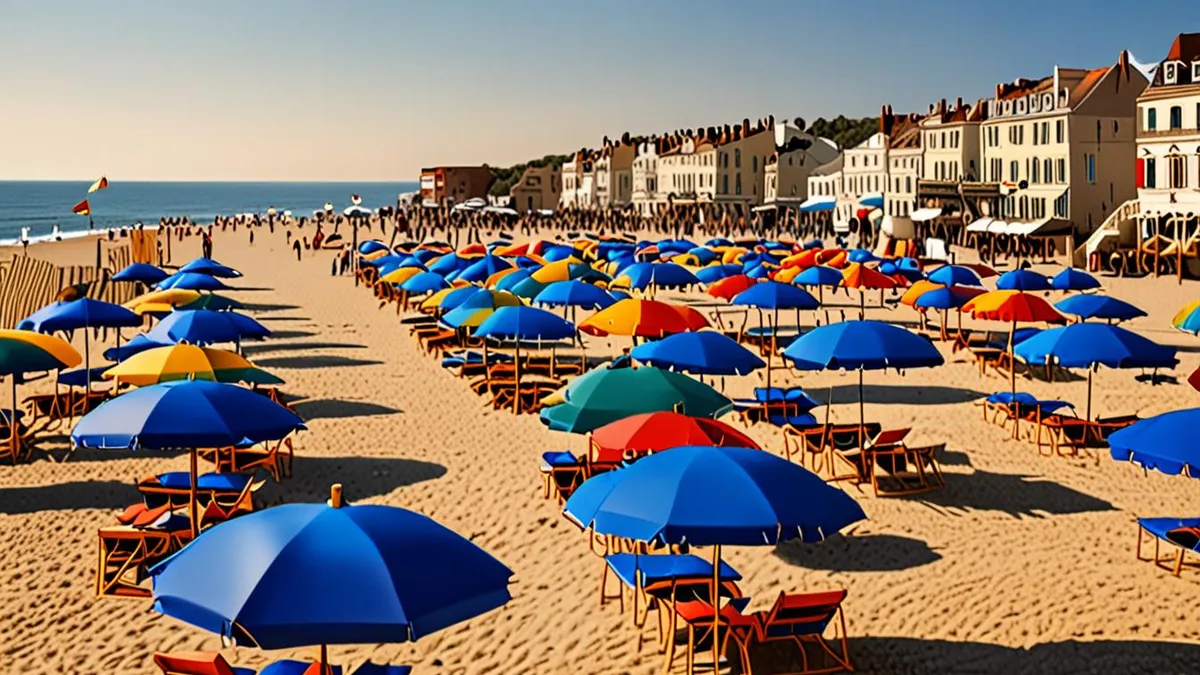
A private resort beach is the version where access is controlled, usually limited to guests of the resort itself. That single detail changes the experience more than anything else: no day-trippers arriving by car, no scramble for a spot of sand, and a manageable number of people even when the season is at its busiest. In practice, this means mid-July to late August stays comfortable rather than packed, which is precisely when public shores feel most crowded.
What is typically included
Most private beaches come with the basics already in place: loungers, parasols, showers and often a beach bar within a few steps of your towel. Whether these are included in your room rate or rented separately varies by resort, so check before you go. Where there is a charge, sun lounger sets often cost 15-40 EUR per day, and some resorts bundle the fee into an all-inclusive package while others bill it to your room.
The honest downsides
Private does not automatically mean perfect. The swimming area is usually smaller than on a big public beach, so you share a limited stretch of water with fellow guests. On parts of the Adriatic, you may find pebble shores or concrete platforms instead of soft sand, which matters if you are traveling with small children. And expect extra fees for premium front-row loungers, since the best positions often carry a surcharge even when the standard set is included. None of these are deal-breakers, but they are worth knowing before you picture yourself on an empty white-sand beach.
Blue Flag Beaches: What the Award Really Means
The Blue Flag is an international eco-label awarded to beaches that meet a strict set of standards, and it is one of the most useful shortcuts for judging a beach before you arrive. To qualify, a beach must satisfy 33 criteria covering water quality, safety equipment, lifeguard presence, accessibility and environmental management. In plain terms, a Blue Flag beach has verified clean water, someone watching over swimmers, and facilities that are maintained to a documented standard rather than left to chance.
The award works per season
Here is the detail many travelers miss: the Blue Flag is granted per season, not permanently. In Europe, the awarded season typically runs from late May or June through September. Outside that window, the same beach may look identical but no longer hold the award, and services such as lifeguards may scale back accordingly. If you are traveling in June or October, check whether the flag applies to your dates rather than assuming the label is year-round.
Where to find them
Croatia alone holds over 100 Blue Flag beaches, among the highest counts in Europe, which makes it a strong pick for a resort holiday with verified water quality. Many Croatian resorts sit directly on or beside awarded beaches, so you get public access with reliable standards. If that combination appeals, our guide to Croatia coast resorts for beach holidays covers the destinations worth a closer look. The same logic applies anywhere: a Blue Flag beach near your resort gives you quality assurance without the guest-only price tag of a private strip.
Public Beaches Near Resorts: Pros and Trade-offs
Public beaches are the ones most locals use, and that is exactly their charm. Entry is free, the stretches are often wider than anything attached to a resort, and you get a lively, local atmosphere with food stalls, inflatable rentals and kids playing beach volleyball until sunset. If you want your holiday to feel like a destination rather than a gated enclave, this is the setup for you.
The trade-offs show up quickly in peak season. From mid-July to late August, the best spots fill by late morning, and you will not find a reserved lounger waiting for you anywhere. Parking near popular public beaches is usually paid, typically 5-15 EUR per day in peak season, so a family arriving by car should budget for it like any other holiday cost.
- Arrive before 9 a.m. in August if you want shade under existing trees or space near the water’s edge.
- Bring your own umbrella and mats, since rentals on public beaches are first-come, first-served and can sell out by noon.
- Facilities such as toilets and outdoor showers exist on most organized public beaches, but quality varies more than at resort-run ones.
- Watch for beach vendors selling fruit, corn and drinks, which adds atmosphere but also foot traffic past your towel.
Finally, check the actual walking distance from your resort before booking. A “beachfront” listing sometimes means a 10-15 minute walk, or even a road crossing between the property and the sand. Look at the resort’s map and satellite view, and if the beach sits across a busy coastal road, families with little ones in tow should weigh whether the daily crossing is worth it.
How to Choose Between Resort Beach Types
The right beach type depends less on the destination and more on who is traveling with you. A couple who loves a quiet morning swim has completely different needs from a family with a toddler who needs toilets every hour. Matching the beach type to your travel style is the single most useful thing you can do before clicking “book”.
Families with small children usually do best on private or Blue Flag beaches. Both typically offer lifeguards during the season, shallow and gradual entry into the water, and toilets and food within a short walk. On a private resort beach, you can also keep an eye on the kids from your lounger instead of packing up every time someone needs a snack.
Couples seeking quiet should look at private beaches in June or September. You skip the peak-season crowds that run from mid-July to late August, and many resorts drop their lounger prices outside those weeks, so you avoid paying top rates for a front-row sunbed.
Budget travelers have a clear winner: a resort near a public beach. Entry is free, so your biggest daily expense becomes the car. Parking at public beaches is charged separately and rises in peak season, so if you can walk or take a local bus to the shore, your beach day shrinks to the price of an ice cream. Bring your own umbrella and you are set.
- Check whether the resort’s beach has lifeguard hours that match your family’s swimming times, not just a lifeguard flag on the brochure.
- Ask if lounger rental is included in your room rate or charged separately, since this changes the real price of a “private beach” stay.
- Look for a marked pedestrian path to a public beach, because a short distance on the map can hide a steep staircase or a roadside walk.
- Confirm the beach type directly on the resort’s map before booking, and email the property if the listing is unclear.
Resort Beaches by Season and Destination
Where you go shapes what kind of beach you get, and when you go shapes how much of it you enjoy. Adriatic resorts along the Croatian and Slovenian coast pair pebble Blue Flag beaches with a long resort beach season running from May to October. Expect smooth stones rather than sand, water shoes for the kids, and swimming water that ranks among the cleanest and best supervised in Europe — Croatia is among the European countries with the highest number of Blue Flag beaches, so verified quality is easy to find here.
Lake resorts: a different kind of beach holiday
Lake resorts in Austria, Slovenia and Serbia offer “beaches” on lakeshores, and Blue Flag status applies to lakes too, so you can still verify water quality. The swimming season is shorter, roughly June to August, when the water is warm enough for long swims. Grass lawns replace sand, entry is often gentle, and the whole pace is slower, which is exactly why many families and couples prefer them. If that sounds appealing, a good starting point is this guide to peaceful lake resorts in Serbia.
Timing matters as much as the destination. The shoulder months of June and September deliver warm water, free loungers on many private beaches as resorts compete for early and late-season guests, and roughly half the crowds of August. You get the same sea or lake, quieter shores and lower prices, simply by shifting your trip a few weeks on either side of peak season.
The Bottom Line on Resort Beaches
So which resort beach should you book? Private resort beaches buy you comfort and space, with loungers, service and a crowd limited to fellow guests. Blue Flag beaches guarantee verified quality and safety, backed by strict criteria checked every season. Public beaches cost nothing to enter but get busy, especially in the peak weeks of mid-July to late August.
The season matters as much as the beach type. June and September beat July and August on both price and crowds, and many private beaches still have their full setup running. Before booking, check the resort’s map to confirm whether the beach is private, Blue Flag or public, and how far it really is from your room. That one step is what turns a vague “beach resort” listing into the holiday you actually pictured. If this helped you plan, leave a comment or share the article with a fellow traveler.