You want a quiet UK countryside break, but crowded coastal towns and city hotels rarely deliver the calm you are after. Pavement queues, car parks full by mid-morning and thin walls between rooms can undo even the best-planned getaway. What most people are really after is space, fresh air and the sound of nothing much at all.
New forest lodges offer exactly that kind of escape. Set among ancient woodland and open heathland in Hampshire, these cabins let you step straight from your deck onto walking and cycling trails, often with free-roaming ponies grazing a few meters away. This guide covers why the Forest suits a slow-paced break, the best villages to base yourself in, when to book for the quietest experience, what lodges typically cost, how to choose the right cabin for your trip, and quiet things to do once you arrive. Whether you want a couples’ retreat or a family base, you will find practical advice to plan it.
Why New Forest Lodges Suit a Peaceful UK Escape
The New Forest covers roughly 566 square kilometers of southern England, and much of it looks much as it has for centuries. Ancient woodland mixes with wide open heathland, and around 5,000 free-roaming ponies and cattle graze wherever they like, including along village lanes. That combination creates a slow, quiet atmosphere that holds year-round, whether you visit in the depth of winter or at the height of summer.
New forest lodges sit in or beside the Forest itself, which changes the whole rhythm of a break. You do not drive to a trailhead or hunt for parking; you step off your decking straight onto walking and cycling paths. Early mornings are especially rewarding, with mist over the heath and ponies grazing close by before day visitors arrive.
Escaping the crowds
Compared with UK seaside resorts, the Forest feels remarkably calm, especially outside school holidays. There are no promenades packed with arcade noise, just villages with tea rooms and miles of quiet tracks. Even in peak weeks, a short walk of ten minutes from a car park usually leaves the crowds behind entirely.
Best Areas to Base Your New Forest Lodge Stay
Where you base yourself shapes your whole stay, because the Forest’s villages each have a distinct character. The three main options are Brockenhurst, Lyndhurst and Lymington, with a couple of quieter alternatives if you want more seclusion. Think first about how you will spend your days: walking, cycling, exploring villages or looking out to sea.
Brockenhurst works well if you want to arrive without a car, as it has direct rail links from London and a walkable village center with shops, pubs and tea rooms. Lyndhurst, often called the Forest’s capital, puts you handy for the northern woodland trails and the visitor centers. Lymington sits on the coastal edge, with marinas and views across the Solent, and the woodland is only a short drive away. If you enjoy coastal settings in general, you might also like the idea of Ireland coastal lodges for wild Atlantic trips as a future trip.
- Ashurst: sits near the northern edge of the Forest, close to the boundary with Southampton, making it a convenient first stop if you are driving in from the M27.
- Beaulieu: a small riverside village with an abbey history and a famous motor museum, surrounded by quiet lanes where deer are often seen at dusk.
- Brockenhurst in season: the village hosts open-air tennis and a swimming waters spot in the woods, handy extras if you are staying several days with children.
- Lyndhurst practicalities: being the administrative hub means you will find ranger-led information and the easiest access to fuel, groceries and the northern car parks.
When to Book New Forest Lodges for the Quietest Experience
Timing makes a real difference to how peaceful your lodge stay feels. The quietest months are January to March, when you will find the lowest prices and often empty trails. The trade-off is that some attractions, tea rooms and smaller sights close or run reduced hours in winter, so plan around the Forest itself rather than visitor attractions.
Autumn as the sweet spot
Mid-October to early November is arguably the best balance of the year. Autumn color peaks across the ancient trees, the summer crowds have gone, and the weather is usually still mild enough for long walks. Photographers rate this window highly, and lodge availability is generally easier to find than in summer.
Summer is a different story. Peak season runs June to August, and school holidays bring families, cyclists and day visitors in numbers. If those dates are the only ones that work for you, reserve 3 to 6 months ahead to secure a good lodge at a sensible rate.
One habit worth adopting in any season: book midweek. Stays from Monday to Friday are noticeably cheaper and calmer than weekends, when local visitors and short-break travelers fill the trails and villages. A midweek autumn or winter stay is about as peaceful as the UK countryside gets.
What New Forest Lodges Cost and What You Get
Lodge prices in the New Forest vary more with timing than with location. Expect roughly £90 to £250 per night depending on the season, the size of the cabin and whether you add extras such as a hot tub or sauna. A midweek break in the quieter months sits at the lower end of that range, while a two-bedroom lodge with a hot tub in peak summer can easily reach the top. The same cabin can shift by a third or more in price between a February midweek and an August Saturday, so it pays to compare dates before committing.
The good news is that the standard specification is generous. Most lodges include a full kitchen, private decking and on-site parking, so you can cook, eat outside and leave the car untouched for days. Some add wood burners and forest-facing views, which make a real difference on chilly evenings after a long day on the trails.
Sizing is straightforward. Two-bedroom lodges suit couples and small families well, while larger cabins with three or four bedrooms handle group trips without anyone feeling cramped. If you are traveling with another couple, ask how many bathrooms the lodge has, since sharing one between four adults gets old fast.
- Hot tubs and saunas are usually optional upgrades, so compare two otherwise similar lodges before paying the premium.
- Wood burners tend to appear in the more premium cabins; if a fire matters to you, filter for it rather than assuming it is standard.
- Forest-facing decks command higher rates than those overlooking the car park or an internal road, so check the lodge’s position on the site plan.
- Larger group cabins often price better per person than booking several smaller units, especially when split between couples.
- Check whether bedding, towels and logs are included in the rate, as some operators charge these as extras.
How to Choose the Right Lodge for Your Trip
If walking is the main point of your trip, make direct forest access your first filter. Some lodges sit right against the open Forest with a gate leading straight onto the heath, while others are on holiday parks a short drive from the nearest trailhead. Stepping out of the door and onto a path changes the whole rhythm of a stay, especially in the early morning.
Before booking, check whether the site is adults-only or family-oriented. Both can be wonderful, but they deliver very different atmospheres. An adults-only lodge park tends to be quieter in the evenings, while a family-oriented site may have playgrounds and more activity around the grounds. Neither is better, but mixing the two expectations leads to disappointment.
Decking, ponies and winter warmth
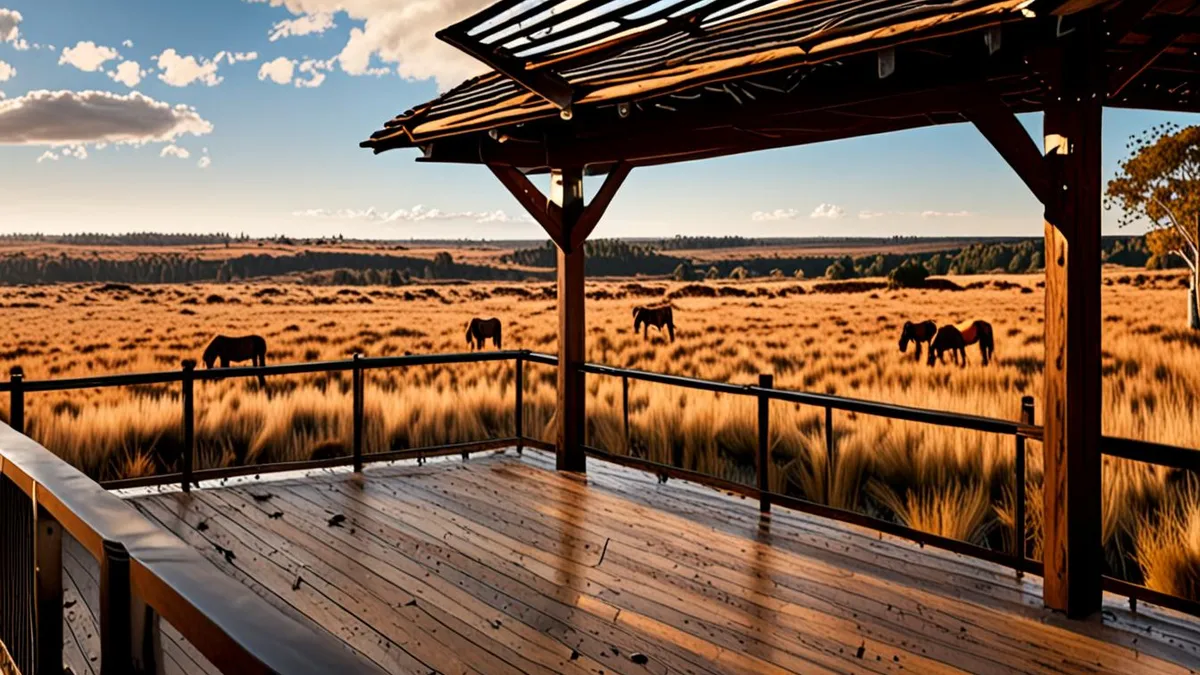
Look for enclosed decking if you want to watch the Forest’s free-roaming ponies pass close by. A deck with railings or a raised position lets you sit with a coffee while animals graze a few meters away, which happens surprisingly often on lodges bordering open land.
Finally, confirm heating and insulation quality for winter stays. Some cabins are built as summer-weight units, and in January the difference between a well-insulated lodge with good heating and a lightweight one is very noticeable. Read recent guest reviews from the colder months, and ask the operator directly about insulation and heating before committing to a winter date.
Quiet Things to Do Around Your Lodge
One of the best things about basing yourself in a New Forest lodge is how little effort the best days require. Some of the Forest’s finest scenery sits within a short drive of the main villages, and the quieter corners reward early starts. You can be back at your deck with a mug of tea by mid-morning and still feel you have seen the Forest at its best.
For tall trees and proper viewpoints, head for the trails around Bolderwood and along Rhinefield Ornamental Drive. These are among the most atmospheric stretches of woodland in the Forest, with towering conifers and ferny verges, and they are manageable even for casual walkers. There are parking spots and viewing areas nearby, so you can tailor the outing to whatever energy level you have that day.
Cyclists should try the off-road gravel tracks running between Brockenhurst and Burley. They are gentle, well-drained and pass through open heathland where you will often spot ponies grazing within a few meters of the path. Give them space and do not feed them; they are free-roaming and best left to their own routine.
- Dawn from your own deck is the quietest wildlife-watching slot of the day; ponies and deer move through before day visitors arrive, and you need not go further than your doorstep.
- Beaulieu village and Buckler’s Hard are best visited on a quiet weekday morning, when the riverside setting and maritime history can be enjoyed without tour groups.
- Pack binoculars for the heathland stretches, where deer and birdlife are often visible at a distance even when the ponies come close.
- Plan one trail-free day; simply walking from your lodge onto the open heath with no fixed destination is often the most restorative option of all.
Planning Your New Forest Lodge Escape
If a crowded seaside town or a generic city hotel has left you longing for real quiet, a lodge in the New Forest is a strong answer. The Forest pairs genuine woodland calm with easy access from London and the south coast, so you can trade traffic noise for ponies grazing outside your deck without a complicated journey. Free-roaming ponies and cattle, around 5,000 of them, set the unhurried tone from the moment you arrive.
Match your base to your priorities: Brockenhurst, Lyndhurst or Lymington each suit a different style of stay, whether you want a walkable village, direct trail access or coastal views. For the lowest prices and the fewest crowds, travel between January and March or in autumn, when the trails empty out and the Forest feels most peaceful. If this helped you plan a calmer break, leave a comment or share the article with a fellow traveler.