Anyone who has started researching a trip to the Greek islands quickly hits the same wall: hotels in Santorini cost wildly different amounts depending on when you book. The exact same cave suite can be a splurge in August and a bargain in October, and it is genuinely hard to know what a fair nightly rate looks like before you commit.
This seasonal guide breaks the puzzle into manageable pieces. We look at how the calendar shapes prices, what typical nightly rates are at each budget level, and how much the famous caldera view really adds to your bill. Then we get practical: where to base yourself, how to cut costs without missing the views, which amenities are worth paying for, and how to match your hotel choice to your style of trip. By the end, you will be able to spot a good deal and plan a stay that fits both your itinerary and your wallet.
How Seasonality Shapes Hotel Prices in Santorini
Santorini is one of the most seasonal hotel markets in Europe, and the calendar matters more here than almost anywhere else in Greece. High season runs from June through September, with July and August sitting at the very top of the price curve. During those two months, demand from honeymooners, cruise passengers and summer vacationers pushes rates to their annual peak, and the best rooms sell out months in advance.
The shoulder months of April, May and October are the smart traveler’s secret. The weather is mild, the light is still glorious for photos, and prices drop noticeably below the summer peak while nearly everything stays open. For many visitors, these months deliver the Santorini experience they imagined at a far gentler cost.
The low season trade-off
From November through March, rates fall to their lowest levels of the year. The catch is that many hotels close entirely for the winter, along with a large share of restaurants and tours. You will find quiet lanes and local life, but limited choice. The scale of the swing is striking: the same room can easily cost 2-3 times more in August than it does in October, so timing your dates is the single biggest lever on your final bill.
Typical Nightly Rates by Budget Level
To give you a realistic anchor before you start searching, here is what different tiers of hotels typically charge in Santorini, depending on the season. Budget rooms in low season can drop to roughly 50-90 EUR per night, which is remarkably affordable for an island with this reputation. These are usually simple rooms in family-run guesthouses, often a short walk from the main squares, and they book up fast with travelers who value price over views.
Mid-range hotels in shoulder season typically run 120-250 EUR per night, covering comfortable rooms, small pools and often a partial view. This tier is where most independent travelers end up, and the quality gap between a 130 EUR room and a 240 EUR room is usually smaller than the price difference suggests, so compare what each rate actually includes.
At the top end, luxury caldera suites in peak season often exceed 500-1000 EUR per night, especially those with private plunge pools carved into the cliffside. These properties sell out early for good reason, and the photos rarely exaggerate the setting.
Keep in mind that these are typical figures, not fixed rules, and individual properties vary widely. A few extra details worth knowing before you compare listings:
- Weekend premiums in summer: July and August Fridays and Saturdays often price higher than midweek nights, as short-stay travelers compete for the same rooms.
- Last-minute premiums: In peak season, waiting rarely pays off. Remaining rooms in July and August are frequently repriced upward as availability shrinks.
- View-based pricing: Within the same hotel, a caldera-facing room can cost substantially more than an identical room facing inland, so read the room description carefully.
- Breakfast and fees: Some rates include breakfast while others charge separately, which can shift the real nightly cost by a noticeable margin.
Where You Stay Matters: Caldera View vs Inland Villages
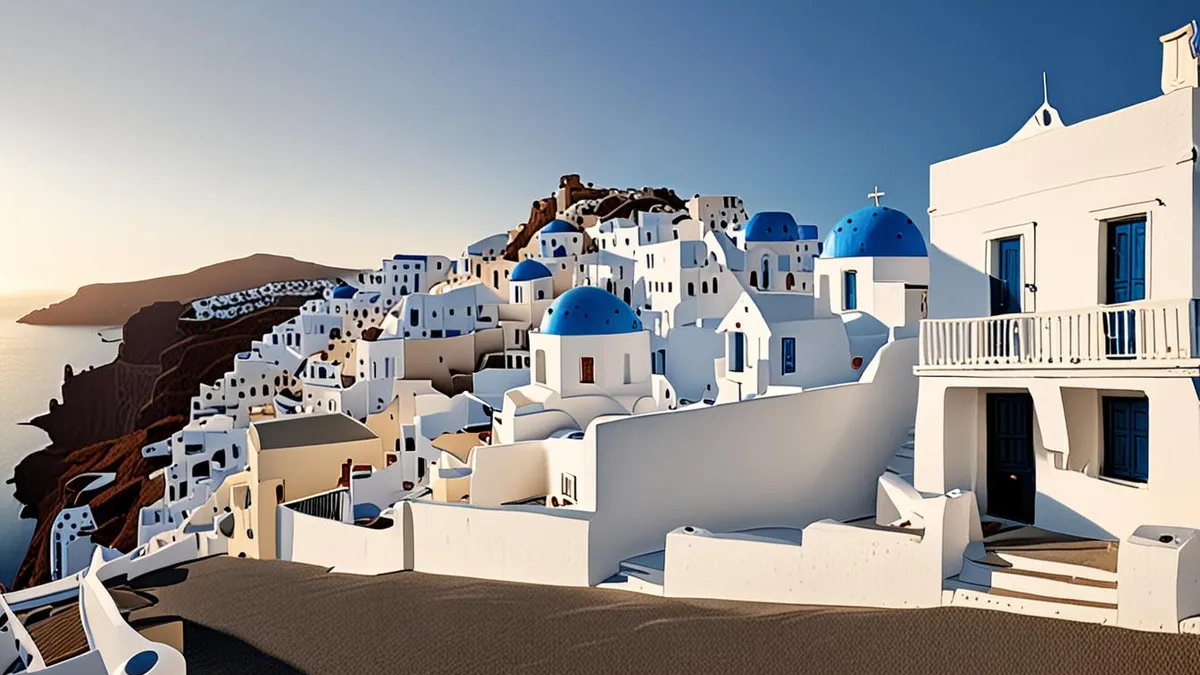
The single biggest price factor after the season itself is location. Caldera-view rooms in Oia, Imerovigli and Fira typically cost 2 to 4 times more than comparable rooms inland. You are paying for the cliffside position, the sunset and the walk-out-the-door views, and hotels know exactly what that is worth. In Oia especially, even modest rooms with a slice of caldera view can rival the price of a full suite elsewhere on the island.
The inland alternative
Villages like Pyrgos, Megalochori and Karterados offer the same island at a fraction of the cost. These are real, lived-in villages with traditional architecture, good tavernas and easy access to the wineries of the interior. East-coast areas near Kamari and Perissa beaches also sit cheaper than the cliffside, and they put you steps from the island’s famous black sand beaches instead of a bus ride away.
The trade-off is logistics. Staying inland or on the east coast means a bus or rental car ride to reach the caldera sights, the sunset spots and the cliffside paths. If you plan to spend your days sightseeing anyway, that ride is a small price for cutting your accommodation bill significantly. If your dream is to watch the sunset from your own terrace, the cliffside premium may still be worth it, at least for part of your stay.
How to Cut the Cost of Hotels in Santorini
Santorini hotel prices swing dramatically with the calendar, so the single biggest way to save is simply choosing when to go. The same room that commands a premium in August can cost a fraction of that in the shoulder months, and a little flexibility with your dates often matters more than any other decision you make. Before you commit to anything, sketch out your priorities: a caldera view, a specific village, or simply the lowest possible rate will each point you toward a different travel window.
Timing your booking matters just as much as timing your trip. Summer availability in the caldera villages fills up early, and rates tend to climb as rooms sell out, so last-minute bargain hunting rarely works in July or August. Set a reminder, watch a few properties you like, and be ready to reserve when a fair rate appears rather than hoping prices will fall later.
- Book 3-6 months ahead for summer trips. Early booking gives you the widest choice of rooms at the best rates, especially if you want a specific view or a small property with only a handful of units.
- Shift your stay to April-May or October. The weather is still pleasant for sightseeing and sunsets, rates drop noticeably, and the villages are far less crowded than in midsummer.
- Choose a room without a caldera view. Inland and east-coast rooms cost far less, and you can still enjoy the famous views from public terraces, bars and walkways along the caldera edge.
- Travel in November-March only if you accept limitations. Rates are at their lowest, but a large share of hotels shut down for the winter and restaurant options are reduced, so check what is actually open before you commit.
Matching Your Hotel Choice to Your Trip Style
The right hotel depends less on the price tag and more on what kind of trip you are planning. A romantic couple and a family of beach lovers will value completely different things, and Santorini has a base that suits each.
Couples and honeymooners
If your trip is about sunsets and romance, a caldera-view room is hard to beat, but you do not need to pay peak-season prices for it. April-May and October offer the same cliffside magic with milder rates and a calmer atmosphere, which is exactly why many couples find shoulder season the sweet spot for a splurge.
Beach lovers and longer stays
Travelers who plan to spend their days swimming and snorkeling save money by basing themselves near Kamari or Perissa on the east coast, where black-sand beaches are steps from the door and rooms cost less than the cliffside villages. If you are staying a week or more, an inland guesthouse in a village like Pyrgos softens the per-night cost and gives you a more local feel. First-time visitors often strike a balance: one or two splurge nights on the caldera, then cheaper inland nights for the rest of the stay.
What the Price Gets You: Amenities Worth Paying For
Not every euro on your hotel bill buys the same thing. In Santorini, a handful of amenities explain most of the price difference between rooms that look nearly identical online, so it pays to know what you are actually paying for before you book. Two listings can sit a few minutes apart, have the same bed size and the same star rating, and still differ dramatically in price simply because of what comes bundled with the room.
The biggest driver is almost always the combination of a private plunge pool and a caldera-facing terrace. These features turn an ordinary room into the postcard experience, and hotels price them accordingly. If you can live without your own pool, you can often halve your rate by choosing a room that skips it. Ask yourself honestly how much time you will spend in that plunge pool — many travelers find they use it for a few photos and little else.
Beyond the view and the pool, a few smaller inclusions can quietly add up to significant savings over the course of a stay. Compare listings on total value rather than headline price, and factor in the following:
- Breakfast included. Food and drinks on the island run high, so a included breakfast can realistically save you 15-25 EUR per person per day compared with buying it at a cafe.
- Free airport or port transfers. Taxis in Santorini are expensive, especially in high season, so a complimentary pickup from the airport or Athinios port adds real, tangible value.
- Flexible cancellation. Read the terms carefully, because peak-season rates are frequently non-refundable, and a cheaper booking can become costly if your plans change.
Planning Your Santorini Stay at the Right Price
So what is a fair nightly rate in Santorini? The honest answer is that it depends on when you go and what you book. Prices range from about 50-90 EUR per night for budget rooms in low season to 500-1000+ EUR for luxury caldera suites in peak season. June to September is the expensive stretch, April to May and October are the value sweet spot, and November to March is the cheapest time of all, though many hotels close and the island goes quiet.
In practice, three levers set your final cost: whether you pay for a caldera view, how far ahead you book, and how your trip style matches the season. Decide those first, and the price you see online will stop feeling like a guessing game. If this guide helped you plan your stay, leave a comment or share it with a fellow traveler.