A hotel can look flawless online, with bright photos, glowing ratings and a great location, then hand you a room above a bar with thumping bass until 3 am. Hotel noise problems are one of the most common complaints travelers make, and they rarely show up in the listing itself. The good news is that most noisy rooms are predictable, if you know where to look.
This guide walks you through the whole process: what actually causes hotel noise, how to spot warning signs in guest reviews, which floor and room position to request, how to pick a quieter neighborhood, and the booking steps that help secure a calm room. It also covers practical backup plans for when a room still turns out louder than expected. A little research before you pay can be the difference between a restful night and lying awake with earplugs in.
Why Hotel Noise Problems Happen: The Main Sources Explained
Most hotel noise problems start with something outside your window. Street traffic, nightlife and construction are the loudest exterior sources, and they often peak between 10 pm and 3 am, which is exactly when you are trying to fall asleep. A room facing a main road can seem fine at check-in, then turn unbearable once the bars fill up and delivery trucks start their morning rounds.
Interior sources travelers overlook
Noise inside the building matters just as much. Elevators, ice machines, housekeeping carts and doors within 20-30 m of the room generate constant clunks, hums and rattles, especially in the early morning when housekeeping starts. A perfectly positioned street-facing room can still be ruined by an ice machine humming through the wall.
Why neighbors matter more in older hotels
In older buildings, thin walls and connecting doors amplify neighbor noise more than window noise. Voices, TVs and doors slamming carry through rooms that were never designed with modern soundproofing. Timing plays a role too: weekend stays in nightlife districts can be 10-20 dB louder than the same room midweek, so a hotel that felt quiet on a Tuesday visit can be a different story on a Saturday.
How to Read Reviews to Detect Noise Before You Book
Reviews are your best early-warning system for hotel noise, but only if you read them with a plan. Skimming a few five-star ratings will not reveal a rooftop bar or a busy road outside your window, so it pays to search reviews deliberately and look for patterns rather than single opinions. Ten minutes of focused reading before you book can save you several sleepless nights after you arrive.
- Search recent reviews for keywords. Read through 20-30 recent reviews and search for words like “noise”, “loud”, “bar” and “thin walls”. This is much faster than reading every review from top to bottom, and it immediately surfaces the complaints that actually matter to a light sleeper.
- Weight recent reviews more heavily. Focus on reviews from the last 6-12 months. Renovations, new nearby construction and a newly opened club down the street can all change noise levels dramatically, so a three-year-old rave review may describe a property that no longer exists in practice.
- Separate one-offs from patterns. A single guest complaining about one loud night, perhaps a wedding party or a festival weekend, is very different from multiple guests independently mentioning the same issue. Recurring complaints about the same thing, like an ice machine humming next to a specific room number, deserve real attention.
- Study the review photos. Guest photos often reveal what official listings hide: a balcony facing a main road, a rooftop bar directly above the rooms, or windows overlooking a busy street corner.
Spending this short time on research usually tells you whether a hotel’s quiet rooms are genuinely quiet, or whether every room shares the same underlying problem. If the patterns look bad, it is often easier and cheaper to simply choose a different hotel than to fight for a room change or a refund after check-in. Trust the guests who took the time to mention noise specifically; they are usually describing exactly what you want to avoid.
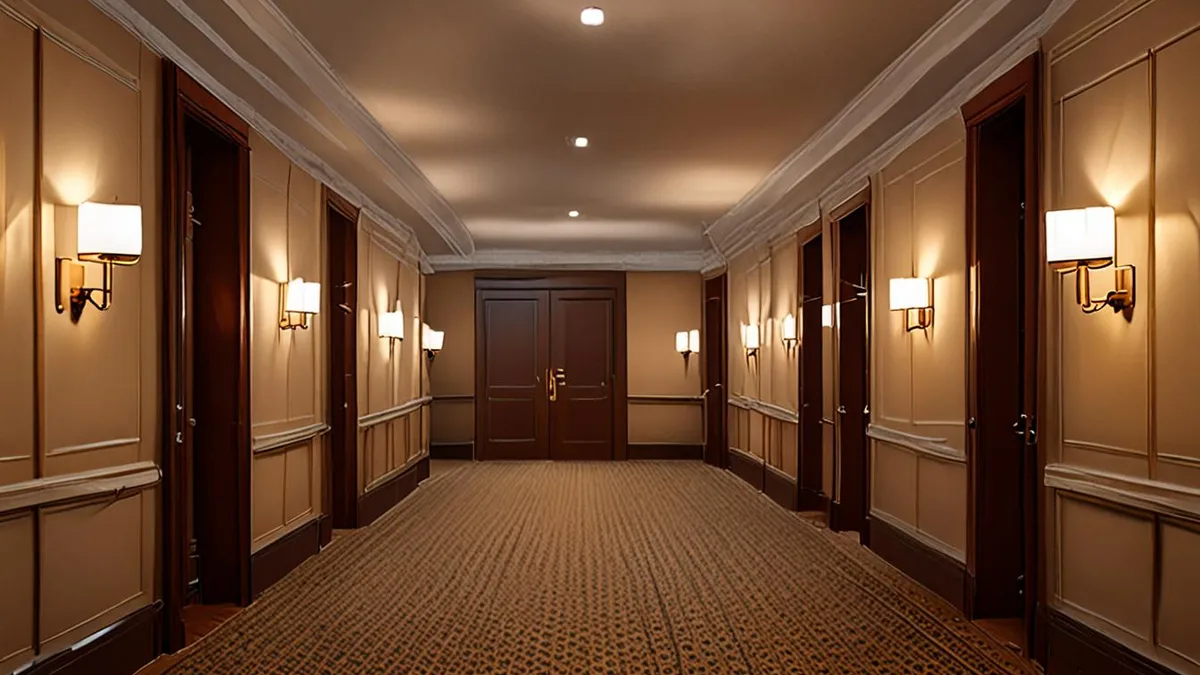
Choosing the Right Floor and Room Position for a Quiet Stay
Once you have picked a hotel with good reviews, the next step is making sure you actually end up in one of its quieter rooms. Two guests in the same property, on the same night, can have completely different sleep experiences based on nothing more than where their rooms sit. That is why it pays to be specific about what you request rather than leaving your room assignment to chance.
As a general rule, request floors 3-8. These floors usually sit above street-level noise but stay below rooftop bars and machinery, which often occupies the top floors. Then narrow it down further with these points in mind:
- Choose courtyard-facing rooms. Rooms looking onto inner courtyards are typically 5-15 dB quieter than street-facing ones, and they also avoid late-night chatter from sidewalks and outdoor seating below.
- Steer clear of the service core. Avoid rooms next to elevators, ice machines and service doors. Elevators and ice machines within 20-30 m of a room are among the most common complaint sources, thanks to constant hums, dings and 6 am cart traffic.
- Ask for a corner room. Corner rooms share fewer walls with neighbors, which reduces the noise transmitted straight through the building. Fewer shared walls also means fewer doors slamming in your corridor.
When you put these requests together, high floor, courtyard view, away from elevators and on a corner, you are not being fussy. You are simply asking for the same room locations that the best-sleeping guests request every time they book. Most front desk staff are happy to accommodate these preferences when they know about them in advance, so state them clearly and politely. If the hotel cannot meet every request, prioritize the courtyard view and distance from elevators, since those two factors tend to matter most for uninterrupted sleep.
Picking the Right Neighborhood, Not Just the Right Hotel
The location you choose matters just as much as the hotel itself. Old town districts are the classic example: you can step out of the lobby and be at the main sights in minutes, but you also share the neighborhood with late-night bars, outdoor terraces and crowds walking home over cobbled streets. Cobblestones amplify every rolling suitcase and passing taxi, and the noise carries upward between narrow buildings. If you love the atmosphere of a historic center, look for hotels a few streets back from the main nightlife strip, or browse options like Edinburgh hotels near the historic old town that balance location with a quieter setting.
Why residential districts often win
Residential neighborhoods one or two metro stops from the center are usually noticeably quieter, and they often cost 10-30% less than hotels in the tourist core. You trade a short commute for better sleep, and you get restaurants and cafes aimed at locals rather than tour groups. Check the metro frequency if you plan to return late, since a well-connected stop makes the trade-off easy.
Before booking, open satellite view on a map app and scan a radius of 200-300 m around the hotel. Main roads, railway lines and club districts are easy to spot from above, even when the hotel’s own photos hide them. Waterfront and park-adjacent areas tend to have less traffic noise than ring-road locations, since there is simply less through-traffic passing by. A five-minute satellite check can save you several nights of regret.
Booking Strategies That Secure a Quiet Room
Getting a quiet room is rarely about luck. Hotels allocate rooms in a predictable order, and guests who ask early and clearly end up with the courtyard-facing, elevator-distant rooms while everyone else takes what is left. The good news is that the whole process takes very little effort if you follow a simple sequence, and each step builds on the one before it. Think of it as putting your request in front of several different people, because the person who reads booking comments is often not the person who assigns keys at the front desk.
- Book 2-3 months ahead. Quiet courtyard rooms are limited in number and are often the first to be assigned to early bookers and loyalty members. Booking 2-3 months ahead gives you the best chance of still having specific room locations to choose from.
- Add a written room request at booking time. Use the comments or special requests field and be specific: ask for a quiet room, away from the elevator, on a high floor. Vague requests like “if possible, something nice” give the front desk nothing to work with. A concrete request can be copied straight into the room assignment system.
- Email the hotel 3-7 days before arrival. A short, polite email confirms your request made it into the system and puts it on your reservation record. Attach your booking reference and ask for a reply confirming the note. If the reply mentions any limitation, such as a full house, you still have time to plan around it.
- Call the front desk on arrival day. Room assignments often happen shortly before check-in, so a morning call reconfirms your preferences while there is still real choice available. Mention that you have a request on file and ask them to flag it for the afternoon shift. If you arrive by car or late at night, say so, since timing affects which rooms remain.
None of these steps guarantees a specific room, since occupancy, group bookings and last-minute changes can interfere. Loyalty status or a repeat stay can help, but polite persistence matters more. Together, these steps put your request in front of the people who assign rooms at every stage, which noticeably improves your odds compared with guests who never ask at all. If the room you receive still turns out loud, there are ways to handle it on the spot, covered elsewhere in this guide.
Backup Plans When the Room Still Turns Out Loud
Even with careful research and a well-timed request, sometimes the room you get is simply loud. The key is to act immediately rather than resigning yourself to a bad night. Front desks deal with these situations daily, and most are willing to help if you raise the issue early and politely.
Your first move happens at check-in, before you unpack anything. If the room faces a busy street or sits next to the elevator, ask about alternatives right away. Once your belongings are spread across the room, switching becomes awkward for both you and the staff, so a quick look around in the first five minutes pays off.
It also pays to travel prepared, because some noise problems cannot be solved by moving rooms. A small kit in your luggage covers most situations:
- Foam earplugs. These cut perceived noise by roughly 20-30 dB, enough to mask door slams, hallway chatter and distant music. Bring several pairs, since they are easy to lose and cheap to replace.
- A white-noise app. Steady sound from your phone masks intermittent noises like elevator dings, which earplugs alone can let through. Download the app before your trip in case hotel wifi is slow.
- A same-night report to the front desk. Call or visit the desk while the problem is happening so staff can verify it, speak to the noisy neighbors or offer a room change. Complaints raised at checkout are much harder to act on.
- Documentation for serious cases. If the noise is severe and you plan to request a partial refund, note the times, take a short video and record what staff said in response. Concrete evidence makes a refund conversation far more productive.
Handled this way, even a disappointing room assignment usually ends in a workable night rather than a ruined stay.
Key Takeaways for Booking a Quiet Hotel Room
A hotel that looks flawless online can still turn into a night of thumping bass, slamming doors and street traffic. The upside is that most noise problems follow patterns, which means you can spot them before you confirm anything. Noise generally falls into three categories: street, interior and neighbor noise, and each one has its own fix.
In practice, a handful of habits prevent most hotel noise problems. Reading 20-30 recent reviews for the word “noise” reveals recurring patterns, and choosing a room on floors 3-8 facing an inner courtyard keeps you away from the loudest sources. To actually land that room, reserve early rather than at the last minute, since the quietest locations tend to be snapped up first. When something still slips through, simple backups like foam earplugs, which cut perceived noise by roughly 20-30 dB, and asking for a room change the same night will save your stay.
Have you had a noisy hotel disaster of your own? Share your story in the comments or pass this article along to a fellow traveler.