You’ve found a gorgeous tented suite in the woods, and the website promises an “eco-friendly glamping” experience. But what does that word actually mean here? In many cases, not much. “Eco” and “green” are marketing terms with no legal definition, so any site can use them whether or not a single solar panel is installed. That leaves travelers in a tough spot: you want to spend your money somewhere that genuinely protects the landscape, but you have no easy way to tell real commitment from clever copywriting.
This guide walks you through the whole process of separating substance from spin. We’ll start with why the word “eco” on a glamping website doesn’t mean much on its own, then look at the certifications that actually require audits. From there, you’ll learn which physical features reveal a genuinely low-impact site, what questions to ask before booking, how to plan a sustainable stay, and how to behave as a low-impact guest once you arrive. By the end, you’ll know exactly what to look for.
Why ‘Eco’ on a Glamping Website Doesn’t Mean Much
Here’s the uncomfortable truth: “eco-friendly” and “green” are unregulated marketing terms. There is no rule that says a glamping site must meet any environmental standard before putting those words on its homepage. A site with diesel generators, plastic-lined showers and food flown in from across the country can describe itself as an eco retreat, and there’s nothing stopping it.
That’s why greenwashing is so common in this space. Some of the tricks are easy to spot once you know what to look for.
Common greenwashing tricks
- Stock photos of forests, sunsets and wildlife that have nothing to do with the actual property
- Vague phrases like “eco-conscious”, “nature-inspired” or “treading lightly” with no specifics about energy, water or waste
- A long list of environmental promises buried in the text, but no mention of who verifies any of it
The clearest difference is in how real operators talk about their setup. A genuinely sustainable site usually describes concrete systems: where its power comes from, how wastewater is treated, what happens to food waste. They name materials, explain their booking limits and often mention staff or local suppliers. In short, they describe how the place works, not just how it feels. When a website offers feelings but no systems, treat the “eco” label as decoration until proven otherwise.
Certifications and Labels That Actually Mean Something
Self-declared labels cost nothing. Third-party certifications cost time, money and scrutiny, which is exactly why they’re worth more. Schemes like Green Key, Green Tourism and LEED involve external auditors who check that a property actually does what it claims, covering areas such as energy use, waste management and staff training. If a glamping site holds one of these, an independent body has verified it, not just the marketing team.
That said, a certification is only meaningful if it’s current. Certifications expire and get renewed on cycles, so check whether the operator lists the label on its own website, ideally with the year or certificate number. If a site mentions a certification nowhere on its own pages but claims it on a booking platform, ask for proof before you book.
Membership in a regional sustainable tourism association is another signal, but a weaker one. These associations vary widely in how much they verify, and joining is often easier than being audited. Treat membership as a supporting point, not proof on its own.
When you’re comparing sites, it helps to look at the details they volunteer. A useful habit is reading the property description the way you’d read a complete glamping packing checklist — item by item, checking that each claim is something you could actually verify on arrival.
- Scope of the audit: some schemes certify the whole property, while others cover only certain buildings or operations, so ask what was actually assessed
- Who runs the scheme: certifications backed by established tourism or environmental bodies carry more weight than labels invented by a booking platform
- Recertification cycle: credible schemes require periodic re-audits, so a certificate from years ago says little about current practice
On-Site Features That Reveal Genuine Eco-Friendly Glamping
While certifications tell you what’s on paper, the physical setup tells you what’s on the ground. The clearest signs of a genuinely off-grid, low-impact site are solar panels, composting toilets and rainwater harvesting. These are visible, hard to fake and expensive to install, so a site that has invested in them usually mentions them prominently. Solar power and composting toilets are the two most common off-grid features at sustainable sites, and both are easy to ask about or spot in photos.
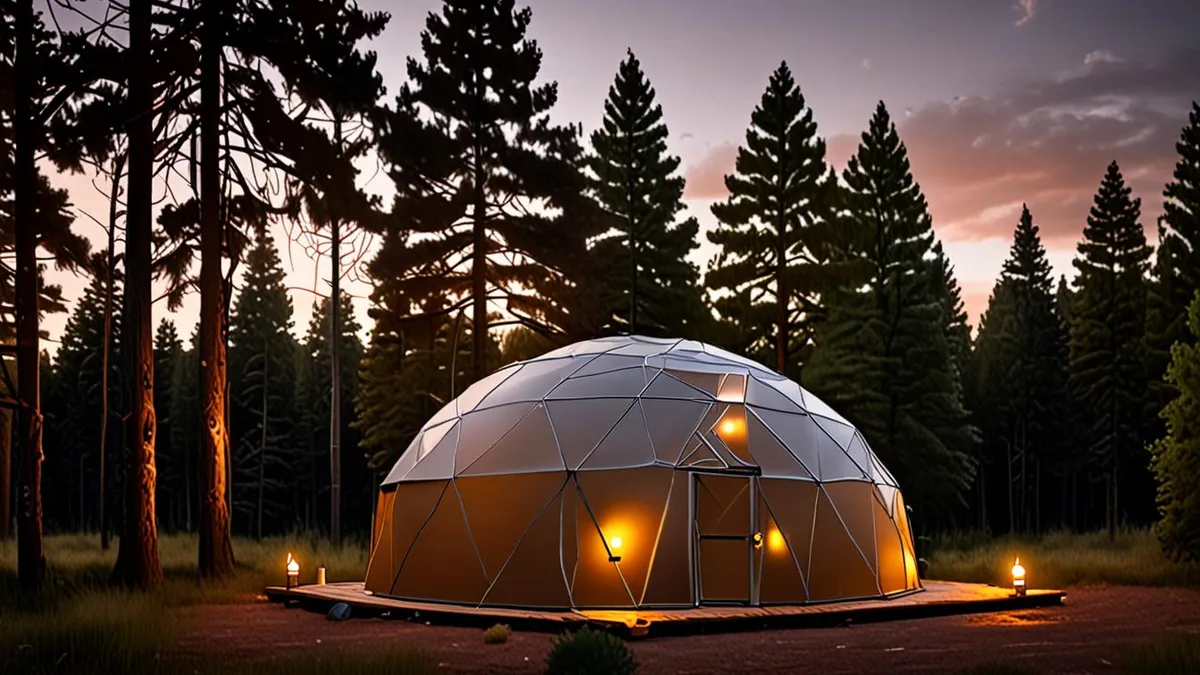
How the structures sit on the land matters just as much. Tents, cabins and domes built on stilts or raised decks leave the ground beneath largely intact — roots, soil and groundcover stay alive. Pouring concrete slabs does the opposite: it seals the soil permanently. If photos show units on flat concrete pads, that’s a sign the site prioritized convenience over land health.
Materials complete the picture. Timber, canvas and natural insulation such as wool age gracefully, breathe well and come from renewable or reclaimed sources. Plastic-clad pods, by contrast, often end up as difficult-to-recycle waste at the end of their life. If you’re weighing structure types, it helps to understand how yurts, domes and safari tents differ in design and construction, since each has a different footprint and material profile.
One honest expectation: these features cost money. Genuine eco glamping sites typically charge 10-30% more than comparable standard sites, which reflects the real cost of solar arrays, water systems and careful construction.
- Wood sourcing: the best operators can tell you whether their timber is certified or locally milled, rather than imported
- Deck design: raised walkways between units protect soil and plants from repeated foot traffic, not just the structures themselves
- Heating and hot water: ask whether these run on the solar system or a backup source, since that’s where off-grid sites often quietly fall short
Questions to Ask Before You Book
A booking email or phone call tells you more about a glamping site than its entire website. Marketing copy can be polished by anyone, but a live conversation reveals whether the operator actually runs the systems they claim to have. Before you hand over a deposit, put a few pointed questions to them and pay close attention to how they respond. Take notes during the exchange, because comparing answers across several sites makes it much easier to spot the genuine operators.
- Ask where energy and water come from. A genuine operator can tell you in one sentence: solar panels with battery storage, a spring-fed supply, a rainwater system. A credible site should source at least some of its energy on-site, typically via solar panels. If the answer is a vague “we try to be as green as possible,” treat it as a red flag and move on.
- Ask how waste is handled. Off-grid sites need a concrete plan for greywater, sewage and recycling. Look for specifics such as composting toilets or a haul-away arrangement, not just “we minimize waste.” Ask what happens to recycling after it leaves the site, since a real operator will know.
- Ask about local hiring and suppliers. Strong sites usually employ people from the surrounding area and source food or activities from nearby farms and guides. Ask for an example or two, such as the name of the farm that supplies breakfast or a local guide they work with.
- Ask how they limit guest impact. Good answers include caps on nightly occupancy, car-free access with a shuttle or parking at the edge of the site, or limits on campfires.
Timing matters as much as content. Genuine operators typically answer these questions with specifics within a day or two. Evasive replies, boilerplate links back to the website, or answers that change between emails suggest greenwashing. It also helps to ask the same question twice in different ways; a site running real systems will give a consistent answer both times. A site that welcomes detailed questions is usually one with nothing to hide, and the operators tend to enjoy talking about their setup rather than deflecting.
Planning and Booking a Sustainable Glamping Stay
Once you have found a site that passes the credibility checks, timing your booking becomes the next challenge. Sustainable glamping is popular for a reason, and the best off-grid sites have very few units to sell, which makes their calendars fill up quickly.
Off-grid eco sites often sell out 3-6 months ahead for the June-September peak season. If you want a summer stay at a genuinely sustainable site, book as early as you can rather than hoping for a late cancellation. Waiting usually means choosing between the dates nobody wants and the sites nobody checked.
Save money and spread demand
Shoulder-season trips in May or late September often cost 20-40% less than peak summer rates, and they do something else valuable too: they spread visitor demand away from the busiest weeks. That is easier on the landscape, on local water and waste systems, and often on wildlife, which gets a quieter stretch of the season.
Finally, think about how you will get there. Choosing a site reachable by train or bus cuts your travel emissions substantially compared with driving, especially for a long trip. Confirm the actual access before booking rather than trusting a map, since rural stations and bus stops can be deceptively far from the site itself. If you are new to glamping altogether, our guide with tips for picking your first glamping site covers the basics in more detail.
Being a Low-Impact Guest Once You Arrive
Arriving at an eco-friendly glamping site is only half the equation. Off-grid locations run on limited capacity, so the way you behave during your stay directly affects whether the site’s systems can keep up. Solar power and composting toilets are the two most common features at these sites, and both depend on guests using them sensibly. The good news is that low-impact habits take almost no extra effort once you know the routine.
Start by learning the site’s waste-sorting and water-saving routines on day one. At an off-grid site, every extra flush, long shower and overflowing bin puts real pressure on systems that have no municipal backup. Ask at check-in if the routine is not obvious, and follow it even when it feels fussy. Most operators would rather answer a few questions than repair a system overloaded by well-meaning guests.
- Use the recycling and composting points exactly as set up. If the site separates food scraps, keep food out of the general bin, since contamination often means the whole load goes to landfill.
- Keep lighting and heating use modest. Turn off lamps and heaters when you leave your tent or cabin, and take shorter showers than you would at a hotel with unlimited supply.
- Stay on marked paths. Vegetation around tents recovers slowly from trampling, and shortcuts across cleared ground can undo years of careful site planning.
- Respect wildlife zones the operator designates. If an area is fenced off or signed, keep out, keep noise down at dusk and never feed animals, however tame they seem.
None of this requires sacrifice so much as attention. Guests who follow the routines leave the site exactly as they found it, which is the entire point of choosing a genuinely sustainable place in the first place. Treat the routines as part of the experience rather than a chore, and your stay will support the systems that make eco glamping possible.
The Bottom Line on Choosing a Green Glamping Site
So how do you know who to trust when every glamping site calls itself eco? Look for proof, not promises. Genuine eco-friendly glamping is shown by recognized certifications, visible on-site systems like solar power and composting toilets, and specific answers to your questions — not by marketing labels or stock photos of forests.
Once you have found a credible site, plan around demand: book 3-6 months ahead for summer stays, or choose shoulder season in May or late September and often save 20-40%. And remember that your own behaviour on site — following waste routines and keeping energy use modest — is the final piece of a truly sustainable stay. If this helped you sort real eco sites from greenwashed ones, leave a comment or share the article with a fellow traveler.