Choosing between a boutique resort vs large resort is one of those decisions that shapes your entire trip, yet many travelers book on instinct and regret it later. A small, intimate property promises personal service and quiet, while a big full-service resort promises variety and convenience. The problem is that each one only delivers those promises for certain types of travelers, certain trip lengths and certain budgets.
This guide breaks the decision down piece by piece. We start with what actually separates the two types, from room counts to staffing ratios. Then we compare prices and when each type costs less, look at service, dining and facilities, and match each option to families, couples and solo travelers. We also cover booking windows that help you secure the right room, the destinations where each resort type shines, and a simple framework for making the final call. By the end, you should know exactly which property fits your next trip.
What Separates a Boutique Resort from a Large Resort
The clearest difference between the two types is scale. Boutique resorts typically run 10-60 rooms, which means the property feels more like an oversized home than a hotel. There is usually a single design identity running through every space, the same materials, the same color palette, the same idea from the lobby to the smallest room. Service is personal because the team is small enough to notice individual guests.
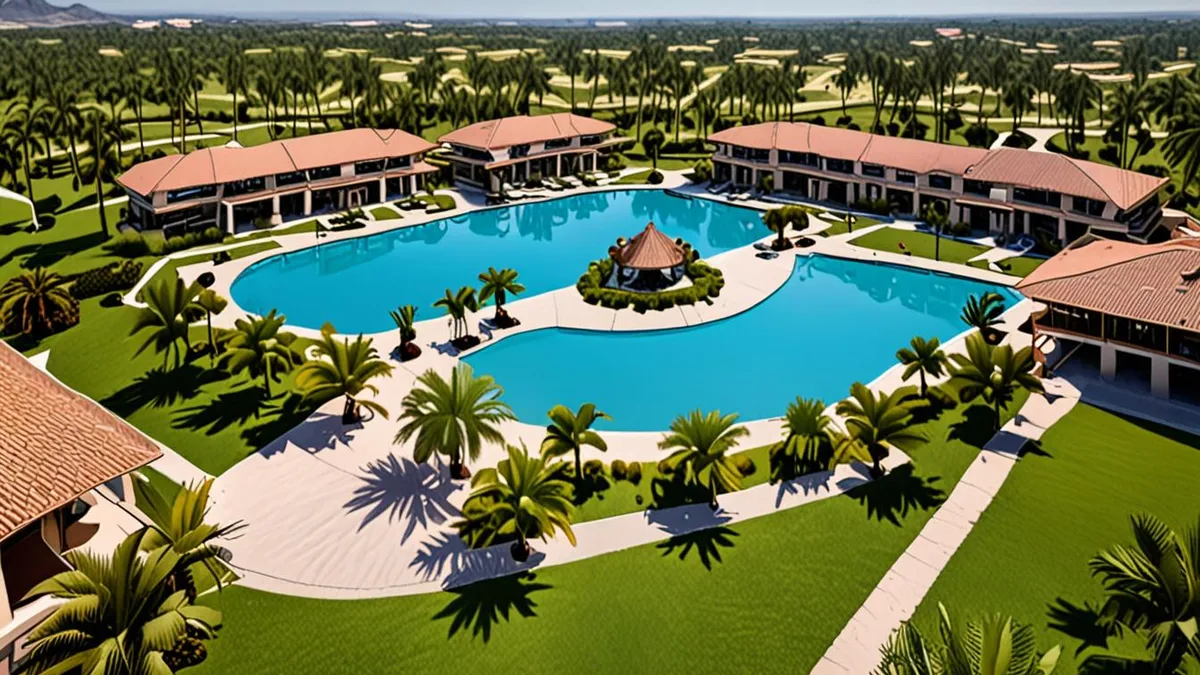
Large resorts often exceed 300 rooms and operate like small villages. They typically have multiple pools, a full spa, several restaurants and shops, and enough corridors, elevators and pathways that you may need a map on your first day. Everything is designed so guests can spend an entire week without leaving the property.
Why size drives everything else
Room count is not just a statistic; it determines how the resort behaves. A 40-room property can staff itself at a ratio that lets a waiter remember your coffee order, while a 300-plus-room property relies on systems, schedules and departments. Atmosphere follows the same logic: small properties stay quiet by default, while large ones absorb hundreds of guests into a lively hum.
Size also decides how much of the resort you actually use. At a large resort, you might visit two of five restaurants and one of four pools and never see the rest. At a boutique property, you can genuinely get to know every corner in a couple of days. Neither approach is better on its own; they simply suit different travel styles, which the rest of this article unpacks.
Price Differences and When Each Type Costs Less
Price is where the decision gets practical. Boutique rooms typically cost 10-30% more per night than comparable rooms in large resorts, and the reason is simple math: the cost of quality service is spread over far fewer guests. When a property has a few dozen rooms, every housekeeper, chef and front desk agent serves a smaller guest base, so each room carries more of the payroll.
Large resorts fight back on packages. Because they have hundreds of rooms to fill, they discount aggressively through bundle deals, and all-inclusive rates in high season are where they usually win. If your priority is paying one predictable price for accommodation, meals and drinks, a big property often comes out cheaper than a boutique stay plus restaurant bills.
When the price gap narrows
Timing matters as much as room count. In shoulder season, roughly May-June and September, rates at both types commonly drop by 20-40%, which narrows the gap considerably. A boutique room that felt expensive in August may sit within reach in late September, while large resorts lose some of their package advantage when demand softens.
The practical takeaway: if you have flexible dates, check boutique prices in the shoulder months before assuming a large resort is your only affordable option. And whichever type you choose, compare the total cost of your stay, including meals and activities, rather than the headline nightly rate. A cheaper room with expensive extras can end up costing more than the premium option.
Service, Dining and Facilities Compared
Service and facilities are where the two types diverge most visibly. Large resorts commonly offer 3-5 restaurants, a spa, kids clubs and daily activity programs all under one roof, so you can fill a week without ever consulting a map of the surrounding area. The trade-off is that service is organized into departments, and interactions can feel professional but standardized.
Boutique resorts usually have 1-2 dining venues, which sounds limiting until you consider what the small team can do instead. With far fewer guests to serve, staff learn names, remember preferences and can arrange custom plans, from a private dinner on the terrace to a tailored day trip. You trade variety for genuine personalization.
A quick way to see the difference in practice:
- Menu rotation at large resorts: with 3-5 restaurants, kitchens often run themed nights and rotating menus, so a week-long guest rarely eats the same meal twice.
- Custom requests at boutique properties: a small kitchen with 1-2 venues can often cook off-menu dishes or adapt to allergies and preferences without a formal process.
- Activity programs: large resorts publish daily schedules of classes, sports and entertainment, while boutique properties typically arrange experiences on request, one guest at a time.
- Local knowledge: boutique staff, often locals themselves, can point you to family-run restaurants and trails that never appear on resort information boards.
The rule of thumb is straightforward. Choose a large resort if you want everything on site and plan to spend most of your time inside the property. Choose a boutique resort if you plan to eat out and explore daily, and would rather have a personal base than a self-contained village.
Which Type Fits Families, Couples and Solo Travelers
The right resort type depends heavily on who is traveling with you. A property that feels perfect for a couple on an anniversary trip can feel limiting for a family with two restless kids, and the reverse is just as true. Matching the resort to your group saves you from paying for facilities you never touch.
Families with young children usually get the most value from large resorts. Kids clubs give parents actual time off, shallow pools mean safer swimming, and a full daily activity program keeps children busy from breakfast to bedtime. Spreading those services across hundreds of guests is also what keeps the per-night price manageable for a family booking two or more rooms.
Couples tend to lean the other way. Boutique resorts offer quiet pools where you can actually hear the water, an adult-oriented atmosphere, and a level of privacy that is hard to find when a resort runs several hundred rooms. Staff who remember your names and your dinner preferences add a personal touch that many couples value more than a climbing wall.
- Kids clubs with age grouping: many large resorts split children into age-based groups, so a four-year-old and a ten-year-old each get activities suited to them instead of one shared program.
- Adults-only corners: some boutique resorts restrict their pool or terrace to adults, which is a real draw for honeymooners and couples celebrating something special.
- Short stays that still feel complete: a boutique resort delivers its full experience in a weekend, while a large resort’s restaurants, spa and activities only make sense once you have several days to use them.
- Easy meal logistics for parents: at a large resort, multiple restaurants and room service mean you can feed tired kids without leaving the property after a long beach day.
Booking Windows and How to Secure the Right Room
Timing your booking matters as much as choosing the right resort, and the two types follow very different rhythms. Large resorts and boutique properties fill up on different schedules, and the room categories that disappear first are not the same. If you understand those patterns before you search, you can avoid the frustration of finding only the least desirable rooms left at the highest rates of the season.
- Book large resorts 3-6 months ahead for July-August. Family rooms and connecting rooms sell out first because families plan summer trips earliest and need the largest configurations. With properties that often exceed 300 rooms, it sounds like there should always be space, but the room types that suit groups vanish quickly. If you wait until spring, you may find only standard rooms left at peak rates, and by then the choice of view, floor or layout is largely gone.
- Give boutique resorts 2-4 months of lead time. With typically only 10-60 rooms in the whole property, availability looks loose at first glance, but the few signature rooms — the ones with the best view, a private terrace or extra space — are usually the first to go. Booking in this window gives you a realistic shot at those rooms rather than whatever remains.
- Check the resort’s own website before any platform. Booking direct often unlocks perks that third-party sites do not list, such as a room upgrade on arrival, more flexible cancellation terms, or a small added benefit like breakfast or a late checkout. It also puts you in direct contact with the property, which matters if plans change.
- Compare cancellation policies side by side. A direct booking with free cancellation up to a week before arrival is often worth slightly more per night than a cheaper, non-refundable platform rate. If your dates might shift, flexibility can easily outweigh the small saving.
One more practical habit: once you have a shortlist, email or call the property with a specific question about your dates, such as whether a quiet room away from the pool area is possible. The speed and warmth of the reply tells you a lot about the service you will get on site, and small properties occasionally hold a room for a guest who has taken the time to ask directly. A five-minute message can be the difference between an ordinary booking and one that fits exactly what you wanted.
Destination Match: Where Each Resort Type Shines
Where you are going should shape which resort type you pick just as much as your budget does. Some landscapes naturally suit small properties that sit quietly among trees and stone, while others are built around rows of large, all-inclusive resorts.
Lake and mountain destinations favor boutique resorts. Places like Zlatibor in Serbia or the Julian Alps reward properties that blend into the landscape rather than dominate it — wooden facades, a dozen or so rooms, and terraces facing the forest. The experience there is about the setting, and a small resort amplifies it instead of competing with it. If that sounds like your kind of trip, our guide to resorts in Zlatibor for nature travelers goes deeper into what to look for.
Beach coastlines and all-inclusive convenience
Beach-heavy coastlines with many large resorts suit travelers who want everything handled in one booking. When a stretch of coast is lined with properties offering several restaurants, pools and daily activities, an all-inclusive rate at a big resort can be the simplest and most cost-effective way to travel, especially with kids in tow.
Quiet escapes in Central Europe
Quieter escapes in Slovakia or Slovenia pair naturally with small properties surrounded by nature. In these destinations the appeal is hiking, local food and slow mornings, so a compact resort with a handful of rooms and a strong sense of place usually fits better than a sprawling complex built for volume.
Making the Final Choice for Your Trip
The decision comes down to three simple questions: how long you are staying, who is traveling with you, and how much time you plan to spend inside the property. Large resorts reward longer trips of 5-7 nights, especially with kids, because the on-site pools, restaurants and activities replace daily excursions. Boutique resorts shine on 2-4 night getaways built around atmosphere, couples time, or a quiet base for exploring the region.
If you are still torn, match the resort type to your trip length and travel group first, then let budget and booking windows settle the rest. If you have stayed at either type recently, leave a comment with your experience or share this article with someone planning their next trip.