Choosing between the Croatian coast vs Greek islands for a villa holiday is a genuinely tough call, because both deliver stone walls, sea views and a private pool within reach of a swim spot. The right answer depends less on which country is “better” and more on how you travel: whether you want to drive and hop ferries, or fly in and settle onto one island for a week or two.
This guide compares the two coastlines on the things that actually shape a villa trip: what you’ll pay in peak and shoulder season, how long each destination stays warm, how easy it is to get there and get around, and what the beach and setting look like from your terrace. We’ll finish with practical booking advice and a clear verdict on which coast fits your group, your budget and your pace.
Croatian Coast vs Greek Islands at a Glance
Croatia and Greece both do the villa holiday well, but they reward different styles of travel, and knowing which suits your group can save you weeks of scrolling through listings. Croatia wins on road-trip flexibility, compact island hopping by ferry and villas clustered close to major hubs, which makes it easy to base yourself near Split and still see Hvar or Korcula in a single trip. Greece wins on a longer season, bigger beaches and a far wider choice of remote, quiet islands where you can go a week without seeing a crowd.
Both destinations deliver beautiful stone or whitewashed villas with private pools, so the real difference comes down to setting and pace rather than quality. Croatian villas tend to sit on pebble coves and pine-covered slopes, often just a short walk from the water, while Greek villas spread across a much larger map of islands, each with its own character, from Crete’s working villages to the Cyclades’ whitewashed lanes. If you’re still weighing the two, the quick comparison below shows where each coast pulls ahead and helps you match the destination to the kind of days you actually want on holiday.
- Price: Croatian coast villas typically undercut comparable Greek island properties in peak July and August weeks, leaving more budget for boats, restaurants or a longer stay.
- Season length: Crete and the southern Greek islands warm up weeks earlier in spring and stay usable later into October than most of the Croatian coast.
- Beach style: Greece offers wide sand beaches for classic sunbathing days; Croatia offers pebble coves and pine-shaded bays better suited to swimmers and boat days.
- Travel logistics: Croatia lets you link villa hubs by car and short ferry crossings, while many Greek islands require a connecting flight from Athens plus a ferry that can take hours.
- Group fit: Large Croatian stone houses often absorb big groups comfortably, dropping the per-person cost faster than smaller island villas in Greece.
Where the Villa Money Goes: Price Comparison
Villa prices on the Croatian coast vs Greek islands follow a consistent pattern: in peak July and August weeks, Greek island villas typically cost 10-20% more than comparable Croatian coast properties. That gap reflects demand as much as anything, since popular Greek islands draw international crowds all summer and their top villas book out early.
In shoulder season, the picture changes. From May to June and again in September, rates in both countries drop toward near parity, and you’ll often find genuinely excellent villas at prices peak weeks would never offer. Peak July-August villa rates run roughly 30-50% higher than shoulder season in both countries, so shifting your dates by a few weeks is the single biggest saving available.
Where in Croatia your money stretches furthest
Location within Croatia matters. Villas near Dubrovnik command a premium thanks to the city’s fame and limited supply, so expect to pay noticeably more there than elsewhere on the coast. Split-area villas and properties across Istria stretch budgets further while keeping you close to beaches, ferry links and good restaurants.
Group size changes the math too. Large Croatian stone houses often sleep ten or more, so per-person rates drop faster there than in smaller Greek island villas. If you’re traveling as a big group, it pays to split villa costs fairly in a group before you book, so everyone agrees on who pays for what.
Season and Weather: When Each Coast Shines
Croatia’s villa calendar runs roughly from May to October, with July and August as the peak months. Expect average temperatures of 28-30°C along the coast in July, and sea temperatures warm enough for long swimming days from late spring onward. Outside those busy weeks, you’ll find quieter roads, easier restaurant bookings and noticeably softer rates.
Greece’s longer season
Greece plays a longer game. On Crete and the southern islands, conditions stay pleasant from April right through to late October, adding shoulder weeks that Croatia can’t match. If you’re dreaming of an Easter-week villa break or a late-October escape with water that’s still swimmable, the southern Greek islands are the more reliable bet.
One summer caveat applies to the Cyclades. July there averages 27-29°C, but the strong meltemi winds that blow through July and August can disrupt both beach days and ferry schedules. On exposed islands, some beaches become uncomfortable on windy afternoons, and crossings can run late or occasionally be canceled. It’s worth checking wind forecasts before you lock in island-hopping days during peak summer.
For most travelers, September is the sweet spot on both coasts. The sea holds its summer warmth, rates ease down from their peak highs, and the crowds thin out noticeably. It’s the month when Croatia and Greece each show their best side, whether you’re swimming from a pebble cove near Hvar or a sandy bay on Paros.
Getting There and Getting Around
If your villa trip involves more than one base, Croatia is the easier country to plan. The classic route links Split, Hvar and Korcula, with short ferry crossings in between, and Brac sits just off the mainland too. You can rent a car, drive onto most routes or hop across as a foot passenger, and be at your next villa within a couple of hours door to door.
Greece works differently. Most island trips start with a flight, either direct to a larger island airport or via a connecting flight through Athens, and then often a ferry on top of that. Crossings between islands can run anywhere from around 2 to 7 hours depending on the route and vessel, so moving bases costs you a real chunk of a day.
Airports and arrival logistics
Croatia’s main villa hubs are well served. Dubrovnik and Split airports both sit close to the villa heartlands, so transfer times are short and you can often be at your rental within an hour of landing. Many Greek islands, by contrast, require that extra Athens connection, which means building buffer time into your arrival day.
Car-free travelers should also think carefully. Croatia’s compact hubs let you walk to restaurants, beaches and markets in many cases, or use short local ferries and taxis. On remote Greek islands, a car or scooter is often close to essential for reaching beaches and tavernas, so check what transport your villa realistically requires before you book.
Beach and Setting: What Each Coastline Looks Like
The two coastlines look and feel very different, and that shapes what kind of villa holiday you get. Croatia’s shoreline is all pebble coves, pine-shaded bays and clear water, with many villas built right on the waterline. It is common to step off your terrace, cross a low wall and swim from the rocks or a small platform below.
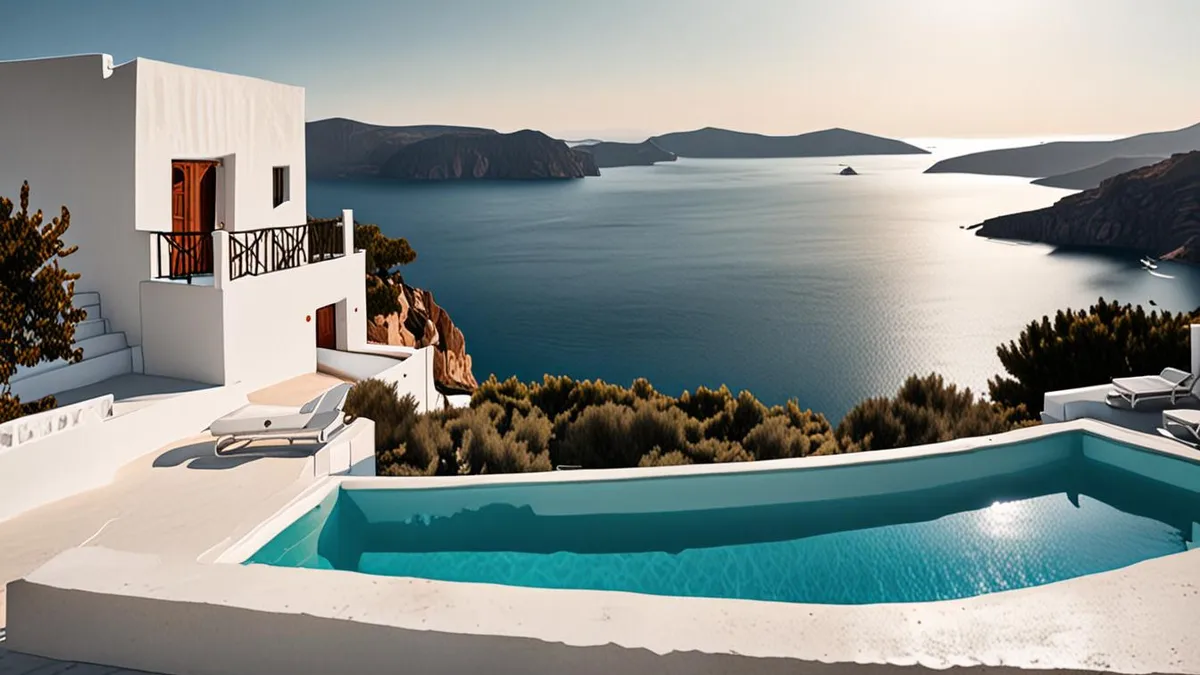
Greece delivers the postcard scenery most people picture first: wide sand beaches on Crete and Corfu, dramatic cliffs on the islands, and Cycladic whitewash villages stacked above the Aegean. The setting is more open and expansive, and the beaches themselves are better suited to spreading out for the day.
Swimmers and boat days versus classic beach holidays
Croatian coast villas suit groups who love swimming, snorkeling and boat days, where the sea itself is the attraction rather than a long stretch of sand. Greek islands suit the classic sunbathing beach holiday, with sunbeds, beach bars and space for kids to play.
Match the villa setting to your group. In Croatia, a walk-to-cove villa means morning swims and evening swims without ever starting the car. On Crete or Corfu, expect to drive to the best beaches, so factor rental cars into your budget and plan. If you are weighing up Greek options specifically, our comparison of Corfu versus Paxos for a villa trip breaks down how two very different islands handle that beach-and-setting question.
How to Choose and Book the Right Villa
Good villas on both coastlines sell out well before summer, so timing matters. For peak August weeks on popular Greek islands, book 9 to 12 months ahead. The Croatian coast moves slightly faster to book, with a 6 to 9 month window usually enough, though waterfront properties in the best spots still go early.
When you book directly with an owner rather than through a platform, vet the host carefully before sending money. It helps to read a proper guide on how to vet a villa host before you book directly, but at minimum, get clear answers in writing on the practical details that make or break a villa week.
- Bedding and linen changes: confirm how many sets are provided per bedroom and whether mid-stay changes are included or charged extra.
- Pool heating: many pools are unheated, which matters outside the hottest weeks; ask about heating costs and whether the temperature is guaranteed at a set level.
- Damage deposit terms: check the amount, how it is held, and the stated timeline for its return after checkout.
- Staff and cleaning inclusions: clarify whether housekeeping, a cook or a caretaker is part of the rate, how often they come, and whether end-of-stay cleaning is included.
- Kitchen equipment: if you plan to cook for a large group, ask whether the kitchen has enough tableware, cookware and fridge space for your headcount.
Be honest when judging listing photos. Confirm the actual pool size relative to the house, whether sea views are full or partial, and the real distance to the nearest cove or beach. Finally, split costs fairly in groups by calculating per-person rates, and get written confirmation of exactly what is included so nobody argues over cleaning fees at checkout.
The Verdict: Which Coast Fits Your Trip
So which coast fits your trip? If your priority is value in peak weeks, easy ferry-based island hopping between Split, Hvar and Korcula, and a stone villa with a cove you can walk to, Croatia is the stronger match. It rewards travelers who like flexibility and a road-trip rhythm.
Choose Greece if you want a longer season stretching from April to late October on Crete and the southern islands, wide sand beaches, and a broader range of quiet islands where you can genuinely switch off. September works beautifully in both destinations, with warm sea and thinner crowds, and early booking secures the best villas either way. If you have been torn between the two, which way are you leaning? Leave a comment or share this article with your travel group.