If you have ever booked a villa with sea views only to discover a distant sliver of water from one corner of a balcony, you know how misleading listings can be. Photos are shot at the best angle, descriptions use vague wording, and the “panoramic ocean outlook” turns out to be a strip of blue between two rooftops. A villa with sea views is usually one of the most expensive options in any destination, so it pays to verify exactly what you are paying for before you commit.
This guide walks you through a practical checklist for judging a sea view honestly. We cover what listing terms actually mean, how to read photos with a critical eye, why floor level and terrace orientation matter, which questions to ask the host, what a genuine sea view costs and when to book, and how the ideal view differs between destinations. A quick checklist at the end pulls everything together.
What ‘Sea View’ Actually Means in Villa Listings
Listing language around sea views is deliberately flexible. Terms like “sea glimpse”, “partial view” or “views over the bay” can describe anything from a full horizon panorama to a narrow sliver of water visible between neighboring rooftops. Because there is no industry-wide standard, two villas in the same town can both claim sea views while offering completely different experiences.
What a full sea view really means
A genuine full sea view usually means you can see water from the main living area and the primary terrace, not just from one bedroom window. If the only glimpse of the sea comes from a spare bathroom or a top-floor landing, you are paying a premium for something you will barely notice during your stay. When you enquire, ask specifically which rooms and outdoor spaces have the view.
Front-line, second-line and hillside positions
Location relative to the coast shapes both the view and the trade-offs. A front-line villa sits directly on the coast and typically offers the most immediate, uninterrupted water outlook, sometimes with more noise or foot traffic nearby. A second-line property, generally within roughly 500 meters of the shore, can still deliver a strong view if it is elevated, but may look over other buildings first. Elevated hillside positions often give the widest panoramas of bays and coastlines, yet the sea sits further away and the walk or drive down to the water is longer. None of these is automatically better; each suits a different kind of traveler, so decide which trade-off matters most to you before comparing listings.
How to Read Villa Photos to Judge the View Honestly
Photos are the first evidence you get of a sea view, and they are also the easiest thing for a host to manipulate without technically lying. A wide-angle shot taken from a rooftop corner can make a cramped terrace look like an observation deck, while a carefully framed image can crop out the coastal road or the neighbor’s second floor sitting directly in the sightline. The good news is that spotting these tricks does not require special skill, just a skeptical eye and a few minutes of comparison. Before you start, it helps to read up on what to check in villa photos before booking online, because the same habits that catch misleading interior shots also apply to view photography. Once you know what to look for, you can tell whether the view is real and, just as importantly, where you would actually have to stand to see it.
- Identify where the photo was taken. If every sea-view shot comes from the same corner of the terrace, the edge of the roof or a specific upstairs window, that is a strong signal the view only exists from that one spot. Genuine panoramic views get photographed from multiple angles because they look good from everywhere.
- Watch for wide-angle distortion. Standard listing cameras use 16-24 mm lenses that exaggerate openness and make cramped terraces look expansive. If railings, planters or neighboring roofs are cropped out of the frame, ask what sits just outside it; those edges often hide exactly the obstructions you care about.
- Cross-check with satellite maps. Zoom in on the area between the villa and the water. Look for a coastal road, a line of taller buildings, or empty plots that could be future construction. Satellite imagery shows you what the photographer left out.
- Compare photo sets across listings. If similar villas nearby show wide, unobstructed horizons and this one shows a tightly framed shot, the difference is telling.
None of these steps takes more than a few minutes, and together they give you a realistic picture of what you are actually paying for. Start by noting which images appear unedited and which look stretched or tightly cropped, then move to the satellite view to confirm what lies between the property and the shoreline. If the evidence is ambiguous, that in itself is useful information: hosts with genuinely spectacular views tend to show them proudly and from several angles, while vague or repetitive imagery usually means there is something to work around. Doing this homework before you enquire also changes the quality of your conversation with the host. Instead of a generic “is the view good?”, you can ask precise questions about the exact spot the photos were taken from and anything that might sit just outside the frame. That saves awkward discussions after arrival and puts you in a far stronger position when comparing villas side by side.
Floor Level, Orientation and Terrace Layout
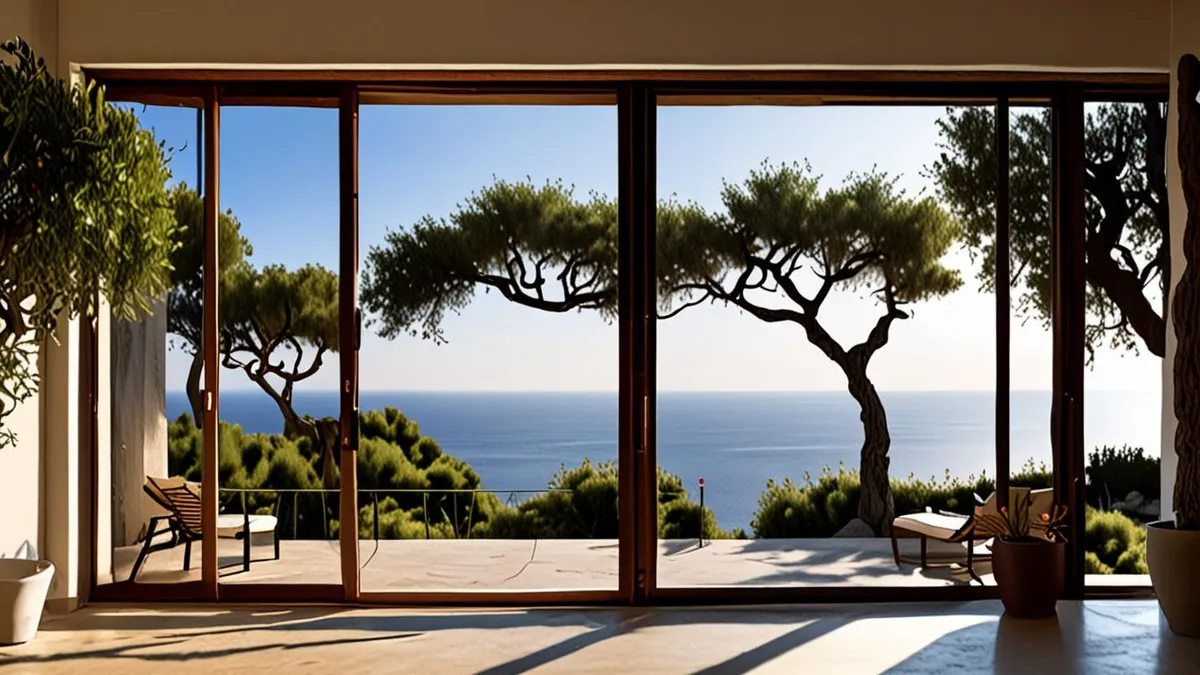
Where a villa sits in relation to the horizon matters as much as its distance from the sea. Upper floors and elevated plots give the most reliable sightlines because nothing between you and the water is likely to grow into your view. Ground-floor villas are the riskiest: hedges and trees can grow 1-2 meters per season, and a view that was clear two years ago may now be a wall of green. If a listing’s photos are a few seasons old, ask when they were taken.
Orientation changes how you actually use the view. West-facing terraces deliver sunset views but can be 3-5°C hotter in the evening than east-facing ones, which can make dinner outdoors uncomfortable in high summer. East-facing terraces suit travelers who want breakfast on the terrace with morning light and cooler evenings. Think about which hours you will realistically spend outside.
- Check where the pool faces. If the pool deck points inland or is walled off from the sea, you will spend your swimming hours without the view you booked for, no matter what the bedroom window shows.
- Check the outdoor dining area too. A dining terrace oriented toward the garden or a neighbor’s fence means your evening meals miss the water; confirm it faces the sea before assuming it does.
- Ask about screening and pergolas. Some villas shade their main terrace with pergolas, sails or tall planting that interrupt sightlines from seating height even when the view is clear from standing position.
- Consider wind exposure on elevated plots. Hillside and upper-floor terraces catch more breeze, which is welcome in summer but can make shoulder-season evenings chilly enough that you retreat indoors and stop using the view.
The simplest rule: if the view is the reason for the trip, confirm it exists from the spaces where you will actually spend your time, not just from one bedroom.
Questions to Ask the Host Before Booking
A host’s listing can tell you a lot, but the fastest way to verify a sea view is a direct conversation. Most owners and managers are happy to answer specific questions, and how they respond often reveals as much as the answers themselves. A host who dodges, sends vague one-line replies, or refuses a simple video call is telling you something before you ever arrive. Before you pay a deposit, work through the points below.
- Ask for a video walkthrough of the terrace. Request a short, unedited clip filmed from the terrace showing the full horizon, not a photo taken at the best angle. Standard listing photos are shot with wide-angle lenses that exaggerate openness, so live footage is far more honest. A slow pan from left to right tells you exactly what you’ll see from the spot where you’ll actually sit, glass in hand.
- Ask about anything that could block the view. Put it directly: is there construction, new fencing, or vegetation that could obstruct the water in the coming season? A neighbor’s building project or a hedge that hasn’t been trimmed in years can quietly erase a panorama between booking and arrival. Ask who maintains the greenery and how often it is cut.
- Confirm where the view is visible from. Is it from the whole property or just one room? A water glimpse from a single bedroom window is very different from a view over the main living area and terrace. Ask the host to describe the view from each outdoor seating area specifically.
- Ask about lighting at night. Outdoor floodlights, pool lights, or a neighboring terrace’s lighting can wash out evening views and stargazing. Ask whether lights can be dimmed or switched off, and whether neighboring properties tend to leave bright lights on after dark. If long evenings on the terrace are part of the plan, this small question matters more than you’d expect.
If you want a fuller framework for screening owners and managers, this guide on how to vet a villa host before you book directly covers the vetting process in detail. A host who answers these questions promptly, specifically and honestly is usually a good sign for the whole stay. Someone who hesitates on simple, factual questions deserves extra scrutiny before you send money.
What a Sea-View Villa Costs and When to Book
Sea views are one of the biggest single price drivers in villa rentals. In the same area, a villa with a genuine water view typically costs 20-50% more than a comparable inland-view property, and the gap is widest in peak season when everyone wants the same handful of front-line terraces. Knowing this helps you judge whether a quote is fair or inflated.
When to book for the best views
For Mediterranean summer stays, prime view-facing villas sell out first. Book 6-9 months ahead, and ideally lock in your choice by January-March. By late spring, the best-positioned villas for July and August are usually gone, and what remains tends to be either overpriced or compromised on the view. If you’re unsure how these windows work across regions, this guide to how far ahead to book a villa breaks down the timing by destination.
The shoulder-season alternative
If your dates are flexible, consider May-June or September-October. You get the same views at noticeably lower rates, and terrace weather is often milder than the peak of summer. A west-facing terrace that feels punishing in August can be perfect for long sunset dinners in late September. The sea is still there, the light is arguably better for photography, and your budget stretches to a higher floor or a front-line position that would be out of reach in high season. Check current rates for your specific dates, since pricing varies by destination and year.
Matching the View to Your Destination
The “best” sea view depends heavily on where you’re going. Terrain, building density and coastline shape all change what a villa can offer, so it helps to match your expectations to the destination before you start filtering listings. A hillside panorama in one place may be impossible to find in another, where the best view simply means being steps from the sand.
In Greece, quieter islands reward travelers who want wide, uninterrupted coastal panoramas without fighting for a spot on the terrace. Kefalonia, for example, has dramatic cliffs and low-density development, which means elevated villas can offer genuinely open sightlines over the Ionian. The trade-off is that you’ll typically need a car, and restaurants and shops are more spread out than on busier islands.
The French Riviera flips that equation. Its steep hillsides produce some of the most dramatic elevated views in the Mediterranean, but villas sit closer together, so sightline privacy deserves careful checking. That stunning panorama may include a neighboring terrace directly below.
- Kefalonia and similar quiet Greek islands: Myrtos Beach and the Melissani area anchor the sightseeing, but the real appeal is villas on west-facing slopes where you can watch the sun drop into open water with few buildings in frame.
- The French Riviera: Look above towns like Èze and Menton for elevation, and ask hosts specifically about sightline privacy, since terraces here often overlap and a “private” view can include neighboring rooftops.
- Barbados and the Caribbean: Elevation matters less than front-line position. The west coast’s calm, sunset-facing waters mean “best view” usually means a villa directly on the beach, where you trade panorama for the sound of the surf and steps-into-the-sand access.
Whichever destination you choose, decide first whether your priority is the panorama itself or the lifestyle around it, then let that shape your search filters.
The Quick Sea-View Villa Checklist
Many villas advertise sea views that turn out to be a distant sliver from one corner of a balcony. The fix is simple: verify the view’s real extent before you pay. Cross-check the listing photos against satellite maps, ask the host for a video call or unedited wide-angle shots from the terrace, and confirm exactly which rooms and outdoor areas face the water.
Then weigh the practical trade-offs. Consider the floor level and terrace orientation, and decide whether the 20-50% premium over inland-view villas fits your priorities. Book 6-9 months ahead for a peak-season Mediterranean stay, or travel in the quieter shoulder months of May-June or September-October, when rates drop while the panorama stays identical. Do that, and the view you see on arrival will be the one you booked. If this helped you avoid a disappointing booking, share the article or leave a comment with your own sea-view tips.