There’s a particular disappointment that seasoned lodge travelers know well: you book a cabin for the cozy evenings, arrive to find a fire pit that’s little more than a decorative bowl, then discover the real fire is “communal, weather permitting, logs not included.” Restrictions, surprise costs and half-hearted setups turn what should be the highlight of a lodge breaks with fire pits into an evening spent indoors scrolling your phone.
This guide is here to make sure that doesn’t happen. We’ll cover why a fire pit is worth prioritizing when you book, which seasons and months give you the most reliable fire weather, and the specific questions to ask about the fire pit itself before you pay. We’ll also walk through realistic costs, how to choose between forest, coastal, mountain and lakeside settings, and the safety habits that keep an evening around the flames relaxing rather than risky. By the end, you’ll know exactly what to check before you commit.
Why Lodge Breaks with Fire Pits Are Worth Booking
A fire pit does something no interior feature can: it keeps the evening going after the temperature drops. In autumn and winter, most lodge guests retreat indoors by late afternoon, but a working fire pit on your deck turns those dark, chilly hours into the best part of the day. You can sit out under stars, wrap your hands around a mug and talk for hours, when without the fire you’d be watching television by 7pm. For anyone booking a lodge between October and March, this single feature often decides whether the trip feels restorative or cramped.
Private beats communal, almost every time
Some lodge sites offer shared fire areas where guests gather around one large pit. These have their charm, but for couples and small groups, a private fire pit on your own deck is usually the better choice. You control the timing, the seating, the music and the conversation. There’s no waiting for a free bench, no strangers’ dogs underfoot and no packing up because the last family left. If a quiet, personal evening is the point of your trip, filter your search for lodges with their own fire pit.
There’s a practical benefit too, especially in remote locations. Many of the best fire pit lodges sit far from towns, and some rural sites have no bar or restaurant on site at all. Rather than seeing this as a drawback, treat the fire pit as your evening entertainment and dining spot. Cook simple food over the flames or nearby, bring a bottle of something you like, and let the fire do the work a bar never could. Guests who plan this way often report that the fire pit evenings become the memory they take home, more than any attraction visited during the day.
Best Seasons and Timing for Fire Pit Lodge Stays
Fire pit weather is not the same as lodge weather. A lodge can be lovely year-round, but for evenings spent sitting outside around flames, you want cool, dry, still conditions, and in northern and central Europe those are most reliable from late September through April. During this window, evenings are long and crisp, midges and other biting insects are largely absent, and the fire becomes genuinely useful rather than optional. Autumn weekends are especially popular, when the trees are turning and a fire feels earned after a day of walking.
Summer has a catch
June to August stays can still work, but be aware of the risk of fire restrictions. During dry spells, many sites and local authorities restrict or ban open fires, sometimes at short notice, and a wood-burning pit may be off limits for days. If a summer fire pit evening is central to your plans, confirm the site’s policy on restrictions before you book, and ask what happens if a ban is imposed mid-stay.
Timing your booking matters as much as timing your trip. Fire pit lodges sell out fastest in peak season, and autumn and winter weekends are the scarcest dates of all. As a rule, book three to six months ahead if you want a specific weekend between October and February, particularly for popular regions or lodges with hot tubs alongside the fire pit. Midweek breaks give you far more flexibility and often quieter sites. If you’re dreaming of snow rather than autumn leaves, a winter lodge trip in Sweden pairs deep-season fire pit evenings with some of the most dramatic cold-weather scenery in Europe, and those dates also fill early.
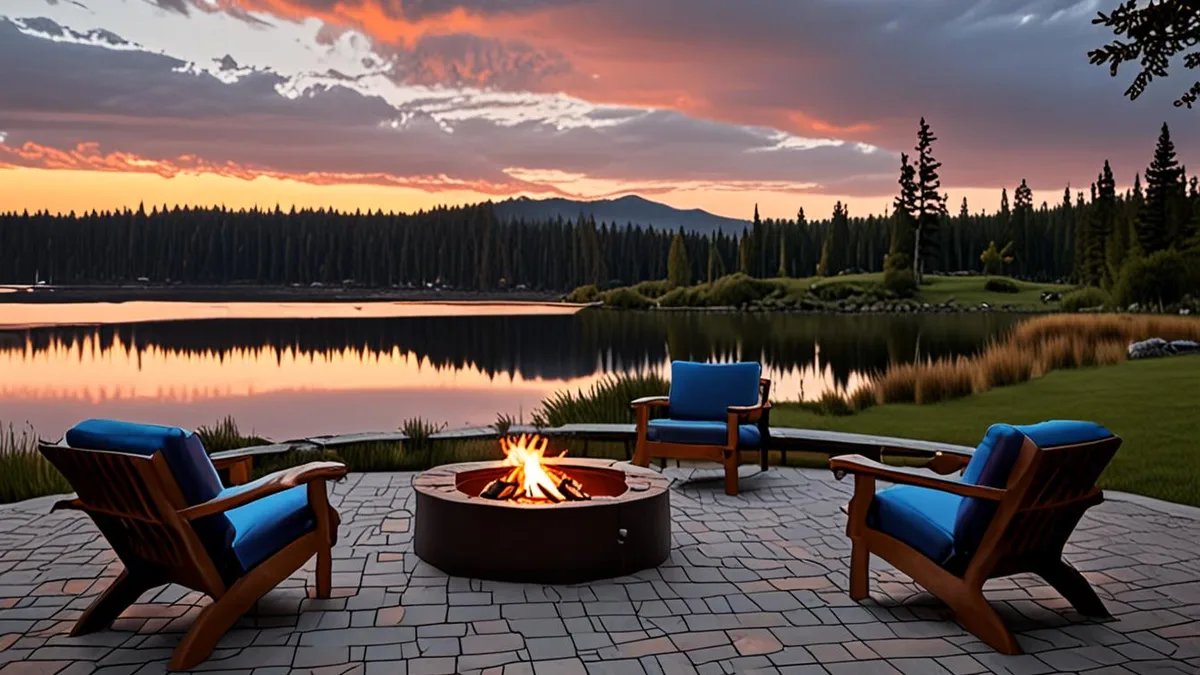
What to Check About the Fire Pit Itself Before You Book
Not all fire pits are created equal, and the photos on a listing rarely tell the whole story. Some lodges offer a genuine wood-burning pit with proper logs, kindling and a good supply of seasoned firewood. Others list a “fire feature” that turns out to be a small gas burner, or worse, an electric flame effect that produces more light than heat. Neither alternative is useless, but if your whole trip is built around real fires, you need to know which you’re getting before you pay. Ask the site directly, and ask for a photo of the fire pit in use rather than a staged shot of an empty deck.
The second question is cost. Some sites include a starter basket of logs and charge for more; others charge for all wood on site. A basket typically runs £5-£15, which sounds minor until you’re feeding a fire for three evenings in February. Ask how long a basket typically lasts and whether the on-site shop or reception stocks wood late in the evening.
- Deck size and layout: the fire pit works best on a private deck or terrace of at least 10 square meters, so ask for the actual dimensions and whether the fire sits away from seating and walls rather than squeezed beside the door.
- Seating around the fire: confirm there are proper outdoor chairs or benches positioned for the fire pit, not just a couple of deck chairs meant for daytime sunbathing.
- Wind and shelter: ask whether the deck is sheltered or exposed, since an exposed pit in a breeze is hard to light and uncomfortable to sit beside.
- Lighting kit: check whether matches, kindling and firelighters are provided, or whether you should bring your own to avoid a cold first evening.
Finally, ask about any rules that limit when you can light the fire, such as quiet-hours cutoffs or seasonal restrictions. A pit you can only use for one hour is a very different proposition from one you can tend all evening.
Costs and Booking Practicalities
Fire pit lodge stays usually run from £90-£250 per night, with the price shaped by season, region and how large the lodge is. A small one-bedroom lodge in a quiet forest park will sit at the lower end of that range, while a spacious lodge with a hot tub in a popular national park can easily reach the top. Peak autumn and winter weekends command the highest rates, so if you have flexibility on dates, midweek stays often cost noticeably less.
Before you get attached to a particular lodge, check the minimum stay requirements. Many sites ask for 2-3 night minimums on weekends, and this is especially common in autumn and winter when demand is strongest. A two-night minimum can double the cost of a trip you had planned as a one-night treat, so it pays to know upfront. Some operators also price weekend nights higher than midweek ones, so ask for a quote for your exact dates rather than relying on the advertised from-price.
Look beyond the nightly rate
The advertised price rarely tells the whole story. Add up the extras before comparing lodges: firewood is often charged separately, extra bedding may carry a fee, and hot tub add-ons are sometimes priced per stay or per night. Two lodges with similar nightly rates can end up £50 or more apart once these extras are included. Ask the operator for a full total covering everything you plan to use, then compare like with like. It is also worth checking the cancellation and deposit terms at the same time, since flexible booking can be worth a slightly higher headline price if your plans might change.
Choosing the Right Setting: Forest, Coast, Mountain or Lakeside
The setting you choose shapes every fire pit evening you will have. A fire pit in a sheltered forest clearing feels completely different from one on a windswept coastal deck, and the right choice depends on what you want from your trip.
Forest lodges are the safest bet for comfortable evenings in cooler months. The surrounding trees act as a natural windbreak, so flames stay steady and the seating area stays usable even when the weather turns. The trade-off is that you rarely get a dramatic view beyond the trees themselves.
Coastal and lakeside lodges deliver the postcard moment: sun setting over the water while the fire crackles beside you. The catch is exposure. Decks in these locations are often open to the elements, so check that the site has windbreaks, glass screens or a sheltered corner before booking. A fire pit that cannot stay lit because of the wind is a wasted feature.
Which setting suits your group?
- Forest: Look for sites with marked walking trails starting from the lodge, since the woodland setting is half the appeal and lets you fill mornings before the evening fire.
- Coastal: Ask which direction the deck faces, as a west-facing deck over the sea gives you the full sunset from your fire pit seat, while a north-facing one may miss it entirely.
- Mountain: Nights are colder and clearer here, so the fire becomes essential rather than optional. Pack insulated layers, hats and blankets for sitting outside. If crisp alpine-style evenings appeal to you, our guide to Wales mountain lodges for adventure trips covers lodges that pair fire pit evenings with serious hiking on your doorstep.
- Lakeside: Calm water reflects the firelight beautifully after dark, but check whether the site lights paths to the water’s edge, as unlit routes between lodge and lake can be slippery in winter.
Whichever setting you lean towards, think about how you will actually use the space. A deck that feels magical on a calm evening can be unusable in driving rain, so ask about covered seating or sheltered corners as well as the view.
Safety and Etiquette Around Lodge Fire Pits
A fire pit is a wonderful feature, but it is still an open fire a few steps from a wooden building. Treating it with respect keeps the evening relaxing instead of stressful, and most rules are simple common sense once you know them.
Distance is the first thing to check when you arrive. Fires need to sit a safe distance from lodge walls, decking edges and any overhanging branches or awnings. If the fire pit is a portable bowl, resist the temptation to drag it closer to the seating for warmth. Move your chairs instead, and keep them far enough back that sparks are not landing on sleeves and blankets.
Never leave a fire burning unattended, even for a few minutes. Wind can shift embers quickly, especially on exposed decks. Before you go inside for the night, make sure the fire is fully extinguished: spread the embers out, pour water over them and stir until everything is cold to the touch. Glowing embers buried under ash can reignite hours later.
Small habits that make a difference
- Use the spark guard if the lodge provides one, particularly on breezy evenings when flying embers are the main risk to decking and dry foliage nearby.
- Keep a bucket of water or sand next to the pit before you light up, so you are not searching for it in the dark if flames flare unexpectedly.
- Supervise children and pets at all times around the fire, and establish a clear “no running near the pit” rule before the evening starts, since decks are often dimly lit.
- Only burn the logs provided by the lodge, as treated timber or household waste can throw sparks and give off unpleasant fumes.
Wrapping Up Your Fire Pit Lodge Planning
The disappointment most travelers face is avoidable with a little planning. Aim for the late September to April window, when fire pit weather is most reliable, and book 3-6 months ahead for autumn and winter weekends, when the best lodges sell out first. Before paying, verify the fire pit type, confirm firewood costs of £5-£15 per basket, and check that your private deck or terrace offers enough space and seating for a genuinely comfortable evening outdoors.
Just as important is matching the setting to your group. A sheltered forest lodge suits anyone who wants warmth and calm in cooler months, a coastal or lakeside spot rewards those chasing sunset views, and a mountain lodge delivers crisp, clear nights for people who don’t mind wrapping up warm. Get these details right and the fire pit becomes the heart of the trip rather than an afterthought. If this helped you plan, leave a comment or share the article with someone planning their own lodge escape.