Many travelers with limited mobility book what looks like the perfect lodge online, only to arrive and discover a single step at the entrance or a long gravel driveway that makes the whole stay difficult. The listing said “accessible,” but nobody defined what that meant. This gap between expectation and reality is one of the most common frustrations in accessible lodges travel, and it is almost always avoidable with the right questions and search habits.
This guide walks you through the process step by step. We start by explaining what step-free access actually covers at a lodge, then show you where to search beyond standard filters. You will find the questions worth asking before you book, advice on timing and rates, help choosing destinations with friendlier terrain, and tips for matching a lodge to your specific mobility needs. By the end, you will know how to verify access details in writing and plan a lodge stay with confidence.
What Step-Free Access Actually Means at a Lodge
When a lodge advertises step-free access, many travelers assume it refers to the front door. In reality, genuine step-free access means no steps at entrances, between rooms, and to key facilities like showers and terraces. A lodge can have a perfectly level entrance and still be unusable if the bedroom sits up two steps, the bathroom doorway is too narrow, or the terrace is reached by a short flight of stairs.
The features that matter most
Inside the bathroom, three features separate a truly accessible lodge from a standard one. A roll-in shower is the single most requested accessible bathroom feature, because it lets a wheelchair user shower without transferring over a high tub edge. Grab rails near the toilet and shower provide stability, and a bathroom doorway of at least 80-90 cm is needed for wheelchair users to move comfortably through the space.
Hidden barriers to watch for
Lodge design creates its own traps. Gravel driveways and unpaved paths are the most common hidden barrier at rural lodges, and they rarely appear in photos. Raised decking around the cabin often means two or three steps up from the garden. Indoors, watch for sunken lounges and split-level layouts, which are common in lodge architecture but impossible for a wheelchair user to navigate. Ask about each of these specifically rather than relying on the word “accessible” in a listing.
Where to Search for Accessible Lodges
Searching for accessible lodges takes a layered approach, because no single source gives the full picture. The best strategy is to combine mainstream booking tools with specialist resources, then finish with direct contact to the property. Each layer tells you something different, and together they help you avoid booking a lodge that only half-delivers on access.
Booking platforms with accessibility filters are the obvious starting point, but treat them as a first pass rather than a final answer. Definitions vary by property: one host may tick the accessible box for a ground-floor bedroom alone, while another means full step-free access throughout. Use the filter to build a shortlist, then verify every detail with the property itself.
- Accessible travel directories: Specialist sites focus entirely on step-free accommodation and often include traveler reviews from people with similar mobility needs, giving you a more realistic picture than a generic listing.
- National tourism boards: Many countries certify or list accommodation that meets defined accessibility standards, so a tourism board website can point you to lodges that have actually been assessed rather than self-described.
- Lodge park operators: Larger lodge parks more often publish detailed access statements than independent cabins, sometimes listing door widths, shower types and path surfaces for every unit in their range.
Once your shortlist is ready, move to direct searches on operator websites. Independent cabins rarely document access in depth, while lodge parks with dozens of units tend to have the information on file. That documentation makes your pre-booking questions much easier to answer.
Questions to Ask Before You Book
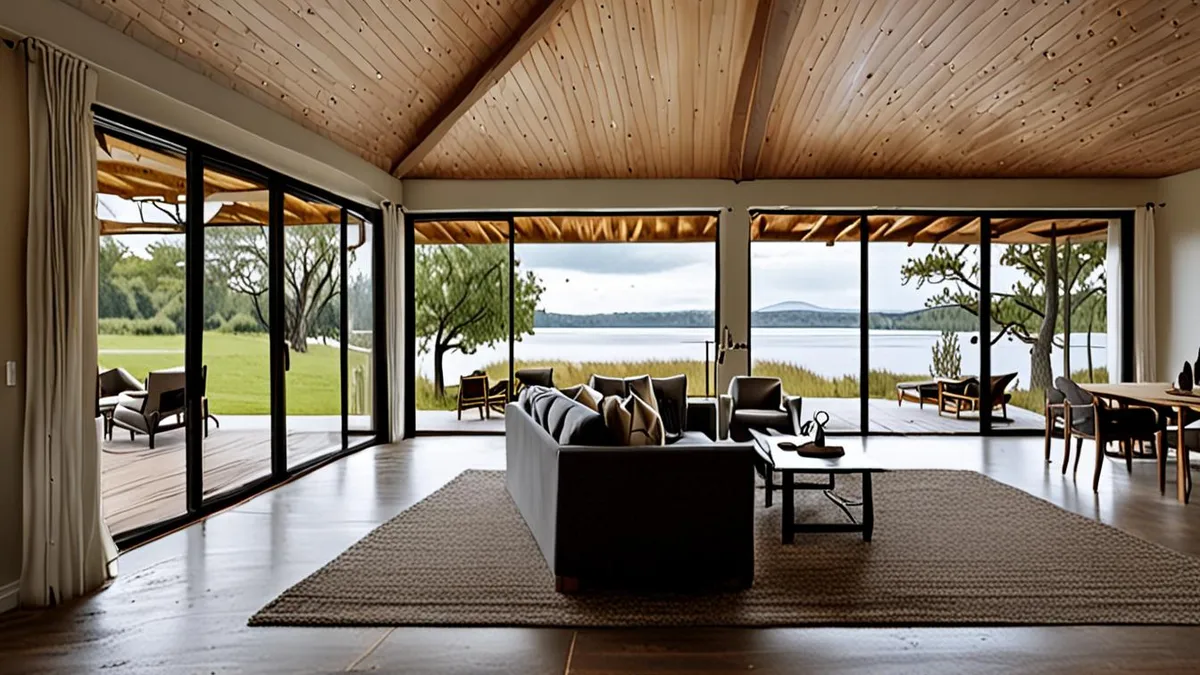
Photos almost never tell the full story of a lodge’s accessibility, so written confirmation from the property is essential before you pay a deposit. A short phone call or email exchange costs you little and can save an entire holiday. Listing images might show a wide-looking doorway or a tidy bathroom, but they rarely reveal the slope of an approach path or the true width of a shower opening. Approach your questions as a checklist rather than a casual conversation, and keep the answers in writing wherever possible. A written reply gives you something concrete to fall back on if anything differs on arrival, and it also shows you how seriously the owner takes accessibility.
- Ask for written confirmation of the essentials. Request that the property confirms in writing that the entrance is step-free, the shower is a true roll-in design, and the doorways meet the 80-90 cm width a wheelchair user needs. If the reply is vague on any of these points, follow up until you get a clear yes or no.
- Request the access statement or accessibility guide. Reputable lodges keep this document on file, and it typically covers everything from door widths to bathroom layout and equipment. If a property cannot produce one, treat that as a signal to ask more questions, not fewer.
- Confirm parking and path surfaces. Ask how far the parking space is from the entrance and whether the route to the door is hard-surfaced or loose. Loose gravel and rough ground are the barrier travelers most often discover only after arrival at rural lodges, and this detail almost never appears in listing photos.
Send your questions together in one message so the property can answer them in a single reply. Most owners respond quickly to clear, specific requests, and the ones who answer thoroughly are usually the ones whose lodges deliver what they promise. If you get slow or evasive answers at the booking stage, expect the same experience during your stay, and consider it a useful filter before you commit your deposit.
Booking Timing and Rates for Accessible Lodges
Accessible lodge rooms are limited stock at almost every property. A lodge park might have thirty cabins but only one or two built with step-free entry and a roll-in shower, which means those rooms often sell out 2-3 months ahead in peak season. If you want a summer or holiday-week stay, treat your booking like a scarce resource and plan early rather than hoping something frees up.
Why the October to April window works in your favor
Shoulder and low season, from October to April in most of Europe, offer the widest choice of accessible lodges. Demand drops, so the handful of step-free cabins that vanish months in advance for July suddenly sit open in November. You will also find owners more willing to answer detailed access questions and hold a room while you confirm details in writing.
On price, the news is good. Accessible lodge rates typically match standard lodge rates, roughly 80-250 EUR per night in Europe, and most properties charge no accessibility surcharge. That means the main cost of getting the right room is your planning time, not your budget. Check current rates with your operator, since pricing shifts by region and season, but you should not expect to pay extra simply because a cabin is step-free.
Choosing Accessible Lodge Destinations
The landscape around a lodge matters as much as the lodge itself. Flatter destinations like lakeside and coastal lodge areas are far easier for step-free travel than steep mountain terrain, where even a paved path can involve gradients that are hard work with wheels or walking aids. Before falling in love with a view, look at the terrain between the parking spot, the cabin and the main facilities.
Where level ground and warm weather meet
The Canary Islands are a strong match for travelers who want warmth without slopes. Lodges there often sit on level, resort-style grounds with paved walkways, and the mild year-round climate means the October to April window doubles as peak comfort season. For a closer look at what is available, see this overview of Canary Islands lodges for warm-weather escapes.
Elsewhere in Europe, lakeside and forest lodge parks frequently offer single-level cabins built on flat plots, which keeps everything from the terrace to the bathroom on one floor. Alpine and fjord lodges are the opposite: dramatic settings usually come with steps, split levels and sloped approaches. That does not rule them out, but it means you should verify each detail carefully rather than assume a mountain lodge can be step-free.
Matching the Lodge to Your Mobility Needs
The right lodge depends on how you actually move, not on a generic “accessible” label. Wheelchair users should prioritize a few essentials above everything else: a roll-in shower as the centerpiece of the bathroom, generous doorways that allow easy movement between rooms, and a smooth, hard-surfaced approach from the parking area to the front door. Rural lodges often hide their trickiest obstacle right where you least expect it, since loose stone and rough ground are the surfaces that trip up most stays, so ask specifically what lies between the car and the entrance.
If you walk with aids rather than use a wheelchair, your requirements are usually lighter. A handrail on a couple of steps and a shower seat may be all you need, which widens your options considerably and makes shoulder-season hunting easier. Traveling with a companion or an assistance dog changes the layout too, since sleeping arrangements and ground-floor access become part of the equation.
- Assistance dogs: ask whether the property accepts assistance dogs at no extra charge and whether there is level ground outside for relief breaks, since rural lodges can sit near livestock or unfenced terrain.
- Companion rooms: check whether the accessible bedroom has two beds or a sofa bed for a travel partner, because some step-free cabins are configured for a single guest.
- Bed height: confirm the mattress height if you use a transfer board or hoist, as raised platform beds common in lodge design can complicate transfers.
- Emergency planning: ask whether there is a way to call for help from the bedroom and bathroom, which matters in detached cabins set away from reception.
Planning an Accessible Lodge Stay with Confidence
Finding a lodge that truly works for limited mobility comes down to one habit: verifying the step-free details in writing before you pay. Photos and booking filters are a starting point, but a single unconfirmed step or gravel path can undo an entire trip, so ask for written confirmation of the features that matter to you and keep it on hand.
Timing helps too. Accessible rooms are limited stock, so booking 2-3 months ahead gives you the best choice, and traveling between October and April widens your options further, often at typical rates of 80-250 EUR per night with no accessibility surcharge. Ask the right questions upfront, and a lodge stay can be every bit as comfortable and scenic as any other trip. If this guide helped you plan, leave a comment or share it with a fellow traveler.