Every resort website seems to list a spa, a sauna and fitness classes, but these words can hide enormous differences. One “spa” might be a single sauna in a basement; another is a full complex with an indoor pool, several saunas and a proper relaxation zone. Resort wellness facilities also vary in what they cost, since pools, treatments and classes are not always included in your room rate.
This guide breaks down what these facilities actually include, what a serious spa looks like, what to expect from a typical resort gym, and how fitness and wellness classes are usually scheduled. It also shows you how to compare wellness facilities before you book and how to match them to your trip, whether you are traveling as a couple, staying active, or simply looking for a quiet escape. By the end, you will know exactly which questions to ask before you click “reserve.”
What Resort Wellness Facilities Actually Include
When a resort advertises wellness facilities, the core is usually a spa area with an indoor pool, somewhere between two and four saunas, a steam room and a relaxation zone. Most of these areas open in the mid-morning and close in the evening, with roughly 10:00-20:00 being a typical span. That gives you a full day to use the facilities, but it also means early-morning or late-night swimming is often off the table.
Gyms are usually more modest than the photos suggest. Expect a room of around 30-80 m² with 5-15 machines covering cardio and basic strength work. Some resorts staff the gym only during peak season, which can affect when you can actually get in and whether anyone is around to help with equipment.
The extras that separate good from great
Beyond the standard setup, extras vary widely from one resort to the next. Hot tubs and cold plunge pools are common additions, while salt rooms and outdoor saunas are less universal and often mark the more ambitious wellness operations. If any of these matter to you, check the facility list carefully rather than assuming they come with the spa, because two resorts with similar room rates can offer very different wellness experiences.
Resort Spas: Pools, Saunas and Treatments
The first thing to check with any resort spa is what your room rate actually covers. At most European resorts, saunas and pools are included, but not everywhere. Where they are not, expect a daily spa fee, often in the range of €10-25 per person per day. For a week-long stay, that can add up to a meaningful extra cost, so confirm it before booking rather than at check-in.
Treatments and how far ahead to book
Massages and other treatments are almost always charged separately. A typical 50-60 minute session runs from about €60-120, depending on the resort and the treatment type. Timing matters too: outside the busiest weeks, booking 2-3 days in advance is usually enough to get the slot you want. In July-August, treat it like a dinner reservation at a popular restaurant and book around a week ahead, because treatment slots fill quickly when the resort is full.
Signs of a serious spa operation
Two details tell you a lot about how well a spa is run. The first is a genuine relaxation zone: a quiet room with loungers or lounging space where you can rest between the sauna and the pool, not just a corridor with a couple of chairs. The second is towel service. If the spa provides fresh towels and bathrobes without you having to bring your own from the room, that usually signals a properly staffed and managed operation. If the listing is vague on both points, ask before you book.
Gyms and Fitness Rooms: What to Expect
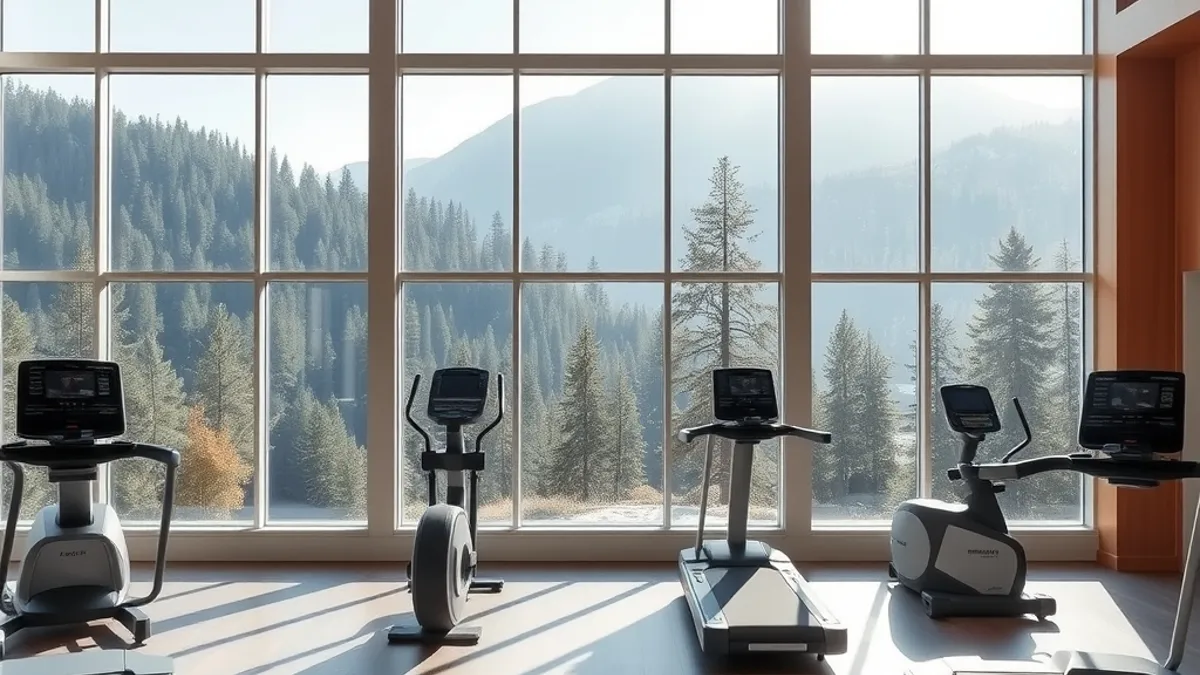
The typical resort gym sticks to a familiar pattern: a few treadmills, an exercise bike or two, a cross trainer and a modest free-weight setup with dumbbells and maybe a bench. In other words, think compact hotel fitness room rather than a full commercial facility. That is usually fine if your goal is keeping a routine going on vacation, but it helps to go in with realistic expectations before you arrive.
Red flags to watch for in listings
Some warning signs show up right on the resort’s own website or booking page:
- No photos of the gym at all. If a resort shows off its pool, rooms and restaurant but never the fitness room, the room is often small, dated or poorly equipped.
- The phrase “fitness corner.” This wording usually signals a couple of machines squeezed into a spare room rather than a dedicated gym space.
- Opening hours limited to staffed times. If the gym is only open when an attendant is present, and that attendant works limited hours, your early-morning or evening workout may not be possible.
Maintenance and cleanliness tell you as much as the equipment list. A treadmill with a worn belt, dumbbells scattered around the floor or no cleaning wipes nearby suggest the room rarely gets attention. Recent guest reviews that specifically mention the fitness room are one of the most reliable ways to gauge this before booking.
Larger resorts often go beyond the indoor gym with outdoor options such as tennis courts, bike rental or marked running trails. These can matter more than the gym itself if you like training outside, so check what is available on-site and whether any of it, like bikes or court time, carries a separate fee.
Fitness and Wellness Classes at Resorts
Most resorts that offer group classes follow a similar rhythm: yoga, stretching or aqua aerobics in the morning between 7:00 and 10:00, then a second round in the evening between 17:00 and 19:00. That structure makes sense for guests, since you can stretch before breakfast or unwind after a day by the pool.
Costs vary more than schedules do. At some resorts, classes are included in your stay; at others, each session costs around €10-20. This is one of the easiest things to confirm when you book, and it prevents an awkward surprise at the fitness room door. Ask specifically whether the classes you want are free for guests or charged separately.
Timing matters too. Class availability drops sharply outside July and August, when many resorts cut their animation budgets and reduce or pause the weekly program entirely. A resort that runs daily yoga in August may offer nothing at all in October. Before you arrive, ask for the current weekly program rather than relying on the brochure, which often shows the peak-season schedule year-round.
- Aqua aerobics usually takes place in the indoor pool, so check whether a class occupies the pool at times you planned to swim laps yourself.
- Morning yoga sessions are often held outdoors on a terrace or lawn in warm months, and move indoors when the weather turns.
- Some resorts require sign-up at reception the day before, so a drop-in approach can leave you without a mat in busy weeks.
- Instructors at smaller resorts are often seasonal staff, so the quality and style of, say, a yoga class can change noticeably from one month to the next.
How to Compare Wellness Facilities Before You Book
Wellness facilities are the part of a resort that photographs best and disappoints most often. A wide-angle shot of a glowing pool tells you nothing about water temperature, crowding or whether the sauna actually works. A few targeted checks before you book will tell you far more than the gallery shots on the resort’s own website, and they take less time than most people expect.
- Read recent guest reviews that specifically mention the spa and gym. Filter or search reviews for words like “sauna”, “massage” or “gym” rather than reading general impressions, and focus on reviews from the last year, since facilities get renovated, downgraded or closed for seasons at a time. Pay attention to comments about cleanliness and crowding, not just the presence of equipment.
- Check the opening season of the wellness area. Many resorts shut their saunas and pools for maintenance in November or in late April and May, so a “spa resort” booked in shoulder season may have half its facilities behind a temporary wall. If the resort’s website is vague, email or call and ask which parts of the wellness area will be open during your exact dates.
- If you travel with children, check the children’s pool hours. Access is often restricted to mornings or to before 18:00, which matters if you pictured an evening swim with the kids after dinner. Also ask whether the main pool is adults-only at certain times, as this changes where your family can actually swim.
- Ask directly what is included in the room rate. Pools and saunas are included at most European resorts, but some charge a daily supplement, and treatment prices are always separate. Get the answer in writing, since front desk staff and booking confirmations do not always match.
Ten minutes of this homework is usually enough to separate resorts with a genuine, well-run wellness area from those with a single hot tub and a good marketing team. It also gives you the right questions to ask reception before you arrive, when changes or upgrades are still possible. And if the answers come back slow, vague or contradictory, treat that as useful information too: a resort that cannot describe its own spa clearly is unlikely to run it well.
Matching Wellness Facilities to Your Trip Type
The “best” wellness facilities depend entirely on why you are traveling. A family resort with a huge pool complex and a couples’ retreat with a small, quiet treatment suite are both excellent, but they suit completely different trips. A family of four will get far more value from a children’s pool and water slide than from a candle-lit treatment room, while honeymooners often want the exact opposite. Before you compare resorts, write down the one or two things that matter most to you, and use them as your filter. Match the facilities to your travel style and the whole stay improves, because you stop paying for amenities you will never use.
- Couples should look at the treatment menu before anything else: a resort with a serious spa will list massage and ritual options by name, and often reserves quiet zones or certain sauna areas for adults only.
- Active travelers should weigh the gym and class schedule over sauna variety, checking that the fitness room has enough cardio machines to avoid morning queues and that classes actually run during their stay.
- For quiet escapes, outdoor saunas and nature settings beat large indoor complexes: a sauna with a view of the forest or lake delivers far more of the relaxation you came for than another tiled indoor pool.
- Rainy-day travelers should favor resorts with a genuine indoor circuit, meaning pool, saunas, steam room and a real relaxation zone under one roof, so a wet afternoon does not derail the plan.
If you are honest about the purpose of your trip, one or two of these priorities will clearly lead. Book the resort that nails those, and treat everything else in the wellness area as a bonus rather than a requirement. It also helps to imagine a typical day at the resort before you commit: where you will spend the morning, what you will do after dinner, and whether the facilities you care about will actually be open during your dates. A resort that looks perfect on paper can still disappoint if its strongest feature is the one you never use, so keep your own priorities at the center of the decision rather than the longest feature list.
Wrapping Up Your Wellness Resort Check
Every resort website promises wellness, but those two words can cover anything from one tired sauna and a treadmill in a storage room to a proper spa complex with pools, treatments and a full weekly class schedule. The gap between the brochure and reality is often wide, so a few minutes of checking before you book is time well spent.
Before you confirm a reservation, ask three simple questions: what is actually included in the room rate, what do treatments and classes cost on top of that, and does the schedule match the way you travel? Add seasonal closures to that list and you will sidestep most disappointments. A resort can look perfect online, yet have its wellness area shut for maintenance exactly when you plan to visit.
If this guide helped you sort the genuine wellness resorts from the marketing, feel free to leave a comment or share it with a fellow traveler who is planning a trip of their own.