It happens to almost every lodge traveler at some point: you book based on interior photos, arrive, and then realize the deck, terrace or hot tub area was the real highlight you never thought to check. Lodge decking is often the space where you’ll spend the most time, yet it’s the part of the listing travelers scrutinize least. A beautiful bedroom matters less when the outdoor space is cramped, overlooked or facing the wrong way.
This guide helps you avoid that mistake. We’ll look at why outdoor space is more than an extra, how to read deck photos and floor plans properly, and what changes with the season, from winter hot tubs to covered decking that extends the usable season into October and April. We’ll also cover privacy and layout, how decking affects prices and booking timing, and how to match outdoor space to your trip type. By the end, you’ll have a simple checklist for judging lodge decking before you book.
Why Lodge Decking Is More Than an Extra
On a lodge stay, the deck often becomes the main living space. Breakfast happens at the outdoor table, afternoons drift by with a book in a lounger, and evenings end with drinks while the light fades. Indoors, you mostly sleep and cook; the deck is where the stay actually happens.
The view is the point
In scenic destinations, this is especially true. At fjords and lakesides, the view from the deck is frequently the reason to choose a lodge over a hotel room in the first place. A hotel gives you a window; a well-positioned lodge deck gives you the whole panorama, unfiltered, from sunrise to sunset.
Extra square meters you don’t pay indoor prices for
Outdoor space also effectively enlarges a small lodge. A good deck adds roughly 15-25 square meters of usable area in decent weather, which can nearly double the living space of a compact one- or two-bedroom unit. That’s room for a dining table, a couple of loungers and, in many lodges, a hot tub. When you compare lodges by interior size alone, you’re comparing only half the picture. Treat the deck as a genuine room of the house, and your whole booking decision changes.
What to Look For in Deck Photos and Floor Plans
Deck photos are usually the most flattering images in a listing, which makes them easy to misread. Before booking, study them with intent, and cross-check everything against the floor plan. Two questions matter most: how is the deck oriented, and how big is it really?
Orientation determines your evening. South- or west-facing decks catch evening light until 21:00-22:00 in northern summer destinations, which is exactly when you’ll want to sit outside with dinner or a drink. A north-facing deck at the same lodge can feel like a different property entirely. Coverage matters just as much: a roofed or covered section keeps the space usable in rain and extends the season into April and October, which is a significant advantage in temperate regions where showers are frequent.
Size is the third pillar. A usable deck of 15-25 square meters comfortably fits a table, two loungers and a hot tub. Smaller decks force choices: you can seat guests or you can have loungers, rarely both. Confirm the dimensions in the floor plan rather than guessing from photos, which are often taken with wide-angle lenses that make modest terraces look generous.
- Check what the deck actually overlooks. Photos taken from deck level can hide a parking lot or access road just out of frame; look for shots taken from the lodge toward the deck to see what sits behind it.
- Look for the hot tub’s position. A tub tucked under a covered section stays usable in drizzle and between swims in cooler months, while one stranded in open decking gets far less use.
- Count the furniture in the photos. If a supposedly large deck is styled with just two chairs, that sometimes signals the space is tighter than the floor plan suggests.
- Confirm it’s private, not shared. Some listings show a communal terrace belonging to the property rather than a deck attached to your unit; read the description carefully and check whether the floor plan marks the deck as part of your lodge.
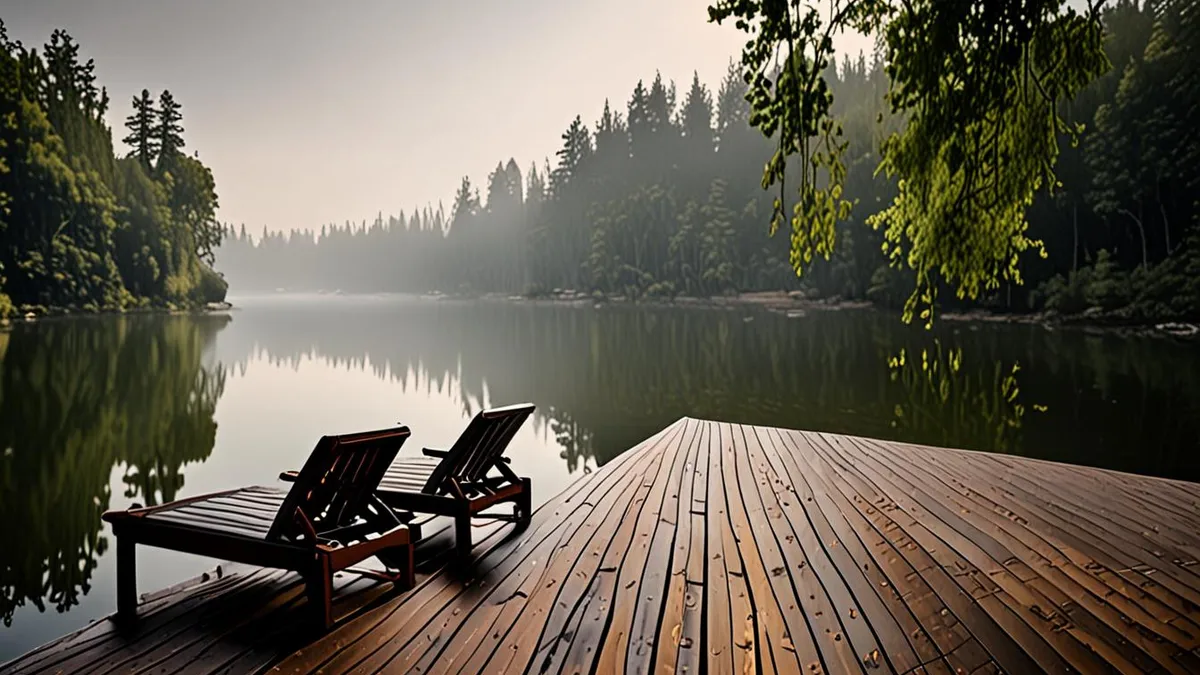
How Outdoor Space Changes by Season
The value of lodge decking shifts dramatically with the time of year, and the shift should change what you prioritize when booking. The deck that dazzles in July can be a damp, unused slab in January, while features you’d ignore in summer become the whole point of a winter stay.
Summer: the deck at full power
June to August is peak deck season in most of Europe. Outdoor furniture, grills and hot tubs are all fully usable, and long northern evenings mean you can eat every meal outside. This is when deck orientation, size and view matter most, and it’s when the best decks command a premium. If a lakeside summer is what you’re after, it helps to read up on lakeside lodges in Finland for a summer holiday, where the deck-to-water relationship is often the defining feature of the stay.
Winter and the shoulder months
From December to March, the value moves indoors-outdoors. A big open deck sees little use in deep winter; what matters instead is a heated hot tub, a sauna with direct deck access for the hot-to-cold ritual, and a sheltered terrace where you can sit wrapped in a blanket and watch snow fall over the landscape. Prioritize those features over raw deck size.
The shoulder months of May and September deserve special mention. Weather is often mild enough for genuine deck use, yet rates sit noticeably below peak summer prices. If your dates are flexible, these months can deliver most of the summer deck experience at a friendlier cost, and popular view-facing lodges are easier to book at short notice.
Privacy, Noise and Layout on the Deck
Not all decks are created equal when it comes to privacy. Two lodges can sit side by side on the same lake and feel completely different from their terraces. The key question to ask before booking is simple: does the deck face other lodges, or does it face the landscape?
Layout matters as much as orientation. Lodges arranged in angled or staggered positions tend to give each unit its own pocket of space, while lodges built in straight rows facing a shared view often mean you are enjoying the sunset with a dozen neighbors. Look at the site map or aerial photos on the listing to spot the difference.
Height is another factor worth weighing. Ground-level decks are easier for families with small children, since there are no stairs to worry about and kids can move between the deck and the grass freely. Raised decks deliver better views and a greater sense of separation, but they usually come with railings and stairs, which changes how usable the space feels.
Finally, check what surrounds the deck rather than what the deck itself looks like. A quiet terrace can be spoiled by a road or walkway running behind it, or by a parking area a few meters away. Ask the operator directly about the distance to parking and to neighboring units, and zoom in on any photos taken from the deck to see what lies beyond it.
- Ask for photos taken from the deck, not of the deck: shots looking outward reveal sightlines to neighboring lodges, roads and walkways that polished deck photos deliberately crop out.
- Check whether the deck is fenced or open-edged: an enclosed edge changes the experience for families with toddlers, while an open edge with a drop matters if you are traveling with a dog.
- Look for natural screening: trees, shrubs or a change in ground level between units often provide more privacy than any layout plan, so scan listing photos for greenery between lodges.
- Consider the direction of neighboring decks: if the lodge next door faces the same view from a few meters away, even a well-angled layout can feel exposed when both terraces are occupied.
How Decking Affects Lodge Prices and Booking Timing
Outdoor space is not free. Lodges with premium decks or view-facing terraces typically charge 10-20% more per night than comparable units without a deck or terrace. That premium is often justified, since on a lodge stay the deck effectively becomes an extra room, but it does mean the listing photos deserve close scrutiny before you commit to the higher rate.
The size of the premium usually tracks the quality of the view and the privacy of the space. A fjord-facing terrace with a hot tub sits at the top of the range, while a small side deck shared with the next unit may barely affect the price at all. Compare units within the same lodge to see exactly what the difference buys you.
Booking timing for summer stays
For summer dates, book lodges with the best decks 3-6 months ahead. View-facing units sell out first, often well before the rest of the lodge, so waiting until a few weeks before your trip usually means choosing between leftover units or paying last-minute rates for a lesser deck. If a specific terrace is the reason you picked the lodge, treat it like a flight booking and reserve early.
What matters in winter
In winter, the calculation flips. Uncovered deck space sees little use during the cold months, so raw deck size becomes nearly irrelevant. Instead, prioritize heated hot tubs and covered decking, since those are the features that actually get used from December to March. A smaller roofed terrace with a steaming hot tub will deliver far more value than a large open deck buried in snow, and it often costs less too.
Matching Outdoor Space to Your Trip Type
The right deck for a honeymoon couple is rarely the right deck for a family of five, so start your search by thinking about how you will actually use the space. A couple staying three nights will spend most of their deck time in the evening, while a family will use it throughout the day, and an adventure traveler may only pass through it in the morning. Matching the outdoor space to your trip type prevents you from paying a premium for features you will never touch.
Couples should prioritize private hot tubs and sunset-facing decks over sheer size. A compact 15 square meter terrace angled toward the water with no neighbors in sight beats a sprawling shared deck every time. Ask specifically whether the hot tub is private to your unit or shared with the rest of the lodge, because listings are not always clear about this.
Families benefit from ground-level decking with enough room for a proper table, so mealtimes can move outdoors, plus safe, enclosed edges that let small children roam without constant supervision. Adventure travelers use decks mainly for gear drying and morning planning, which makes covered storage space far more valuable than loungers or a view deck.
- Couples: check the hot tub water type and heating method: wood-fired tubs take time to heat and need tending, while electric tubs are ready on demand, which changes how spontaneous an evening soak can be.
- Families: confirm whether the deck connects directly to your living area: a deck accessed through a separate door or down steps is much harder to use with napping toddlers or half-asleep kids.
- Adventure travelers: ask about a covered gear area or drying room: some lodges offer a dedicated boot and jacket dryer near the deck, which matters far more than furniture after a wet day on the trail.
- Groups: look for a deck with a grill and a large table: shared cooking space turns the terrace into the social center of the trip, something a pair of loungers cannot do.
Wrapping Up Your Lodge Decking Checklist
If you take one thing from this, let it be this: lodge decking is a core part of the stay, not a bonus. Many travelers book on interior photos alone and only realize later that the deck, terrace or hot tub area was the real highlight they overlooked. A well-chosen outdoor space often justifies a higher nightly rate, because it is where breakfast, reading and evening drinks actually happen.
Before booking, check orientation, coverage, size and privacy in the photos and floor plans, and match the outdoor space to your season and trip type. For summer dates, view-facing decks sell out first, so booking 3-6 months ahead makes a real difference. If this helped you plan your next lodge stay, leave a comment or share the article with a fellow traveler.