Booking a hotel with kids often comes down to one confusing choice: connecting rooms vs family rooms. The differences in space, price and privacy are rarely explained clearly on booking sites, and many families only discover what they actually got when they arrive at check-in. A family room typically sleeps 4-6 guests in one open space, while connecting rooms are two separate rooms joined by an internal door — a small detail that changes everything about how your stay feels.
This guide breaks down both options so you can pick with confidence. We’ll cover the core difference between the two room types, when a family room works best for kids, and when connecting rooms are worth the extra cost. You’ll also learn how to book connecting rooms and avoid surprises, how to check family room layouts before you pay, and how to match the room type to your trip style — whether you’re traveling with a toddler or a privacy-hungry teenager.
Connecting Rooms vs Family Rooms: The Core Difference
At first glance, both options promise space for the whole family, but the layout underneath is completely different. Understanding that difference early makes every later decision — price, bedtime logistics, bathroom queues — much easier to weigh.
What a family room actually is
A family room is a single open space with multiple beds. The most common setup is a double bed for the parents plus bunks or a sofa bed for the children, though some rooms add a second double instead. Everyone shares one bathroom, and there is no door between sleeping areas — you can hear (and smell) whatever your kids are up to from across the room.
Most family rooms are designed to sleep 4-6 guests in total, which covers a typical family of four plus a grandparent or a third child. That said, the exact bed count varies a lot between hotels, so the number of people a room officially accepts is not the same as the number of comfortable beds it contains.
What connecting rooms look like
Connecting rooms are two separate bedrooms, each with its own bathroom, joined by an internal locking door. Parents get one room, kids get the other, and everyone keeps their own sink, toilet and storage space. The connecting door can usually be locked from both sides, which matters if you have teenagers who value a bit of independence.
The practical effect is that connecting rooms effectively double standard occupancy: instead of squeezing five or six people into one room, you book two standard rooms and gain roughly twice the space, twice the beds and twice the bathrooms. In many hotels these rooms are regular doubles with a door between them, so the quality of each room is usually what you would expect from a standard booking — not a specially built family space.
When a Family Room Works Best for Kids
If your kids are under 10, a family room is usually the easier choice. Young children in this age group typically need close supervision at night, and having them a few steps away in the same open space makes that simple. You can hear a restless sleeper, check on a fever without leaving your bed, and settle a nightmare in seconds.
One open room also means one bathroom to manage. There is no corridor walking in an unfamiliar building at 7 a.m., no knocking on an internal door to wake a child, and no worrying about a little one wandering into the hall. For parents of toddlers and early school-age kids, that simplicity counts for a lot.
Budget is another strong reason to lean toward a family room. In European city hotels, family rooms often start around EUR 100-180 per night, which is typically cheaper than paying for two separate rooms. When you add up a multi-night stay, the savings can cover a family meal or two.
That said, not every family room suits every family. Before booking, look for these practical details:
- Bed spacing: check that the beds are not crammed so tightly that a child climbing down at night bumps into furniture or wakes a sibling.
- Blackout curtains: in summer, European cities stay light late, and one open room means everyone shares the same light and noise level.
- Luggage space: four people plus suitcases in one room gets tight fast, so look for under-bed storage or a wardrobe big enough for the whole family.
- A small seating spot: a chair or corner lets one parent read or work after the kids fall asleep without turning on the main lights.
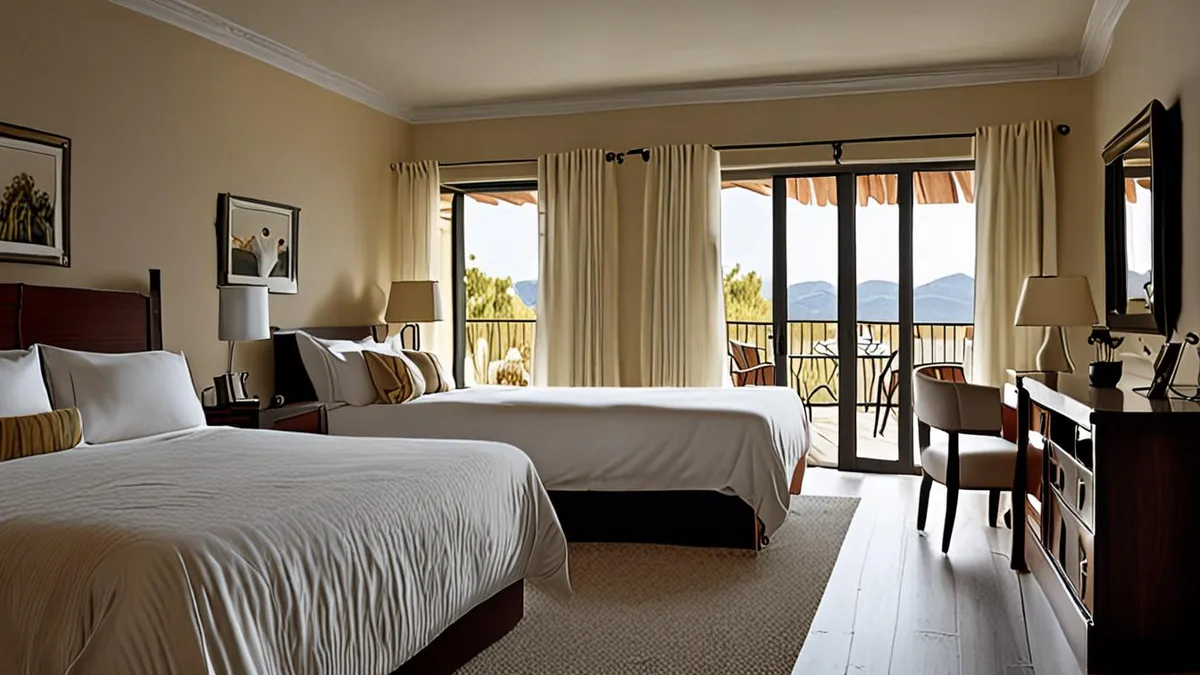
When Connecting Rooms Are Worth the Extra Cost
Connecting rooms earn their higher price tag in a few specific situations. If you are traveling with teenagers, the extra cost is often money well spent. Teens genuinely value having their own space, and a separate room with a lockable internal door lets them stay up later, watch their own shows, or simply enjoy some privacy without anyone hovering. Parents get the same benefit in reverse: you can go to bed at your usual time without tiptoeing around a sleeping ten-year-old.
Larger families feel the difference even more. Once your group grows past four people, a single family room gets crowded fast. Connecting rooms effectively double your sleeping capacity and give everyone a real bed instead of squeezing an extra person onto a sofa bed. For families of five or six, that space can be the difference between a restful trip and a week of elbows.
The two-bathroom advantage
One of the most underrated perks is having two bathrooms. On sightseeing days, mornings are usually the bottleneck: everyone needs the shower, the toilet, and mirror time before breakfast. With connecting rooms, two people can get ready at once, and you can be out the door in half the time. Anyone who has queued behind a slow-moving tween in a single-bathroom family room will understand immediately.
The trade-off is price. Expect to pay roughly 1.5-2x the cost of one family room for the pair. If your kids are young, that premium rarely pays off; but with teens or a bigger family, the privacy, extra beds, and faster mornings often justify it.
How to Book Connecting Rooms and Avoid Surprises
Connecting rooms are some of the most requested setups in family travel, and hotels often have only a handful of them per floor. That scarcity means you cannot treat the booking like a standard room reservation and hope for the best. A little extra effort before and after you book makes the difference between two rooms that share a door and two rooms that share nothing but a corridor.
- Write the request into your booking notes. When reserving online, add a clear note asking for connecting or interconnecting rooms. Keep in mind that many hotels cannot guarantee them at the time of booking, so treat the note as a request rather than a confirmation. Some hotels only offer interconnecting rooms on request and will simply not have them available once you arrive.
- Book well ahead for summer travel. Connecting configurations are limited in number, and families snap them up first. For summer trips, aim to book 3-6 months in advance to give yourself a realistic chance. Last-minute bookings during peak season almost always leave you choosing between rooms on separate floors or paying for suites instead.
- Call the hotel directly after booking. A short phone call lets you confirm that your two rooms actually share an internal door, and you can also check the bed configuration in each room so nobody ends up on a sofa bed. Ask for the room numbers if the staff can share them, and repeat your request a day or two before arrival.
Doing these three things takes maybe twenty minutes in total, and it removes the most common source of check-in disappointment for traveling families. If the hotel cannot confirm the internal door, ask what alternatives they can offer before you arrive. Some properties will suggest adjacent rooms, family rooms or suites at a different rate, and knowing your options in advance makes it much easier to decide whether to keep the reservation, adjust it or look elsewhere.
Checking Family Room Layouts Before You Pay
Family room labels can be misleading. Two hotels can sell a room under the same name while offering very different amounts of sleeping space, so it pays to check the details before your card is charged. A few minutes of research now prevents a cramped night later, and it also protects you from surprise charges that only appear at check-in.
- Verify the bed types, not just the bed count. Some family rooms are a double plus a narrow sofa bed, which works for one small child but not for two older kids who need real beds. Ask specifically whether the extra sleeping surfaces are proper beds, bunks, or a fold-out.
- Check what the rate actually includes. Some quoted prices cover all family members, while others charge extra per child, sometimes including breakfast fees that only appear at check-in. Ask whether the total changes if you add a third or fourth child.
- Study floor plans or photos for real capacity. Family rooms typically sleep 4-6 guests in one open space, but layouts vary widely. Guest photos often show how much floor space remains once beds are set up, which matters if you have a stroller or bulky luggage.
If photos and floor plans leave any doubt, email the hotel with your exact family size and the ages of your children. A property that answers clearly and specifically is usually one that takes family bookings seriously. Vague or templated replies, on the other hand, are a signal to keep looking. Save the response in writing, since it gives you something to refer to if the room does not match what was promised when you arrive.
Matching the Room Type to Your Trip Style
The right room type depends less on the hotel and more on what your trip actually looks like. A family of four doing three nights of city sightseeing has very different needs from the same family spending a week in the mountains, so it makes sense to match the room to the itinerary rather than defaulting to whatever you booked last time.
City trips with young kids
For city sightseeing with children under 10, one family room is usually the practical choice. Everyone is close by at night, you manage a single bathroom, and nobody wanders corridors in an unfamiliar building. It also helps to pick a room close to the lifts and the breakfast area, since tired little legs make those short distances matter more than you would expect. Family rooms in European city hotels often start around EUR 100-180 per night, which typically undercuts booking two separate rooms.
Longer stays and mountain trips
When the stay stretches to a week or more, or when you are heading into ski and mountain terrain with teenagers, connecting rooms earn their keep. Teens get privacy, everyone gets a proper bed, and two bathrooms mean faster mornings before you hit the slopes or trails. For winter trips, it is worth reading a guide to ski hotels in Andorra for winter sports trips to see how room setups work at mountain properties. Keep in mind that connecting rooms usually cost 1.5-2x the price of one family room, so weigh that against how much time you will actually spend in the room.
Resorts often offer both options under one roof, which makes comparison easy. Calculate the per-night total for your exact family size in each configuration, including any per-child charges, and let that number guide your decision rather than the room label alone.
Wrapping Up Your Room Choice
So which should you pick? Family rooms suit younger kids under 10 and tighter budgets, often starting around EUR 100-180 per night in European city hotels. Connecting rooms suit teens who want privacy and larger families who need two bathrooms and real beds for everyone, usually at 1.5-2x the price of a single family room.
Whatever you choose, confirm the layout, the sleeping capacity and the internal door directly with the hotel before paying, especially since some hotels cannot guarantee connecting rooms at booking. And book early for peak season, because both room types tend to sell out first with families. If this helped you decide, leave a comment or share the article with another traveling family.