You scroll through a hotel listing, spot a sparkling blue pool framed by palm trees, and hit book. Weeks later you arrive, towel in hand, and find a narrow plunge pool wedged between walls, ringed with loungers already claimed by 10:00, or worse, drained for maintenance. That tempting photo told you almost nothing you actually needed to know.
This happens constantly, and it is avoidable. Hotels with pools are not all equal, and the difference between a trip highlight and a damp letdown usually comes down to details the listing photo hides: the pool’s real size, whether it is indoors or outdoors, when it opens, who can use it and how crowded it gets. In this guide we walk through why pool photos mislead, how to choose between indoor and outdoor pools for your travel month, what size and depth mean for actual swimming, the hours and access rules worth checking, the steps to take before you pay, and how pool offers differ by destination, so you can book with confidence.
Why Pool Photos Can Mislead You
That glowing pool photo on the listing page deserves your suspicion, not your trust. The most common trick is not a trick at all, just physics: wide-angle lenses stretch space dramatically. A 10 m plunge pool can fill the frame and look every bit as long as a 25 m lap pool, especially when shot from a corner at deck level. Without a person or a lounger for scale, you have no way to judge the true dimensions from the image alone.
Old photos and borrowed pools
Age is the second problem. Listing photos are often 3-5 years old, which means the pool in the picture may have since been renovated, resurfaced, reduced in size or removed entirely. Some booking sites also display images from a sister property down the road, so the gorgeous infinity pool you fell for may belong to a hotel you are not actually staying in.
The fix is simple and takes ten minutes. Cross-check recent guest reviews for mentions of the pool, and look specifically at traveler photos uploaded in the last few months rather than the polished gallery. Recent guest snapshots show the pool as it looks today, with real people in frame for scale, real crowds and real wear. If several recent reviews complain that the pool is small, cold or closed, believe them over the listing photo every time.
Indoor vs Outdoor Pools: Which Suits Your Trip
The single biggest mistake travelers make with hotel pools is booking for the wrong season. An outdoor pool photographed in July looks idyllic, but if you are traveling in November, that same pool will likely be closed, covered or bitterly cold. In most of Europe, outdoor pools typically open roughly May to September. Outside that window, expect cold water at best and a drained, padlocked pool at worst. Always match the pool type to your travel month, not to the listing photo.
When indoor pools make more sense
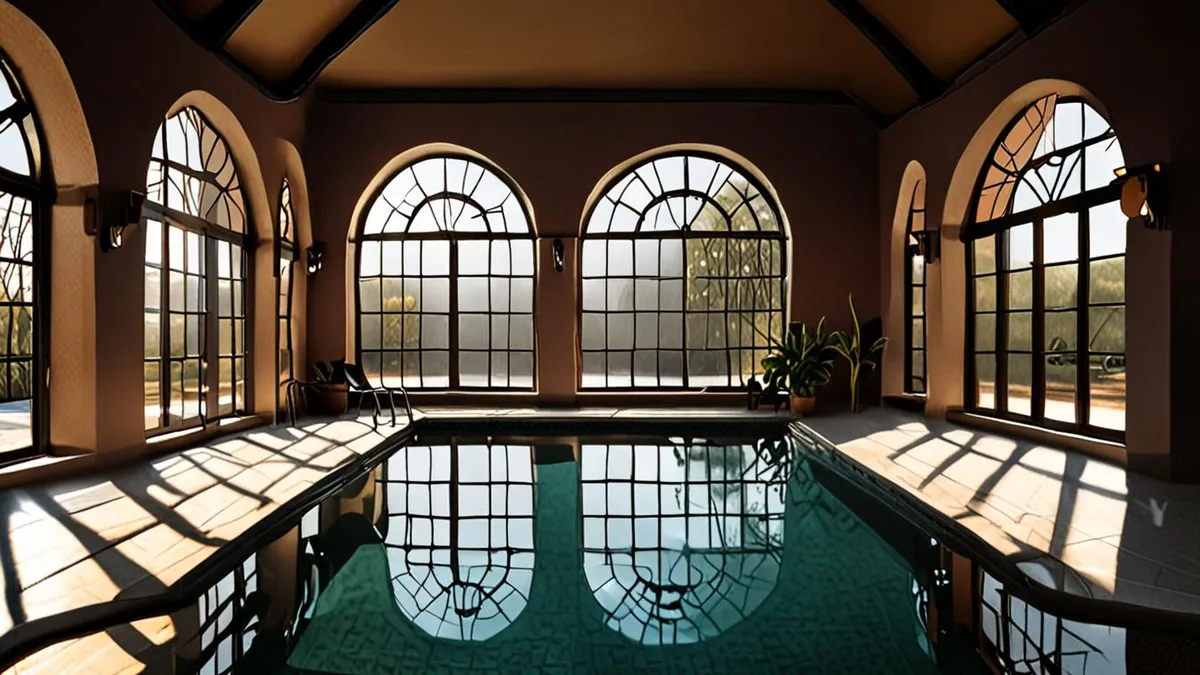
Indoor pools run year-round, typically open around 07:00-21:00, which makes them the reliable choice for winter city breaks and spa-focused stays. You can swim before breakfast regardless of the weather, and a warm indoor pool paired with a sauna turns a cold-weather trip into something genuinely restorative. Mountain and ski destinations lean heavily on this model: indoor or heated pools are the norm there, almost always paired with saunas and wellness areas, because an outdoor pool at altitude is useless for most of the year. If you are comparing winter options in the Alps, our guide to ski hotels in Andorra for winter sports trips shows how the wellness facilities stack up. The practical rule: summer beach and lakeside trips suit outdoor pools, while city breaks between October and April should prioritize hotels with a proper indoor pool.
Size, Depth and Swimming Space
Pool size determines what the pool is actually for, and most listings never state it. A typical hotel lap pool runs 15-25 m long, enough for proper swimming. Anything under 10 m is a plunge pool: fine for cooling off between sunbathing sessions, useless for swimming laps because you will hit the wall after three or four strokes. Depth matters just as much. Many city hotels cap pool depth at 1.2-1.5 m, which is comfortable for lounging and standing but unsuitable for diving. If the listing does not give dimensions, email the hotel and ask for the exact length and depth before you book. A vague answer like “our pool is standard size” tells you nothing, so push for numbers in meters. It also helps to ask how many loungers surround the pool, because a compact pool crammed between walls can feel far smaller in person than in photos. Finally, check whether the depth is uniform or graded, since a pool with a genuine deep end offers more variety than a flat-bottomed basin where every guest stands at the same height.
- Kids’ pools and shallow zones: families with small children should prioritize hotels with a separate kids’ pool or a clearly marked shallow section, rather than a single pool where the shallow end is still chest-deep for a six-year-old.
- Lane setup: if you plan to train or swim seriously, ask whether the pool has marked lanes and set lap hours, since some hotels reserve mornings for lane swimming and afternoons for families.
- Shape as well as length: a short, wide pool can hold more swimmers than a long narrow one, so a 15 m pool with generous width may suit a family better than a 20 m lap pool two lanes wide.
Crowds, Hours and Access Rules
Pool decks follow a rhythm, and most travelers arrive right at the busiest moment. In peak season, the sun loungers tend to fill up between 10:00 and 16:00, which is exactly when families settle in for the day and towels claim the best spots. If you want the water to yourself, go early: right after opening, or in the evening when day guests have headed off to dinner. Early morning light is also better for photos, and the water is usually calmest.
Access rules are the part most people forget to check, and they matter more than you might think. Some hotels keep the pool child-free during certain hours, others limit it to older guests all day. Spa and wellness pools can be the strictest of all, especially in high season. Before you pay, run through these questions:
- Age policies: some properties restrict the pool to guests aged 16+ or 12+ during set quiet hours, so a family afternoon swim may not be possible at the time you planned.
- Time slots: wellness and spa pools sometimes require booked sessions in high season, meaning you cannot simply wander in whenever you like.
- Outside visitors: confirm whether the pool is shared with spa-day guests who are not staying at the hotel, since a public spa crowd can fill the deck faster than the guest list alone.
- Towel and lounger rules: a few resorts charge a small fee for pool towels or remove unattended belongings after a short time, which affects how early you need to claim a spot.
A quick email covering these points takes five minutes and saves a lot of disappointment. It also gives the hotel a chance to suggest quieter times or book you into a spa slot before it sells out.
Checking Pool Details Before You Pay
Once you have shortlisted a hotel, spend ten minutes verifying the pool before you enter payment details. It is the single most effective way to avoid arriving at a drained, closed or very different pool from the one in the listing. Listing photos are often 3-5 years old, and booking sites rarely flag seasonal closures or ongoing renovation work. Here is the sequence I follow for every pool-focused booking:
- Email the hotel directly. Ask specifically whether the pool is open during your exact dates, since seasonal maintenance and renovations are rarely flagged on booking sites. Ask them to confirm in writing, so you have something to reference if there is a dispute at check-in. A short, specific email works best: mention your dates, ask whether the pool will be fully open, and request current photos if the listing looks dated.
- Filter reviews by recency, not score. Read reviews from the last 6 months that mention the pool, rather than trusting the overall rating. A hotel can score well overall while its pool has been closed for renovation since spring. Sort reviews by date first, then skim for words like “closed”, “cold” or “small”.
- Check the pool’s location and type. Use the satellite view on a map service or browse the hotel’s own website to see whether the pool is rooftop, tucked into a courtyard or indoors. This tells you about sun exposure, noise and whether it suits your travel month. A rooftop pool in a windy city center, for example, can feel very different from the sheltered courtyard pool in the photo.
- Look at recent guest photos. Booking platforms let travelers upload their own pictures, and these usually show the current condition far better than the polished listing images. Guest photos also reveal details the hotel omits: surrounding construction, crowded loungers, or a pool that shares space with a busy bar.
None of these steps costs anything, and together they take less time than choosing the hotel did in the first place. If the hotel answers your email promptly and clearly, that is also a useful signal about how they handle guests once you arrive. Skip the checks, and you are essentially booking a pool you have never seen, based on a photo that may predate the last renovation. Ten minutes of verification is the cheapest insurance you can buy for a pool-focused trip.
Hotels with Pools Worth Comparing by Destination
The right pool depends heavily on where you are going. A rooftop plunge pool that feels luxurious in a city can be a poor substitute for a proper swim spot at a lake, and vice versa. Matching the pool style to the destination is half the battle.
Water, mountains and old towns
Lakeside and waterfront destinations often give you the best of both worlds: an outdoor pool for lounging, plus the lake or sea itself for actual swimming. In these spots, check whether the hotel offers direct water access, a private jetty or a beach area, because that can matter as much as the pool. Mountain destinations work differently. Ski resorts and alpine towns build their pool offer around indoor wellness areas, usually heated and paired with saunas, since outdoor swimming is rarely practical there. If a wellness pool after a day on the slopes is your priority, look at hotels that treat the spa as a centerpiece rather than an afterthought, such as the options covered in our guide to hotels in the High Tatras with mountain views.
Historic old-town hotels are a different case again. Their buildings rarely leave room for large decks, so expect small courtyard or rooftop pools instead. These can be charming, but check the dimensions before assuming you will swim laps. A compact pool in a quiet courtyard often beats a big one next to a noisy road, though.
Whichever destination you choose, weigh pool quality alongside location. A spectacular pool cannot fix a bad base for sightseeing, and the most beautiful setting cannot rescue a hotel with no usable pool in the month you travel. Compare both together, and you will book with far fewer surprises.
Booking with Confidence
That gap between the listing photo and reality is exactly what this guide helps you close. A tempting pool image can be years old, shot with a wide-angle lens, or even belong to a sister property, so never treat one picture as proof. Verify it with recent guest reviews and traveler photos, and send the hotel a quick email asking whether the pool will actually be usable for the dates you plan to stay.
Then match the pool to your trip: outdoor for summer stays, indoor for winter city breaks or ski destinations. Size, depth, hours and access rules decide whether it actually fits your plans, whether that means laps, lounging or splashing with kids. A few emails and review checks before paying make the difference between a highlight and a letdown. If this helped you dodge a disappointing booking, share the article or leave a comment below.