You’ve picked your dates, found a gorgeous region, and now you’re staring at three very different options: a round yurt, a glassy dome, and a canvas safari tent. They all promise a night under the stars, but they deliver wildly different levels of comfort, warmth and price. Booking the wrong one for your season or your group can turn a dreamy escape into a cold, cramped disappointment.
This guide to glamping in yurts, domes and safari tents breaks down exactly how each structure is built, what you’ll find inside, when in the year each type makes sense, and what a typical night costs. We’ll also match each option to the travelers it suits best — couples, families or small groups — and share realistic booking timelines so you actually get the dates you want. By the end, you’ll know precisely which stay type fits your trip.
What Exactly Is a Yurt, a Dome and a Safari Tent?
Before comparing comfort or prices, it helps to understand that these three structures are built in completely different ways — and those differences drive everything else, from warmth to bathroom access.
The yurt: a circular classic
A yurt is a circular canvas shelter stretched over a wooden lattice frame. It sits on a solid floor, has a central skylight at the top of its dome-shaped roof, and often includes a wood stove for heat. The design comes from Central Asian nomadic dwellings, which is why yurts feel cozy and insulated rather than tent-like. In most mountain regions, a wood-stove yurt is usable roughly from April to October.
The dome: modern and weatherproof
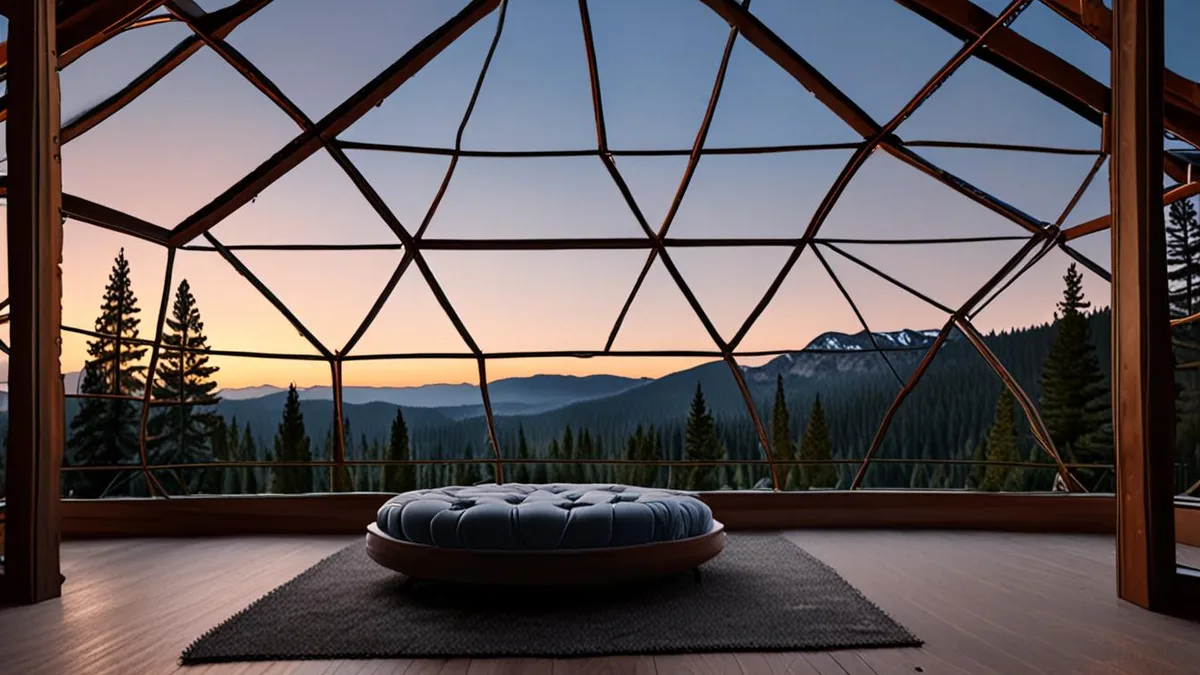
A geodesic dome is a half-spherical structure made of rigid panels, which are often transparent. Unlike the other two options, it usually has real flooring and built-in heating, making it far more weather-resistant. Because the panels can be clear, domes often give you views of the sky or landscape right from your bed.
The safari tent: space on a solid frame
A safari tent is a spacious canvas tent pitched on a fixed platform frame, inspired by the luxury camps of African safaris. It’s the largest of the three and behaves the most like a small cabin: these tents usually include a kitchenette and a deck. The canvas walls mean it breathes with the weather, which shapes when it’s practical to stay in one.
Comfort and Interior: What You Get Inside Each Stay
Step inside each of these structures and you’ll quickly see they cater to different expectations. A yurt leans rustic and traditional, a dome leans modern and design-forward, and a safari tent aims to feel like a hotel room made of canvas. Here’s what you can typically expect from each.
Yurts have felt-lined walls that keep the round interior snug and quiet, and most are heated by a central wood stove. Beds usually sit on floor-level platforms rather than standard frames, which adds to the cozy, grounded feel. Bathrooms are often in a shared or private bathhouse a short walk away, though some upscale yurt sites offer private facilities.
Domes are the most hotel-like of the three. You’ll typically find a proper hotel-style bed, panoramic windows framing the view, and — in premium models — an en-suite bathroom. Some dome operators go further and add extras designed for lingering.
Safari tents are built for space. A king bed, an en-suite bathroom and a kitchenette come standard in most models, and the whole living area flows onto a covered veranda. A few details worth checking when you compare listings:
- Dome hot tubs: many premium domes add a private hot tub on the deck or inside near the windows — a major plus in colder months, but confirm it’s private rather than shared.
- Safari tent kitchens: kitchenettes usually include a two-burner stove, a small fridge and basic cookware, enough for simple meals rather than full cooking.
- Yurt bathhouse access: if bathrooms are shared, ask how far the bathhouse is from your yurt and whether it’s heated — this matters a lot on shoulder-season nights.
Season and Weather: When Each Type Works Best
Season is where these three stay types truly separate. Because two of them are made primarily of canvas, weather dictates when you can realistically book — and booking the wrong type for the wrong month is the most common glamping mistake.
Canvas options: warm months only
Safari tents are canvas-only structures, so they’re best from May to September. Outside that window, the canvas becomes cold and damp, and most operators simply close the tents rather than tough it out. If your trip falls in early May or late September, pack warm layers and check how the site handles chilly nights, since canvas insulates far less than a solid wall.
Yurts: a longer shoulder season
Yurts hold up better thanks to their felt lining and wood stove, stretching the season to roughly April through October, even in mountain regions. That said, a wood stove takes some attention: you’ll be feeding it on cold nights, and early-spring stays can still be brisk in the morning before you get the fire going.
Domes: the year-round choice
Domes with insulated panels and built-in heating are the only type of the three commonly open year-round, including snowy winters. If a white, snow-quietened landscape is what you’re after, a dome is realistically your only glamping option — and many operators specifically market winter dome stays with clear panels for watching snowfall and stars from bed. Just remember that heated structures in winter tend to sit at the higher end of the pricing scale, and availability around holidays is tighter than you might expect.
Price Ranges: What Each Stay Type Costs Per Night
Glamping prices vary a lot depending on which structure you pick, and the differences come down to what is built into each stay. A safari tent with a king bed, en-suite bathroom and a covered deck costs more to set up and maintain than a simple canvas yurt, and that shows in the nightly rate. Location matters too: the same dome can cost noticeably more with an ocean or mountain view than in a quiet field an hour from the nearest trailhead.
As a general guide, expect these typical ranges per night:
- Safari tents: $150-$400. The higher end usually applies to resorts with housekeeping service, a full kitchenette and a large private deck, often near national parks or on the coast.
- Yurts: $100-$300. Budget models may share a bathhouse with other guests, while the upper end of the range gets you a private bathroom and a more remote, scenic setting.
- Domes: $180-$500. Transparent-window and clear-ceiling models sit at the top of the range, especially those with a private hot tub or panoramic valley views.
Keep in mind that these are typical figures, not fixed rates. Weekends, holidays and high season push prices toward the top of each range, while midweek stays in shoulder season often come in lower. Some sites also add cleaning fees or require a two-night minimum on weekends, so read the fine print before you compare prices. If a deal looks far below the usual range for the area, check reviews carefully and confirm what is actually included.
Who Each Type Suits: Couples, Families and Groups
The right glamping structure depends less on the view and more on who is sleeping in it. Space, layout and atmosphere differ sharply between the three types, so it pays to match the stay to your group before you book.
Families of 4-5 fit best in safari tents. These are the largest of the three, with enough floor space for separate sleeping areas, so parents get a king bed while kids have their own corner. The covered veranda gives children room to play outside even when the weather turns, and the en-suite bathroom makes bedtime routines far easier than a trek to a shared bathhouse in the dark.
Couples chasing romance should head straight for a dome. The clear ceiling panels let you lie in bed and watch the stars, which is something yurts and safari tents simply cannot offer with their opaque roofs. Add a panoramic window, a hotel-style bed and sometimes a private hot tub, and it is easy to see why domes dominate anniversary and proposal bookings.
Small groups of 2-4 who want a cozy, rustic social space tend to gravitate toward yurts. The circular layout puts everyone around the central wood stove, which becomes the natural gathering point for card games and late-night conversation.
- Families with toddlers: Safari tents on fixed platforms keep little ones off the ground and away from muddy entrances, a small detail that matters after rain.
- Couples celebrating something special: Ask specifically about dome models with transparent ceilings when booking, since not every site offers them and they tend to sell out first.
- Friend groups who cook together: Safari tents often include a kitchenette, while yurts usually do not, so plan meals around what your structure actually provides.
How to Book: Timing and Availability for Glamping in Yurts, Domes and Safari Tents
Glamping books out faster than most travelers expect, especially in scenic regions where the number of structures is small. A site with six yurts simply cannot absorb the demand that a hotel with sixty rooms can, so popular dates disappear early. The good news is that booking windows are fairly predictable once you know the pattern.
Summer and peak season
For any of the three types, reserve 3-6 months ahead for summer weekends. That gives you a realistic choice of structures and dates rather than whatever is left over. If you have your heart set on July or August in a popular region, think bigger: book 6-12 months in advance. These peak summer weeks in well-known destinations are the hardest dates to secure, and the best-positioned units, such as domes with the clearest views, go first.
Midweek stays are a genuine workaround. If your schedule allows a Monday-to-Wednesday trip, you can often book much closer to your travel date and still get a good unit, sometimes at a lower rate as well.
Winter dome stays
Winter is the easier season to book, simply because fewer people travel then. Domes are typically the only type open year-round, so snowy dates have less competition. Still, plan on 2-3 months of lead time around holidays such as New Year, when a starlit, heated dome becomes a sought-after treat rather than a quiet alternative.
One final tip: whatever type you choose, check the operator’s cancellation policy before paying. Weather-dependent trips and non-refundable rates are a poor combination, and flexible booking is often worth a few extra dollars per night.
Choosing Between Yurts, Domes and Safari Tents
Choosing comes down to three simple questions: how much space you need, when you want to travel, and what you want to spend. If you are a family of 4-5 traveling between May and September, a safari tent gives you the most room and hotel-like amenities, with king beds, en-suite bathrooms and large decks, typically for $150-$400 per night.
If rustic charm and the lowest price matter most, a yurt fits the bill: a cozy round space with a wood stove, usable roughly April to October in most mountain regions, at around $100-$300 per night. If you want year-round comfort and the best stargazing through clear ceiling panels, a geodesic dome is the pick, usually sleeping 2-4 for $180-$500 per night. Match the type to your season and budget, and the choice makes itself. Have a favorite? Tell us in the comments or share this article.