Nothing ruins a summer villa faster than stepping into the bedroom at 10 p.m., hitting the remote and realizing the “air conditioning” in the listing is a wheezing portable unit, a broken split system or, worse, an amenity billed by the kilowatt-hour. Many travelers discover this only after arriving, when hot nights become sleepless nights and the extra electricity charge shows up at checkout.
Villa air conditioning is one of those details worth checking before you pay, not after. In this guide, we’ll cover why cooling matters so much in summer, the types of systems you’ll actually find in villas, the questions to ask your host, how electricity allowances and fair-use policies work, how to match cooling to your destination and villa type, the red flags hiding in listings, and a final checklist to run through before you book.
Why Villa Air Conditioning Matters in Summer
July and August are the hottest stretch of the year across southern Europe, with temperatures regularly exceeding 30-35°C. A traditional stone villa, which feels delightful in spring, can turn into an oven: thick walls absorb heat all day and release it into the rooms at night, just when you want to sleep. If the villa has no evening breeze, the bedroom can stay well above 30°C until after midnight.
No front desk to help you
At a hotel, a failed AC unit is an inconvenience: you call reception, they move you to another room, problem solved. In a villa, there is no reception, no spare room and often no one on site until the next day. If the cooling fails on the first night of your week-long stay, you may spend several nights emailing an agent and waiting for a technician, with no immediate alternative.
This is why the hidden cost of a badly cooled villa isn’t the electricity bill — it’s your sleep. Poor sleep in hot bedrooms makes everyone groggy, short-tempered and sunburned-prone, and it erodes the very daytime activities you booked the trip for: a day trip, a wine tasting, a long beach afternoon. A villa that’s pleasant on paper can quietly undermine the whole vacation if the bedrooms aren’t genuinely cool at night.
Types of Cooling Systems in Villas
Villas come with a surprising variety of cooling setups, and knowing what each type can and can’t do will help you ask the right questions before you commit to a booking. The three categories you’ll encounter most often are split units, ducted or multi-split systems, and fans or portable units used as backup. Each behaves differently, especially overnight in bedrooms and in larger open-plan spaces, so it pays to understand the differences now rather than discover them on a sweltering first night.
- Split AC units are the quiet, effective workhorses found in most villas. They cool only the room where the indoor unit is mounted, so a villa may have a powerful unit in the living area and none in the bedrooms — or vice versa. Always ask which specific rooms have them.
- Ducted or multi-split systems cool the entire villa through one outdoor unit feeding several rooms. These are more common in newer builds and luxury properties. They usually run quieter and can keep a consistent temperature throughout the house, but they still depend on the owner paying the electricity bill or setting a fair-use allowance.
- Ceiling fans and portable units work fine as backup in mild conditions, but portable AC units are weaker than split systems and usually cool only small rooms by 5-8°C. In a large or high-ceilinged living room, a portable unit barely makes a dent.
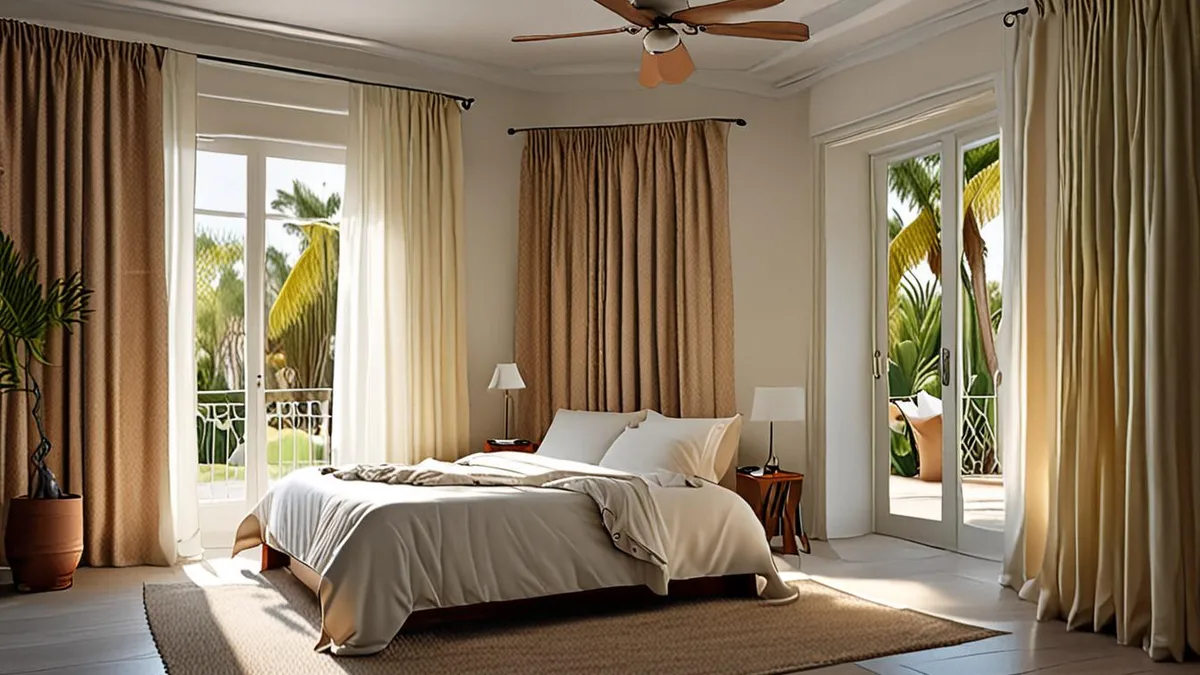
One practical tip: ceiling fans are excellent companions to AC rather than substitutes. A fan running at low speed lets you set the split unit a degree or two warmer while feeling just as comfortable, which also helps keep electricity usage within any fair-use allowance. But if a listing mentions only fans for the bedrooms in a hot region, treat that as a warning, not a feature. Before you book, ask the host to confirm the system type and the cooling capacity in each room, since bedrooms typically need 7,000-9,000 BTU and living areas 12,000-18,000 BTU to stay comfortable. Getting these details in writing makes it far easier to compare villas and avoid disappointment later.
What to Ask the Host Before Booking
The best time to sort out air conditioning is before you pay, not after you arrive. A short set of questions sent to the host or agent, ideally 2-3 months before a July or August stay, gives you time to compare answers and still switch villas if something sounds off. Treat it as part of your booking routine, alongside wifi and pool questions. Written answers also give you something to point back to if the reality on arrival doesn’t match what was promised, and most hosts reply within a day or two. If you’re still choosing a region, our guide to the best places to rent a villa in Portugal can help you decide where cooling matters most.
- Ask which rooms have AC. Don’t settle for “air conditioning available.” Confirm that every bedroom you’re booking has a unit, plus the living area if you plan to spend afternoons indoors. A villa with AC in only one bedroom can be a problem for a family of four.
- Ask for the system type and BTU capacity per room. Villa cooling capacity is measured in BTU, and matching output to room size matters: bedrooms typically need 7,000-9,000 BTU, while living areas need 12,000-18,000 BTU. A host who can answer this instantly is usually a host who maintains the equipment.
- Ask whether AC is included in the rental price. Some owners charge electricity separately after a fair-use allowance, often 100-200 kWh per week. Knowing the billing structure up front prevents an uncomfortable surprise at checkout.
Send these questions together in one message and keep the answers in writing. A host’s willingness to give specific, confident replies is itself a good sign; vague answers or long delays deserve the same caution as a vague listing description. If a host says a unit is “being installed” or “usually works fine,” ask for photos of the actual units in the bedrooms before you commit. It’s a reasonable request that takes the host two minutes, and the response tells you a lot about how the villa is managed. Once you have everything confirmed, you can book with far more confidence and look forward to cool, quiet nights instead of sweaty ones.
Electricity Costs and Fair-Use Policies
Electricity is the part of villa cooling most travelers forget until the final bill arrives. A split unit running eight hours a day in peak season can add roughly €3-7 per day to electricity use, and in a villa with three or four cooled bedrooms, those numbers add up fast over a two-week stay.
This is why fair-use policies matter. Many villa owners include a set amount of electricity in the rental price, often somewhere in the range of 100-200 kWh per week, then charge anything above that separately. If your group runs the AC all night in every bedroom, you can burn through an allowance quickly. The base rental price can also be misleading here, so it helps to understand what a villa rental in Croatia actually costs before you compare options.
Protect yourself with meter readings
The simplest safeguard costs nothing: ask the host to note the electricity meter reading together with you at check-in, and repeat the exercise at check-out. Photograph the meter with a timestamp. This turns a vague “extra usage” charge into a verifiable calculation and prevents surprise bills at departure. Also ask what rate per kWh the owner charges for usage above the allowance, so you can estimate the cost of your own habits before you arrive rather than arguing about them afterward.
Matching Cooling to Your Destination and Villa Type
Where your villa sits shapes how much cooling you actually need. Coastal villas benefit from sea breezes, and an evening cross-breeze through open shutters can make a terrace dinner genuinely pleasant. But do not let that fool you: July and August regularly exceed 30-35°C in southern Europe, and a still, humid night with no wind can make an uncooled bedroom miserable. Treat bedroom AC as essential at the coast in peak weeks, and enjoy the breeze as a bonus, not a substitute.
Inland and mountain villas
Countryside and mountain locations typically stay cooler, especially after sunset, and stone farmhouse walls help keep daytime heat out. Outside the peak weeks, ceiling fans may well be enough for comfortable sleep. That said, check the elevation and ask the host directly how hot the bedrooms get in the specific weeks you plan to travel, since valleys can trap heat even when nearby hills are cool.
Group size matters just as much as location. A large family villa needs per-room coverage, because eight people cannot all sleep in one cooled living room. Couples or small groups have more flexibility and can manage with fewer cooled rooms, perhaps prioritizing the bedrooms they will actually use. Match the cooling setup to how many bedrooms will be occupied each night, not just to the villa’s total size.
Red Flags in Villa Listings
Listing descriptions often bury the truth about cooling in careful wording. The phrase “air conditioning available” might mean one aging unit in the living room and nothing in the bedrooms. “Cooling available” is vaguer still, and “fans provided” usually means exactly what it says: no AC at all. Read the description as a lawyer would, then ask the host to confirm in writing that every bedroom has air conditioning.
Photos are your second line of defense, and they often reveal what the text leaves out. Look closely at the bedroom shots, not just the pool and terrace images. A wall-mounted split unit above the bed is a good sign. A portable unit on the floor, or a bedroom photo with no visible unit anywhere, tells you what to expect on a hot night.
Warning signs to watch for
- Reviews mentioning hot nights or guests sleeping poorly, even when the overall rating is high, since many travelers won’t downgrade a villa over one sweaty week
- Comments about broken or underpowered units, especially recent ones, because an AC system that failed for previous guests may fail for you too
- Guests complaining about unexpected electricity charges at check-out, which signals a strict fair-use policy the listing downplayed
- Listing photos that only show the living area and terrace while conveniently skipping interior bedroom shots altogether
None of these signs alone means you should walk away, but two or three together should prompt a direct question to the host before you pay the deposit. Honest owners answer specifics without hesitation.
Final Checklist Before You Book
A little checking before you pay saves a lot of sweating later. Confirm that every bedroom has proper AC, not just the living area, and ask which system is installed and what BTU output each room gets. Clarify how electricity is billed, including any fair-use allowance and extra charges, so there are no surprises at check-out.
Timing matters just as much. Reach out to the host early in your planning, well ahead of the peak season rush, while plenty of alternative villas are still available if the answers sound vague. Then scan recent reviews for mentions of hot nights or surprise bills before you commit. If this helped you plan a cooler summer stay, leave a comment or share the article with a fellow traveler.